Masai Mara National Reserve: The Complete Guide to Costs, Wildebeest Migration, and the Best Time to Go.

Masai Mara National Reserve guide: crossing timing, real 2027 park fees, top lodges, and pairing it with Rwanda’s gorillas. Tell us your dates.

The Masai Mara National Reserve is a 1,510-square-kilometer savannah reserve in southwestern Kenya’s Narok County, the northern extension of the same unfenced ecosystem that includes Tanzania’s Serengeti, and it is best known for the Mara River crossings that form the headline chapter of the Great Migration each year between roughly July and October. Named for the Maasai people who have grazed cattle across this landscape for generations and for the Maa word “mara,” meaning “spotted,” a reference to the scattered acacia trees, cloud shadows, and scrub that dot the plains, the reserve has carried its current boundaries since 1984 and is administered not by the Kenya Wildlife Service, as Amboseli and Tsavo are, but directly by the Narok County Government, with its western third, the Mara Triangle, managed separately by the nonprofit Mara Conservancy. A ring of private, community-owned conservancies, Mara North, Olare Motorogi, Naboisho, and Ol Kinyei, among the largest, borders the reserve and roughly doubles the protected area of the wider Mara ecosystem to around 3,000 square kilometers, offering night drives, off-road tracking, and walking safaris that the core reserve itself does not permit.

Masai Mara National Reserve 2027: The Complete Safari Guide

Non-resident park fees changed substantially in 2026: Narok County now charges USD 100 per adult per day from January through June and USD 200 per adult per day from July through December, a seasonal structure introduced specifically to manage demand during the migration months, and the ticket itself is a 12-hour daylight pass rather than a 24-hour one. Recent lion-density surveys from the Mara Predator Conservation Programme put the reserve’s own population at just over 17 lions per 100 square kilometers, among the highest concentrations in Africa, while the best-performing conservancies now record figures well above that. Most international travelers land at Nairobi’s Jomo Kenyatta International Airport, then either connect by a roughly 45-minute light aircraft hop from Wilson Airport to one of the Mara’s seven airstrips or drive the 225 to 275 kilometers southwest, a journey of five to six hours on a route that turns to gravel for the final stretch.

For travelers already planning mountain gorilla trekking in Rwanda, the Masai Mara has become an increasingly common second chapter of a single East Africa journey, connecting through Kigali and Nairobi in half a day. This guide covers exactly how the reserve’s areas differ from its surrounding conservancies, when the migration will actually be in the Mara during your travel dates, what the trip costs, and how the logistics work if you’re routing your trip against specific dates for your Rwanda gorilla permits. Our team at Rwanda Gorilla Expeditions is a Rwanda-based gorilla trekking specialist, not a Kenya ground operator, and this guide exists to give you an accurate, thorough picture of the Mara so you know exactly what to ask for, then help you build the combined itinerary from the Rwanda side.

Permits are limited — spaces fill months ahead

Reserve Your Private Gorilla Trek

Speak with a Rwanda-based specialist today. We secure permits, match you to the right gorilla family, and plan every detail around your schedule.

No group departures · Private itineraries only · Direct Rwanda expertise

Where the Masai Mara is and how it came to be protected.

The Masai Mara sits in the far southwest corner of Kenya, in Narok County, stretching from the Siria (Oloololo) Escarpment in the west to Sekenani Gate in the east and from the Tanzanian border in the south to roughly 40 kilometers north, an area of 1,510 square kilometers that shares an entirely unfenced border with the 14,750-square-kilometer Serengeti National Park in Tanzania. Ecologically, the two protected areas are a single continuous system: a wildebeest crossing the Mara River from Tanzania into Kenya has crossed a political boundary that means nothing to it. The reserve’s terrain is classic East African savannah, open plains of red oat grass punctuated by flat-topped acacia trees, cut through by the Mara and Talek Rivers, and rising to the dramatic Oloololo Escarpment along the western boundary.

Administratively, the Mara is unusual among Kenya’s major reserves. Amboseli, Tsavo, and Nairobi National Park all fall under the Kenya Wildlife Service, a national parastatal, but the Masai Mara National Reserve is run by the Narok County Government, with its western third, the roughly 510-square-kilometer Mara Triangle, managed separately again by the nonprofit Mara Conservancy on behalf of the Trans-Mara County Council. This patchwork of authorities is more than a bureaucratic footnote: it determines which fee structure applies, which roads are best maintained, and how strictly off-road driving rules are enforced, and travelers who understand it before arrival avoid a surprising amount of confusion at the gate.

The Maasai Name and What “Mara” Means

The reserve takes its name directly from the Maasai people, the semi-nomadic pastoralist community who have grazed cattle across this landscape for generations and who continue to live in and around the ecosystem today. The second half of the name, Mara, comes from the Maa word for “spotted,” describing the way acacia trees, patches of scrub, and moving cloud shadows dot the plains when viewed from a distance, a visual detail that gives the reserve its name and that becomes obvious from the air on the short flight in from Nairobi. The reserve was first gazetted as a wildlife sanctuary in 1961, expanded to a full game reserve in 1974, and has held its current 1,510-square-kilometer boundary since 1984.

The Great Migration in the Mara: When the Herds Actually Arrive.

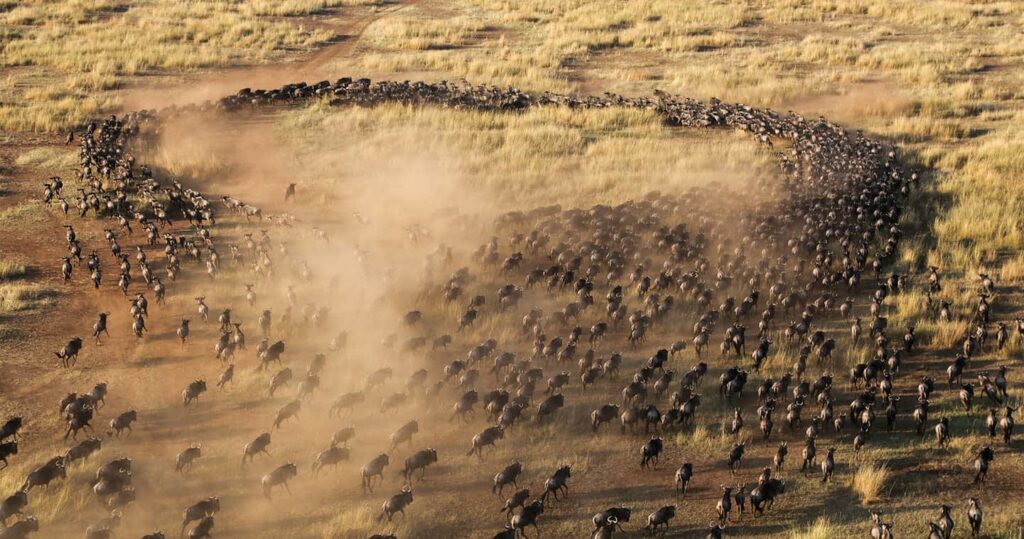
In contrast to the Serengeti, which hosts some phase of the Great Migration in one part of the ecosystem or another for most of the year, the Mara has a clearly defined window for the migrating herds, and understanding this window is the most important piece of planning information for first-time visitors. Roughly two million wildebeest, zebra, and gazelle spend the majority of the year on the Serengeti’s plains in Tanzania; it is only when the southern grazing dries out that the front of the herd pushes north and crosses into Kenya, which typically happens from late June or July.

Great Migration in the Masai Mara

Crossings of the Mara River itself are the event most people picture when they imagine the migration, chaotic lines of wildebeest plunging down cut banks into crocodile-contested water, and cluster most heavily from late July through September, with August widely regarded by guides who work the ecosystem year-round as the single most reliable month for witnessing multiple crossings. The herds typically linger on the Mara’s rich grass through September and into October before the short rains pull them back south toward the Serengeti, usually by late October or November, which means the reserve’s wildebeest population outside this roughly four-month window is a fraction of its peak-season size, and travelers visiting in, say, February or March are seeing the Mara’s substantial resident wildlife rather than the migratory herds. No crossing is ever guaranteed on a specific day: herds frequently gather at a crossing point and mill for hours or days, building courage before the first animal commits, which is why guides consistently recommend a minimum of three consecutive nights in the reserve during crossing season rather than a rushed overnight stop.

The Mara’s Distinct Areas: Reserve, Triangle, and Conservancies.

A Masai Mara safari is not one uniform experience, and the choice between the main reserve, the Mara Triangle, and the private conservancies that ring the reserve shapes almost everything about the trip, from the rules you’ll operate under to the number of other vehicles you’ll see at a sighting.

Area Managed By Size Defining Feature
Main Reserve (Narok) Narok County Government ~1,000 km² Widest lodge choice; busiest vehicle density
Mara Triangle The Mara Conservancy (nonprofit) ~510 km² Best-maintained roads; prime river-crossing access
Private Conservancies Community land trusts / individual lodges ~1,500 km² combined Night drives, walking safaris, off-road tracking

The Main Reserve (Narok Side)

The eastern and central portion of the reserve, accessed principally through Sekenani and Talek Gates, is the Mara’s busiest and most historically established section, home to long-running lodges such as Keekorok and Governors’ Camp and the closest entry points for travelers driving from Nairobi. Roughly 40 to 60 percent of all Mara visitors stay in or use this side of the reserve, which means that popular sightings, a river crossing in progress, and a pride on a fresh kill can draw a meaningful cluster of vehicles, creating a genuine trade-off with the convenience and choice of accommodation this side of the Mara offers.

The Mara Triangle.

Masai Mara National Reserve 2027: The Complete Safari Guide

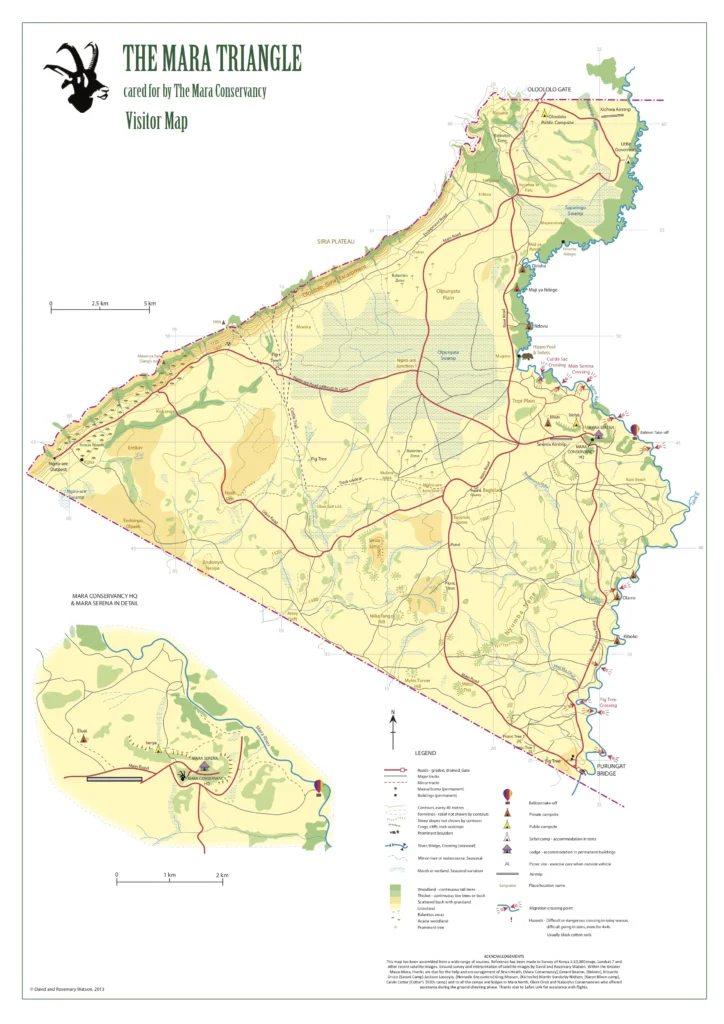
The Mara Triangle occupies the reserve’s western third, roughly 510 square kilometers between the Mara River and the Oloololo Escarpment, reached through Oloololo Gate or the New Mara Bridge and managed independently by the nonprofit Mara Conservancy rather than Narok County. Visitors and guides who know the ecosystem well consistently rate the Triangle’s road network and off-road-driving enforcement as the best maintained in the reserve, a direct result of the Conservancy’s independent management and cashless-only payment system, and its position along the Mara River gives it a genuine claim to some of the best crossing-point vantage in the entire ecosystem.

The Private Conservancies

Surrounding the reserve on land leased directly from Maasai landowners, a network of community-owned conservancies, Mara North, Olare Motorogi, Naboisho, Ol Kinyei, Lemek, and Enonkishu, among the best known, roughly doubles the ecosystem’s protected area to around 3,000 square kilometers and operates under an entirely different rulebook. Only guests staying at a lodge inside a given conservancy may enter it, which caps visitor density by design, and in exchange conservancies permit night drives, walking safaris, and off-road vehicle tracking of predators, all of which are prohibited inside the national reserve itself. Conservancy fees run separately from reserve entry, typically USD 80 to 150 per person per night, and are usually bundled directly into the camp’s nightly rate rather than billed as a standalone charge. Olare Motorogi Conservancy alone covers 140 square kilometers and, along with its neighbors, has become the address of choice for travelers specifically seeking the exclusivity and expanded activity list that the main reserve cannot offer.

Plan Your Rwanda Safari

Start Planning a Private Gorilla Trek

Rwanda gorilla permits sell out months in advance. Secure your dates before the season closes.

Wildlife Beyond the Migration

The Masai Mara’s reputation rests heavily on the migration, but the ecosystem’s resident wildlife, present in every month of the year regardless of where the wildebeest are, is what keeps serious safari travelers coming back outside the crossing season. The Mara Predator Conservation Program’s most recent technical report, drawing on twelve consecutive years of surveys across the ecosystem, recorded a lion density of just over 17 per 100 square kilometers within the reserve itself, close to the ecosystem-wide average, while Ol Kinyei Conservancy posted the highest figure anywhere in the Mara at 28.56 lions per 100 square kilometers in 2025, a detail rarely found on general safari guides but a genuinely useful data point for photography-focused travelers choosing between the reserve and a specific conservancy. The Mara’s lion prides were the subject of the long-running BBC series Big Cat Diary, filmed largely around the Musiara Marsh in the reserve’s northern sector, and several of the prides featured in that series still hold territory in roughly the same area today.

Ngorongoro Crater Safari Guide: Big Five, Cost & Best Time

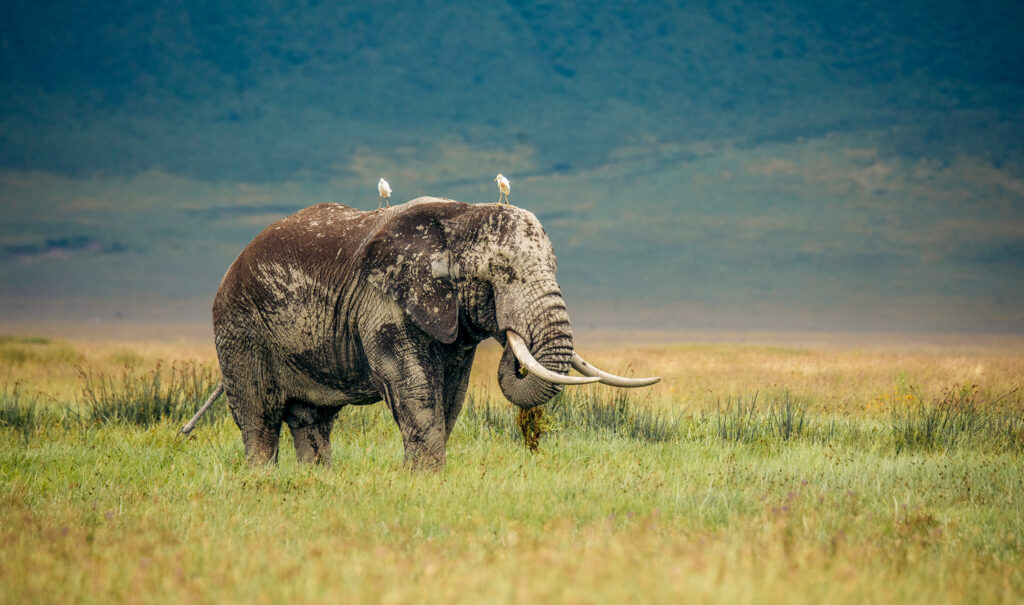
Cheetahs hunt the Mara’s open plains with some of the best visibility of any East African reserve, and leopards are reliably found in the riverine forest fringing the Mara and Talek Rivers. A small, closely guarded population of critically endangered black rhino survives within designated protection zones, sightings remain genuinely rare and typically require an experienced guide working a specific area. Beyond the predators, elephant and buffalo herds range widely across the open plains, hippo pods and Nile crocodiles concentrate along the Mara River’s deeper pools, and more than 500 recorded bird species, including the lilac-breasted roller, secretary bird, and both marabou and white-backed vultures, make the reserve a serious destination for birding travelers independent of the mammal list.

Masai Mara vs. Serengeti vs. Amboseli

First-time safari planners frequently ask which of Kenya’s or Tanzania’s parks to choose, and the honest answer depends on what stage of the migration matters to you, how much time you have, and whether an open savannah or Kilimanjaro’s silhouette matters more to your photographs.

Destination Core Experience Typical Cost Driver Best For
Masai Mara (Kenya) Migration crossings; highest lion density; private conservancies USD 100-200/day reserve fee, plus conservancy fees and lodge Fastest access from Nairobi; peak crossing season
Serengeti (Tanzania) Open-plains migration across all four seasons USD 70-83/day park fee, plus lodge Migration drama across a longer window; more space
Amboseli (Kenya) Elephant herds beneath Kilimanjaro KWS park fees, plus lodge A compact, photogenic add-on to a Nairobi-based trip
Volcanoes NP (Rwanda) On-foot mountain gorilla trekking USD 1,500 permit, plus lodge The rarest, most intimate wildlife encounter on the continent

Masai Mara vs. Serengeti

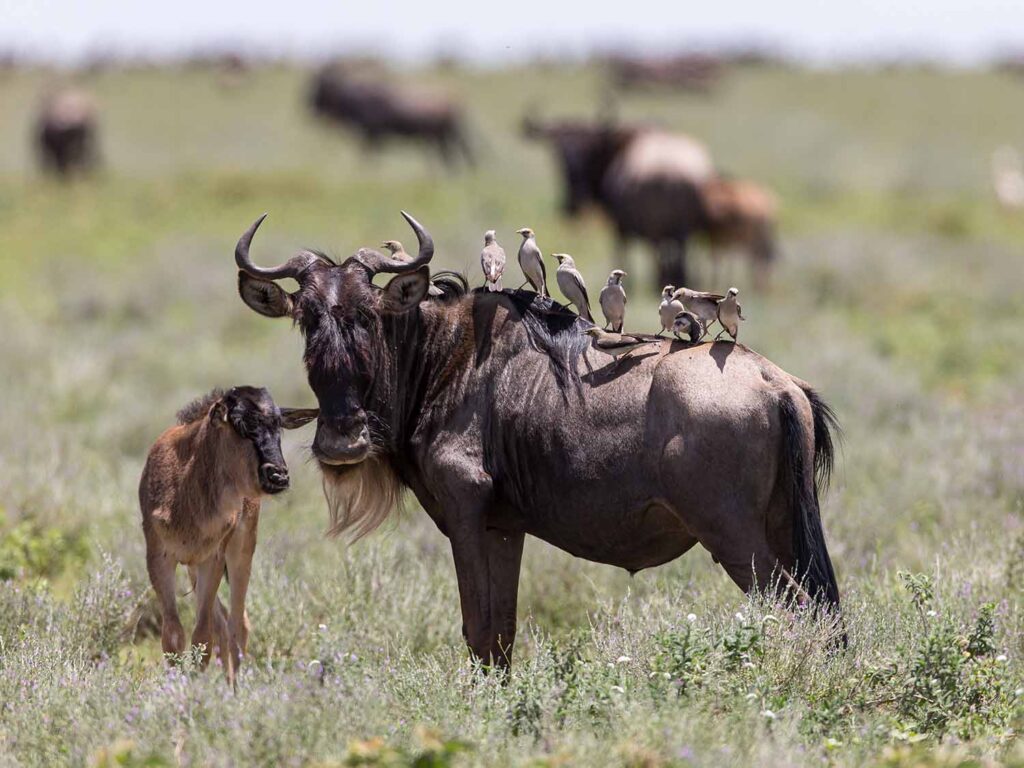
Serengeti Wildebeest Calving Season

The Mara and the Serengeti are, ecologically, one continuous system split only by an international border, but the practical differences are real. The Mara covers 1,510 square kilometers against the Serengeti’s 14,750, which concentrates wildlife and vehicles into a considerably tighter space during peak crossing weeks, while the Serengeti’s far larger area spreads both animals and visitors across four distinct regions for most of the year. The Mara sees the migration for a shorter, more concentrated window, roughly July through October, while the Serengeti hosts some phases of the same migration, calving, the Grumeti crossings, or the same Mara River crossings viewed from the Tanzanian bank across nearly the entire calendar. Nairobi’s proximity makes the Mara a faster, shorter-haul add-on for travelers already in Kenya, while the Tanzanian side of the same river crossings, viewed from the Serengeti’s northern sector, tends to feel noticeably less crowded during the same event. Our full Serengeti National Park guide covers the Tanzanian side of this same ecosystem in complete detail, including the calving season and Western Corridor phases the Mara never sees.

Masai Mara vs. Amboseli

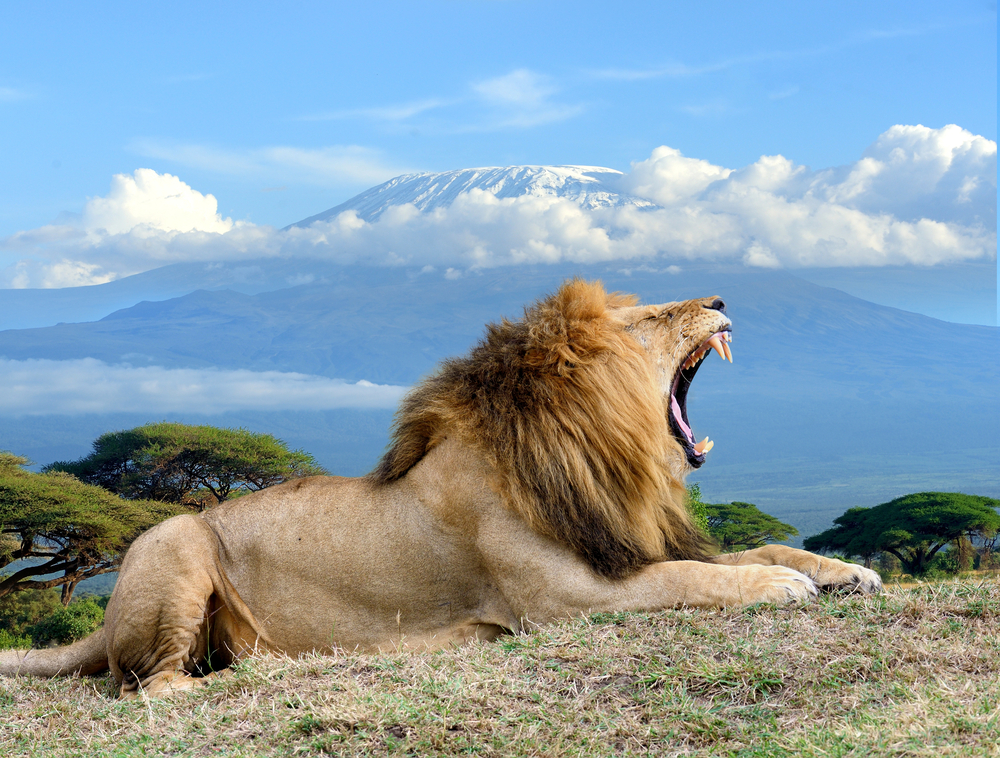
Amboseli National Park

Amboseli National Park, roughly 240 kilometers southeast of Nairobi near the Tanzanian border, offers an entirely different register of safari: a smaller, drier park built around swamps fed by Kilimanjaro’s snowmelt, famous less for volume of wildlife than for large, well-documented elephant herds photographed against Africa’s tallest mountain as a backdrop. Where the Mara delivers scale, predator density, and the migration, Amboseli offers a single, unmistakable image and a more compact, easily combined add-on for travelers building a short Kenya itinerary around Nairobi. Serious first-time safari travelers weighing the two destinations against limited time should generally prioritize the Mara for its wildlife density and the migration; Amboseli rewards a traveler who already has a Mara or Serengeti safari booked and wants Kilimanjaro in the frame as a shorter addition.

Why Travelers Pair the Masai Mara With Rwanda’s Mountain Gorillas.

Gorilla trekking and a Masai Mara safari are not competing choices; they are complementary halves of the same continent’s best wildlife experiences, and an increasing number of travelers researching where to trek gorillas end up booking both rather than choosing between them. Mountain gorilla trekking in Rwanda’s Volcanoes National Park is an intimate, on-foot forest encounter with an endangered great ape at close range, capped at eight visitors per gorilla family and one hour of observation; a Masai Mara safari is an open-plains, vehicle-based spectacle built around scale, predator density, and, in season, one of the largest wildlife movements on Earth. The two journeys draw on entirely different registers of wildlife travel, and routed correctly through Kigali and Nairobi, they combine comfortably into a single 10-to-14-day East Africa circuit.

Sequencing matters. Most experienced travelers tackle gorilla trekking first, while still physically fresh, since it is the more physically demanding of the two activities, then transition into the largely vehicle-based, lower-exertion game drives of a Mara safari. The connection itself typically routes from Kigali to Nairobi’s Jomo Kenyatta International Airport in roughly two hours, with a same-day or next-day onward light aircraft connection to the Mara from Wilson Airport, which is a considerably shorter regional hop than the equivalent Rwanda-to-Tanzania routing. Because Rwanda’s gorilla permits are date-specific and allocated by the Rwanda Development Board on a first-booked basis, we generally recommend confirming the gorilla trekking dates first, then building the Mara portion of the trip around them. Our team at Rwanda Gorilla Expeditions specializes in the Rwanda side of that circuit, securing gorilla permits directly with the Rwanda Development Board, matching you to the right gorilla family, and coordinating the cross-border routing and timing so a confirmed gorilla permit date and your Masai Mara dates actually line up on the calendar. Our Luxury Rwandan Primate Safari and Best of Rwanda’s National Parks itineraries are both routed to end in Kigali, making a same-day or next-day connection to Nairobi and onward to the Mara genuinely realistic.

The Best Time to Visit the Masai Mara.

There is no single best month for a Mara safari, because the right answer depends on whether the migration itself or the reserve’s year-round resident wildlife matters more to your trip. Kenya’s climate follows two rainy seasons, the long rains from roughly March through May and the short rains in November, bracketing two drier windows that account for most of the year’s visitor traffic and, not coincidentally, for the migration’s presence in the ecosystem.

Best time for gorilla trekking.

Season Months Conditions Best For
Migration arrival Late June – July Dry, herds pushing north from the Serengeti Early crossings; fewer crowds than peak August
Peak crossing season August – September Dry, dusty, highest visitor numbers The most reliable window for multiple river crossings
Migration lingers. October Dry, transitioning toward short rains Herds are still present; noticeably quieter than August.
Short rains November Light, mostly afternoon rain Herds departing south; strong value, fewer crowds
Long rains / green season March – May Heaviest rainfall; lush landscape Lowest rates of the year; resident wildlife, not migration
Dry resident season December – February Warm and mostly dry Excellent year-round wildlife without the crossing crowds

Plan Your Rwanda Safari

Start Planning a Private Gorilla Trek

Rwanda gorilla permits sell out months in advance. Secure your dates before the season closes.

Getting to the Masai Mara: Flights, Kenya’s ETA, and Driving.

Nearly every international traveler reaches the Masai Mara via Nairobi, landing at Jomo Kenyatta International Airport (NBO) before connecting onward to the reserve. Kenya abolished its visa system entirely on 1 January 2024 and replaced it with an Electronic Travel Authorization (eTA): almost every non-East African nationality must apply online at etakenya.go.ke, paying a processing fee of roughly USD 30 to 34, before travel, and while applications are typically approved within two to three business days, applying at least two weeks ahead is the safer practice given occasional processing delays. Citizens of East African Community member states, including Rwanda, Uganda, Tanzania, Burundi, and South Sudan, are exempt from the eTA requirement entirely, a detail worth knowing for travelers building a multi-country itinerary, though it does not exempt a US, UK, German, or Australian passport holder simply because their trip begins in Rwanda.
Serengeti National Park 2027: The Complete Migration Guide

From Nairobi, the fastest and by far the most common way into the Mara is by light aircraft: scheduled flights operated chiefly by Safarilink and AirKenya Express depart Wilson Airport, a 15-to-30-minute transfer from central Nairobi, multiple times daily and land at one of the reserve’s roughly seven airstrips, Musiara, Keekorok, Mara Serena, Ol Kiombo, and Kichwa Tembo, among the busiest, in around 45 minutes. One-way fares typically run from roughly USD 150 to 300 per person depending on the specific airstrip and season, and several conservancy camps coordinate transfers directly with their preferred airstrip.

Driving is the slower, more scenic alternative: the Mara sits roughly 225 to 275 kilometers southwest of Nairobi depending on which gate you’re entering through, and the route runs through the Great Rift Valley escarpment, with genuine viewpoints over the valley floor, and the market town of Narok, the last sizeable settlement before the reserve. Plan on five to six and a half hours of driving, since the final 70 to 75 kilometers shifts from tarmac to a rougher gravel track that slows progress considerably. Most self-drive and private-vehicle itineraries break the return journey with a lunch stop in Narok rather than attempting it without a break.

For travelers building a Rwanda-then-Kenya circuit, the connection from Kigali routes through Nairobi in roughly two hours of flying time, with same-day onward connections to the Mara realistic for most arrival times, considerably shorter than the equivalent Rwanda-to-Tanzania routing through Kilimanjaro. Reach out through Rwanda Gorilla Expeditions or on WhatsApp, and we will map the exact routing against your dates.

What a Masai Mara Safari Costs

Masai Mara safari costs break into three layers, reserve or conservancy entry fees, accommodation, and internal transport, and the reserve’s fee structure changed substantially in 2026. Narok County now charges non-resident adults USD 100 per person per day from January through June and USD 200 per person per day from July through December, a deliberate seasonal split designed to manage demand during the migration’s peak months; children aged 9 to 17 pay USD 50 year-round, and children under 9 enter free. The ticket itself covers a 12-hour daylight window, roughly 6:00 AM to 6:00 PM, rather than a full 24 hours, a change introduced in 2023 that means a late-morning arrival can represent poor value for the day, and payment at most gates is cashless only, Visa, Mastercard, or M-Pesa. The Mara Triangle, managed separately by the Mara Conservancy, follows a similar seasonal fee structure but processes payment exclusively online in advance rather than at the gate.

Private conservancy fees run entirely separately from reserve entry, typically USD 80 to 150 per person per night, and are almost always bundled directly into a camp’s nightly rate rather than billed as a standalone line item; entry to a given conservancy is restricted to guests actually staying at a lodge inside it. On accommodation, a comfortable tented camp or lodge inside the main reserve typically runs USD 400 to 800 per person per night on a full-board basis, while the ecosystem’s benchmark ultra-luxury conservancy properties, Angama Mara, Mahali Mzuri, and Mara Plains Camp, among them, run USD 1,200 to 2,500 per person per night inclusive of meals, house drinks, two daily game drives, and conservancy fees. At the very top of the market, the Ritz-Carlton Masai Mara, which opened in 2025 with private plunge pools, butler service, and an in-house photography studio with professional camera equipment available to guests, prices upward of USD 5,000 per night, setting a genuinely new benchmark for the ecosystem. A hot air balloon safari, one of Mara’s signature activities, runs roughly USD 450 to 650 per person, including a champagne bush breakfast on landing, and has limited daily capacity that should be reserved before arrival rather than requested on the ground.

Taken together, a realistic mid-range Mara safari of four to five nights runs from roughly USD 3,000 to 6,000 per person, while a high-end conservancy-based itinerary with the ecosystem’s benchmark luxury camps runs from USD 6,000 to well over USD 12,000 per person depending on season and property. For travelers combining the Mara with a Rwanda gorilla trek, the single largest fixed cost on the Rwanda side is the USD 1,500 gorilla trekking permit, issued by the Rwanda Development Board, with a combined 10-to-14-day, two-country itinerary typically running from roughly USD 9,000 to over USD 18,000 per person depending on lodge tier and season. We provide fully itemized quotations covering the Rwanda leg of any combined itinerary so there are no hidden costs once your dates are confirmed; explore the full range of Rwanda safari experiences and Rwanda safari styles that pair naturally with a Masai Mara extension.

Where to Stay: Reserve Lodges and Conservancy Camps

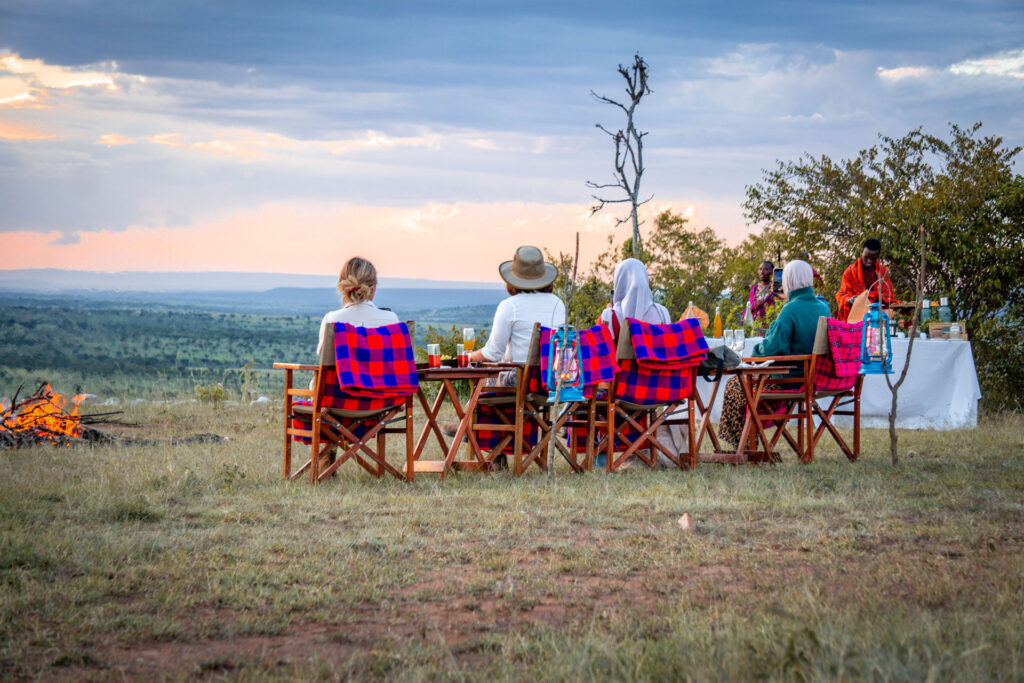
Choosing where to stay in the Masai Mara comes down to three questions: reserve or private conservancy, proximity to the river crossings versus quieter plains, and lodge versus tented camp, and the right answer depends far more on your travel dates and priorities than on any fixed ranking of the ecosystem’s best properties. Inside the main reserve, Mara Serena Safari Lodge holds one of the classic five-star positions, set high above the Mara Triangle with sweeping views across the crossing points, while Governors’ Camp and Keekorok Lodge anchor the reserve’s northern and central sectors, respectively, with decades of established operating history. Sarova Mara Game Camp offers a strong, gentler-priced luxury tented alternative near Talek Gate with particularly excellent family facilities.
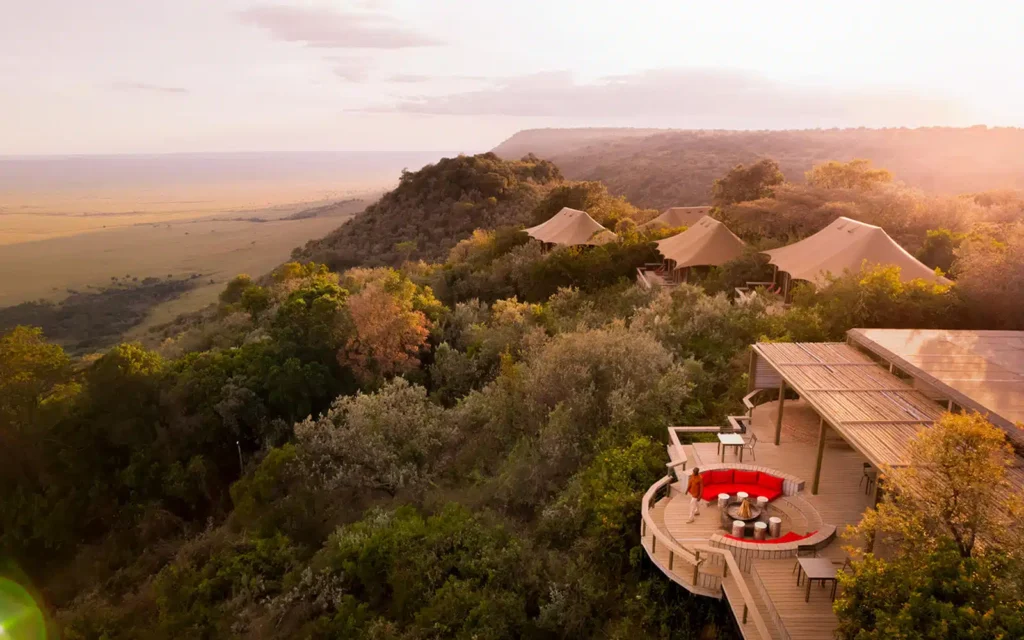
Angama Mara

In the private conservancies, Angama Mara sits directly on the edge of the Oloololo Escarpment with glass-fronted suites overlooking the Mara Triangle, widely regarded as one of the most photographed views in African safari accommodation. Mahali Mzuri, Sir Richard Branson’s Virgin Limited Edition property in the 140-square-kilometer Olare Motorogi Conservancy, offers twelve modern tented suites raised on stilts along a ridge with an infinity pool and a strong reputation for its kitchen. Cottar’s 1920s Camp, on its own private conservancy near Olderkesi on the reserve’s southeastern boundary, recreates a deliberately old-world safari atmosphere with a private butler for every tent and, given its conservancy status, offers night drives that are unavailable inside the reserve proper. Mara Plains Camp, also in Olare Motorogi, offers just seven secluded tented suites for travelers prioritizing intimacy and low camp density above all else. For travelers combining a Mara stay with a Rwanda gorilla trek, the lodge landscape around Volcanoes National Park is, by any global standard, comparable in caliber: Singita Kwitonda Lodge, Wilderness Bisate, One&Only Gorilla’s Nest, and Wilderness Sabyinyo Silverback Lodge sit within twenty to forty minutes of the Kinigi trekking headquarters and are covered in full in our dedicated Volcanoes National Park guide.

What to Pack for a Masai Mara Safari

Packing for the Masai Mara is a genuinely different exercise from packing for gorilla trekking in Rwanda: this is vehicle-based, open-plains travel rather than forest hiking, so the priorities shift from waterproof boots and gaiters to sun protection, optics, and layers for cool early-morning game drives that warm quickly once the sun clears the horizon. Neutral-colored clothing in khaki, olive, and stone tones works well, avoiding bright colors and dark blacks or navy that can attract tsetse flies in some areas, and a warm fleece or packable jacket is essential for pre-dawn game drives and any hot air balloon flight, when temperatures on the open plains can drop into the low teens Celsius before warming quickly by mid-morning.
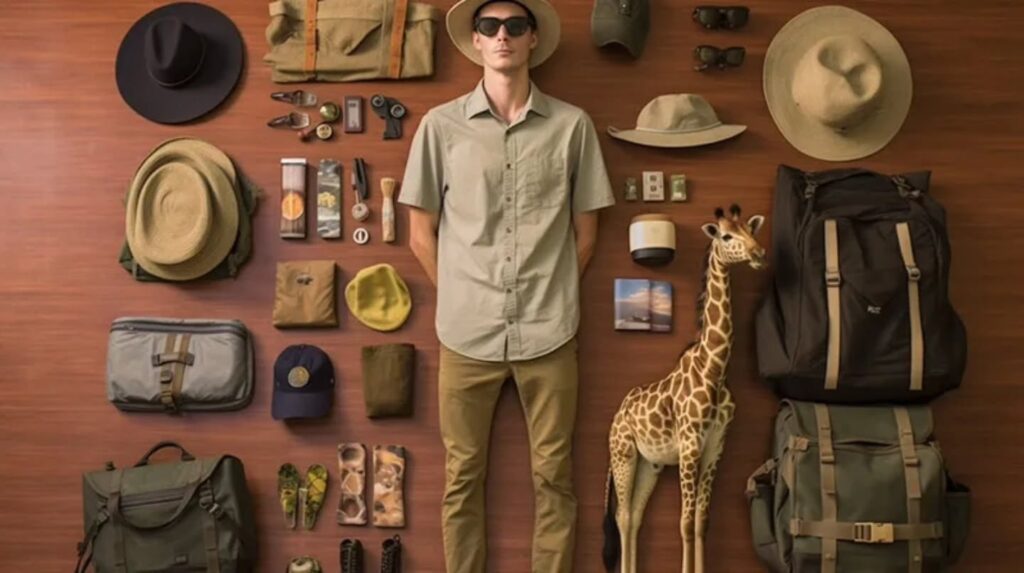
What to Pack and Wear for a Ngorongoro Crater Safari

A wide-brimmed hat, sunglasses, and high-SPF sunscreen are non-negotiable given the intensity of the equatorial sun on open grassland, even on overcast days, and binoculars, ideally one pair per traveler rather than shared, matter considerably more here than on a forest-based trek, since much of the Mara’s wildlife viewing happens at genuine distance across open country. A camera with a telephoto lens of at least 200mm, spare batteries, and ample memory card storage is worth the extra luggage weight for both game drives and any balloon safari, and comfortable closed walking shoes are useful for the limited guided walks available within the conservancies. Malaria prophylaxis, discussed with a travel medicine specialist in advance, is generally advised for the Mara’s lower-elevation savannah, which carries a meaningfully higher malaria risk than Rwanda’s high-altitude gorilla trekking zones in Volcanoes National Park.

Health, Safety, and Practical Preparation

The Masai Mara is a well-established, professionally managed safari destination visited by hundreds of thousands of international travelers each year, and standard safari safety protocols, staying inside vehicles during game drives except at designated points, following ranger and guide instructions, and respecting minimum wildlife distances, are consistently enforced across both the reserve and the surrounding conservancies. As with any wildlife destination, the primary practical risks are environmental rather than security-related: malaria prophylaxis is generally recommended for the Mara’s lower-elevation savannah, and standard travel vaccinations recommended for East Africa more broadly include hepatitis A and B, typhoid, and, for wildlife-focused travelers, rabies.

A pre-departure consultation with a travel medicine specialist is worth scheduling several weeks ahead of your trip rather than in the final days before departure. Reputable ground operators brief every guest thoroughly on health and safety before travel, and any combined Rwanda-and-Kenya itinerary should include a checklist covering both countries’ specific entry requirements, since Kenya’s Electronic Travel Authorization and Rwanda’s own entry rules are administered by entirely separate governments.

Plan Your Rwanda Safari

Start Planning a Private Gorilla Trek

Rwanda gorilla permits sell out months in advance. Secure your dates before the season closes.

Frequently Asked Questions About the Masai Mara

What is the Masai Mara known for?

The Masai Mara National Reserve is best known for the Mara River crossings, the headline chapter of the Great Migration, when roughly two million wildebeest, zebra, and gazelle move from Tanzania’s Serengeti into Kenya between July and October each year. It also holds among the highest lion densities anywhere in Africa, with the reserve itself recording just over 17 lions per 100 square kilometers and top-performing conservancies recording nearly 29. Beyond the migration and its predators, the Mara is known for its ring of private conservancies, Mara North, Olare Motorogi, and Naboisho among them, which permit night drives and walking safaris unavailable inside the core reserve, and for its status as the northern extension of Tanzania’s Serengeti ecosystem.

How much does a Masai Mara safari cost?

A realistic mid-range Masai Mara safari of four to five nights runs from roughly USD 3,000 to 6,000 per person, while a high-end conservancy-based itinerary with the ecosystem’s benchmark luxury camps runs from USD 6,000 to well over USD 12,000 per person depending on season and property. This covers accommodation, guiding, reserve or conservancy fees, and internal flights but typically excludes international flights, Kenya’s Electronic Travel Authorization, tips, and travel insurance. Government reserve fees alone run USD 100 to 200 per person per day depending on season, figures that stay constant regardless of which operator you book with.

What is the best time to visit the Masai Mara?

August and September offer the most reliable window for the Mara River crossings, the reserve’s signature event, though crossings can occur anytime from July through October depending on rainfall patterns that year. Travelers who prioritize resident wildlife and lower rates over the migration itself should consider December through February, when the reserve is warm and mostly dry without the crossing-season crowds, or the March-to-May long rains for the lowest prices of the year, at the cost of a lush but wetter landscape. Because reserve fees themselves now rise from USD 100 to USD 200 per person per day starting July 1st, travel dates on either side of that line carry a real cost difference worth factoring into a booking decision.

When is the Great Migration in the Masai Mara?

The migration typically arrives in the Mara from late June or July, as the front of the herd crosses north from Tanzania’s Serengeti in search of fresh grazing, with Mara River crossings clustering most heavily from late July through September. August is widely regarded by guides working the ecosystem year-round as the single most reliable month for witnessing multiple crossings, though no crossing is ever guaranteed on a specific day since herds can gather at a crossing point and mill for hours or days before committing. The herds typically linger on the Mara’s plains through October before the short rains pull them back south toward the Serengeti by late October or November.

What is the difference between the Masai Mara and Serengeti?

The Masai Mara and Serengeti are ecologically one continuous system divided only by the Kenya-Tanzania border, but the Mara covers just 1,510 square kilometers against the Serengeti’s 14,750, which concentrates wildlife and vehicles into a considerably tighter space during peak crossing weeks. The Mara sees the migration for a shorter, roughly four-month window from July through October, while the Serengeti hosts some phases of the same migration, calving season, the Grumeti crossings, or the same Mara River crossings from the Tanzanian bank across nearly the entire year. Nairobi’s proximity makes the Mara a faster add-on for Kenya-based travelers, while the Serengeti’s far larger area and longer season reward a longer, more exploratory stay; our full Serengeti National Park guide covers the Tanzanian side of this ecosystem in complete detail.

What is the difference between the Masai Mara Reserve and its conservancies?

The Masai Mara National Reserve, including its Mara Triangle sector, is publicly accessible to any visitor who pays the entry fee, while the private conservancies surrounding it, Mara North, Olare Motorogi, and Naboisho, among the largest, restrict entry to guests staying at a lodge physically located inside that conservancy. In exchange for that exclusivity, conservancies permit night drives, guided walking safaris, and off-road vehicle tracking of predators, activities banned inside the core reserve to protect its more heavily used road network and habitat. Conservancy fees run separately from reserve entry, typically USD 80 to 150 per person per night, and are almost always bundled directly into a camp’s nightly rate.

How much is the Masai Mara entry fee in 2027?

Non-resident adults pay USD 100 per person per day from January through June, rising to USD 200 per person per day from July through December, a seasonal structure introduced by the Narok County Government in 2026 specifically to manage demand during the migration’s peak months. Children aged 9 to 17 pay USD 50 year-round, and children under 9 enter free. The ticket is a 12-hour daylight pass, roughly 6:00 AM to 6:00 PM, rather than a full 24-hour permit, and payment at most gates is cashless only, accepted via Visa, Mastercard, or M-Pesa.

Do I need a visa to visit Kenya for a Masai Mara safari?

Kenya abolished its visa requirement entirely on 1 January 2024 and replaced it with an Electronic Travel Authorization, or eTA, which almost every non-East African nationality must obtain online before travel at a processing fee of roughly USD 30 to 34. Applications are typically approved within two to three business days, though applying at least two weeks before departure is the safer practice given occasional delays, and the eTA is valid for a single entry within a 90-day window. Citizens of East African Community member states, including Rwanda, Uganda, Tanzania, Burundi, and South Sudan, are exempt from the eTA requirement, though this exemption is based on passport nationality rather than where the traveler’s trip began.

How do I get to the Masai Mara, and how far is it from Nairobi?

Most international travelers fly into Nairobi’s Jomo Kenyatta International Airport, then connect via a roughly 45-minute scheduled light aircraft flight from Wilson Airport to one of the Mara’s seven airstrips, operated chiefly by Safarilink and AirKenya Express, with one-way fares typically running USD 150 to 300 per person. Driving is the slower alternative: the Mara sits roughly 225 to 275 kilometers southwest of Nairobi, a journey of five to six and a half hours since the final 70 to 75 kilometers shifts from tarmac to gravel. Travelers coming from Rwanda typically route through Kigali to Nairobi in roughly two hours of flying time, with same-day onward connections to the Mara being realistic for most arrival times.

Is the Masai Mara safe to visit?

Yes, the Masai Mara is a well-established, professionally managed safari destination visited by hundreds of thousands of international travelers each year, with standard safari safety protocols, staying inside vehicles during game drives, following ranger and guide instructions, and respecting minimum wildlife distances, consistently and effectively enforced across both the reserve and its surrounding conservancies. As with most wildlife destinations, the primary practical risks are environmental rather than security-related, chiefly malaria in the reserve’s lower-elevation savannah, and a reputable operator will brief every guest thoroughly before travel.

Can I combine a Masai Mara safari with gorilla trekking in Rwanda?

Yes, and this is one of the most requested combinations in East African luxury travel. Mountain gorilla trekking in Rwanda’s Volcanoes National Park delivers an intimate, on-foot forest encounter capped at eight visitors per gorilla family, while a Masai Mara safari delivers open-plains wildlife viewing and, in season, one of the largest wildlife movements on Earth, and routed through Kigali and Nairobi, the two experiences combine comfortably into a single 10-to-14-day itinerary. Because Rwanda’s gorilla permits are date-specific and allocated on a first-booked basis, we generally recommend confirming the gorilla trekking dates first, then building the Kenya portion of the trip around them. Rwanda Gorilla Expeditions coordinates the Rwanda side of exactly this kind of combined journey.

What should I pack for a Masai Mara safari?

Pack neutral-colored clothing in khaki, olive, and stone tones, a warm layer for cool early-morning game drives and any hot air balloon flight, a wide-brimmed hat and high-SPF sunscreen, and binoculars, ideally one pair per traveler, given how much Mara wildlife viewing happens at genuine distance across open plains. A camera with at least a 200mm telephoto lens, spare batteries, and ample storage is worth the extra luggage weight, and comfortable closed walking shoes are useful for guided walks available within the private conservancies. This kit differs meaningfully from gorilla trekking packing for Rwanda, which prioritizes waterproof boots, gaiters, and rain gear for forest conditions rather than sun and dust management on open plains.

How many days do I need in the Masai Mara?

Four to five nights is the realistic minimum for a satisfying Mara safari, since a shorter stay leaves little margin if a river crossing takes an extra day to materialize; guides consistently recommend at least three consecutive nights specifically during crossing season to meaningfully improve your odds of witnessing one. Travelers splitting time between the main reserve and a private conservancy, or adding a Nairobi bookend, typically budget six to seven days for the Kenya portion alone, while those combining the Mara with Rwanda gorilla trekking usually allocate 10 to 14 days for the full two-country circuit.

Can I do a hot air balloon safari in the Masai Mara?

Yes, a hot air balloon safari is one of the Mara’s signature activities, departing before dawn from a staging area near your camp and drifting silently over the plains as the sun rises, typically followed by a champagne bush breakfast on landing. Pricing generally runs USD 450 to 650 per person for a flight of roughly one hour, though several operators offer a longer combined package including transfers and breakfast that can extend the total experience to three or four hours. Balloon safaris have limited daily capacity across the ecosystem and should be reserved before arrival rather than requested on the ground, particularly during the July-to-October migration season.

Which is better for a first safari: the Masai Mara or a private conservancy?

For a first-time visitor with limited time, the main reserve is usually the stronger choice, since it offers the widest lodge selection, the shortest flights from Nairobi, and direct access to the Mara River crossing points during migration season. Travelers on a second or subsequent Mara trip, or those specifically prioritizing exclusivity, night drives, and walking safaris over convenience, tend to gravitate toward a private conservancy such as Mara North or Naboisho, where entry is restricted to guests of lodges inside it and vehicle density is correspondingly far lower. Many well-designed itineraries split time between both, a few nights in the reserve for the crossings, followed by a few nights in a conservancy for the activities the reserve does not permit.

How do I book a Masai Mara and Rwanda gorilla trekking combined safari?

Booking a combined Masai Mara and Rwanda itinerary starts with confirming your travel dates and priorities, whether that is the August-to-September river crossings, a specific gorilla family experience, or a particular conservancy, since this shapes both routing and lodge selection across the two countries. Rwanda Gorilla Expeditions handles the Rwanda side of this process directly, securing gorilla permits with the Rwanda Development Board and coordinating cross-border timing through Kigali and Nairobi, while advising on the Kenya portion so your dates and seasons align. Tell us your dates, and we’ll check gorilla permit availability within a few minutes.

Ready to Trek? Permits are limited — plan early.

Plan Your Masai Mara Safari

The Masai Mara and Rwanda’s mountain gorillas are, between them, two of the most complete wildlife experiences East Africa has to offer, and the travelers who see both rarely regret the extra days it takes to plan them properly. Our team at Rwanda Gorilla Expeditions specializes in the Rwanda half of that journey, securing gorilla permits directly with the Rwanda Development Board, matching you to the right gorilla family, and coordinating the cross-border routing through Kigali and Nairobi so your Masai Mara dates line up cleanly with your gorilla trek rather than fighting against it.

Whether you already know exactly which migration phase you want to see or you are still weighing Kenya against a Rwanda-only trip, get in touch through WhatsApp or email. Tell us your dates and we’ll check permit availability within a few minutes.