Where to Stay: Ngorongoro Crater Lodges and Camps
Accommodation near Ngorongoro splits into two clear categories: a small number of properties directly on the crater rim, offering the shortest possible access to the descent road and, in most cases, views straight down onto the caldera floor, and a wider, generally more affordable range of options in and around the town of Karatu, roughly 30 to 45 minutes from the main gate.
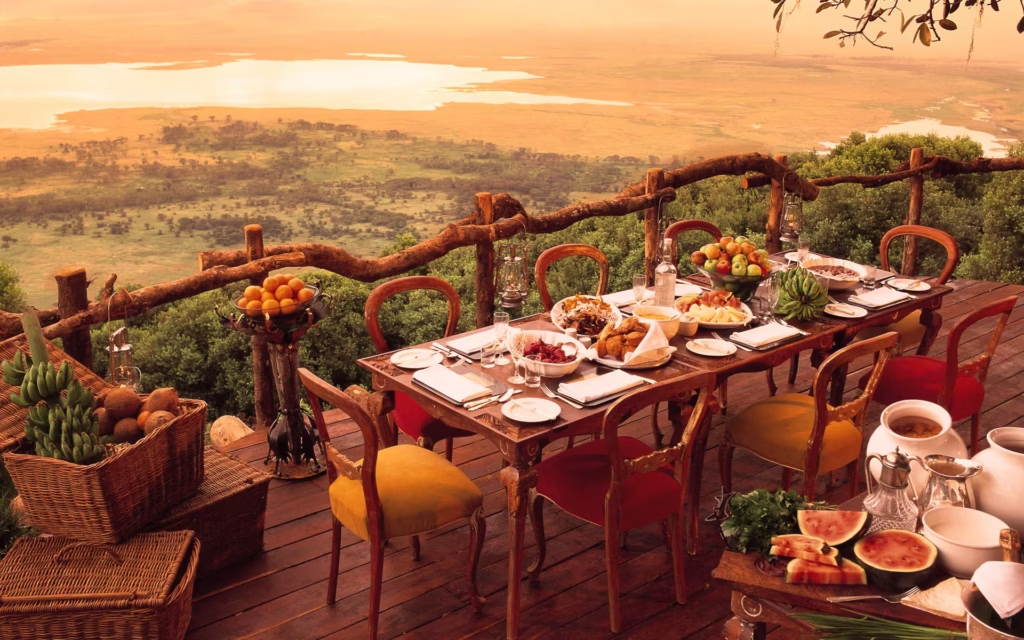
&Beyond Ngorongoro Crater Lodge
On the Rim
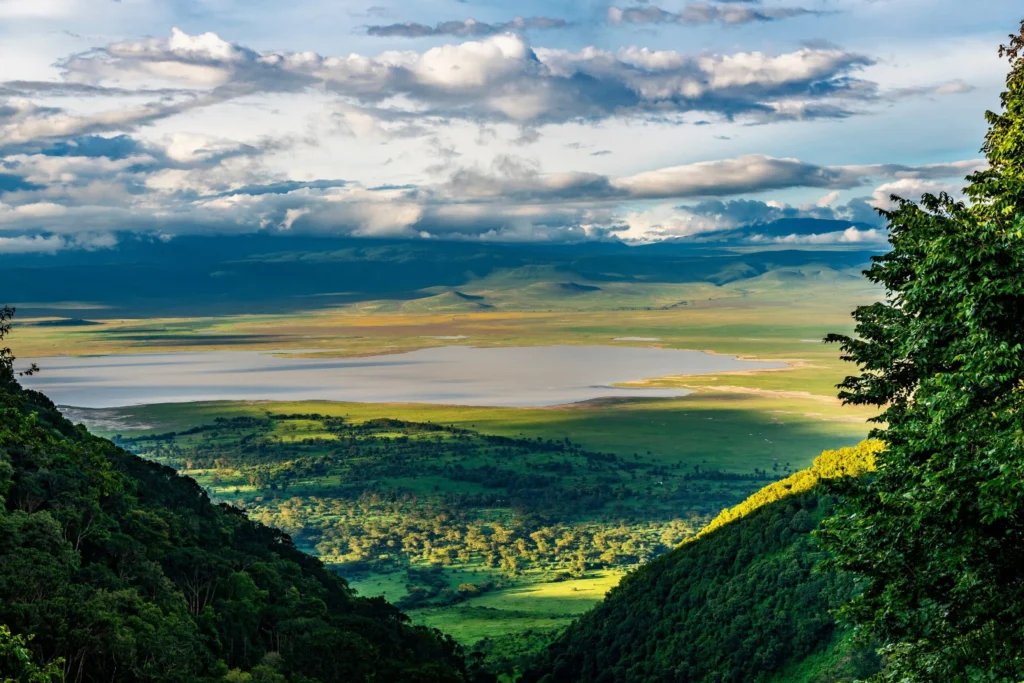
Ngorongoro Serena Safari Lodge is built into the rim’s stonework and river rock, with roughly 75 rooms strung along the crater edge, each with a private balcony over the caldera. Ngorongoro Sopa Lodge sits at one of the highest points on the entire rim and is known for some of the best sunset views in the region. Asilia’s The Highlands, positioned on the slopes of the neighboring Olmoti volcano, and Entamanu Ngorongoro, on the crater’s western rim, offer a more intimate, less conventional style of luxury camp, with sweeping views toward both the crater and, in Entamanu’s case, the Serengeti plains beyond. The renowned &Beyond Ngorongoro Crater Lodge, long considered one of the most extravagant safari properties on the continent, is currently closed for a full refurbishment through early 2027, so travelers specifically hoping to stay there should confirm its reopening status before finalizing a rim itinerary.
Karatu: The Softer, More Flexible Base
Karatu offers a genuine alternative for travelers who prioritize value, seek a wider choice of properties, or desire a change of pace from rim-edge luxury. Gibb’s Farm, a former colonial coffee estate turned boutique lodge, is among the most characterful options in the area, set among working coffee gardens with views toward the Ngorongoro Highlands, and sits close enough to the main gate to make an early crater descent entirely practical.
What to Pack and Wear for a Ngorongoro Crater Safari
A Ngorongoro game drive is a fundamentally different physical experience from mountain gorilla trekking: you are seated in an open-sided vehicle rather than hiking through forest, so the packing priorities shift toward temperature management, optics, and photography rather than trekking gear.
Clothing and Layers
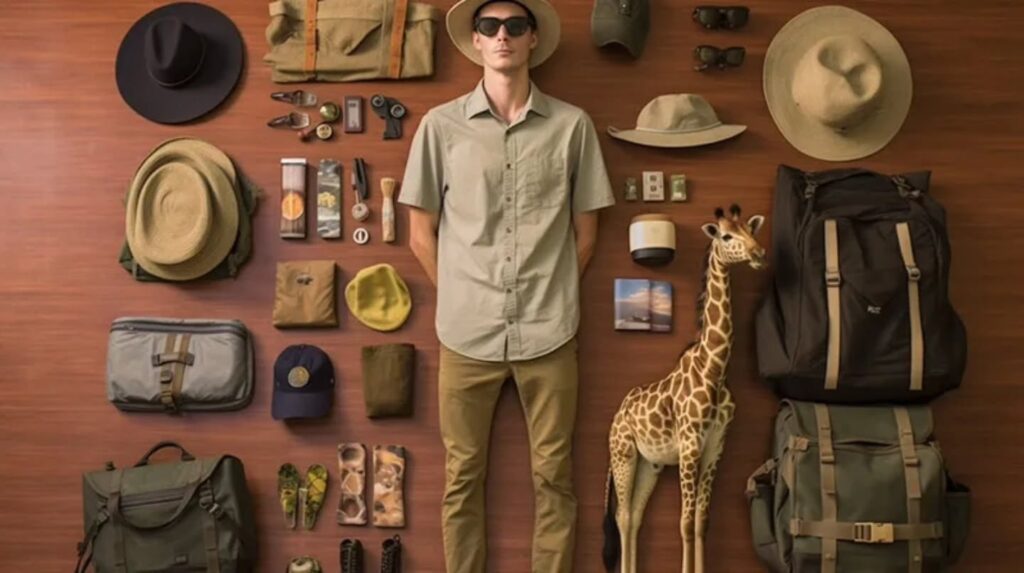
Layering is the single most important packing principle here. Crater rim mornings can genuinely drop to single-digit Celsius temperatures, especially during the pre-dawn departure. Most rim lodges schedule to reach the descent road at opening time, while the crater floor itself warms considerably by mid-morning, often into the high teens to mid-20s Celsius. A warm fleece or packable jacket, a hat, and gloves are worth having for the drive down, alongside lighter layers to shed once the sun is up. Neutral safari tones such as khaki, olive, and beige remain sensible, along with sunglasses and a wide-brimmed hat for the strong equatorial sun at altitude.
Gear for Game Drives
Binoculars matter considerably more on a Ngorongoro safari than during gorilla trekking, since sightings across the open crater floor can occur at real distance, and a decent pair transforms the experience of spotting a distant rhino or a pride resting in the grass. A camera with a telephoto or zoom lens, spare batteries, and extra memory cards is worth carrying, since the six-hour floor window passes quickly once sightings begin. High-SPF sunscreen, a reusable water bottle, and a light scarf or buff for dust on drier-season roads round out the essentials. Because only one crater descent is permitted per 24-hour permit, a packed breakfast and lunch arranged through your lodge in advance is standard practice, not an optional extra.
Beyond the Crater Floor: Olduvai Gorge, Empakaai & the Maasai
The Ngorongoro Conservation Area extends well beyond the crater itself, and travelers with an extra day or two can add genuinely distinctive experiences to a standard game drive.
Olduvai Gorge: The Cradle of Mankind
Olduvai Gorge, a steep ravine roughly midway between Ngorongoro and the Serengeti, is among the most significant paleoanthropological sites on Earth. Excavations led by the Leakey family from the 1930s onward uncovered some of the oldest known hominid fossils and stone tools, including the “Zinjanthropus” skull that Mary Leakey discovered in 1959, which found that reshaped scientific understanding of human origins. A small site museum sits close to the gorge and is commonly visited as a stopover on the drive between Ngorongoro and the Serengeti, adding historical depth to what is otherwise a wildlife-focused itinerary. Nearby Laetoli holds fossilized hominid footprints estimated at 3.6 million years old, among the oldest direct evidence of upright, bipedal walking, though the footprint site itself is not generally open to casual visitors.
Empakaai and Olmoti: The Conservation Area’s Other Craters
North of the main crater, Empakaai Crater is a smaller caldera roughly six kilometers wide, its floor covered by a deep soda lake that serves as an important flamingo breeding site, with views from the rim stretching toward the Great Rift Valley, Lake Natron, and the active volcano Ol Doinyo Lengai. Olmoti Crater, a shallower caldera near The Highlands lodge, features a waterfall and is typically explored on a guided walking safari, an activity not available on the main crater floor itself given its wildlife density.
Maasai Cultural Visits
Because the Ngorongoro Conservation Area’s founding policy explicitly protects Maasai pastoralist life alongside wildlife, visits to Maasai villages within the NCA are both accessible and meaningfully grounded in the area’s actual land-use history, rather than staged for tourism alone. These visits typically involve a guided walk through a boma, conversations about grazing patterns and daily life, and traditional dance, and are best arranged in advance through your lodge or safari operator.
How Ngorongoro Fits Into a Rwanda Gorilla Safari
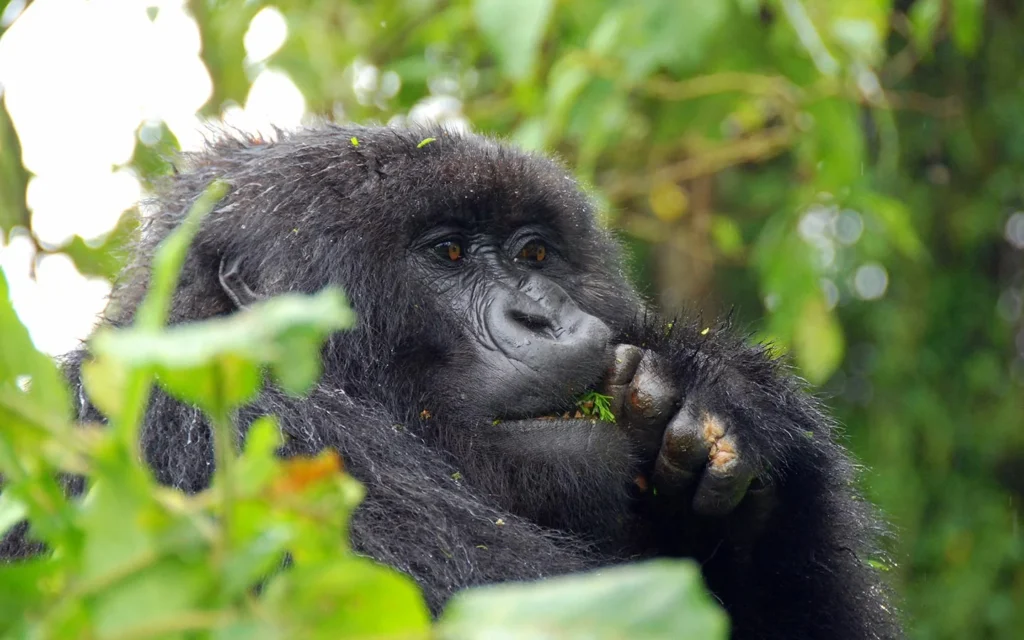
For travelers who have already trekked mountain gorillas in Rwanda’s Volcanoes National Park, Ngorongoro Crater is the natural second act: the open plains, the Big Five counterpart to the forest-based intimacy of a gorilla encounter. The two experiences are genuinely complementary rather than repetitive. A gorilla trek delivers one hour, on foot, at close range, with a single family of habituated gorillas; a Ngorongoro game drive delivers six hours, from a vehicle, across an entire enclosed ecosystem holding tens of thousands of animals. Combining both within a single trip, typically 10 to 16 days in total, gives travelers a genuinely complete picture of East and Central Africa’s wildlife, from the misty bamboo forests of the Virunga Mountains to the open volcanic bowl of northern Tanzania.
Sequencing matters. Most experienced travelers tackle gorilla trekking first, while still physically fresh, since it is the more demanding of the two activities, and then transition into the largely vehicle-based, lower-exertion game drives of the Tanzania Northern Circuit. The connection itself typically routes from Kigali through Nairobi to Kilimanjaro or Arusha, and should be budgeted as a half-day to full-day connection with a comfortable buffer rather than scheduled back-to-back with a morning gorilla trek. Rwanda Gorilla Expeditions designs and coordinates exactly this kind of multi-country itinerary directly, sequencing Rwanda’s gorilla permits alongside Tanzania’s Conservation Area logistics into a single, carefully planned journey. Explore the full range of Rwanda safari experiences and Rwanda safari styles that pair naturally with a Tanzania extension, or get in touch directly to start planning a combined itinerary.