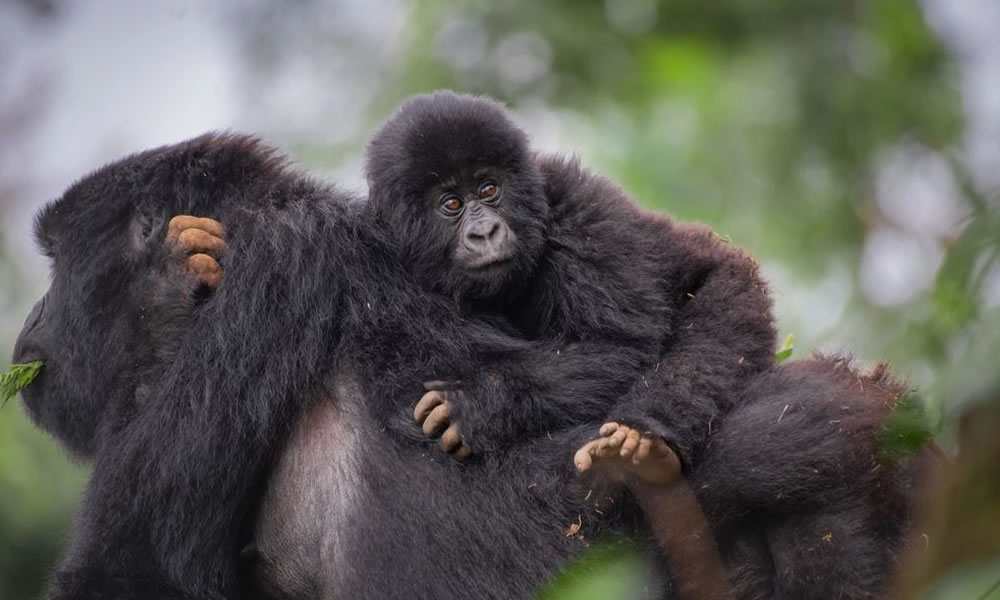
The Laikipia Plateau: Rhinos, Wild Dogs, and Total Privacy.
The Laikipia Plateau is Kenya’s premier private-conservancy safari region, a high rangeland of more than 9,000 square kilometers northwest of Mount Kenya, and it solves the two problems that increasingly define high-end Kenya travel: crowding and restriction. Rather than a single park, it is a mosaic of conservancies, Ol Pejeta, Lewa, and Loisaba among the best known, coordinated since 1992 through the Laikipia Wildlife Forum, and because the land is privately or communally owned rather than government-gazetted, guides can offer night drives, walking safaris, camel treks, and horseback riding that Kenya’s national parks and reserves generally prohibit.
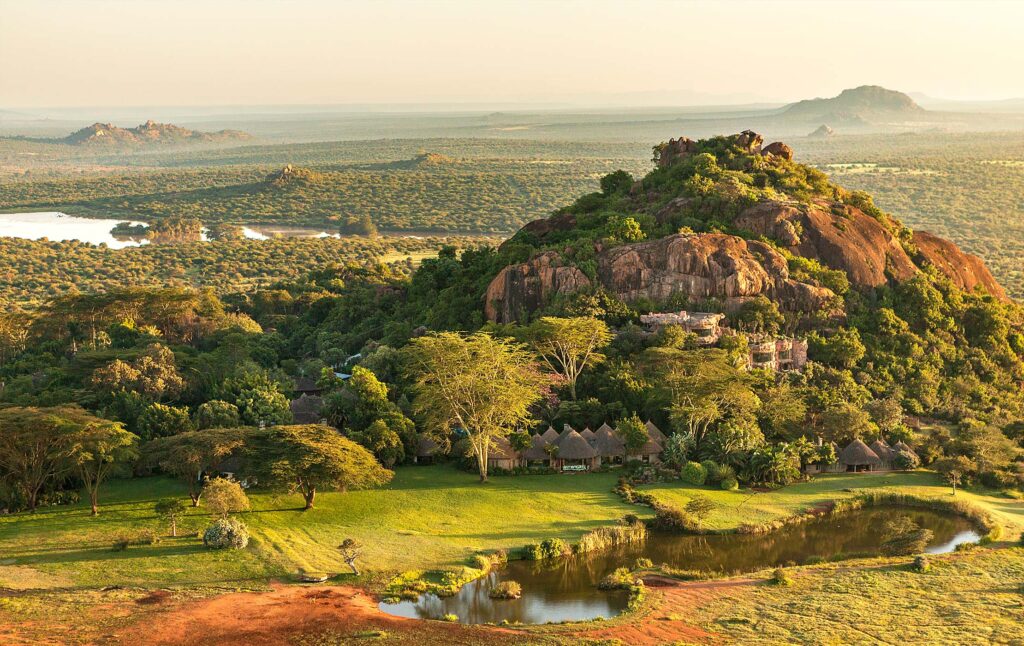
Laikipia’s species list justifies the extra flight time on its own: Ol Pejeta Conservancy shelters the world’s last two northern white rhinos alongside East Africa’s largest black rhino sanctuary, Lewa Wildlife Conservancy protects nearly 230 black and white rhinos and the largest single population of endangered Grevy’s zebra, and the Samburu-Laikipia Wild Dog Project has tracked African wild dog numbers recovering from two packs to nine since a 2017 distemper outbreak. Budgets range from roughly USD 500 per person per night at entry-level luxury camps to more than USD 2,500 at the most exclusive private-use houses, generally including conservancy fees. Our full Laikipia Plateau guide covers every major conservancy, activity pricing, and how to combine a Laikipia stay with a Rwanda gorilla trek.
Tsavo East and West: Kenya’s Wilderness Heartland.
Tsavo National Park is Kenya’s largest protected area, combining Tsavo East, at 13,747 square kilometers, and Tsavo West, at 9,065 square kilometers, into a single ecosystem of roughly 22,000 square kilometers, an area larger than the entire country of Wales. Gazetted in April 1948 as a single unified reserve before colonial administrators split it into two sections later that year for practical management, Tsavo lies roughly 240 kilometers southeast of Nairobi and sits directly on the Mombasa road and railway corridor, which makes it a natural stop for travelers routing between Nairobi and the Kenyan coast rather than a stand-alone flight destination. Non-resident entry costs USD 80 per adult per 24 hours under the Kenya Wildlife Service’s Wilderness tariff, among the lowest gate fees of any major Kenya park, which keeps a Tsavo safari meaningfully more affordable than a comparable Masai Mara or Amboseli itinerary.
Tsavo East vs. Tsavo West
Tsavo East is defined by flat, open, red-dust plains, the Galana River, and the Yatta Plateau, the longest lava flow on Earth, and its elephants are famous for the ochre-red dust bathing that gives them their distinctive color. Tsavo West is volcanic, hillier, and considerably greener, centered on Mzima Springs, a crystal-clear natural spring fed by underground volcanic filtration where hippos and crocodiles can be observed through an underwater viewing chamber, and the dramatic Shetani Lava Flow, a field of jagged black rock from a comparatively recent volcanic eruption. Most first-time Tsavo visitors choose one park rather than both given the driving distances involved, and Tsavo West’s greater variety of landscape and its rhino sanctuary at Ngulia tend to edge out Tsavo East for travelers with only a single park to spare, while Tsavo East’s vast, uncrowded plains reward photographers who prioritize space and light over species density.
Samburu and the Northern Frontier: The Special Five
Samburu National Reserve sits in Kenya’s arid north, a 165-square-kilometer reserve that anchors a wider ecosystem approaching 12,000 square kilometers alongside neighboring Buffalo Springs and Shaba National Reserves, coordinated in large part through the Northern Rangelands Trust. It is best known for the Samburu Special Five: the gerenuk, a long-necked antelope that stands on its hind legs to browse; the Grevy’s zebra, the largest wild equid, identified by its narrow stripes and enormous rounded ears; the reticulated giraffe, with liver-colored patches defined by crisp white lines; the beisa oryx, marked by a black stripe along its flank; and the blue-necked Somali ostrich, all species found here and almost nowhere else in Kenya.
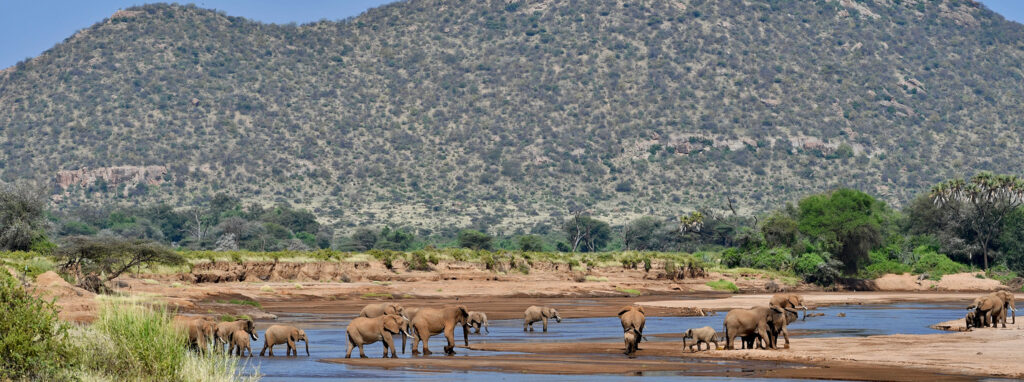
The Ewaso Ng’iro River cuts through Samburu’s arid, scrub-covered landscape and concentrates wildlife along its banks, including some of Kenya’s most consistent leopard sightings in the riverine forest that fringes it, alongside well-studied, habituated elephant herds that have made Samburu a center for long-running elephant research. Non-resident entry costs approximately USD 85 per adult per 24 hours, and the reserve is reached either by a long drive from Nairobi, crossing the equator en route, or a scheduled light-aircraft flight, making it a natural addition for travelers who have already covered the classic southern circuit and want a genuinely different landscape and species list on a second Kenya trip.
Lake Nakuru and the Rift Valley Lakes
Lake Nakuru National Park is a compact, 188-square-kilometer park in the Great Rift Valley, roughly three and a half hours by road from Nairobi, and it is the single most reliable rhino destination among Kenya’s KWS-managed parks. Declared Kenya’s first national rhino sanctuary in 1987, the park is fully fenced, a deliberate anti-poaching measure rather than a restriction on wildlife movement, and it now shelters a substantial concentration of both black and white rhino alongside a healthy population of the endangered Rothschild’s giraffe, relocated here for safety beginning in 1977. Lions, leopards, and cheetahs are all present, and the park’s dense woodland is also known for its resident pythons.
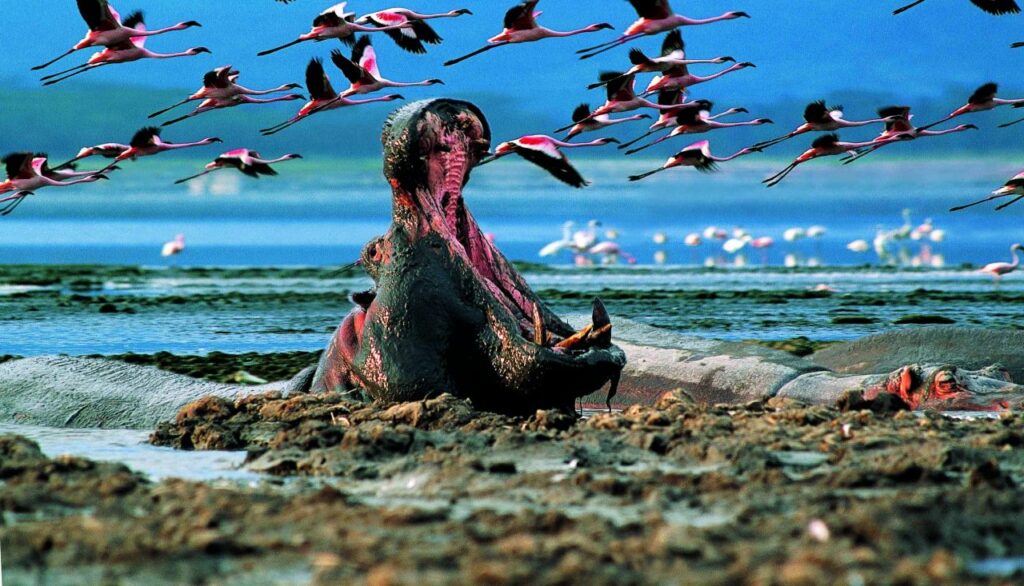
Lake Nakuru itself, a shallow soda lake within the park, was once famous for hosting up to two million flamingos in a single vivid pink fringe along its shores, though shifting water levels since around 2012 have made the flamingo spectacle considerably less predictable than it once was; travelers visiting specifically for the birdlife should treat it as a possible bonus rather than a guarantee. Non-resident entry costs USD 90 per adult per 24 hours under the KWS Premium tariff, and because the park sits directly on the main road between Nairobi and western Kenya, it works well as a one- or two-night add-on for travelers who want a reliable rhino sighting without committing to a full Laikipia or Mara itinerary.
Nairobi National Park: Safari at the Capital’s Doorstep
Nairobi National Park, gazetted in 1946, is Kenya’s first national park and the only national park in the world located within a capital city, just seven kilometers from downtown Nairobi and a short drive from Jomo Kenyatta International Airport. Despite covering only 117 square kilometers, one of the smallest parks in Kenya, it supports a remarkable density of wildlife, including lion, leopard, cheetah, buffalo, giraffe, zebra, and more than 400 recorded bird species, all visible with the city’s skyline occasionally in frame. The park has earned the nickname Kifaru Ark, Swahili for “rhino ark,” for sheltering around 50 black rhino, the densest concentration of the species anywhere in Africa, though notably the park has no resident elephants, a genuine gap for travelers prioritizing the full Big Five in a single visit.
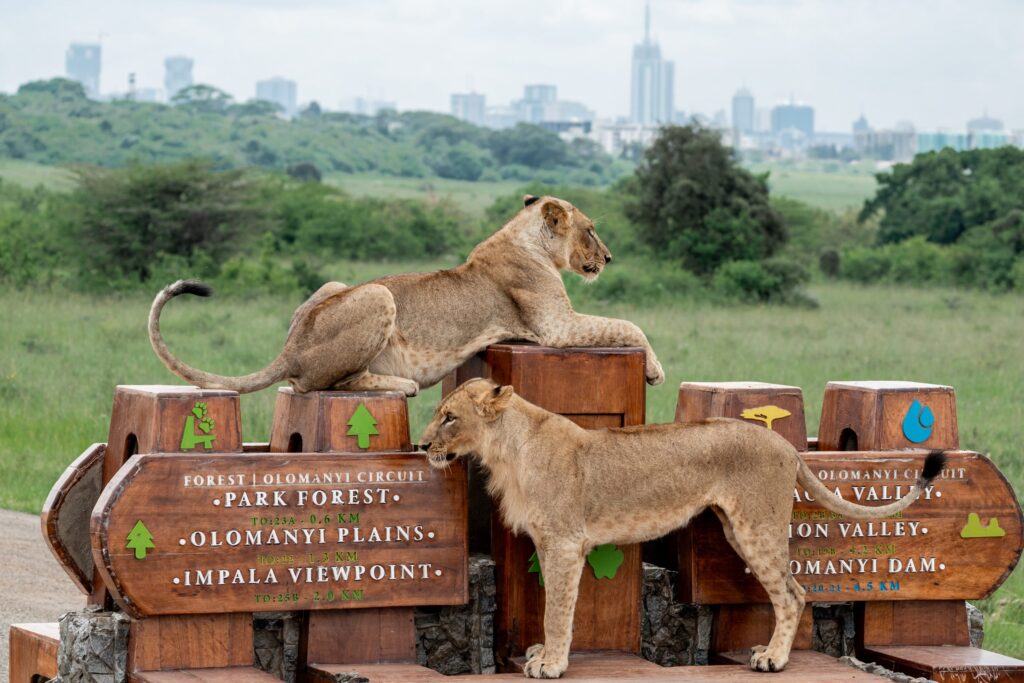
Non-resident entry costs USD 80 per adult per 24 hours under the KWS Wilderness tariff, and the park works best as a half-day or full-day excursion rather than a multi-night stay, making it a natural way to use a layover between international flights or a spare afternoon before or after the main safari begins. The park sits adjacent to the David Sheldrick Wildlife Trust’s elephant orphan nursery, a popular add-on for travelers with a free morning in Nairobi, and it remains genuinely useful for travelers whose itinerary does not allow time for a fly-in safari but who still want a real, if compact, taste of Kenya’s wildlife before departure.
The Kenyan Coast: Diani, Watamu, and Lamu
For a substantial share of Kenya travelers, the safari is only half the trip, and the Indian Ocean coastline supplies the beach half. Diani Beach, south of Mombasa, is generally regarded as the strongest all-round choice on the coast, a long stretch of white sand and turquoise water backed by coral cliffs and a wide range of luxury villas and resorts, reached by daily flights from Nairobi to the Ukunda airstrip or by road through Mombasa via the Likoni ferry. Watamu, further north near Malindi, pairs its beaches with the coral reefs of Watamu Marine National Park and the ruins of the ancient Swahili town of Gede, while Lamu, reached by light aircraft, is a genuinely different register of coastal Kenya: a UNESCO World Heritage-listed old town of narrow streets and carved wooden doors, with dhow sailing, donkey transport in place of cars, and a strong Omani-Swahili cultural heritage.
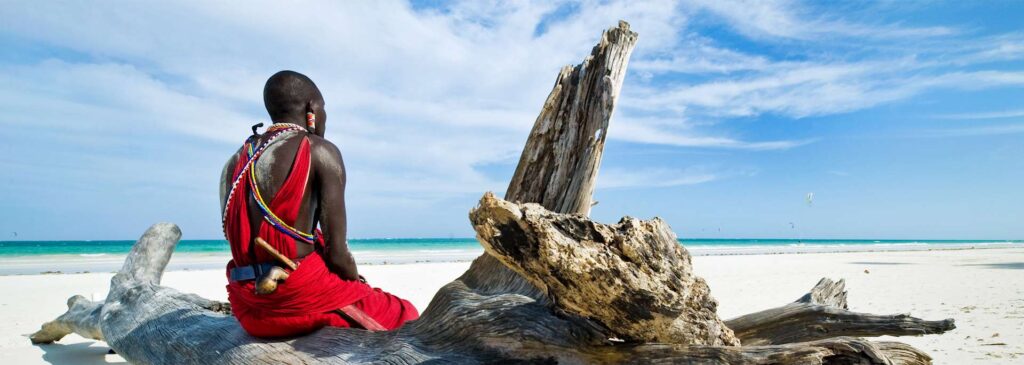
The best time to visit Kenya’s coast runs from December to March, when skies are clear and the water is at its calmest for snorkeling and diving, with a secondary window from July to October that overlaps conveniently with the Masai Mara’s peak migration season, allowing a single itinerary to close with several days on the sand after the safari portion ends. Reaching the coast from a safari circuit typically means a short domestic flight from Nairobi or directly from a safari airstrip, and pairing three or four nights on the coast with a Kenya safari, or with a Rwanda gorilla trek and Kenya combination, is one of the more natural ways to close out a longer East Africa itinerary.
What a Kenya Safari Costs
Kenya safari costs break into three layers, government park or reserve fees, accommodation, and internal transport, and the Kenya Wildlife Service’s fee structure changed substantially with a new four-tier tariff that took effect on 1 October 2025. Premium parks, Amboseli and Lake Nakuru, now charge non-resident adults USD 90 per 24 hours; wilderness parks, Tsavo East, Tsavo West, and Nairobi National Park, charge USD 80; and the county-run Masai Mara charges USD 100 per adult from January through June and USD 200 from July through December, with Samburu National Reserve charging separately at roughly USD 85. These government fees are fixed regardless of which operator is booked, and children generally pay around half the adult rate.
Accommodation is where the widest cost variation happens. A comfortable tented camp or lodge inside a national park or the main Masai Mara reserve typically runs USD 400 to 800 per person per night on a full-board basis, while the benchmark ultra-luxury conservancy properties, Angama Mara, Mahali Mzuri, and Mara Plains Camp in the Mara’s conservancies, or Segera and Loisaba in Laikipia, run USD 1,200 to 2,500 per person per night inclusive of meals, drinks, and guided activities. At the very top of the market, the Ritz-Carlton Masai Mara, which opened in 2025 with private plunge pools and an in-house photography studio, prices upward of USD 5,000 per night. Internal light-aircraft flights between park airstrips typically run USD 150 to 320 per person per sector, and a multi-park itinerary with two or three internal flights should budget accordingly.
Taken together, a realistic mid-range Kenya safari of seven to ten days runs from roughly USD 4,000 to 8,000 per person, while a genuinely high-end, fully fly-in itinerary across two or three private conservancies runs from USD 8,000 to well over USD 15,000 per person, depending on season and property tier. For travelers combining Kenya with a Rwanda gorilla trek, the single largest fixed cost on the Rwanda side is the USD 1,500 gorilla trekking permit, issued by the Rwanda Development Board, with a combined ten- to fourteen-day, two-country itinerary typically running from roughly USD 9,000 to over USD 20,000 per person depending on lodge tier and the number of Kenya regions covered. We provide fully itemized quotations covering the Rwanda leg of any combined itinerary so there are no hidden costs once dates are confirmed; explore the full range of Rwanda safari experiences and Rwanda safari styles that pair naturally with a Kenya extension.