What Is Included and Excluded
| Included |
Excluded |
| 9 nights of luxury accommodation as listed |
International flights to Nairobi and from Kigali |
| All meals as specified in the itinerary |
Nairobi to Kigali flight |
| Gorilla trekking permit, USD 1,500 per person |
Visas, Kenya eTA, and Rwanda e-visa |
| Masai Mara conservancy and park fees |
Travel and medical insurance |
| Light aircraft flights from Wilson to Masai Mara and back |
Tips for guides, lodge staff, and porters |
| Private 4×4 safari vehicle with a professional guide |
Hot-air balloon flight, optional |
| Private road transfers in Rwanda |
Golden monkey permit, USD 100 optional |
| Airport transfers in Nairobi and Kigali |
Premium drinks and personal items |
| Bottled water on game drives and treks |
Laundry at hotels, which is not included |
| Services of a driver-guide in Rwanda |
Anything not listed as included |
Gorilla Families and Trek Difficulty
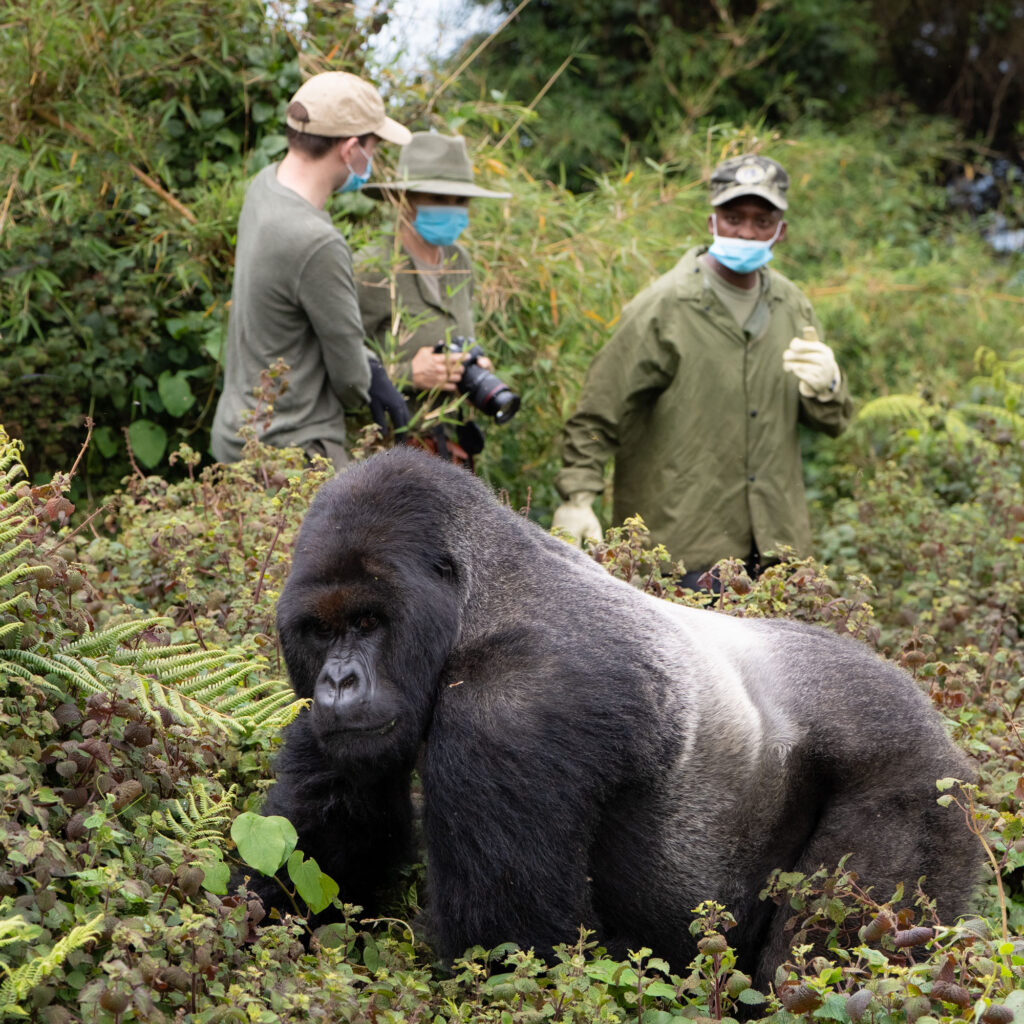
Gorilla trekking in Rwanda takes place only in Volcanoes National Park, and every visitor is allocated a habituated family by the Rwanda Development Board on the morning of the trek. The families are not all equal in terms of effort. Some live low on the slopes, close to the park boundary, and can be reached in under an hour. Others range high on the volcanoes, and the walk to find them can take most of the day. Because the park’s guides assign visitors by fitness and preference, an honest conversation with us before you travel makes a big difference.
The notable gorilla families include the Susa group, one of the largest and most demanding, whose home range lies on the slopes of Mount Karisimbi and was the focus of Dian Fossey’s research. The Sabyinyo group, named after the volcano whose jagged peaks resemble an old man’s teeth, is renowned for its enormous silverback. The Amahoro group is known for its peaceful nature and the steepness of its terrain. Other groups include Umubano, Hirwa, Agashya, and Kwitonda.
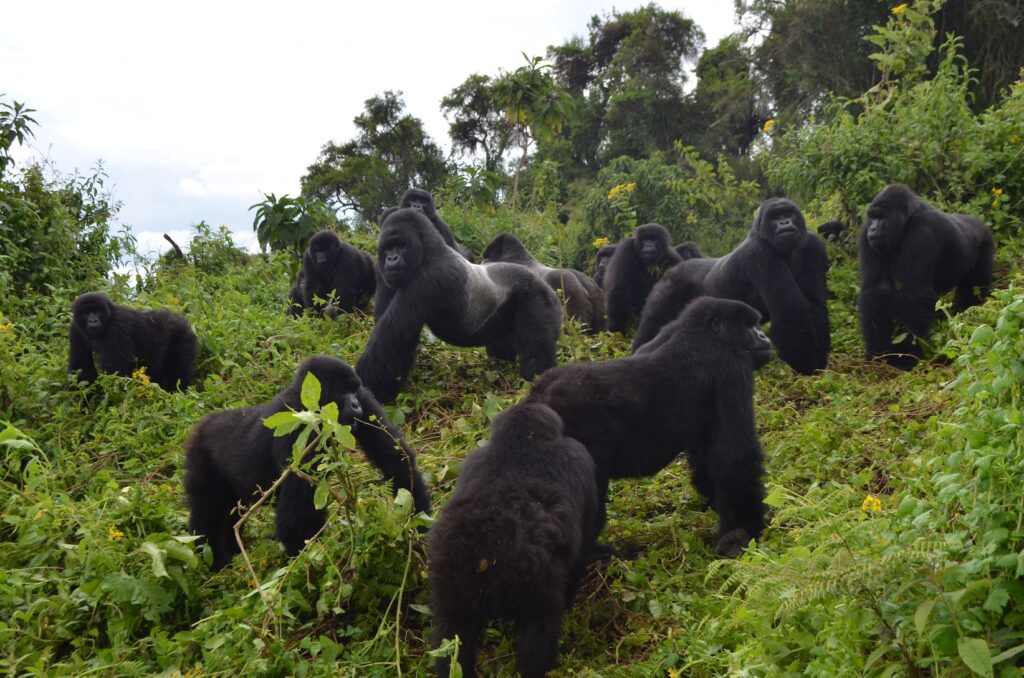
Pablo Gorilla Family
If you have any health concerns, mobility limitations, or a specific wish, tell us and we will request the best fit, though allocation is ultimately the park’s decision and cannot be guaranteed. Porters are available at the park headquarters and are strongly recommended: they carry your bag, give you an arm on steep ground, and your fee supports local households. The minimum age for trekking is 15.
Elevation Profile
Altitude shapes this safari more than most people expect, and it is worth understanding before you travel. The Mara sits at about 1,500 to 1,700 meters, and Nairobi at about 1,800 meters. Kigali is lower, at about 1,570 meters. The real climb comes in Volcanoes National Park, where the park headquarters at Kinigi are at about 2,300 meters, and gorilla treks typically take place between 2,500 and 3,500 meters. The summit of Karisimbi, the highest of the Virungas, reaches 4,507 meters.
| Location |
Approximate altitude |
What it means |
| Masai Mara |
1,500 to 1,700 m (4,900 to 5,600 ft) |
No effect for most visitors |
| Nairobi |
1,795 m (5,890 ft) |
Mild, comfortable |
| Kigali |
1,567 m (5,141 ft) |
Mild, comfortable |
| Kinigi Park headquarters |
About 2,300 m (7,500 ft) |
Starting point for treks |
| Gorilla trekking range |
2,500 to 3,500 m (8,200 to 11,500 ft) |
Breathing becomes harder on steep sections; move slowly. |
| Karisimbi summit |
4,507 m (14,787 ft) |
Multi-day volcano hike, not included |
Spending a night in Kigali, then three nights at the foot of the volcanoes, allows your body to adapt gradually. Drink plenty of water, move at a steady pace on the mountain, and tell your guide if you feel dizzy or unusually breathless. Altitude sickness at these elevations is uncommon, but you can easily manage it if you catch it early.
Accommodations
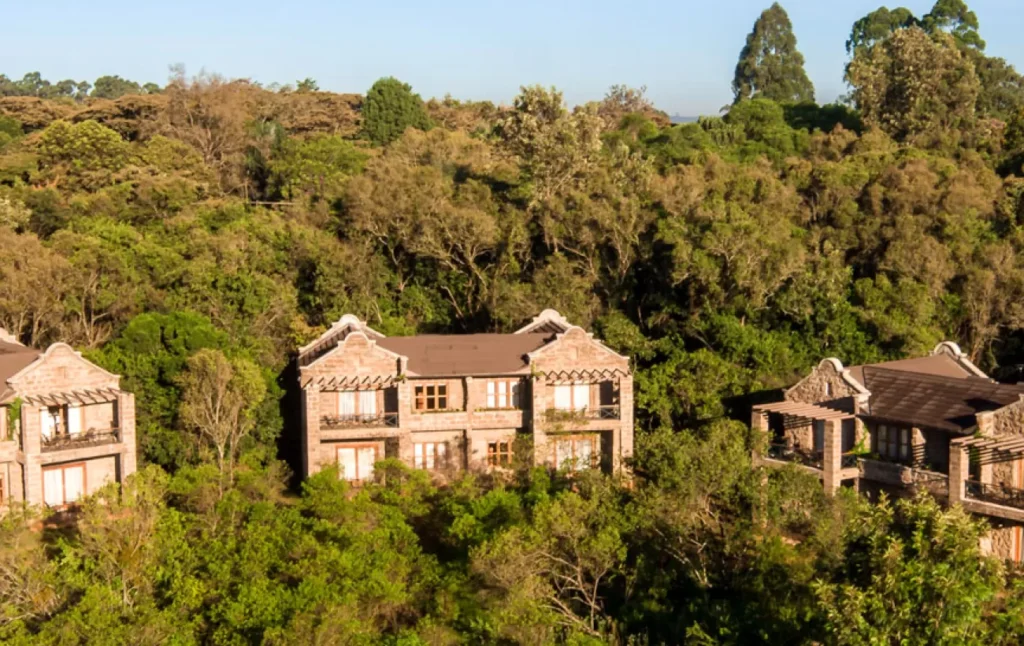
Each stay on this Kenya and Rwanda safari has been selected for its position, its service, and its ability to immerse you quickly in the landscape. Specific properties are confirmed at the time of booking and depend on the dates of travel. The categories below show what you should expect.
| Stop. |
Nights |
Type of stay |
| Nairobi |
1 |
The Residences At Karen |
| Masai Mara |
3 |
Naboisho Camp |
| Kigali |
2 (nights 5 and 9) |
Hôtel des Mille Collines |
| Volcanoes National Park |
3 |
Wilderness Sabyinyo |
Luxury camps in the Mara typically cost USD 1,200 to 2,500 or more per person per night at the top end, and the price reflects what is included: all meals, drinks, game drives, conservancy fees, and often laundry. Our approach is to match the camp to your travel dates and priorities, rather than to a standard formula.
Wildlife You Can Expect
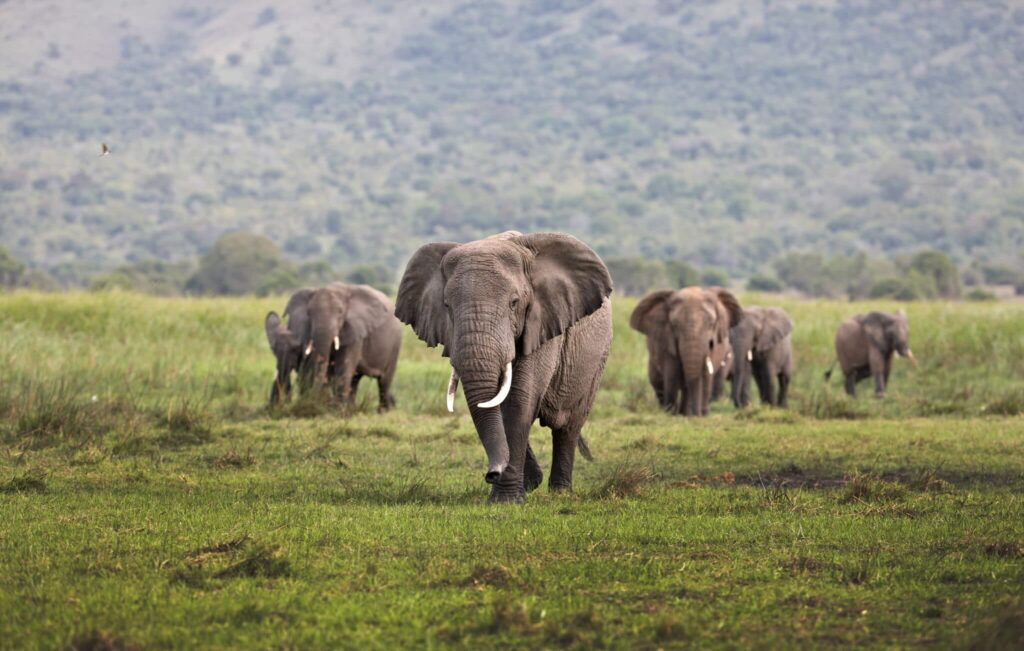
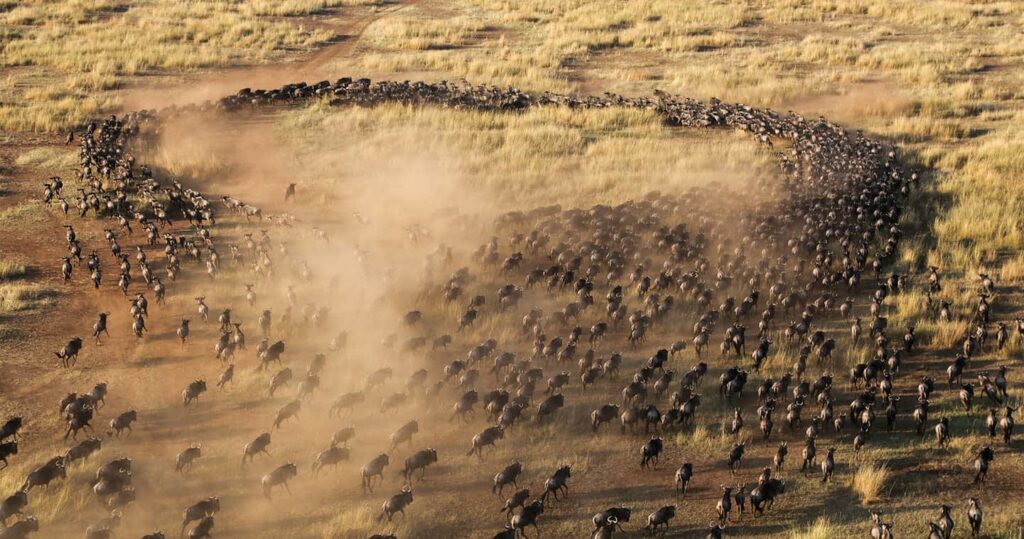
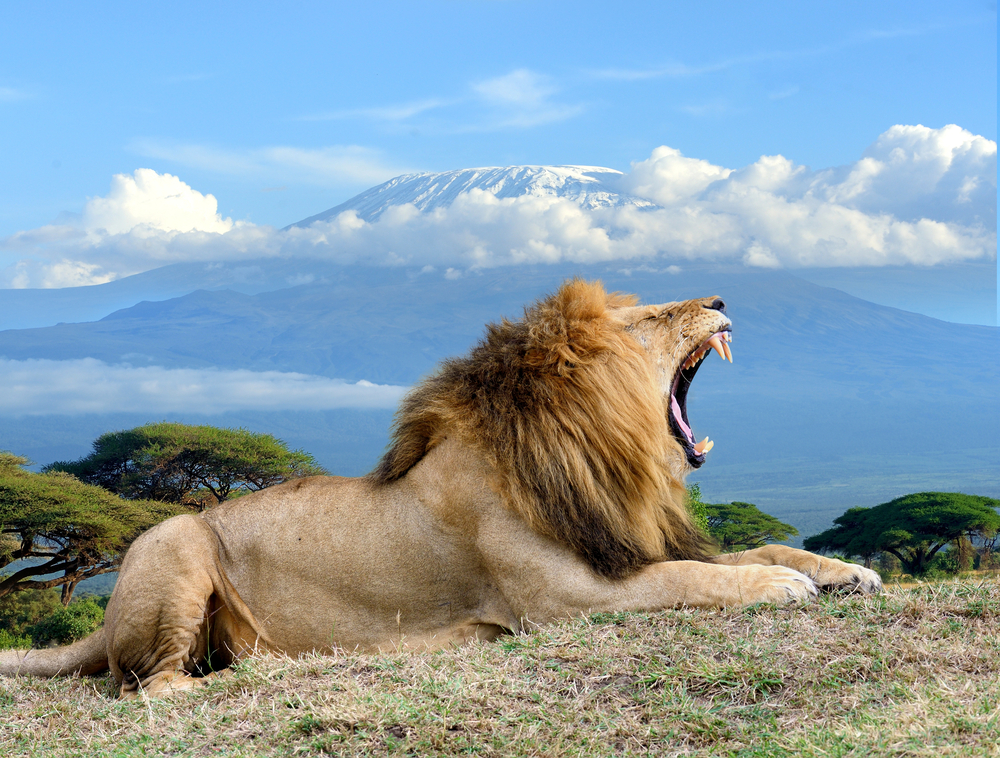
The Masai Mara is the best place in East Africa to see predators, and almost every visit produces lions, often in prides of a dozen or more. Leopards are harder, but they live in the riverine woodland and rocky outcrops. Cheetahs hunt on the open plains and are most active in the early morning. Elephants and buffalo are widespread, and rhino are present in small numbers. Giraffes, zebras, topi, hartebeest, Thomson’s gazelles, and hippos are everywhere. The wildebeest migration is in the Mara from roughly July to October, with river crossings that can be dramatic, though timing is never certain.
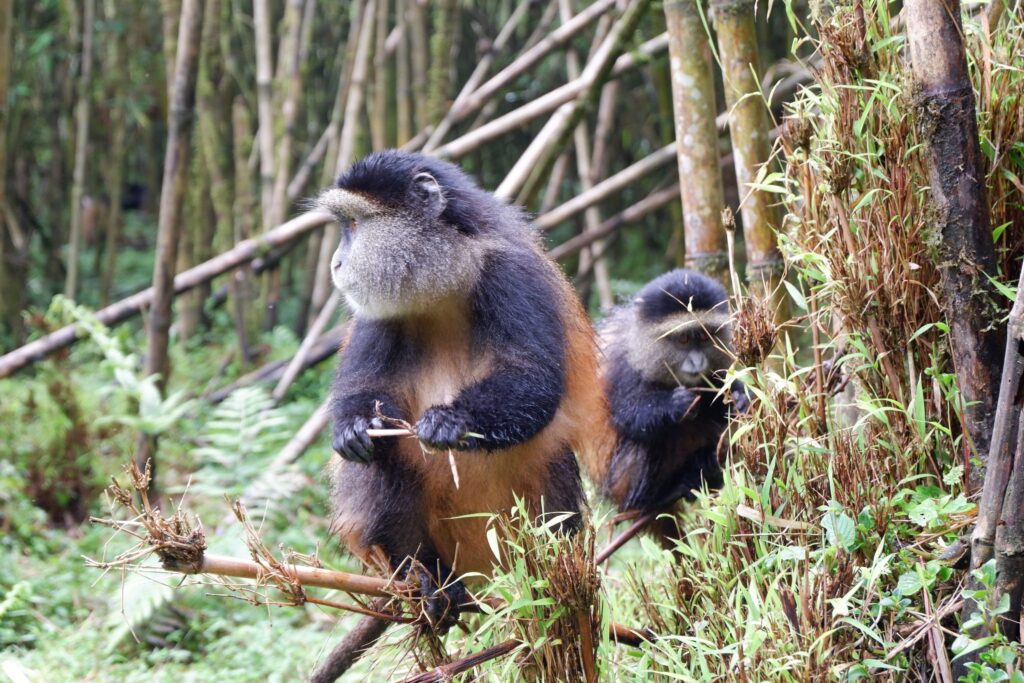
Volcanoes National Park offers a quite different list. The headline species is the mountain gorilla, of which only about 1,000 survive in the wild, all in the Virunga massif and Bwindi in Uganda. The golden monkey, a rare and beautiful primate, is found only in the Virunga bamboo forest. The park also holds forest buffalo, bushbuck, spotted hyena, and more than 200 bird species, including the colorful Rwenzori turaco.
| Species |
Masai Mara |
Volcanoes National Park |
| Lion |
Excellent, year-round |
Not present |
| Leopard |
Good, with a good guide |
Not present |
| Cheetah |
Good on open plains. |
Not present |
| Elephant |
Excellent |
Rare |
| Wildebeest migration |
July to October |
Not present |
| Mountain gorilla |
Not present |
Excellent, one-hour trek |
| Golden monkey |
Not present |
Excellent |
| Birds |
450+ species |
200+ species |
Fitness and Physical Requirements
The Mara part of this safari makes no demands, as you sit in a vehicle or walk gently with a guide. The gorilla trek is where fitness matters, and it is the only section that requires preparation. The walk can last anywhere from 30 minutes to four hours or longer in each direction, at altitude, over steep, muddy, and uneven ground. You don’t need to be an athlete; many people in their sixties and seventies trek successfully, but you should be comfortable walking for several hours.
Start walking regularly at least six weeks before departure, ideally on hills and in the boots you will wear in Rwanda. If you have a heart, lung, or joint condition, consult your doctor before booking. Hire a porter and use a walking stick. We can also request a family with an easier trek. For people who prefer not to walk at all, the porters’ sedan chair service is sometimes available.
Best Time to Take a Kenya and Rwanda Safari
The good news is that you can trek Rwanda’s gorillas all year, and the Mara is productive every month. The best time for the combined route is the dry season from June to October, which overlaps with the wildebeest migration, and the shorter dry window from December to February. The wettest months are March to May, when the Mara is lush and quiet, and lodges offer their best rates. Temperatures are consistently pleasant. Mara days are warm, with highs around 25 to 28°C (77 to 82°F) and cool nights of 12 to 14°C (54 to 57°F). In Volcanoes National Park, temperatures are cooler, with daytime highs of 20 to 24°C (68 to 75°F) and nighttime lows around 8 to 10°C (46 to 50°F).

| Month |
Masai Mara |
Rwanda |
Temp. (Mara / Volcanoes) |
Roads and flights |
Crowds and value |
| January |
Dry, hot, good predator viewing |
Dry, clear trails |
28°C (82°F) / 22°C (72°F) |
Roads good, flights reliable |
Moderate, good value |
| February |
Dry, hot, game concentrated |
Dry, best trekking |
29°C (84°F) / 22°C (72°F) |
Roads are decent. |
Moderate, good value |
| March |
Rains begin, green |
Wet, muddy trails |
27°C (81°F) / 21°C (70°F) |
Mara roads can be slow. |
Quiet, best value |
| April |
Long rains, lush, few visitors |
Heaviest rain, slippery |
25°C (77°F) / 20°C (68°F) |
Fly in, road risky. |
Quiet, lowest rates |
| May |
Rains ending, green |
Rain, easing |
25°C (77°F) / 20°C (68°F) |
Fly in, roads improving |
Quiet, good value |
| June |
Dry, cool, clear |
Dry, excellent |
25°C (77°F) / 21°C (70°F) |
Roads are decent. |
Building rates rising |
| July |
Migration arrives, peak season. |
Dry, peak trekking |
25°C (77°F) / 21°C (70°F) |
Roads are good; book early. |
Busy, premium rates |
| August |
Migration, river crossings |
Dry, peak trekking |
25°C (77°F) / 22°C (72°F) |
Roads are good; book early. |
Busiest, highest rates |
| September |
Migration, river crossings |
Dry, excellent |
27°C (81°F) / 23°C (73°F) |
Roads are decent. |
Busy, premium rates |
| October |
Migration ending, quieter |
Short rains begin late. |
28°C (82°F) / 23°C (73°F) |
Roads are decent. |
Moderate, rates easing |
| November |
Short rains, green |
Rain, muddy |
27°C (81°F) / 21°C (70°F) |
Fly in. |
Quiet, good value |
| December |
Dry, festive |
Dry, clear |
27°C (81°F) / 22°C (72°F) |
Roads are good; book early. |
Busy at Christmas, premium rates |
Our recommendation for first-time visitors is July to September for the migration and January to February if you prefer a quieter trip with warm, dry weather. In every month, we fly into the Mara rather than drive, because the road from Nairobi takes five to six hours and can be rough, especially after rain.
Permits, Fees, and Costs
A gorilla permit costs USD 1,500 per person in Rwanda, set by the Rwanda Development Board, and there is no seasonal discount. It covers park entry and your hour with the gorillas. Permits are limited and sell out well in advance in the peak months, so we recommend confirming your dates at least six months ahead for July to September. We secure the permit on your behalf and hold it against your name. A golden monkey permit is USD 100 per person, and the Dian Fossey hike has its fee.
Kenya’s fee structure is more complex. In the national reserve, the daily park fee is USD 100 per person from January to June and USD 200 per person from July to December for a 12-hour ticket. Conservancies charge a bundled fee of USD 80 to 150 per person per night, which is usually included in the camp rate. A hot-air balloon flight costs USD 450 to 650, and a light aircraft seat between Wilson Airport and the Mara is USD 150 to 320 one way. All of these are built into your itinerary price.
For travellers who want a private gorilla family, the exclusive-use permit costs about USD 15,000 for a group of up to eight people.
What to Pack
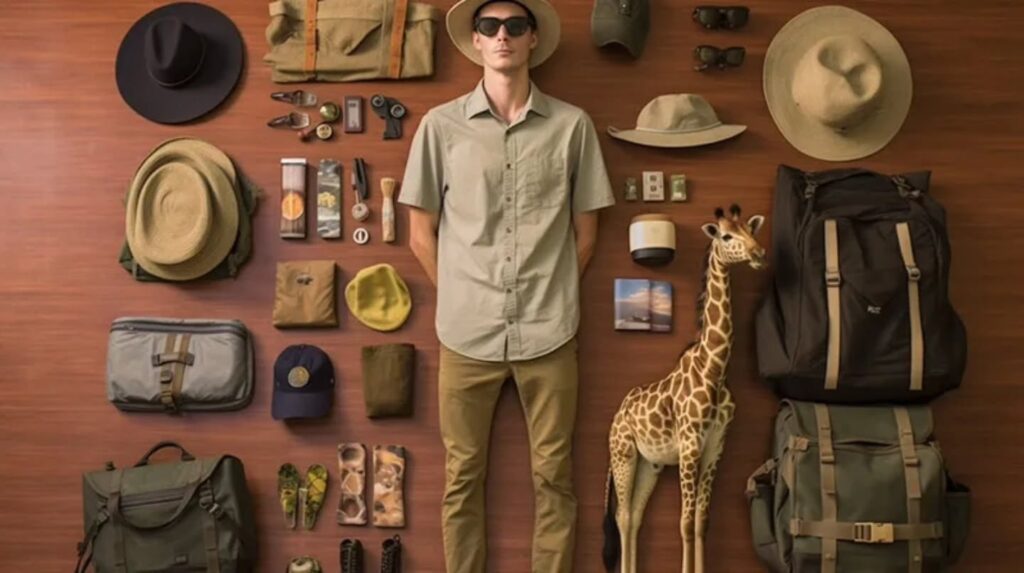
Pack light in soft bags. The light aircraft to the Mara allows 15 kg per person, including hand luggage, and does not accept hard-shell suitcases. Lodges in both countries provide laundry, so you do not need a lot of clothing. Layers are everything: the Mara is warm in the day and cool at night, and Volcanoes National Park is cool and damp.
| Category |
Items |
| Clothing for the Mara |
Neutral colors (khaki, olive, tan), light long sleeves, a warm fleece for early drives, a sun hat, and a scarf for the dust |
| Clothing for the gorillas |
Long trousers, long-sleeved shirt, waterproof jacket, thin gloves for gripping vegetation, gaiters, a warm layer |
| Footwear |
Waterproof hiking boots with ankle support, broken in, plus comfortable shoes for the lodges |
| Equipment |
Binoculars (8×42), a camera with a zoom lens, spare batteries, a head torch, a dry bag |
| Health |
Sun cream, insect repellent, personal medication, hand sanitizer, any malaria tablets |
| Documents |
Passport valid for at least six months, e-visa printouts, yellow fever certificate if required, insurance details |
Avoid bright colors and camouflage clothing, which some countries restrict. Plastic bags are banned in both Kenya and Rwanda, so leave them at home. Drones are tightly regulated and are not permitted without a license, so do not bring one. A camera with a fast lens is more useful than a long one at the gorilla encounter, where the light under the canopy is low, and flash photography is not permitted.
Getting There
Fly into Jomo Kenyatta International Airport (NBO) in Nairobi, and depart from Kigali International Airport (KGL), which makes the trip an open-jaw journey and removes the need to retrace your route. Many major carriers serve Nairobi from Europe, the Middle East, North America, and Asia, and several airlines connect to Kigali. The flight between Nairobi and Kigali takes 1.5 to 2 hours, and the light aircraft from Wilson Airport to the Mara takes about 45 minutes. We are happy to book your international flights or work with your preferred travel agent and align the itinerary to your schedule.
If you are travelling from the United States or Europe, many travellers fly overnight to Nairobi, arriving in the morning so you can rest at the hotel during the day. We can adjust the first night accordingly.
Visas and Entry Requirements
Both countries require advance travel authorization for most nationalities, and the process is simple and online. Rwanda’s e-visa costs about USD 50 for a single-entry, 30-day visa and is usually approved within a few days. Kenya requires an Electronic Travel Authorisation (eTA), which costs about USD 30 to 35, and should be applied for at least a week before travel. The East Africa Tourist Visa (USD 100) covers Kenya, Rwanda, and Uganda for 90 days with multiple entries and is worth considering if you are visiting more than one of the three.
Your passport should be valid for at least six months from the date of entry, with at least two blank pages. We guide you through the applications and send reminders, so you don’t miss anything.
Health and Vaccinations
Consult your doctor or a travel clinic six to eight weeks before departure. Routine vaccinations should be up to date. Hepatitis A and typhoid are commonly recommended. Malaria is present in the Mara, and a prophylaxis course is usually advised, while the risk in the high altitude of Volcanoes National Park is low, though your doctor will give personal advice.
A yellow fever certificate is required if you arrive in Kenya or Rwanda from a country where yellow fever is endemic. Because this safari crosses from Kenya to Rwanda, carry the certificate if you have one. Take out comprehensive travel and medical insurance that includes emergency evacuation. Flying doctors operate in the Mara.
The gorillas are susceptible to human illnesses, so rules protect them. If you have a cold, cough, or any infectious illness on the morning of your trek, tell your guide, because you may be refused entry to protect the animals. Face masks may be required near the gorillas. Keep the distance your guide specifies, and never approach.
Currency, Tipping, and Money
The Kenyan shilling and the Rwandan franc are the local currencies, but US dollars are widely accepted at lodges and camps, and prices are quoted in dollars. Bring clean, undamaged notes printed in 2013 or later, as older notes are often refused. Credit cards are accepted at most lodges, hotels, and larger restaurants, with a surcharge in some places. ATMs are available in Nairobi and Kigali, but not in the Mara or at the volcanoes, so carry cash for small purchases.
Tipping is customary and appreciated. As a guide, tip your safari guide USD 20 to 50 per person per day, and lodge staff USD 10 to 15 per person per day, shared among the team at each lodge. Porters at the gorilla trek are usually tipped in cash at the end of the day. We brief you on current practice at the start of the safari and provide envelopes if you prefer.