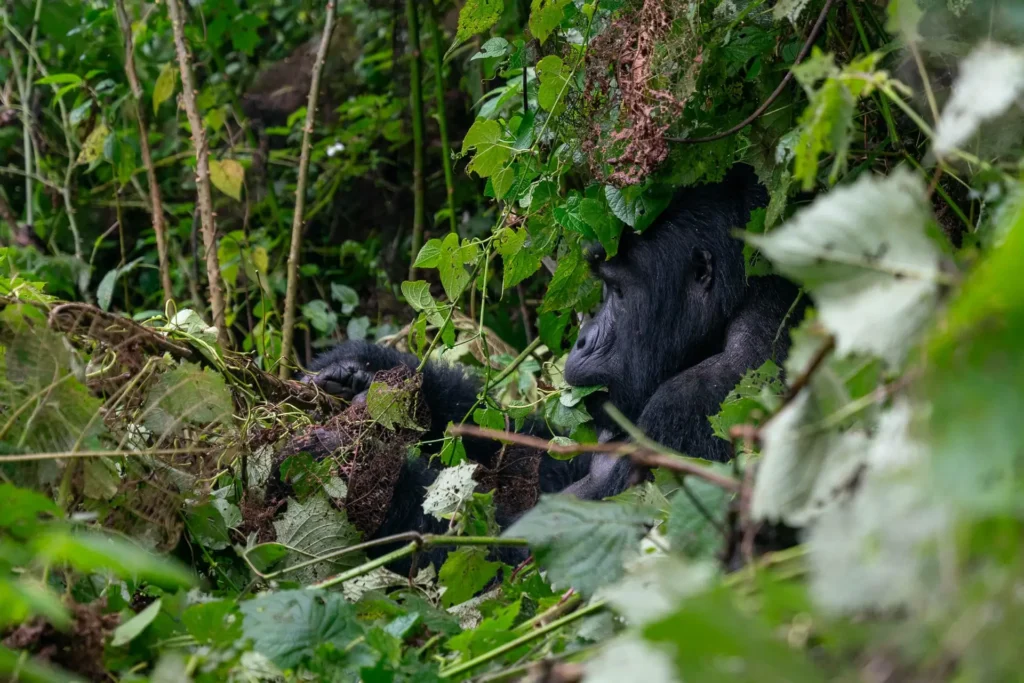
Rwanda Safari Experiences: The Complete Travel Guide for Travellers.

Discover every Rwanda safari experience: gorilla trekking, Big Five game drives, chimp trekking & more. Expert guide with permits, costs & lodge recommendations.

Rwanda delivers one of the most diverse and tightly curated safari portfolios on the African continent, anchored by mountain gorilla trekking in Volcanoes National Park but extending across four distinct national parks that span misty rainforest, open savannah, ancient montane jungle, and shimmering Rift Valley lakes. Whether you are spending three days or three weeks in the country, Rwanda offers a caliber of wildlife encounters, landscapes, and luxury infrastructure that justifies both the investment and the journey from virtually any corner of the world.

What Makes Rwanda Different From Every Other Safari Destination in Africa

Rwanda does not compete on scale. It is not the Serengeti, where a single plain holds a million wildebeest. It does not rival Botswana’s delta systems or Kenya’s vast conservancies. What Rwanda offers is something categorically different: depth, intimacy, and a level of organization that virtually no other wildlife destination on the continent can match.

Rwanda Safari Experiences: The Complete Expert Guide 2027

The country is small, roughly the size of Massachusetts, but it packs an extraordinary ecological range into that footprint. Within a four-hour drive of Kigali International Airport, a traveller can stand face-to-face with a silverback mountain gorilla in the mist of the Virunga volcanoes, walk a canopy suspension bridge 70 metres above an ancient rainforest, scan open savannah for lions and elephants, or drift by boat across a glittering Rift Valley lake watching hippos and hundreds of waterbirds. This concentration of experiences is genuinely unrivalled.

Rwanda is also, by any objective measure, the safest, cleanest, and most efficiently managed safari destination in East Africa. The capital, Kigali, has been rated among the cleanest cities on the continent for more than a decade. The roads are well maintained, guides are rigorously trained, and the Rwanda Development Board enforces conservation regulations with an authority and consistency that protects both the wildlife and the quality of the visitor experience. For high-net-worth travellers accustomed to precision: people who book private jets, Michelin-starred restaurants, and five-star hotels in capital cities, Rwanda operates at a comparable standard.

It is this combination of ecological richness, operational excellence, and ethical rigor that has made Rwanda the reference point for luxury conservation travel in Africa. Operators like Rwanda Gorilla Expeditions have built their entire model around matching that standard, designing itineraries that don’t waste a single hour and don’t leave a single meaningful experience untouched.

Permits are limited — spaces fill months ahead

Reserve Your Private Gorilla Trek

Speak with a Rwanda-based specialist today. We secure permits, match you to the right gorilla family, and plan every detail around your schedule.

No group departures · Private itineraries only · Direct Rwanda expertise

Mountain Gorilla Trekking in Volcanoes National Park: Rwanda’s Signature Safari Experience.

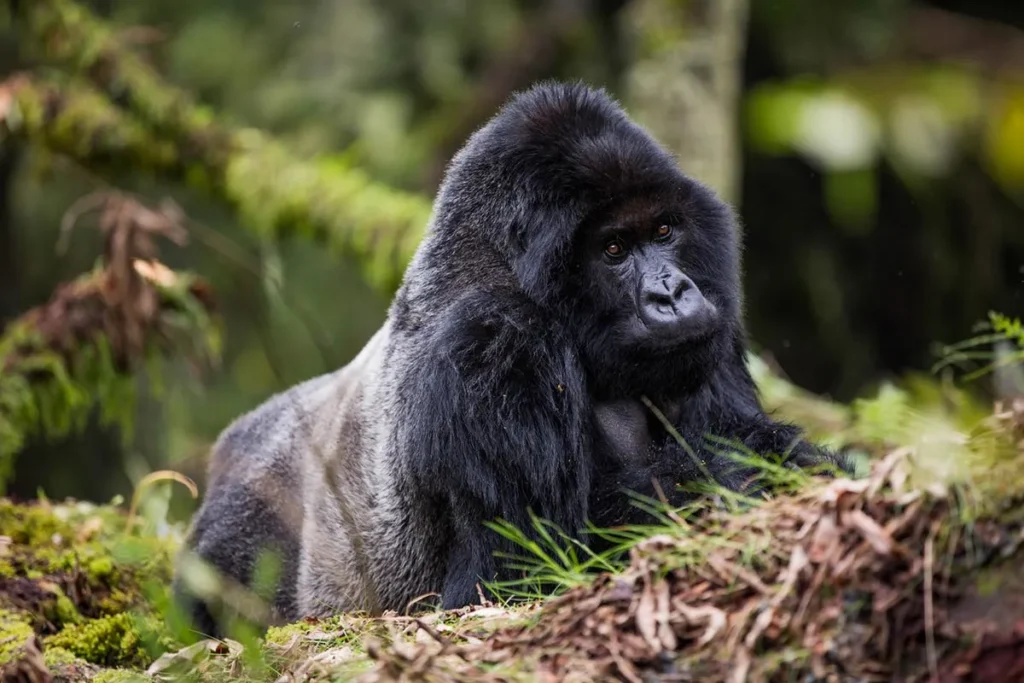
No wildlife encounter on earth is quite like standing in the forest watching a family of mountain gorillas go about their morning, silverbacks resting against ancient hagenia trees, juveniles tumbling through the undergrowth, and mothers nursing infants while the males keep a quiet, authoritative watch. Gorilla trekking in Rwanda is the defining luxury safari experience of the 21st century, and Volcanoes National Park is where it happens at its absolute finest.

The park sits in Rwanda’s northwestern corner, draped across the foothills of the Virunga volcanic chain. At approximately 160 square kilometers, it is not large, but its terrain: bamboo forest, dense montane rainforest, open grassland, and volcanic slopes rising above 4,000 metres, supports some of the highest concentrations of biodiversity in Africa. It is home to multiple habituated gorilla families, each monitored daily by expert trackers.

The Gorilla Trekking Permit: Cost, Availability, and What It Covers

A gorilla trekking permit in Rwanda currently costs USD 1,500 per person. This is the official rate set by the Rwanda Development Board, and it is non-negotiable. The permit covers park entry, ranger-guided accompaniment, security escort, and one strictly enforced hour of observation time with a habituated gorilla family. Only 192 permits are issued per day, eight per gorilla family across twelve habituated families, and these sell out weeks, sometimes months, in advance during peak season.
2-Day Rwanda Gorilla Safari.

The price point is deliberate. Rwanda has positioned gorilla trekking as a premium, low-volume experience, understanding that the scarcity of permits is itself a conservation tool. By limiting visitor numbers and commanding a high permit fee, the Rwanda Development Board ensures that revenue is substantial enough to fund serious conservation infrastructure, ranger salaries, veterinary care, anti-poaching patrols, habitat monitoring, and community benefit programs while keeping the experience uncrowded and intimate.

For travellers considering the cost, it is worth framing it correctly: USD 1,500 for a one-hour encounter with one of the rarest and most intelligent animals on the planet, in the context of a luxury safari that includes private transfers, a $600-per-night lodge, and the services of an expert local guide, is not expensive. It is well-priced.

How a Gorilla Trekking Day Actually Works: On-the-Ground Reality

Trekking days begin early. Visitors gather at Volcanoes National Park headquarters in Kinigi by 7:00 a.m. for a mandatory briefing, during which rangers assign each group of up to eight visitors to a specific gorilla family based on fitness levels, locations scouted the previous afternoon, and the morning’s tracker reports. Experienced lead guides, armed ranger escorts, and trained porters accompany each group.

The drive from the briefing center to the trailhead takes between 15 and 45 minutes, depending on which gorilla family the rangers assign. Trekking then begins through farmland at the forest edge before the trail enters the bamboo zone and, further up, denser montane forest and open volcanic terrain. Trek duration is genuinely variable; on some mornings, when gorillas have nested low overnight, visitors reach them in under an hour. On other mornings, they may trek for three to five hours before locating the family. The gorillas are never stationary; they move continuously in search of food, and the trackers follow them every single morning.

Once the family is located, the one-hour observation period begins. During this time, visitors may watch gorillas at distances as close as five metres closer if the gorillas approach on their own, which they often do. Photography is unrestricted except for flash, which is prohibited. There is no sound apart from the forest, the gorillas, and the quiet commentary of the guide. Most travellers describe it as the most profound wildlife experience of their lives. Most also say one hour feels catastrophically short.

After the trek, visitors hike back to the trailhead, where their vehicle collects them. Many choose to spend the afternoon visiting the Dian Fossey Gorilla Fund’s Ellen DeGeneres Campus, a world-class research and conservation facility opened in 2022, or participating in cultural experiences in nearby villages.

Choosing the Right Gorilla Family for Your Trek

Rwanda currently has twelve habituated gorilla families open for tourism, each with its character, territory, and trekking difficulty. Some families occupy lower forest zones and are generally reached within an hour; others range across the upper volcanic slopes and require a full day’s effort. When planning, it is worth discussing family assignment with your operator, a question Rwanda Gorilla Expeditions addresses directly when building your itinerary.

Exclusive and Private Gorilla Trekking: The Ultimate Rwanda Safari

For travellers who require absolute privacy and maximum flexibility, Rwanda offers an exclusive gorilla trekking permit at approximately USD 15,000, granting your group sole access to a gorilla family for the entire day, with private briefings, priority family selection, and no strangers sharing the encounter. This option is increasingly popular among honeymoon couples, photography-focused travellers, conservation philanthropists, and senior travellers, all of whom benefit from being able to set their pace.

Beyond the standard exclusive permit, Rwanda also offers a behind-the-scenes gorilla. Experience a multi-day immersive itinerary priced at approximately USD 15,000 per person that places you alongside primatologists, veterinary doctors, and field researchers for up to three consecutive days with a gorilla family. Groups are capped at three people, making it one of the most intimate wildlife encounters available anywhere in the world. Travellers considering this experience can find a comprehensive breakdown in the dedicated behind-the-scenes gorilla experience guide.

Golden Monkey Trekking: The Volcanoes National Park Experience That Many Travellers Overlook.

The Rwandan golden monkey Cercopithecus kandti is a vivid, acrobatic primate endemic to the Virunga volcanic region and found nowhere else on earth. Trekking these animals in Volcanoes National Park is a genuine highlight for any visitor to the northwest, offering a faster-paced, more kinetic wildlife encounter than gorilla trekking, which is less reverent and more joyful.
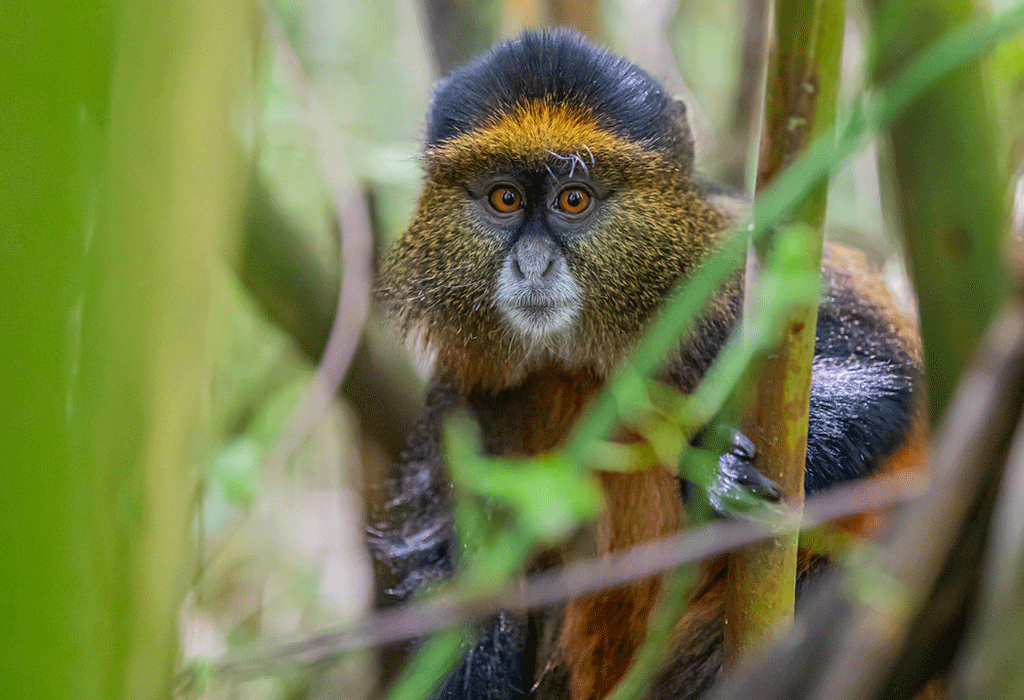
Golden monkeys are bamboo specialists, spending the majority of their time foraging in the park’s lower bamboo zone, which means treks to locate them are typically shorter and less demanding than gorilla expeditions. Groups of 100 or more individuals move through the bamboo in loose, chattering formations, providing extraordinary photographic opportunities as they leap between stems and descend to feed at ground level. The golden-orange flanks and vivid blue-grey limbs of these animals against the deep green of the bamboo create images that rarely need post-processing.

Golden monkey trekking permits cost USD 100 per person, a fraction of the gorilla permit cost, making them an excellent addition to any Volcanoes National Park itinerary. The trek is commonly paired with gorilla trekking across a multi-day visit to the northwest, and Rwanda Gorilla Expeditions includes it as a natural component of several of their signature itineraries, including the five-day Gorilla and Golden Monkey Discovery Safari.

Volcano Hiking: Summiting the Virunga Chain Above the Clouds.

The Virunga Mountains form one of Africa’s most dramatic skylines, and several of their volcanic peaks are open to guided hiking expeditions that offer extraordinary panoramic views, rare high-altitude ecosystems, and a genuine sense of physical achievement. For physically capable travellers who want to go beyond wildlife observation and into the landscape itself, the volcanoes are a compelling addition to any Volcanoes National Park itinerary.
Mount Karisimbi: Rwanda's Highest and Most Demanding Hike

Mount Bisoke: Rwanda’s Most Accessible Summit Trek

At 3,711 meters above sea level, Mount Bisoke offers a challenging but achievable day hike that rewards summit hikers with a spectacular crater lake, Lac de Bisoke, sitting perfectly within the caldera. The ascent takes approximately four to five hours and descends through alternating bamboo forest and open moorland vegetation, with frequent wildlife sightings including bushbuck, buffalo, and raptors. This peak is the volcano most commonly added to gorilla trekking itineraries and requires an additional permit of USD 75 per person.

Mount Karisimbi: Rwanda’s Highest and Most Demanding Hike

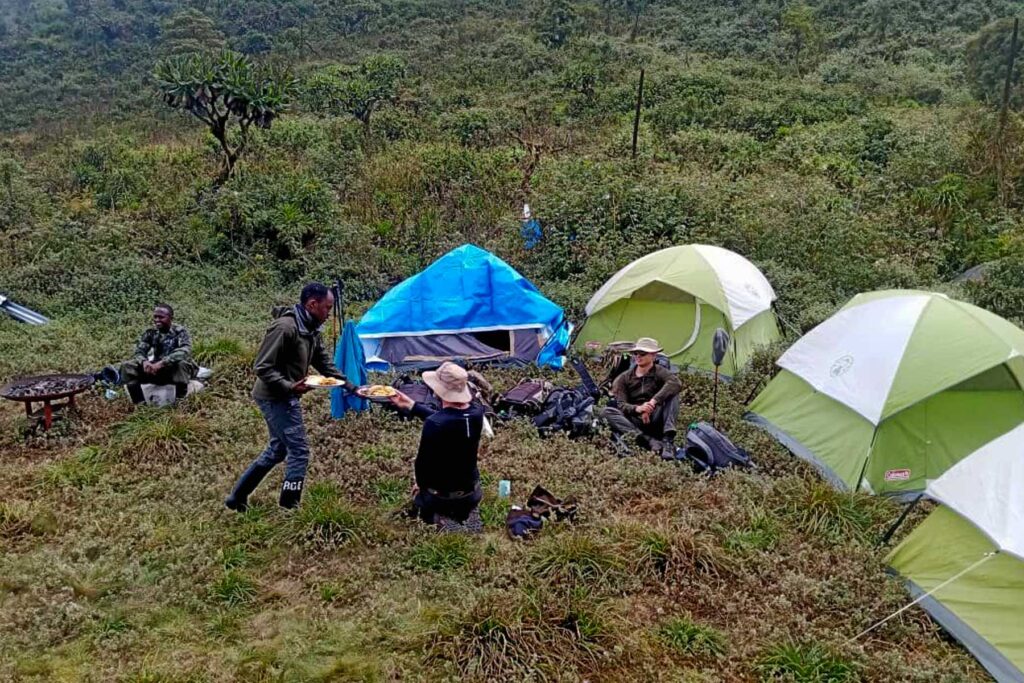
Karisimbi, at 4,507 metres, is Rwanda’s highest point and the region’s most physically demanding summit. The two-day guided expedition involves an overnight camp on the mountain and rewards serious hikers with sweeping views across the entire Virunga chain, into Uganda and the Democratic Republic of Congo. The permit for this expedition costs USD 400 per person and includes ranger accompaniment, porters, and camping equipment. Altitude acclimatisation is genuinely important at this elevation, and guides are trained to manage the physical demands carefully.

Plan Your Rwanda Safari

Start Planning a Private Gorilla Trek

Rwanda gorilla permits sell out months in advance. Secure your dates before the season closes.

Akagera National Park: Rwanda’s Big Five Safari and Savannah Wildlife Experience

In Rwanda’s eastern lowlands, where the terrain softens from highland drama into rolling savannah and papyrus-fringed lakes, Akagera National Park delivers a wildlife experience that bears more resemblance to East Africa’s classic safari circuit than anything else in the country. The park has undergone one of conservation’s most remarkable transformations in the past decade, recovering from severe poaching and human encroachment in the 1990s to become a fully functioning Big Five ecosystem once again, complete with lions reintroduced in 2015 and black rhinos reintroduced in 2017 and 2019.

Rwanda Safari Styles: Which Travel Style Is Right for You?

At approximately 1,122 square kilometers, Akagera is Rwanda’s largest national park and the country’s only savannah ecosystem. Its landscape is a mosaic of open grassland, dense miombo woodland, rocky hills, and an interconnected system of lakes and wetlands that includes Lake Ihema, one of Africa’s most productive papyrus habitats and an extraordinary destination for birdwatchers. The park is managed in partnership with African Parks, the nonprofit conservation organization that has overseen its extraordinary recovery.

Game Drives in Akagera: The Classic East Africa Safari Experience

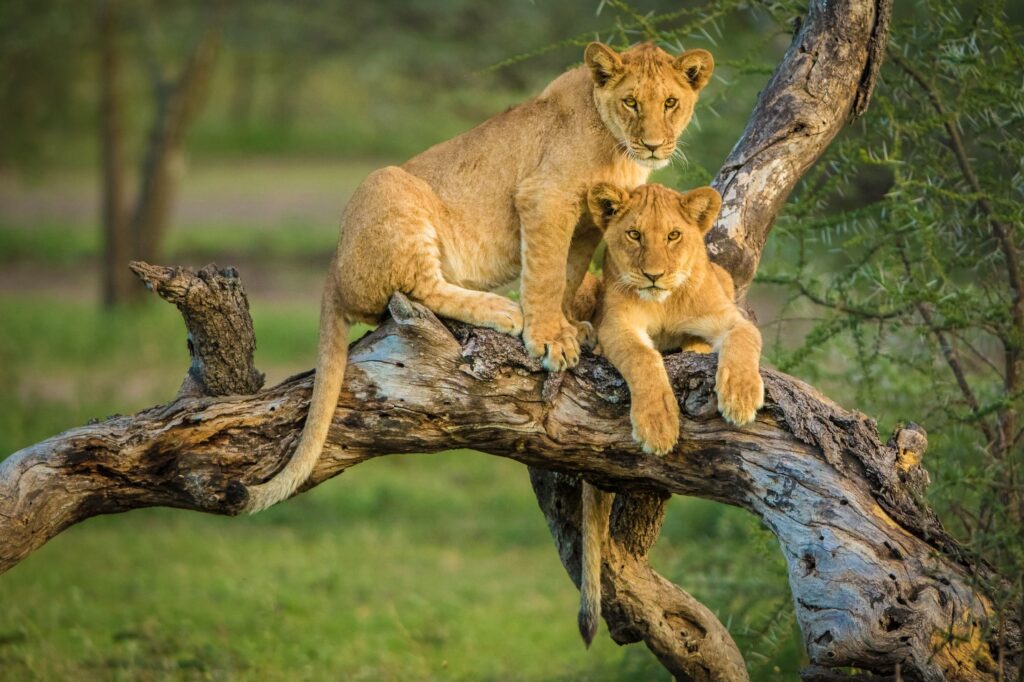
Morning and afternoon game drives in Akagera offer reliably excellent wildlife sightings. Throughout the park, visitors consistently see elephants, buffalo, hippos, and giraffes. Lion prides have expanded significantly since reintroduction and are regularly encountered in the southern grasslands. Leopard, while present, remains appropriately elusive. The reintroduced black rhino population is closely monitored and can be observed on dedicated rhino-tracking excursions with specialist rangers, which are among the most emotionally powerful wildlife encounters available in Rwanda for conservation-minded travellers.

Lake Ihema Boat Safaris: Wildlife from the Water

One of Akagera’s greatest underrated experiences is a guided boat safari on Lake Ihema, a two-hour excursion that brings visitors within meters of hippos surfacing, crocodiles basking on papyrus islands, and an astonishing diversity of waterbirds, including the prehistoric-looking shoebill stork, one of Africa’s most sought-after birdwatching targets. Lake Ihema holds one of Africa’s highest densities of hippos in a single water body, and the experience of drifting among them in a small boat at dawn is quietly extraordinary.

Birdwatching in Akagera: Over 500 Species in a Single Park

For serious birdwatchers, Akagera is one of East Africa’s most rewarding destinations. The park has recorded over 500 bird species, including a suite of papyrus-endemic species that draw ornithologists from across the continent. The shoebill is the headline act, but the park also offers excellent opportunities to observe African fish eagles, grey crowned cranes, saddle-billed storks, martial eagles, and numerous species of kingfisher, roller, and sunbird.

Nyungwe Forest National Park: Chimpanzee Trekking and the Ancient Rainforest Experience

In Rwanda’s southwestern corner, where the land rises again toward the Congo Basin watershed, Nyungwe Forest National Park protects one of Africa’s oldest and most biologically diverse montane rainforests. Covering approximately 1,020 square kilometers, the forest is a UNESCO-recognized biodiversity hotspot, home to 13 primate species, over 300 bird species, and more than 1,000 plant species, many of them endemic. It is also the headwater of the Nile River, a fact that adds a quiet historical gravity to walking in these ancient woods.

Luxury Rwandan Primate Safari

Chimpanzee Trekking in Nyungwe: Tracking Our Closest Relative

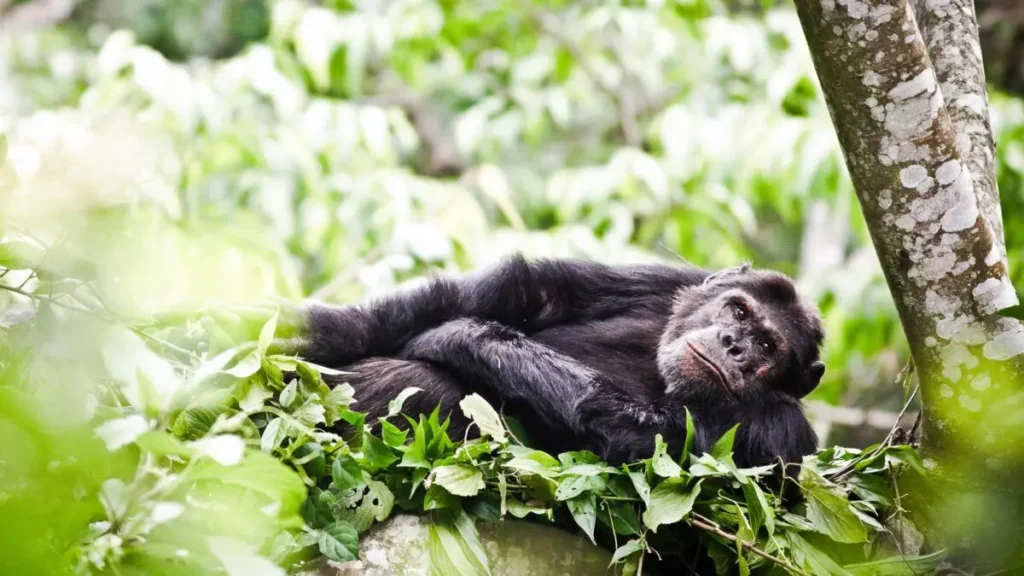
Nyungwe is one of East Africa’s premier destinations for chimpanzee trekking, with three habituated chimpanzee communities available for guided trekking expeditions. The experience is categorically different from gorilla trekking: chimpanzees move fast, cover great distances, and spend much of their time high in the forest canopy, making tracking a more dynamic and unpredictable experience. When a chimpanzee community descends to the forest floor to feed on fallen fruit, to rest, or simply to investigate human visitors, the encounter is electric. A chimpanzee trek permit costs USD 150 per person.

Unlike gorilla trekking, where groups walk in relative silence through relatively open terrain, chimpanzee trekking in Nyungwe involves navigating dense undergrowth, steep ridges, and sections of genuinely challenging terrain. Physical fitness and sensible footwear are more important here than almost anywhere else in Rwanda’s safari circuit. The reward is an encounter with animals whose expressiveness, intelligence, and social complexity make the physical effort entirely worthwhile.

The Nyungwe Canopy Walk: 70 Metres Above Africa’s Oldest Rainforest

The Uwinka Canopy Walk is a 160-meter suspension bridge system that stretches above the Nyungwe canopy at heights of up to 70 meters above the forest floor, making it one of the highest canopy walkways in Africa. The experience of walking above the forest, watching primates and hornbills moving through the canopy below, with views stretching across unbroken forest to the horizon, is genuinely memorable. It is accessible to visitors of most fitness levels and takes approximately one to two hours, including the approach hike. The canopy walk has become one of Rwanda’s most photographed safari experiences.

Nyungwe’s Other Primates: Angola Colobus and Beyond

Nyungwe’s 13 primate species include the Angola colobus, a strikingly beautiful black-and-white monkey that moves in troops of up to 400 individuals, one of the largest recorded primate groupings anywhere in Africa. Guided colobus trekking excursions are available daily and offer reliably excellent sightings. Other primates present in the forest include l’Hoest’s monkeys, olive baboons, Dent’s mona monkeys, and the relatively rare grey-cheeked mangabey. For primate enthusiasts, Nyungwe is among the most biodiverse destinations in Africa.

Gishwati-Mukura National Park: Rwanda’s Newest and Most Intimate Safari Frontier

Rwanda’s fourth and most recently gazetted national park, Gishwati-Mukura, sits between Volcanoes National Park and Nyungwe in the country’s western highlands. Gazetted in 2016 after a major reforestation program, the park is still developing its tourism infrastructure but already offers guided golden monkey trekking, chimpanzee habituation excursions, nature walks, and exceptional birdwatching in a forest that receives far fewer visitors than Rwanda’s more established parks.

For discerning travellers who value exclusivity and authenticity, Gishwati-Mukura offers an opportunity to experience Rwanda’s primate and forest safari before the crowds discover it. The golden monkey trek here is less formalized than in Volcanoes National Park, with smaller groups, more spontaneous encounters, and a sense of genuine wilderness exploration. This park rewards adventurous travellers who want to feel like pioneers in a landscape that most people simply pass through on their way to the country’s bigger destinations.

Lake Kivu: Rwanda’s Lakeside Safari Retreat

Lake Kivu

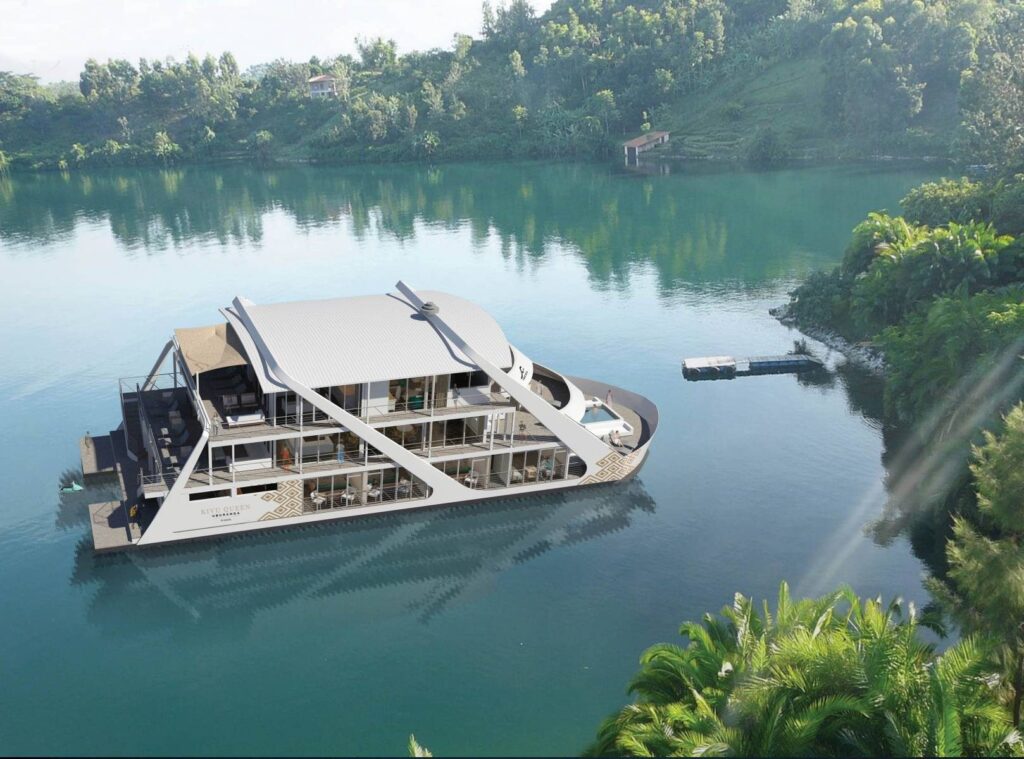
Lake Kivu is one of Africa’s Great Lakes, a deep, cobalt-blue expanse stretching along Rwanda’s western border with the Democratic Republic of Congo, framed by volcanic hills and punctuated by dozens of forested islands. At an elevation of 1,463 meters, the lake is free from the bilharzia and malaria that affect many of Africa’s lowland lakes, making it one of the continent’s most inviting for swimming, kayaking, and boat excursions.

The lakeside towns of Gisenyi in the north and Kibuye in the center serve as the gateway to the lake experience. Several of Rwanda’s most considered boutique hotels and resorts are located here, offering a slower-paced, restorative contrast to the intensity of gorilla and primate trekking. Many travellers combine three or four days at Lake Kivu with their gorilla trek in Volcanoes National Park, crossing the scenic western highway through tea plantations and terraced farmland between the two destinations.

Boat excursions to the lake’s forested islands offer birdwatching, guided forest walks, and the opportunity to visit remote fishing communities. The lake itself is also notable for holding dissolved methane gas extracted commercially to power a portion of Rwanda’s electricity grid.

Plan Your Rwanda Safari

Start Planning a Private Gorilla Trek

Rwanda gorilla permits sell out months in advance. Secure your dates before the season closes.

Kigali: A World-Class Safari Gateway That Deserves Its Day.

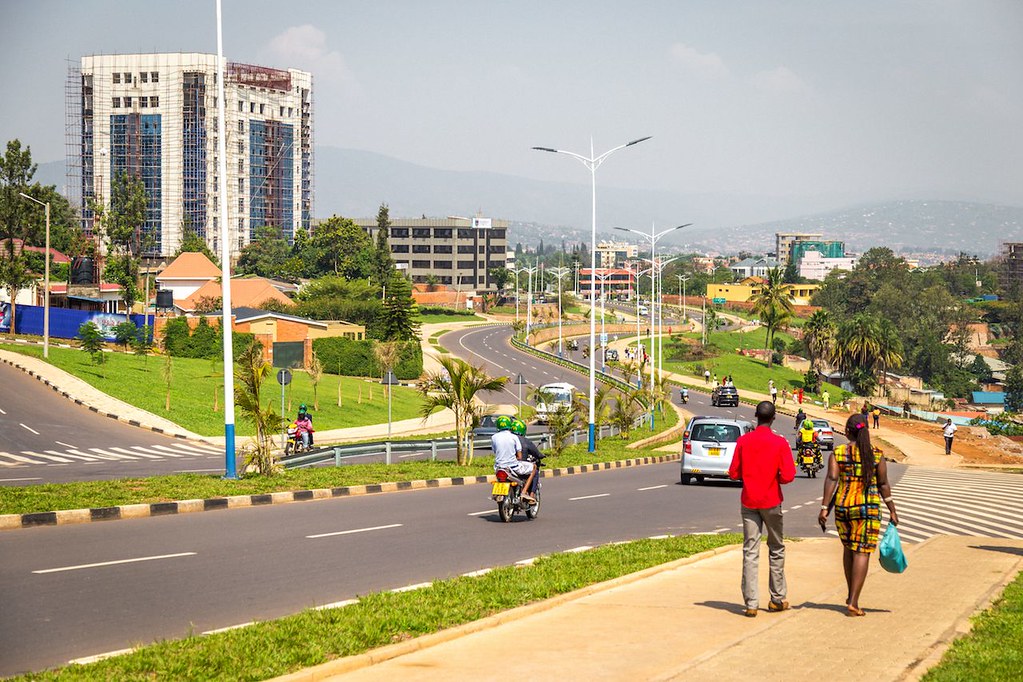
Most travellers treat Kigali as a transit point, arriving from the airport, sleeping, and then leaving for the national parks at dawn. This is an understandable approach but a genuine missed opportunity. Rwanda’s capital is one of Africa’s most compelling, modern, and walkable cities, and a single full day invested in it adds a cultural and intellectual dimension to any safari that enriches the wildlife experiences that follow.

Kigali City

The Kigali Genocide Memorial is one of the most sobering and important historical sites on the continent, an honest, respectful, and deeply moving account of the 1994 genocide that is essential context for understanding the Rwanda that visitors encounter today: a country rebuilt with deliberate intention, extraordinary speed, and a remarkable degree of national unity. The memorial is not easy, but it is important.

Beyond history, Kigali’s Kimironko Market, its cluster of contemporary art galleries in the Kacyiru district, and the emerging restaurant scene in the city center invite exploration. The city’s cleanliness, the absence of plastic bags (banned since 2008), and the general sense of civic order all make an impression. For luxury travellers accustomed to global capitals, Kigali is genuinely comparable as an urban experience, small but precise.

Designing Your Rwanda Safari: Itinerary Structures That Work.

The structure of a Rwanda safari depends on time available, physical fitness, and the balance between primate encounters, savannah wildlife, culture, and relaxation. Rwanda Gorilla Expeditions offers a full portfolio of Rwanda safari itineraries, from focused short-stay treks to comprehensive multi-park journeys. Below are the structures that experienced safari planners know work best.

3 to 4 Days: The Focused Gorilla Trek

For travellers with limited time, a three- or four-day itinerary built around a single gorilla trek arriving in Kigali, transferring to a luxury lodge near Volcanoes National Park, trekking gorillas, and returning to Kigali is entirely viable and deeply satisfying. Rwanda Gorilla Expeditions offers short Rwanda gorilla trekking safaris specifically designed for this format, including the popular 3-Day Rwanda Gorilla Trekking and Cultural Safari and the 4-Day Exclusive Rwanda Gorilla and Golden Monkey Safari.

6 to 8 Days: The Primate Circuit

The most popular luxury Rwanda safari structure combines gorilla trekking in Volcanoes National Park with chimpanzee trekking in Nyungwe, often with a night or two at Lake Kivu in between. This eight-day format delivers Rwanda’s two most compelling primate encounters while covering the country’s most dramatic landscapes. The Luxury Rwandan Primate Safari offered by Rwanda Gorilla Expeditions is designed precisely around this structure, with carefully chosen luxury lodges at each stage.

10 to 12 Days: The Complete Rwanda National Parks Safari

Travellers with ten days or more can experience all four of Rwanda’s national parks in a single itinerary, adding Akagera National Park’s Big Five savannah experience to the primate circuit and finishing with a day or two in Kigali. This is the most comprehensive Rwanda safari available, and it rivals the diversity of a multi-country East Africa journey in a fraction of the geographic distance. The Best of Rwanda’s National Parks Safari from Rwanda Gorilla Expeditions is built around exactly this structure: a ten-day journey that leaves no major ecosystem unexplored.

Fly-In Luxury Rwanda Safaris: The Premium Time-Efficient Option

For travellers who want to maximise wildlife experiences while minimising road time, helicopter and light aircraft transfers between Rwanda’s national parks are available. A fly-in safari from Kigali to Volcanoes National Park takes approximately 30 minutes by helicopter, compared to 2.5 to 3 hours by road. For travellers spending USD 1,500 per night on accommodation, the additional cost of an air transfer is a logical investment in comfort and the quality of their experience.

Permits are limited — spaces fill months ahead

Reserve Your Private Gorilla Trek

Speak with a Rwanda-based specialist today. We secure permits, match you to the right gorilla family, and plan every detail around your schedule.

No group departures · Private itineraries only · Direct Rwanda expertise

Rwanda’s Finest Safari Lodges: Where Luxury Meets Conservation.

The quality of accommodation around Rwanda’s national parks has reached a standard that puts the country firmly in the top tier of global safari destinations. The lodges listed below represent the benchmark experiences in each park.

Volcanoes National Park: The World’s Best Gorilla Safari Lodges

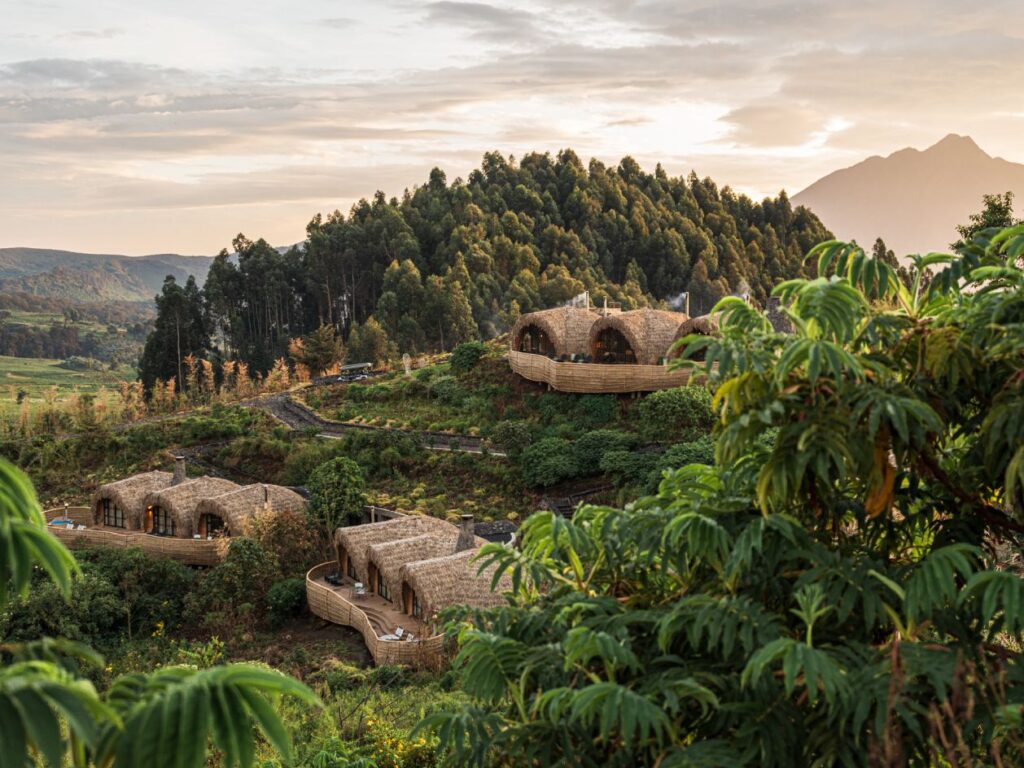
Wilderness Bisate Lodge is widely regarded as one of the finest safari lodges in Africa, a collection of six ensuite forest villas perched on a volcanic cone with sweeping views of the Virunga peaks. Bisate’s architecture draws directly from Rwandan vernacular tradition, its conservation program is active and measurable, and its cuisine is exceptional. Nightly rates start at approximately USD 2,000 per person during high season.

Bisate Lodge

Bisate Lodge

Singita Kwitonda Lodge brings the globally acclaimed Singita brand, arguably Africa’s most prestigious luxury lodge operator, to the foothills of Volcanoes National Park. With ten spacious suites, one of Rwanda’s finest spas, and Singita’s characteristic attention to material quality and service detail, Kwitonda delivers a lodge experience that can legitimately stand alongside the best anywhere in the world.

One and Only Gorilla’s Nest occupies a prime forest-edge position just minutes from the park entrance, with 50 rooms and suites set among ancient fig trees. The property’s scale allows for a broader range of amenities than smaller boutique lodges, including multiple dining venues and an extensive pool complex, while the woodland setting retains genuine intimacy with the landscape.

Wilderness Sabyinyo Silverback Lodge, managed by the African Wildlife Foundation, sits on the forest boundary near the Sabyinyo volcano with views across the Virunga foothills. The lodge’s community ownership model means that a significant portion of revenue flows directly to local villages, making it one of Rwanda’s most consequential conservation accommodation options.

Akagera National Park: Savannah Safari Lodges

Family Rwanda Safari Style

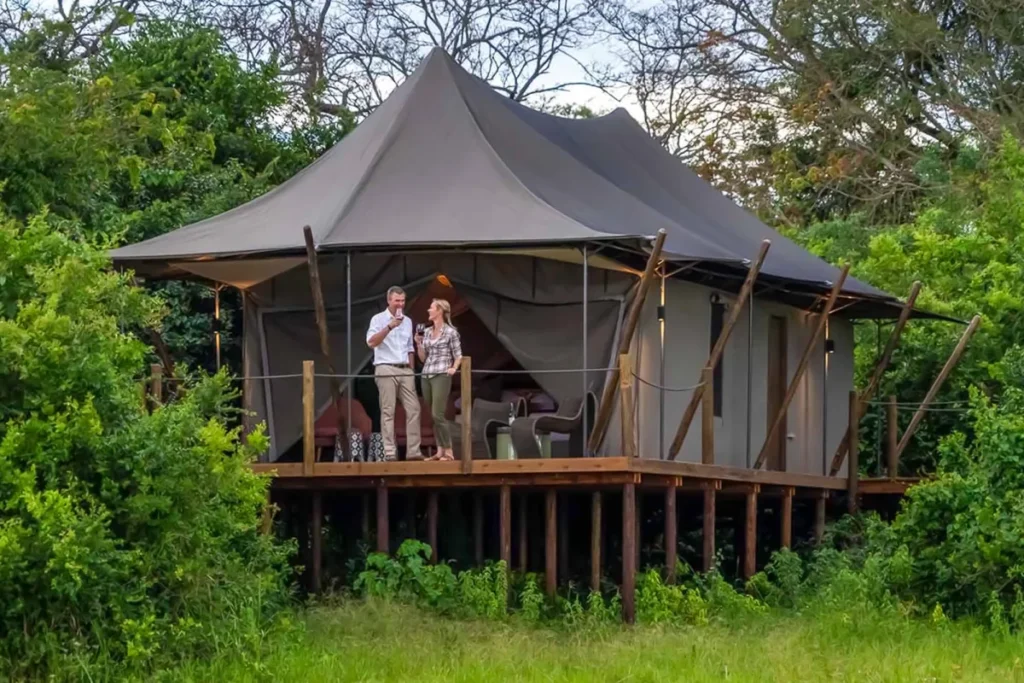
Wilderness Magashi Camp is set in a private eastern section of Akagera, accessible only by boat across Lake Rwanyakazinga. The camp’s eight tented suites command uninterrupted views across the lake, and its exclusive concession area ensures private game drives without other vehicles. This is genuinely remote, intimate luxury safari accommodation as it should be.

Nyungwe Forest National Park: Rainforest Retreats

One and Only Nyungwe House is positioned on a working tea plantation at the edge of the forest, offering elegantly designed rooms, a world-class spa, and the surreal experience of watching morning mist roll across an ocean of tea bushes from your private terrace. The lodge organizes all Nyungwe trekking activities and is the natural choice for the Nyungwe portion of any multi-park Rwanda itinerary.

Best Time for a Rwanda Safari: Month-by-Month Planning Guide

Rwanda’s climate is determined by two dry seasons and two wet seasons, with altitude moderating temperature across all regions. Unlike most East African safari destinations, Rwanda’s highland location keeps temperatures comfortable year-round, rarely above 27 degrees Celsius and rarely below 15 degrees at most trekking elevations.

Best time for gorilla trekking.

The primary dry season runs from June through September, coinciding with Europe and North America’s summer holidays. This is Rwanda’s peak safari season: trails are drier, visibility in the forests is better, Akagera’s grasslands are less dense, and photography conditions are generally more favorable. For travel in this window, you should secure gorilla permits and luxury lodge availability at least six months in advance.

The short dry season in December through February is equally reliable from a weather perspective and represents the best compromise between good conditions and slightly lower visitor volumes. Many experienced safari operators actually prefer this window for private and exclusive-access experiences.

The long rains of March through May bring heavier and more persistent rainfall, particularly in the west. Trails become muddy, and some mountain roads require four-wheel drive. However, the forests are extraordinarily lush, wildlife remains consistently present, and visitor numbers drop significantly, giving travellers who are comfortable with occasional wet weather a noticeably more private experience. Some lodges offer meaningful rate reductions in this period.

The short rains of October and November are the least predictable of Rwanda’s seasonal windows. Shower activity tends to be afternoon-focused, leaving mornings, including the start times for gorilla trekking, often dry and clear. Chimpanzee and golden monkey activity is typically high as forest fruit peaks, and birdwatching reaches its best for migratory species.

Combining Rwanda With Other East African Destinations

Rwanda’s central position in East Africa makes it an exceptional hub for multi-country safari itineraries. Kigali International Airport is connected by direct flights to Nairobi, Entebbe, Dar es Salaam, Johannesburg, Dubai, Brussels, London, and Paris, making combinations with other destinations genuinely practical.

The most popular combination is Rwanda and Uganda, which can be explored either separately or on a cross-border overland route through the shared Virunga ecosystem. Comparing the gorilla trekking experience between the two countries is a common consideration; a detailed breakdown is available in the Rwanda vs Uganda gorilla trekking comparison guide. Rwanda also combines naturally with Kenya’s Maasai Mara for a primate-to-plains safari of gorillas one week, with a great migration the next, or with Tanzania’s Serengeti, Ngorongoro, and Zanzibar for a comprehensive East Africa journey.

Ready to Trek? Permits are limited — plan early.

Practical Rwanda Safari Planning: Permits, Logistics, Health, and Packing.

Entry Requirements and Visa

Rwanda operates an e-visa system for most nationalities, available online through the Rwanda Directorate General of Immigration. Citizens of most African Union countries and several other nations can enter visa-free. The e-visa costs USD 50 for a single entry and is typically processed within 72 hours. Rwanda’s passport-free entry agreement with African Union member states means that East African travellers face minimal administrative friction.

Health Considerations

Malaria prophylaxis is recommended for travel to Akagera National Park and the Lake Kivu region at lower elevations. Volcanoes National Park and Nyungwe Forest, at their respective altitudes, carry very low malaria risk. Yellow fever vaccination is required for entry if you are arriving from a yellow fever zone. Altitude acclimatisation is relevant for volcano hiking above 3,000 metres, and travellers with respiratory conditions should consult a physician before planning their trek. As a general rule, visitors with active cold or flu symptoms will be denied access to gorilla trekking carrying a rapid test kit and protective health measures in the days before a scheduled trek is genuinely advisable.

What to Pack for a Rwanda Safari

What to Pack for gorilla trekking

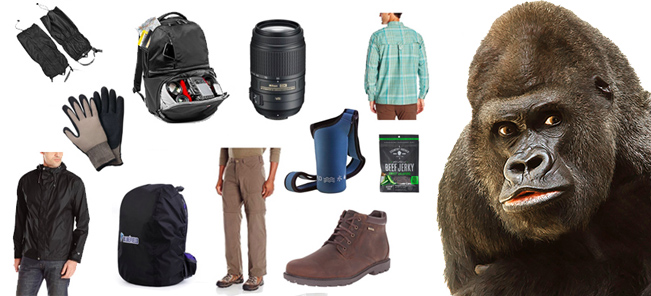
For gorilla trekking specifically, waterproof hiking boots with ankle support are non-negotiable. The forest floor is invariably damp and occasionally very muddy. Long trousers and long-sleeved shirts protect against nettles, insects, and the cold at altitude. Gardening gloves are recommended for gripping vegetation on steep sections. A small daypack with water, snacks, camera, and rain jacket covers the essentials. Porters are available to carry bags at the trailhead and are strongly recommended for travellers over 60 or for anyone with back, knee, or hip concerns.

For Akagera game drives, the standard safari wardrobe applies: neutral-colored clothing in khaki, olive, and beige tones, with a fleece or light jacket for early morning departures. Binoculars are important in Akagera in a way they are not for primate trekking, where close distances make them less relevant.

Plan Your Rwanda Safari

Start Planning a Private Gorilla Trek

Rwanda gorilla permits sell out months in advance. Secure your dates before the season closes.

Frequently Asked Questions About Rwanda Safari Experiences.

How much does a Rwanda safari cost in total?

A complete Rwanda safari cost depends heavily on the length of the trip, accommodation category, and activities selected. For a 7 to 8-day luxury primate safari combining gorilla and chimpanzee trekking with high-end lodges, total costs typically range from USD 8,000 to USD 15,000 per person, inclusive of permits, accommodation, meals, transfers, and guides. The single largest fixed cost is the gorilla trekking permit at USD 1,500 per person. Luxury lodge accommodation in the most prestigious properties adds between USD 600 and USD 2,500 per person per night.

Is Rwanda safe for safari travel?

Rwanda is consistently rated among Africa’s safest travel destinations. The country has a highly effective police presence, exceptionally low violent crime rates, and well-enforced public safety standards. Kigali is safer than most European capitals for solo travelers at night. The national parks all operate with armed ranger escorts for guest safety, and wildlife encounters are managed within strict, well-tested protocols. Travel advisories from the UK, US, EU, and Australian governments all rate Rwanda as low risk for standard tourist travel.

Do I need to be physically fit to go gorilla trekking in Rwanda?

A reasonable baseline fitness level is recommended. Treks can last between one and six hours, covering uneven, often steep, and frequently muddy terrain at elevations between 2,300 and 3,000 meters. That said, Rwanda’s park rangers are highly skilled at matching gorilla family assignments to group fitness levels, and porters are available at the trailhead to carry bags and provide physical support on difficult sections. Travellers in their 70s and 80s successfully complete gorilla treks every day. The key is to communicate honestly with your operator about physical limitations during the planning stage.

How far in advance should I book gorilla permits in Rwanda?

For peak season travel between June and September and December through February, permits should be booked a minimum of six months in advance, and ideally nine to twelve months ahead if you have fixed travel dates. Rwanda’s 96 daily permits sell out consistently during these windows. For the wet season months of March through May and October to November, shorter lead times of two to three months are generally sufficient, though earlier booking is always preferable to avoid disappointment.

Can I do gorilla trekking as a day trip from Kigali?

Technically yes, Volcanoes National Park is approximately 2.5 to 3 hours from Kigali by road, making a very long day trip possible. However, it is strongly inadvisable. A day trip means a 4:00 a.m. departure, an uncertain trek length, and a return drive in the dark after what may be a physically demanding day. Spending at least one, and ideally two, nights near the park in one of the luxury lodges in the Kinigi or Musanze area transforms the entire experience. Rwanda Gorilla Expeditions’ 2-day Rwanda gorilla safari is the minimum recommended itinerary.

What is the minimum age for gorilla trekking in Rwanda?

The Rwanda Development Board sets the minimum age for gorilla trekking at 15 years old. This rule is strictly enforced without exceptions. Younger children can participate in other activities in Rwanda, such as golden monkey trekking, cultural village visits, and Kigali city tours. They have no minimum age requirements, but they are categorically excluded from gorilla trekking. Families with children under 15 are encouraged to plan Rwanda visits that incorporate these alternative activities alongside an adult gorilla trek.

What is the difference between gorilla trekking and the gorilla habituation experience?

Standard gorilla trekking allows visitors one strictly enforced hour with a habituated gorilla family, animals already fully accustomed to human presence. The gorilla habituation experience, available in Uganda but not Rwanda, involves spending up to four hours with a family still undergoing the habituation process, a longer, more intimate encounter but also a more unpredictable one. Rwanda’s equivalent premium option is the Behind-the-Scenes Gorilla Experience, which places visitors with primatologists and researchers over multiple consecutive days.

Which is better for gorilla trekking; Rwanda or Uganda?

Both countries offer exceptional gorilla trekking, but they suit different traveler profiles. Rwanda’s permit costs USD 1,500, compared to USD 800 in Uganda, but Rwanda offers superior infrastructure, shorter travel times from Kigali airport, and more consistent trail conditions. Uganda has more gorilla families (around 20 habituated), giving better permit availability, but trekking locations are farther from major airports, and roads are less reliable. For travelers prioritizing comfort, efficiency, and the overall quality of the experience, Rwanda is consistently the stronger recommendation.

Can I combine gorilla trekking with a Kenya or Tanzania safari?

Absolutely, and this combination is one of the most popular luxury safari itineraries in East Africa. A logical sequence places Rwanda first for gorilla trekking in Volcanoes National Park, followed by a flight to Nairobi or Kilimanjaro for a Kenya or Tanzania wildlife safari. In practice, this allows travellers to experience Africa’s most intimate wildlife encounter (gorillas in the forest), followed by its most dramatic (great migration on the Mara or Serengeti). Total trip length for this combination is typically 12 to 16 days.

What wildlife can I see in Akagera National Park?

Akagera hosts the full suite of African savannah wildlife, including elephant, lion, leopard, black rhino, hippopotamus, buffalo, giraffe, zebra, and over 12 species of antelope and gazelle. The lion and rhino populations were reintroduced in the last decade and are now established breeding populations, a remarkable conservation success. The park also hosts one of Africa’s highest hippo concentrations in Lake Ihema and offers shoebill stork sightings, making it an exceptional destination for birdwatchers alongside the big game experience.

What is the best luxury lodge near Volcanoes National Park?

Wilderness Bisate Lodge and Singita Kwitonda Lodge are considered the two benchmark luxury properties in the Volcanoes National Park area and among the finest safari lodges in Africa. Bisate’s forest villa architecture and active conservation program give it an edge in experiential depth; Singita Kwitonda’s service standards and material quality are unrivalled. One and Only Gorilla’s Nest offers a larger-scale luxury option with more amenities and the weight of a globally prestigious hospitality brand. The choice ultimately depends on whether you prefer intimate boutique immersion or polished resort luxury.

Is Rwanda good for birdwatching?

Rwanda is an excellent destination for birdwatching, with over 700 recorded species across the country’s four national parks. Nyungwe Forest is the most biodiverse birding location, hosting numerous Albertine Rift endemic species, including the handsome francolin, Rwenzori turaco, and African green broadbill. Akagera offers the best savannah and wetland birding, with the shoebill as its headline species. Volcanoes National Park’s montane forest holds its own suite of highland specialties. Dedicated birding itineraries in Rwanda can reliably produce 300 to 400 species in a single week.

Can I visit Rwanda on a short trip of 3 to 4 days?

A 3 to 4-day Rwanda itinerary focused on gorilla trekking is entirely viable and deeply rewarding. The essentials of the northwest Rwanda experience include arriving in Kigali, transferring to a luxury lodge in Volcanoes National Park, trekking gorillas, and optionally adding golden monkey trekking or a cultural village visit. Rwanda Gorilla Expeditions designs several itineraries specifically for this format, including the 3-Day Rwanda Gorilla Trekking Cultural Safari and the 2-Day Rwanda Gorilla Safari. The critical task is securing your permit well in advance.

How do I book a Rwanda safari with Rwanda Gorilla Expeditions?

Rwanda Gorilla Expeditions handles the full planning and booking process, from initial enquiry through permit acquisition, accommodation booking, ground transfers, and on-trip support. The process begins with a detailed consultation to understand your travel dates, budget, fitness level, preferred lodge style, and the specific experiences that interest you most. From there, the team designs a bespoke itinerary and handles all logistics. You can contact us directly through the website, by email, or via WhatsApp for immediate assistance.

Plan Your Rwanda Safari With Rwanda Gorilla Expeditions.

A Rwanda safari done properly is not something you piece together from a comparison website. It requires a team with genuine on-the-ground knowledge of the region, including people who know which gorilla family is most suitable for a traveller with limited mobility, which lodge has the best sightlines of the Virunga volcanoes at sunrise, and exactly when to book to secure permits during a highly competitive peak season.

Rwanda Gorilla Trekking Expeditions | Tours & Safaris

Rwanda Gorilla Expeditions was built specifically to deliver that knowledge not as a generalist reseller, but as a specialist operator with deep roots in Volcanoes National Park, Nyungwe, Akagera, and every community and lodge in between. Whether you are planning a three-day focused gorilla trek, a ten-day national parks circuit, or a fully private fly-in expedition with exclusive permit access, the team designs and operates your journey with the precision that the experience deserves. Begin your Rwanda safari consultation today and invest your trust in the operator that knows this extraordinary country best.