Serengeti National Park: The Complete Guide to Tanzania’s Great Migration

A complete guide to Serengeti National Park covering the Great Migration calendar, park regions, wildlife, entry fees, best time to visit, and how to combine a Serengeti safari with gorilla trekking in Rwanda.

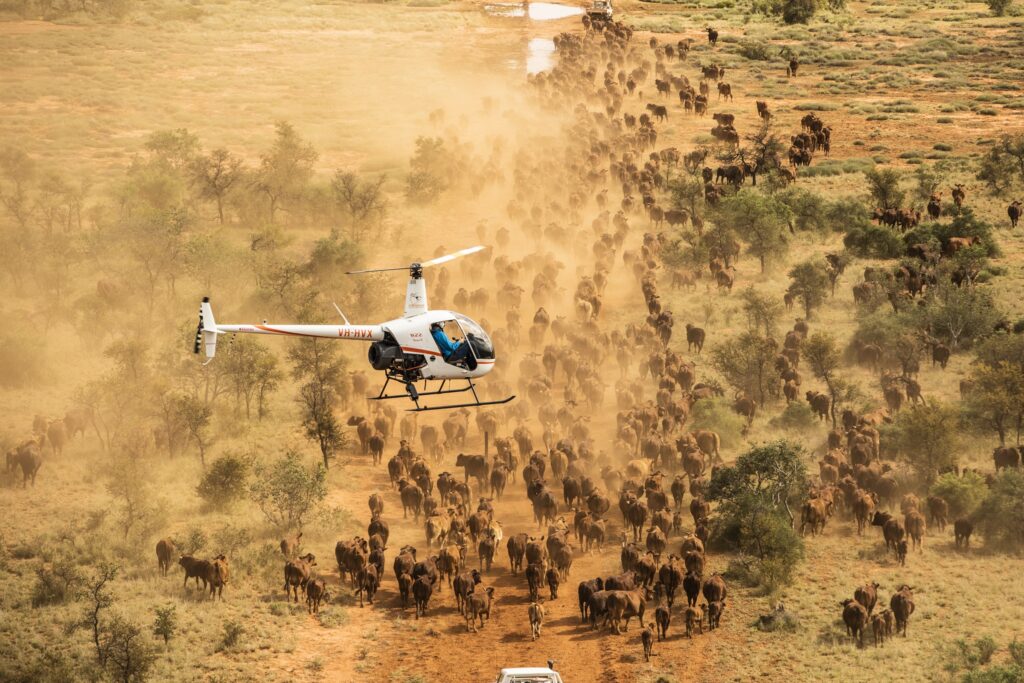
Serengeti National Park is a 14,750-square-kilometer wilderness in northern Tanzania that protects the largest, most intact land migration left on Earth: a continuous circuit of roughly 1.5 million wildebeest, some 400,000 zebras, and several hundred thousand gazelles that has moved across these plains for longer than anyone has kept written record of it. Gazetted in 1951 as Tanzania’s first national park and inscribed as a UNESCO World Heritage Site in 1981, the Serengeti sits at the heart of a much larger, unfenced ecosystem that runs north into Kenya’s Masai Mara and borders the Ngorongoro Conservation Area to the southeast, so the herds move across an international boundary as freely as they move across a river.

Serengeti National Park 2027: The Complete Migration Guide

Non-resident visitors currently pay a park entry fee of roughly USD 70 to 83 per person per 24-hour period, set by the Tanzania National Parks Authority (TANAPA), and there is no true off-season: wildlife is present year-round, but the migration’s exact location within the ecosystem shifts month by month, from the calving grounds of the southern plains in January and February, through the Western Corridor’s Grumeti River crossings around June, to the northern Serengeti’s Mara River crossings between July and October.

For the traveler already weighing where to go for a gorilla trek, the Serengeti most often enters the conversation as the second half of a two-country East Africa journey, one that pairs mountain gorilla trekking in Rwanda’s Volcanoes National Park with the open-plains drama that no forest encounter can offer. This guide covers exactly where the migration will be during your travel dates, how the park’s four regions differ, what it actually costs, and how the logistics work if you’re routing through Kigali on the way.

Permits are limited — spaces fill months ahead

Reserve Your Private Gorilla Trek

Speak with a Rwanda-based specialist today. We secure permits, match you to the right gorilla family, and plan every detail around your schedule.

No group departures · Private itineraries only · Direct Rwanda expertise

Where the Serengeti Is, and How It Came to Be Protected

The Serengeti ecosystem covers approximately 25,000 square kilometers of northern Tanzania and southern Kenya, of which Serengeti National Park itself protects 14,750 square kilometers, an area slightly larger than the U.S. state of Connecticut and roughly ninety-two times the size of Rwanda’s Volcanoes National Park. The park sits in Tanzania’s Mara and Simiyu regions and is bordered by the Ngorongoro Conservation Area to the southeast, the Maswa Game Reserve to the south, the Grumeti and Ikorongo Game Reserves to the west, the Loliondo Game Controlled Area to the east, and the Masai Mara National Reserve across the Kenyan border to the north. None of these boundaries are fenced, which is precisely why the migration is able to exist at all: an animal following the rains crosses from a national park into a game reserve, then into a conservation area, and finally into a foreign country without ever meeting a barrier.

The Maasai Name and the Land That “Runs Forever”

The name Serengeti comes from the Maasai word siringet, meaning roughly “the place where the land runs on forever,” a description the pastoralist Maasai communities gave to the open, treeless plains long before any European traveler had recorded them. The Maasai grazed cattle across this landscape for generations before colonial-era protection began, and their historical presence is part of why the eastern section of the ecosystem was later carved out as the Ngorongoro Conservation Area rather than a strict national park, a distinction that still shapes where you can and cannot see Maasai homesteads on a Serengeti itinerary today.

From Game Reserve to World Heritage Site

The British colonial administration first protected a section of the Serengeti as a game reserve in 1921, largely in response to the near-total loss of the region’s lion, rhino, and elephant populations to early twentieth-century big-game hunting. That reserve was expanded and formally gazetted as Serengeti National Park in 1951, and in the late 1950s the eastern portion, including the Ngorongoro Crater, was split off into the separate Ngorongoro Conservation Area specifically to accommodate continued Maasai grazing rights, a multiple-land-use compromise that does not apply within the national park itself. German zoologist Bernhard Grzimek and his son Michael brought the Serengeti to global attention in the 1950s with their aerial wildlife surveys and the Academy Award-winning film Serengeti Shall Not Die, work carried on today by the Frankfurt Zoological Society, which remains an active conservation partner in the ecosystem. The park was among the first sites named to UNESCO’s World Heritage list at the 1972 Stockholm conference and was formally inscribed in 1981. A lesser-known fact that rarely appears on competitor guides: the Laetoli footprint trackway and Olduvai Gorge, two of the most significant paleoanthropological sites on Earth, sit just southeast of the park boundary within the Ngorongoro Conservation Area, meaning a Serengeti circuit also passes through some of the oldest direct physical evidence of human bipedalism, footprints preserved in volcanic ash roughly 3.6 million years old.

Metric Detail
Total ecosystem area ~25,000 km² (Serengeti-Mara, spanning Tanzania and Kenya)
Park area 14,750 km² (Tanzania’s largest national park)
Established as a national park 1951, Tanzania’s oldest national park
UNESCO World Heritage status Inscribed 1981; first proposed at the 1972 Stockholm conference
Location Mara and Simiyu regions, northern Tanzania
Bordering areas Ngorongoro Conservation Area (SE), Maswa Game Reserve (S), Grumeti/Ikorongo Game Reserves (W), Masai Mara (Kenya, N)
Managing authority Tanzania National Parks Authority (TANAPA)

The Great Migration: A Month-by-Month Guide to Where the Herds Are

The Great Migration is a continuous, circular movement of close to 1.5 to 2 million wildebeest, zebra, and gazelle that has no true starting point and never actually stops, but for planning purposes it breaks cleanly into four phases: calving on the southern plains from December to March, the long march north through the central and western Serengeti from April to June, the northern crossings of the Mara River from July to October, and the return south beginning in November as the short rains arrive. Because the herds are chasing rainfall rather than following a fixed script, exact dates shift by two to four weeks in either direction depending on the year, which is why experienced guides talk in terms of windows rather than calendar promises.

December–March: Calving Season on the Southern Plains and Ndutu
Serengeti Wildebeest Calving Season

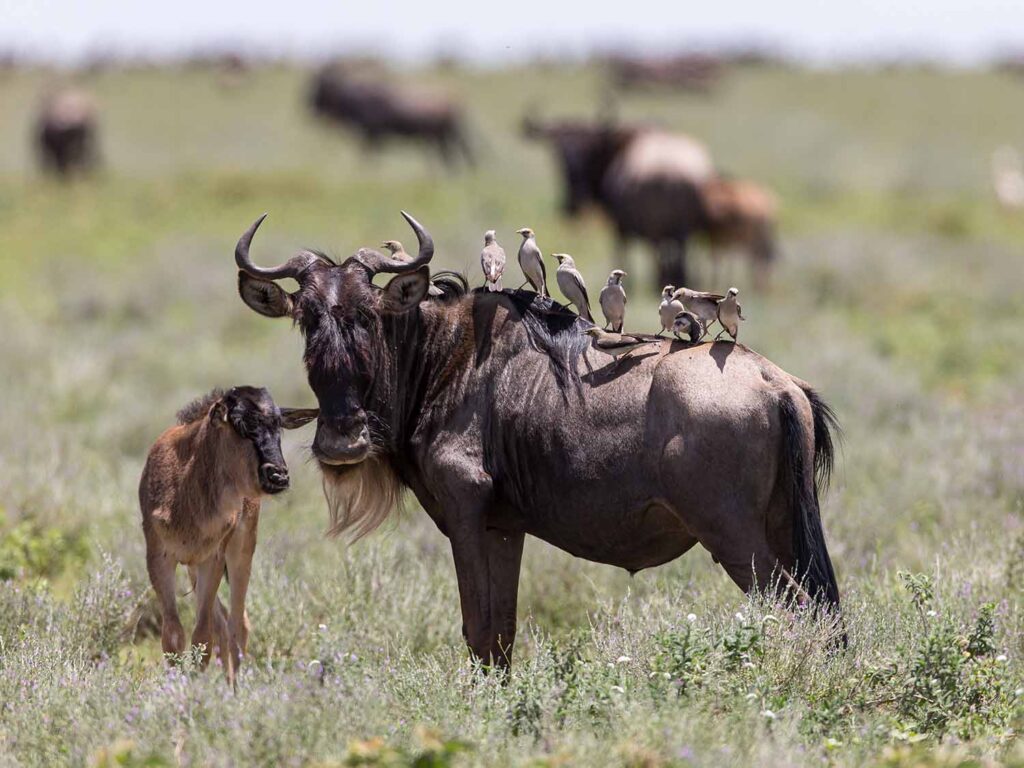
The herds concentrate on the short-grass plains of the southern Serengeti and the neighboring Ndutu area, which technically straddles the boundary between the park and the Ngorongoro Conservation Area, drawn by nutrient-rich volcanic soils that support the richest grazing in the ecosystem. Roughly 500,000 calves are born within a two-to-three-week window centered on late January and February, with as many as 8,000 born in a single day at the peak, and the resulting concentration of vulnerable newborns pulls in a correspondingly dense population of lions, cheetahs, hyenas, and jackals. This period is consistently described by guides who work the ecosystem year-round as the finest predator viewing of the entire calendar, and it draws a fraction of the visitor numbers that the July-to-September crossing season attracts, a genuine advantage for travelers who value both wildlife density and a less crowded plain.

April–June: The Long Rains and the Push Through the Western Corridor

As the southern plains dry out, the herds begin moving northwest through the central Serengeti and into the Western Corridor, a narrower finger of the park that stretches toward Lake Victoria and is defined by the Grumeti River. This period coincides with Tanzania’s long rains, which fall most heavily in April and May, turning tracks muddy and reducing visitor numbers to their lowest point of the year, a trade-off that rewards travelers comfortable with wetter conditions in exchange for markedly lower lodge rates and a landscape at its most vividly green. By June, the herds have typically gathered in the Western Corridor and begun the Grumeti River crossings, dramatic in their own right and populated by some of the largest Nile crocodiles in the ecosystem, but seen by a fraction of the visitors who crowd the more famous Mara crossings later in the year.

July–October: The Northern Push and the Mara River Crossings

This period is the migration’s headline chapter and the Serengeti’s peak tourist season: the herds push into the northern Serengeti around Kogatende and the Lamai Wedge, then cross and re-cross the Mara River in a series of chaotic, crocodile-contested crossings that supply most of the wildlife photography associated with East Africa. September is frequently cited by guides working the northern sector as the single best month for balancing active crossings against crowd levels, typically 30 to 40 percent quieter than the August peak while the crossings themselves remain reliably active. Camps in the northern Serengeti and Kenya’s neighboring Mara conservancies are booked twelve to eighteen months in advance for this window, and travelers who commit late are frequently pushed into whatever inventory remains rather than the specific camp positioned closest to that season’s crossing points.

November: The Short Rains and the Return South

As the short rains arrive, the herds begin turning back south and east through the eastern Serengeti, retracing their route toward the calving grounds for the cycle to begin again. November is a genuinely underrated month: rainfall is typically light and afternoon-focused rather than an all-day washout, mornings are often clear, and the herds are on the move in large, photogenic columns without the vehicle congestion of the crossing season. Lodge rates across the ecosystem sit at some of their lowest points of the year, and central Serengeti’s resident wildlife, present regardless of where the migration happens to be, keeps game viewing strong even outside the herd’s immediate path.

Plan Your Rwanda Safari

Start Planning a Private Gorilla Trek

Rwanda gorilla permits sell out months in advance. Secure your dates before the season closes.

The Serengeti’s Distinct Regions

The Serengeti is not one uniform landscape but four genuinely distinct regions, each with its own terrain, wildlife rhythm, and ideal season, and choosing the right region for your travel dates matters more to the quality of a Serengeti safari than which specific lodge you book within it. A camp in the wrong region during the wrong month, however luxurious, can mean days of driving without seeing the herds at all.

Seronera and the Central Serengeti: Year-Round Wildlife

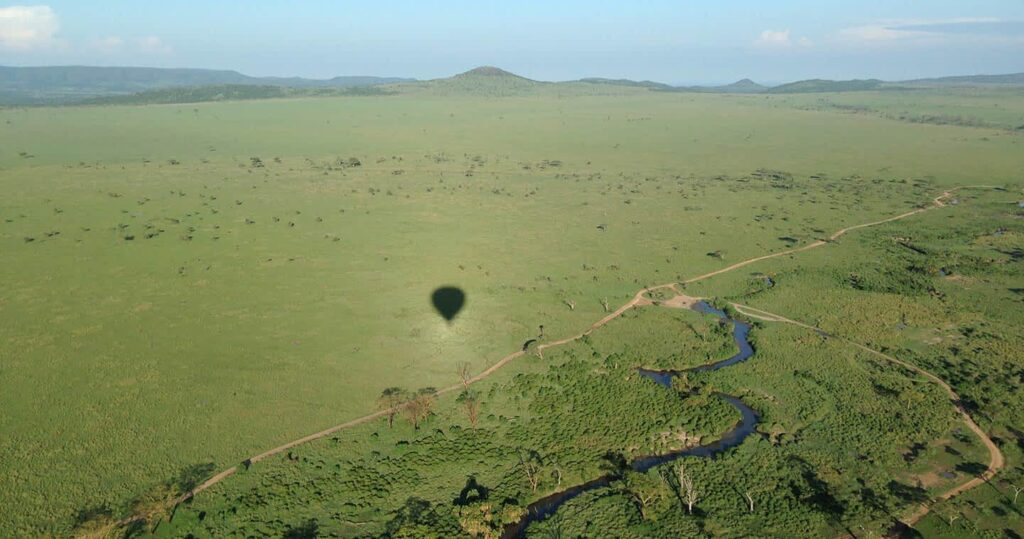
Balloon flight in Seronera

Seronera sits at the geographic and infrastructural heart of the park, home to the main airstrip, visitor center, and the highest concentration of permanent lodges. The Seronera River Valley supports resident lion prides and some of the best leopard viewing in East Africa along its riverine forest, and because this wildlife is territorial rather than migratory, Seronera delivers strong game viewing every single month of the year regardless of where the wildebeest herds happen to be. It is the natural first stop for travelers with limited time or those unsure which season they will be traveling in.

Ndutu and the Southern Plains: Calving Season Headquarters

The Ndutu area, technically split between the national park and the neighboring Ngorongoro Conservation Area, is short-grass plains country defined by seasonal lakes and volcanic soil, and it is where the migration concentrates for calving between roughly December and March. Several camps here operate on a seasonal or semi-mobile basis, moving or closing outside the calving window, which is worth confirming directly before booking a stay timed around this specific phase of the migration.

The Western Corridor: Grumeti River and Quiet Crossings

Stretching west toward Lake Victoria, the Western Corridor is defined by the Grumeti River and its resident hippo pools and large Nile crocodiles, and it hosts the migration for a shorter, quieter window around May and June. It is also home to Singita Grumeti Reserves, one of the largest privately managed conservation areas bordering the park, and to a resident population of unusually dark, black-maned lions that draw dedicated photographic interest independent of the migration’s timing.

Northern Serengeti and Kogatende: Mara River Crossings

The remote northern sector, accessed through Kogatende and the Lamai Wedge, hosts the most famous chapter of the migration story, the Mara River crossings, from roughly July through October. This area is the most exclusive and generally the most expensive corner of the park, with a smaller number of camps and a genuine sense of remoteness even at the height of peak season, and it rewards travelers who commit to at least three consecutive nights in the area rather than a single overnight, since crossings can take days to materialize and a rushed one-night stop frequently misses them entirely.

Region Best Months Known For Nearest Airstrip
Seronera (Central) Year-round Resident lions and leopards; reliable game viewing Seronera (SEU)
Ndutu (Southern) December – March Calving season; dense predator action Ndutu (LDZ)
Western Corridor May – July Grumeti River crossings; black-maned lions Grumeti / Fort Ikoma
Northern Serengeti (Kogatende) July – October Mara River crossings; remote, exclusive camps Kogatende / Lamai

Wildlife Beyond the Migration

Beyond the migratory herds, the Serengeti holds one of the highest concentrations of large predators found anywhere on the continent, and travelers who arrive expecting only wildebeest are consistently surprised by the depth of the resident wildlife. The park is regarded as home to one of the largest single lion populations of any African protected area, distributed across well-studied prides in Seronera, the Western Corridor, and the eastern plains near Ndutu. Cheetah viewing is exceptional on the open, short-grass plains of the south and east, supported by the Serengeti Cheetah Project, one of the longest continuously running carnivore research studies in the world, tracking individually known cheetahs since 1968, a detail rarely mentioned on general safari guides but a genuine point of interest for wildlife-focused travelers. Leopards are most reliably found along the riverine forest fringing the Seronera River, where they favor the shade of sausage trees and drape kills across low branches out of reach of scavenging hyenas.

Big Five Safaris in Serengeti

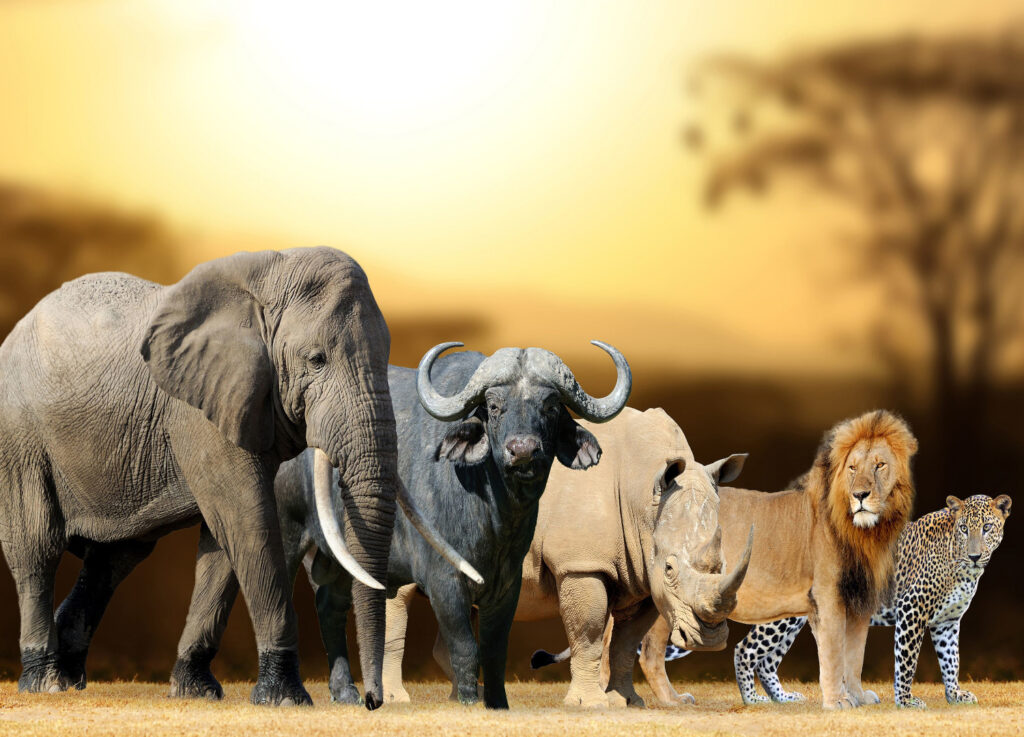
  • African lion: one of the largest single populations of any African national park, spread across resident prides in Seronera, the Western Corridor, and the southern plains
  • Cheetah exceptional viewing on the open eastern and southern plains, monitored since 1968 by the Serengeti Cheetah Project
  • Leopards are most reliably seen in the riverine forest along the Seronera River
  • Black rhino: a small, closely guarded reintroduced population, primarily in the Moru Kopjes area; sightings are genuinely rare
  • Elephant and buffalo present year-round across all four regions, completing the Big Five alongside lion, leopard, and rhino
  • Nile crocodiles concentrated at the Grumeti and Mara river crossing points
  • Over 500 recorded bird species, including the lappet-faced vulture, kori bustard, and secretary bird

Serengeti vs. Ngorongoro Crater vs. Masai Mara and Where Rwanda’s Gorillas Fit In.

The Serengeti, the Ngorongoro Crater, and Kenya’s Masai Mara are routinely confused by first-time safari planners, but they are three genuinely different experiences within or adjacent to the same ecosystem, and the right choice, or right combination, depends on how much time you have and whether wide-open migration drama or concentrated, near-guaranteed game viewing matters more to you.

Serengeti vs. Ngorongoro Crater

The Ngorongoro Crater is a collapsed volcanic caldera roughly 260 square kilometers across, holding an extraordinarily dense, largely resident wildlife population in a self-contained bowl, which makes it the closest thing in East Africa to a guaranteed Big Five sighting within a single day. It is not part of Serengeti National Park; it is managed separately by the Ngorongoro Conservation Area Authority and carries its crater descent and conservation fees on top of standard park charges. The Crater mostly lacks migration and the sense of scale and space of a multi-day Serengeti stay, as herds pass through its southern rim only seasonally.

Serengeti vs. Masai Mara (Kenya)

The Serengeti and the Masai Mara are, ecologically, one continuous system divided only by an international border; a wildebeest crossing the Mara River has no idea it has changed countries. The practical differences are logistical and experiential rather than biological: the Mara is considerably smaller than the Serengeti, which concentrates wildlife and vehicles into a tighter space during crossing season, and it typically sees the migration for a shorter window, roughly July through October, mirrored by Tanzania’s own northern Serengeti dry season. Nairobi’s proximity makes the Mara a faster, shorter-haul add-on for travelers already in Kenya, while the northern Serengeti on the Tanzanian side of the same river crossings tends to feel noticeably less crowded for the same event, a distinction serious repeat safari travelers weigh carefully when choosing where to base for crossing season.

Plan Your Rwanda Safari

Start Planning a Private Gorilla Trek

Rwanda gorilla permits sell out months in advance. Secure your dates before the season closes.

Why Travelers Pair the Serengeti With Rwanda’s Mountain Gorillas.

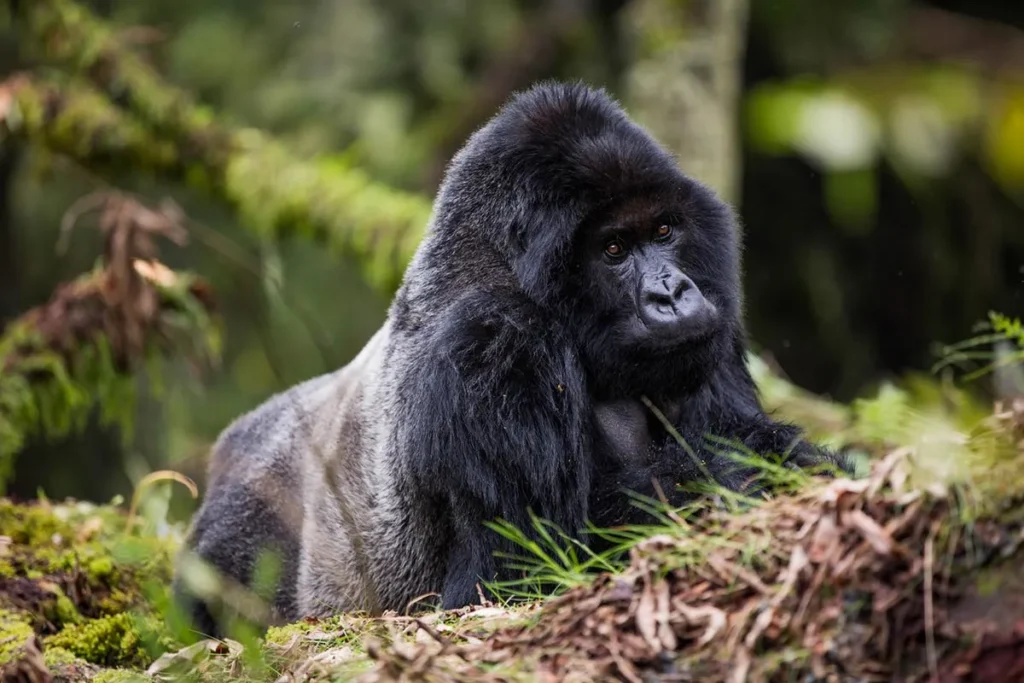
Gorilla trekking and a Serengeti migration safari are not competing choices; they are complementary halves of the same continent’s best wildlife experiences, and an increasing number of travelers researching where to trek gorillas end up booking both rather than choosing between them. Mountain gorilla trekking in Rwanda is an intimate, on-foot, forest encounter with an endangered great ape at close range, capped at eight visitors per family and one hour of observation; a Serengeti safari is an open-plains, vehicle-based spectacle measured in millions of animals rather than dozens. The two journeys draw on entirely different registers of wildlife travel, and routed correctly through Kigali and Kilimanjaro, they combine into a single 12-to-16-day East Africa circuit that most experienced travelers describe as delivering the continent’s two most distinct wildlife experiences without a wasted travel day. Our team at Rwanda Gorilla Expeditions specializes in the Rwanda side of that circuit and coordinates the cross-border routing and timing so that a confirmed gorilla permit date and a Serengeti migration window actually line up on the calendar rather than working against each other.

2-Day Rwanda Gorilla Safari.

Destination Core Experience Typical Cost Driver Best For
Serengeti (Tanzania) Open-plains migration; vehicle game drives USD 70–83 per person, per day, park fee, plus lodge Migration drama, scale, and regional variety
Ngorongoro Crater (Tanzania) Concentrated Big Five in a volcanic caldera Crater and conservation fees, plus lodge Near-guaranteed sightings in a single day
Masai Mara (Kenya) Migration crossings; private conservancies Reserve and conservancy fees, plus lodge Faster access from Nairobi; crossing season
Volcanoes NP (Rwanda) On-foot mountain gorilla trekking USD 1,500 permit, plus lodge The rarest, most intimate wildlife encounter on the continent

When to Go: The Best Time to Visit the Serengeti

There is no single best month to visit the Serengeti, because the right answer depends entirely on what you most want to see: calving and its associated predator action favor January and February, the classic river-crossing imagery favors July through September, and travelers prioritizing value and smaller crowds should look closely at March through May or November. Tanzania’s climate follows two rainy seasons, the long rains from roughly March to May and the short rains in November, bracketing two drier windows that account for most of the year’s visitor traffic.

Best time for gorilla trekking.

Season Months Weather Migration Phase Crowd & Price Level
Calving season December – March Warm, increasingly green as short rains taper Southern plains / Ndutu calving Moderate, rising toward February
Long rains March (late) – May Heaviest rainfall of the year; muddy tracks Move toward the Western Corridor. Lowest crowds and rates of the year
Dry / peak season June – October Dry, dusty, clear skies Grumeti crossings, then Mara crossings Highest crowds and rates; book 12–18 months ahead for July–September.
Short rains November Light, mostly afternoon rain Return south begins. Low to moderate; strong value

Getting There and Practical Logistics

Nearly every international traveler reaches the Serengeti via Kilimanjaro International Airport (JRO) near Arusha, then connects onward either by light aircraft directly to one of the park’s seven airstrips or by a six- to nine-hour overland transfer that most itineraries deliberately break up with a stop at the Ngorongoro Crater.

Flying In: Kilimanjaro or Arusha to the Serengeti’s Airstrips

Scheduled and charter flights operated by carriers such as Coastal Aviation, Grumeti Air, and Safari Air Link connect Kilimanjaro International Airport (JRO) and the smaller Arusha Airport (ARK) to seven airstrips inside the park, including Seronera, Kogatende, Lamai, Grumeti, Lobo, and Ndutu, with flight times ranging from roughly one to two and a half hours depending on the destination. A typical published one-way fare on the Arusha-to-Seronera route runs around USD 265 per person, including taxes, and several of the more exclusive northern and western camps maintain their own private airstrips with direct charter access. Air travel is, by a wide margin, the more time-efficient way to reach the Serengeti and the option most luxury itineraries default to.

Driving In: The Overland Route via Ngorongoro

The overland route from Arusha to Seronera covers roughly 325 kilometers and takes approximately eight hours, which is why almost every drive-in itinerary includes an overnight stop near the Ngorongoro Crater along the way rather than attempting the full transfer in a single day. Naabi Hill Gate, the park’s busiest entrance, sits roughly 45 kilometers from Seronera and operates daily from 6:00 AM to 6:00 PM. Travelers approaching from the Lake Victoria side typically use the Ndabaka Gate, roughly an hour and a half from Mwanza, while the northern Klein’s Gate and Bolongonja Gate serve the Kogatende sector near the Kenyan border, the latter doubling as an entry point for travelers crossing between the Serengeti and the Masai Mara overland.

Coming From Kigali and Rwanda

For travelers building a Rwanda-then-Tanzania circuit, there are two realistic routings from Kigali. The first flies from Kigali to Kilimanjaro International Airport, typically via Nairobi or a direct regional connection, then continues by light aircraft into the Serengeti, exactly as described above. The second, faster but pricier, option books a direct charter flight from Kigali straight to the Seronera airstrip, bypassing the Kilimanjaro connection and the eight-hour road transfer entirely. Both routings are ones our team coordinates as part of a combined itinerary; because gorilla permits in Rwanda are date-specific and must be confirmed well in advance, sequencing a Rwanda gorilla trek before a Tanzania migration safari, rather than the reverse, generally produces a cleaner overall schedule. Reach out through our Rwanda Gorilla Expeditions or on WhatsApp, and we will map the exact routing against your dates.

Park Entry Fees and Costs (2027)

Fee Type Approximate Cost (Non-Resident)
Park entry, adult, per 24 hours USD 70–83 (peak / low season), plus 18% VAT
Park entry, child (5–15), per 24 hours USD 20–24
Concession/bed-night fee (in-park lodges) USD 59–71 per person, per night
Ngorongoro transit fee (if routing via NCA) Approximately USD 71 per adult, per crossing
Foreign-registered 4×4 vehicle fee USD 40–75, depending on vehicle type
Hot air balloon safari USD 500–700 per person

What to Book in Advance

  • Northern Serengeti camps for the July–September crossing season and Ndutu-area camps for the January–February calving season, both routinely book out 12 to 18 months ahead for the most sought-after positions
  • A minimum of three consecutive nights in whichever region matches your priority season crossings and calving action can take days to materialize, and a single overnight stop frequently misses the event entirely
  • Hot air balloon safaris, which have limited daily capacity and should be reserved before arrival rather than requested on the ground
  • Any Rwanda gorilla trekking permit that anchors the front half of a combined itinerary, since permits are allocated by the Rwanda Development Board on a first-booked basis and routinely sell out for peak dates
  • Internal flights between Serengeti airstrips and onward connections to Kilimanjaro, particularly during the July–September and December–January peak windows

Where to Stay: Serengeti’s Finest Lodges by Region

Accommodation across the Serengeti ranges from simple public campsites to some of the most architecturally ambitious camps on the continent, and the right choice depends almost entirely on which region matches your travel dates rather than a fixed hierarchy of “best” properties. The table below organizes the ecosystem’s benchmark luxury names by the region and season they serve.

Region Representative Properties Character
Central Serengeti (Seronera) Four Seasons Safari Lodge Serengeti, Lemala Ewanjan Camp, Namiri Plains Year-round base with the widest lodge choice and reliable resident wildlife
Southern Serengeti / Ndutu Lake Ndutu Luxury Tented Lodge; seasonal mobile camps Seasonal, calving-focused stays; some properties close outside December–March
Western Corridor Singita Grumeti Reserves (Sasakwa, Faru Faru, Sabora) Private-concession luxury with black-maned lions and Grumeti River crossings
Northern Serengeti (Kogatende / Lamai) Nomad’s Lamai Serengeti, & Beyond Serengeti Under Canvas The most exclusive, remote camps, positioned for the Mara River crossings

For travelers combining a Serengeti stay with a Rwanda gorilla trek, the lodge landscape around Volcanoes National Park is, by any global standard, comparable in caliber: Singita Kwitonda Lodge, Wilderness Bisate, One&Only Gorilla’s Nest, and Wilderness Sabyinyo Silverback Lodge sit within twenty to forty minutes of the Kinigi trekking headquarters and are covered in full in our dedicated Volcanoes National Park guide.

What to Pack for a Serengeti Safari

Packing for the Serengeti is a genuinely different exercise from packing for gorilla trekking. This experience is vehicle-based, open-plains travel rather than forest hiking, so the priorities shift from waterproof boots and gaiters to sun protection, optics, and layers for cool early-morning game drives that warm quickly once the sun clears the horizon.

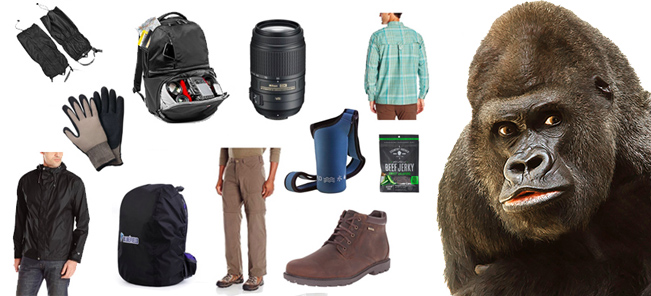
What to Pack for gorilla trekking

  • Neutral-colored clothing in khaki, olive, and stone tones, avoiding bright colors and dark blacks or navy that attract tsetse flies in some areas
  • A warm layer or fleece for early-morning and evening game drives, when temperatures on the open plains can drop into the low teens Celsius
  • A wide-brimmed hat, sunglasses, and high-SPF sunscreen; the equatorial sun on open grassland is intense even on overcast days
  • Binoculars, ideally one pair per person rather than shared, given how much of Serengeti wildlife viewing happens at genuine distance across open plains
  • A camera with a telephoto lens of at least 200mm, spare batteries, and ample memory card storage for both game drives and any balloon safari
  • Comfortable, closed walking shoes for guided bush walks in permitted areas, plus sandals for camp downtime
  • A basic malaria prophylaxis regimen, discussed with a travel medicine specialist in advance, since the Serengeti’s lower elevation carries meaningfully higher malaria risk than Rwanda’s high-altitude gorilla trekking zones

Plan Your Rwanda Safari

Start Planning a Private Gorilla Trek

Rwanda gorilla permits sell out months in advance. Secure your dates before the season closes.

Frequently Asked Questions About Serengeti National Park.

What is Serengeti National Park known for?

Serengeti National Park is known above all for the Great Migration, the year-round, circular movement of roughly 1.5 million wildebeest, 400,000 zebra, and hundreds of thousands of gazelle across its 14,750 square kilometers of Tanzanian plains. It also holds one of Africa’s largest lion populations, exceptional cheetah viewing on its open eastern and southern grasslands, and reliable leopard sightings along the Seronera River. Beyond wildlife, the park is a UNESCO World Heritage Site inscribed in 1981 and sits adjacent to Olduvai Gorge and the Laetoli footprint site, two of the world’s most significant paleoanthropological locations. Most first-time visitors come specifically for one phase of the migration, whether the January-to-February calving season or the July-to-October Mara River crossings, then discover that the resident wildlife around Seronera is compelling in its own right regardless of the herd’s location.

How much does it cost to visit Serengeti National Park?

As of 2027, non-resident adult visitors pay approximately USD 70 to 83 per person per 24-hour period, set by the Tanzania National Parks Authority and subject to an additional 18 percent VAT. Children aged 5 to 15 pay roughly USD 20 to 24 per day, and children under 5 enter free. This entry fee covers park access only; travelers staying at lodges or camps inside the park boundaries also pay a separate concession or bed-night fee, typically USD 59 to 71 per person per night, and vehicle fees apply for foreign-registered 4x4s. A complete Tanzania safari package, including accommodation, guiding, and internal flights, runs from roughly USD 1,500 per person for a basic camping itinerary to well over USD 12,000 per person for a fully bespoke, fly-in luxury circuit.

When is the best time to see the Great Migration river crossings?

The Mara River crossings in the northern Serengeti typically occur from July through October, with the action generally most intense during August and September. Guides who work the northern sector year-round frequently cite September specifically as the best overall month, since crossings remain reliably active while visitor numbers run 30 to 40 percent lower than the August peak, producing calmer riverbanks and better vehicle positioning for photography. Crossings are never guaranteed on any single day, since herds can gather at a crossing point for hours or days before actually moving, which is why a stay of at least three consecutive nights in the northern Serengeti materially improves your odds compared to a single overnight stop.

When is calving season in the Serengeti?

Calving season runs roughly from late December through March, with the sharpest concentration of births occurring in a two-to-three-week window centered on late January and February. During this peak, as many as 8,000 wildebeest calves can be born across the southern plains and Ndutu area in a single day, out of an estimated 500,000 total births for the season. The dense concentration of newborns draws intense predator activity from lions, cheetahs, hyenas, and jackals, and many experienced safari guides consider this the single best predator-viewing window of the entire year, made more appealing by the noticeably smaller crowds compared to the July-to-September crossing season.

How do I get to Serengeti National Park?

Most international travelers fly into Kilimanjaro International Airport (JRO) near Arusha, then connect by light aircraft, operated by carriers such as Coastal Aviation and Grumeti Air, to one of the park’s seven airstrips, a flight of roughly one to two and a half hours depending on the destination airstrip. Alternatively, travelers can drive approximately 325 kilometers and eight hours from Arusha to Seronera, a route almost every operator breaks up with an overnight stop near the Ngorongoro Crater. Travelers coming from Rwanda typically route through Kigali to Kilimanjaro via Nairobi or a direct regional connection, or they book a direct charter flight from Kigali straight to the Seronera airstrip.

What is the difference between the Serengeti and the Masai Mara?

The Serengeti and the Masai Mara are ecologically one continuous system, divided only by the Kenya-Tanzania border, and the migrating herds cross freely between them with no awareness of the political boundary. The practical differences are logistical: the Serengeti covers roughly 14,750 square kilometers versus the Mara’s considerably smaller footprint, and the Serengeti hosts the migration for most of the year across its four regions, while the Mara typically sees the herds concentrated mainly from July to October. Nairobi’s proximity makes the Mara a faster add-on for Kenya-based itineraries, while the Tanzanian side of the same river crossings, viewed from the northern Serengeti, tends to feel noticeably less crowded during peak crossing weeks.

What is the difference between the Serengeti and Ngorongoro Crater?

Ngorongoro Crater is a collapsed volcanic caldera roughly 260 square kilometers across, separately managed by the Ngorongoro Conservation Area Authority rather than part of Serengeti National Park itself, and it holds an extraordinarily dense, largely resident wildlife population within its walls. This makes the Crater the closest experience in East Africa to a guaranteed single-day Big Five sighting, but it does not offer the wide-open sense of scale or the migration itself in most months, since the herds only cross its southern rim seasonally. Most Northern Circuit Tanzania itineraries combine both destinations, often descending into the Crater for a single day en route between Arusha and the Serengeti’s central or southern regions.

Can I combine a Serengeti safari with gorilla trekking in Rwanda?

Yes, and this is one of the most requested combinations in East African luxury travel. Mountain gorilla trekking in Rwanda’s Volcanoes National Park delivers an intimate, on-foot forest encounter capped at eight visitors per gorilla family, while a Serengeti migration safari delivers open-plains wildlife viewing on a completely different scale. Routed through Kigali and Kilimanjaro, the two experiences combine comfortably into a single 12-to-16-day itinerary. Because Rwanda’s gorilla permits are date-specific and allocated on a first-booked basis by the Rwanda Development Board, we generally recommend confirming the gorilla trekking dates first, then building the Tanzania portion of the trip around them.

How many days do I need in the Serengeti?

A minimum of three nights is recommended for meaningful game viewing in a single region, since a shorter stay leaves little margin if a crossing or a specific sighting takes an extra day to materialize. Four to six nights split across two regions, for example, Seronera and the northern Serengeti during crossing season, gives a genuinely complete picture of the ecosystem and a realistic chance at the migration’s headline moments. Travelers combining the Serengeti with Ngorongoro Crater, Tarangire, or a Rwanda gorilla trek typically budget seven to ten days for the Tanzania portion alone, with the Serengeti itself accounting for the largest single block of that time.

Is the Serengeti safe to visit?

The Serengeti is a well-established, professionally managed safari destination visited by hundreds of thousands of international travelers each year, and standard safari safety protocols, staying inside vehicles during game drives except at designated points, following ranger and guide instructions, and respecting minimum wildlife distances, are consistently and effectively enforced. Tanzania’s Northern Circuit, which includes the Serengeti, Ngorongoro Crater, and Arusha, is one of the country’s most heavily visited and best-resourced tourism corridors. As with any wildlife destination, the primary practical risks are environmental rather than security-related, including malaria in lower-elevation areas and the physical unpredictability of being close to wild animals, both of which a reputable operator will brief you on thoroughly before you travel.

What animals can I see in the Serengeti besides the migration?

Beyond the migratory wildebeest, zebra, and gazelle, the Serengeti supports one of the largest lion populations of any African national park, exceptional cheetah viewing on its open plains, and reliable leopard sightings along the Seronera River’s riverine forest. A small, closely guarded population of reintroduced black rhino lives primarily around the Moru Kopjes, completing the Big Five alongside resident elephant and buffalo populations present year-round across all four park regions. The park also holds Nile crocodiles concentrated at the Grumeti and Mara river crossing points and more than 500 recorded bird species, including the lappet-faced vulture, kori bustard, and secretary bird.

Do I need a visa to visit Tanzania?

Most international visitors require a visa to enter Tanzania, available either as an e-visa applied for in advance through Tanzania’s official immigration portal or, for many nationalities, as a visa on arrival at Kilimanjaro International Airport or another official entry point. The standard tourist visa fee is typically around USD 50 to 100 depending on nationality and visa type, and processing for the e-visa is generally recommended at least a few weeks ahead of travel to avoid arrival delays. Travelers combining Tanzania with a Rwanda gorilla trek should note that Rwanda’s own visa and entry requirements are handled entirely separately, and both should be confirmed against your specific passport before finalizing flights.

What should I pack for a Serengeti safari?

Pack neutral-colored clothing in khaki, olive, and stone tones, a warm layer for cool early-morning and evening game drives, a wide-brimmed hat and high-SPF sunscreen, and a pair of binoculars per traveler given how much Serengeti wildlife viewing happens at genuine distance across open plains. A camera with at least a 200mm telephoto lens, spare batteries, and ample storage is worth the extra luggage weight, and comfortable closed walking shoes are useful for any guided bush walks. This kit differs meaningfully from gorilla trekking packing, which prioritizes waterproof boots, gaiters, and rain gear for forest conditions rather than sun and dust management on open plains.

How much does a full Serengeti and gorilla trekking combined safari cost?

A combined itinerary pairing a Rwanda gorilla trek with a Serengeti migration safari typically runs from roughly USD 10,000 to over USD 20,000 per person for a 12-to-16-day journey, depending on the season, lodge tier, and number of regions covered within each country. The single largest fixed cost on the Rwanda side is the USD 1,500 gorilla trekking permit; on the Tanzania side, the largest variable costs are luxury lodge nights, which range from roughly USD 600 to over USD 2,500 per person per night depending on the property and season, plus internal flights between airstrips. We provide fully itemized quotations covering both countries so there are no hidden costs once you confirm your dates.

How far in advance should I book a combined Serengeti and Rwanda gorilla trekking safari?

For travel during either country’s peak season, roughly June through September and December through February, we recommend booking six to twelve months in advance, since both Rwanda’s gorilla permits and the Serengeti’s most sought-after northern and southern camps sell out well ahead of those dates, with the top northern Serengeti crossing-season camps often committed 12 to 18 months out. For shoulder-season travel in April, May, or November, three to six months of lead time is generally workable, though earlier booking always widens your choice of specific lodges and gorilla family assignments. The planning conversation should start with us as early as your travel dates are roughly fixed, because the two halves of a combined itinerary depend on different booking systems in different countries.

Plan Your Serengeti and Rwanda Safari

The Serengeti and the mountain gorillas of Rwanda are, between them, the two most complete wildlife experiences East Africa has to offer, and the travelers who see both rarely regret the extra days it takes to do so properly. Our team at Rwanda Gorilla Expeditions specializes in the Rwanda half of that journey, securing gorilla permits directly with the Rwanda Development Board, matching you to the right gorilla family, and coordinating the cross-border routing through Kigali and Kilimanjaro so your Serengeti dates line up cleanly with your gorilla trek rather than fighting against it. Whether you already know exactly which migration phase you want to see or you are still weighing Rwanda against a Tanzania-only trip, get in touch through WhatsApp or email. Tell us your dates and we’ll check permit availability within a few minutes.

Ready to Trek? Permits are limited — plan early.