What’s Included and What’s Not Included
Included
- Standard Rwanda gorilla trekking permit (one trek) and golden monkey permit
- All park and conservation fees for the activities on this itinerary, including Serengeti entry and bed-night concession fees
- Eleven nights of luxury accommodation as specified
- All meals during the safari, as listed in the daily itinerary, plus drinking water
- Private English-speaking guides in Rwanda and Tanzania and a private vehicle in each country.
- All airport and road transfers, including the Kigali to Volcanoes road transfer
- Internal flights: Kigali to Kilimanjaro and light-aircraft flights within the Serengeti
- We provide pre-departure planning, visa guidance, and in-country support throughout.
Not included
- International flights to Kigali and from Kilimanjaro
- Visa fees for Rwanda and Tanzania
- Travel insurance, which is essential and must cover medical evacuation
- Tips and gratuities for guides, porters, trackers, and lodge staff
- Alcoholic drinks and premium wines or spirits (some lodges include house drinks; we confirm per property)
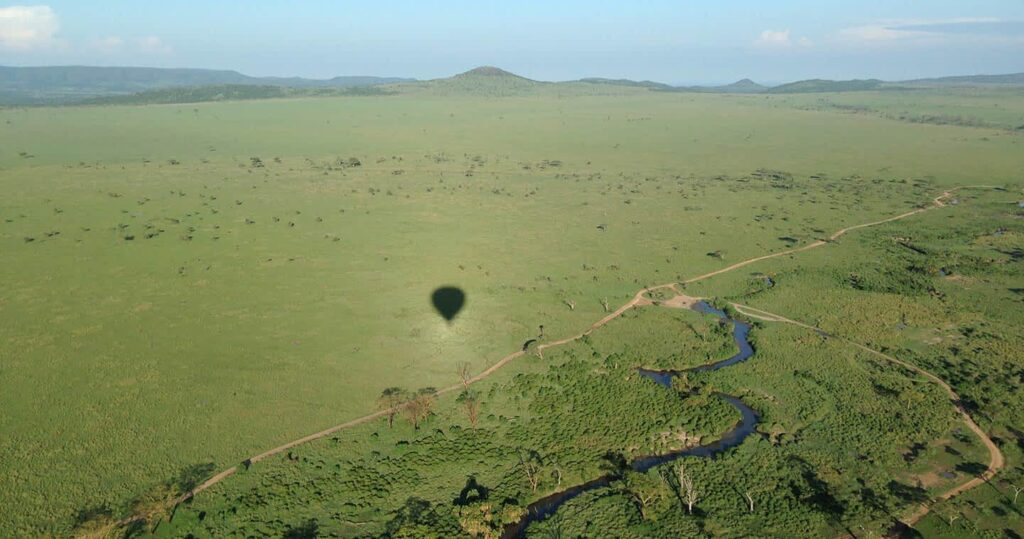
- Optional activities: hot air balloon safari, a second gorilla permit, exclusive gorilla trekking, helicopter transfers, and spa treatments
- Personal items, laundry, and any expenses of a personal nature
Gorilla Families and Trekking Difficulty in Volcanoes National Park.
Volcanoes National Park is home to more than twenty habituated gorilla families, each with its own size, history, and range. A maximum of eight people visit each family once a day, which is why permit supply is tight.
On the morning of your trek, park officials at Kinigi assign visitors to families, and this process is where honesty about difficulty matters. Unlike a summit hike, gorilla trekking has no fixed difficulty. Gorillas move each day, feeding and travelling according to their own decisions, and a family that was 30 minutes from the trailhead yesterday may be four hours away today. Some of the better-known families, such as Sabyinyo, Amahoro, Agashya, Kwitonda, Hirwa, and Umubano, are regularly seen on moderate routes, while others, notably the large Susa family studied since Dian Fossey’s time, tend to range higher and farther and are favored by strong hikers. Family ranges change, and we never promise a specific family or a specific trek length.
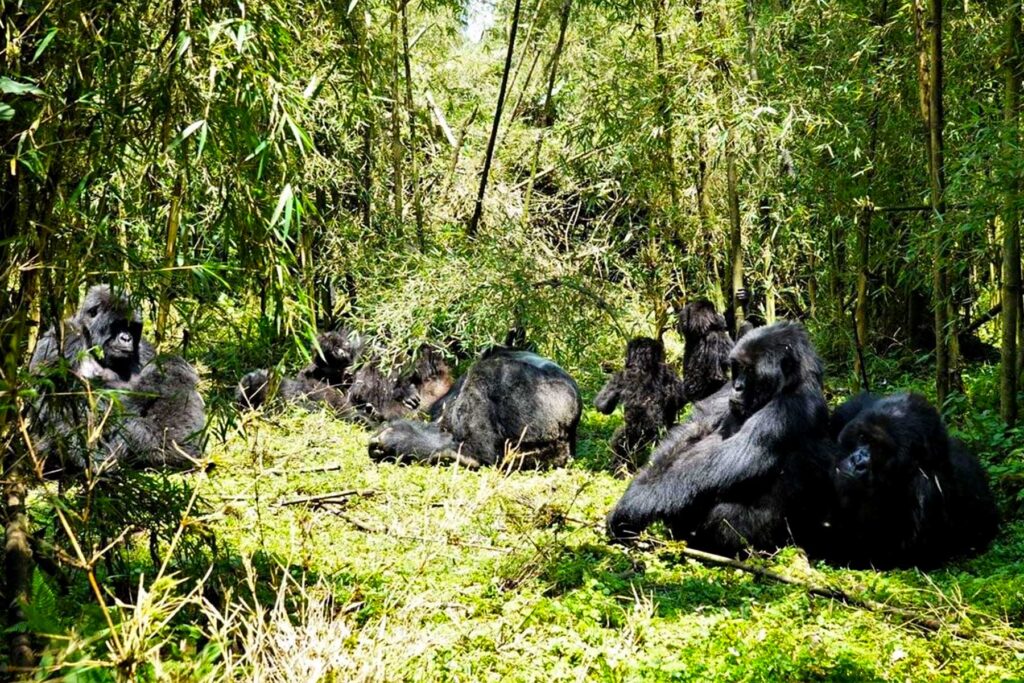
What we can do is ask. We tell the park team in advance about the fitness level, age, and expectations of your group, and guides generally match visitors to families accordingly, so travellers who prefer a gentler trek are placed with groups closer to the trailhead and those who want a challenge are offered the higher routes. For guests who want certainty and control, an exclusive gorilla permit lets your party choose the family and the pace for the day.
Elevation Profile for the 12-Day Safari
This itinerary moves between highland Rwanda and the savannah plains of Tanzania, and the altitude changes are meaningful in the first half and negligible in the second. The figures below are approximate and will help you plan your fitness and acclimatization. In short: you start at about 1,500 meters in Kigali, climb to the 2,100- to 3,000-meter zone for the gorilla and golden monkey days, then descend to roughly 1,100 to 1,500 meters for everything that follows.
| Day and activity |
Approx. elevation |
Notes |
| Day 1: Kigali |
1,500 m (4,900 ft) |
Mild altitude; city walking only |
| Day 2: Drive to Volcanoes NP |
Climb to about 2,100 to 2,500 m. |
Net gain of roughly 600 to 1,000 m along the road; lodges are at the foot of the volcanoes. |
| Day 3: Gorilla trek |
Trailheads are about 2,400 to 2,800 m; gorillas commonly 2,500 to 3,200 m. |
Net climbs typically range from 200 to 600 m, with several hundred more metres of up-and-down; harder treks can exceed these numbers. |
| Day 4: Golden Monkeys, Twin Lakes |
Bamboo zone about 2,400 to 2,800 m; lakeshores lower, about 1,900 to 2,000 m |
Golden monkey walks are usually gentler than gorilla treks. |
| Day 5: Volcanoes to Kigali to Arusha |
Descent to 1,500 m, then Arusha to about 1,400 m. |
Altitude falls and stays comfortable. |
| Days 6 and 7: Seronera |
About 1,500 m |
Vehicle-based; no physical demand from altitude |
| Days 8 to 10: Kogatende |
About 1,100 to 1,500 m |
Open plains and river valleys |
| Days 11 and 12: Arusha, Kilimanjaro Airport |
About 1,400 m, the airport is near 900 m. |
Descending toward departure |
The practical takeaway is that Day 3 is the only physically demanding day on the entire itinerary. Everything else is paced for comfort, which is one reason the journey suits older travellers and mixed-ability groups, provided the gorilla trek is planned thoughtfully.
Accommodation and Lodges on This Safari
Every lodge on this itinerary sits in the luxury to ultra-luxury tier, and our selection is built around location, privacy, and the quality of the guiding team, not simply the brand. Final properties are confirmed based on availability for your dates.
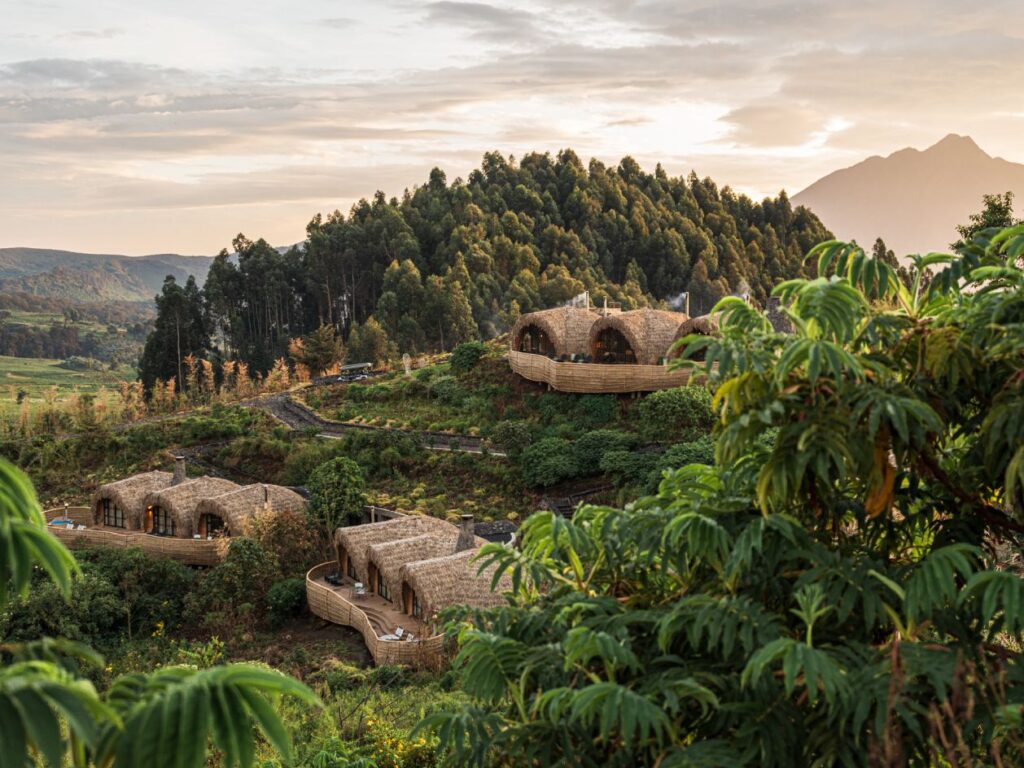
Wilderness Bisate Lodge
Near Volcanoes National Park, Rwanda (3 nights)
- Wilderness Bisate: Circular, thatched forest villas on a hillside that has been reforested with native species. Memorable for the design, the golden monkeys that sometimes pass through the grounds, and the views across the volcanic landscape.
- Singita Kwitonda Lodge: Set directly against the park boundary with uninterrupted views of the volcanic range. Known for its private suites, cuisine, and the depth of the guiding team.
- One&Only Gorilla’s Nest: Spacious suites, extensive gardens, and the unhurried polish of the One&Only brand, which many guests find a restorative counterpoint to the physical trek.
- Wilderness Sabyinyo Silverback Lodge: One of the original luxury lodges in the area, community-owned and sitting at the base of Mount Sabyinyo, with a documented benefit to the surrounding communities.
Kigali and Arusha (3 nights in total)
In Kigali and Arusha, we use five-star or boutique hotels and lodges chosen for quiet, comfort, and an easy airport transfer. These are transit stays, and the aim is a good night’s sleep, a satisfying dinner, and a smooth transfer the next morning.
Serengeti (5 nights)
In the central Serengeti, properties such as Four Seasons Safari Lodge Serengeti offer a comfortable base with reliable game viewing. In the north, small camps such as Nomad’s Lamai Serengeti and &Beyond Serengeti Under Canvas are positioned for the crossing season, trading some of the larger-lodge amenities for proximity, privacy, and an authentic bush atmosphere. If you are travelling for the calving season instead, we would use camps in the Ndutu region. Explore our full guide to the Serengeti and the Great Migration for a region-by-region breakdown.
Wildlife and Nature to Expect
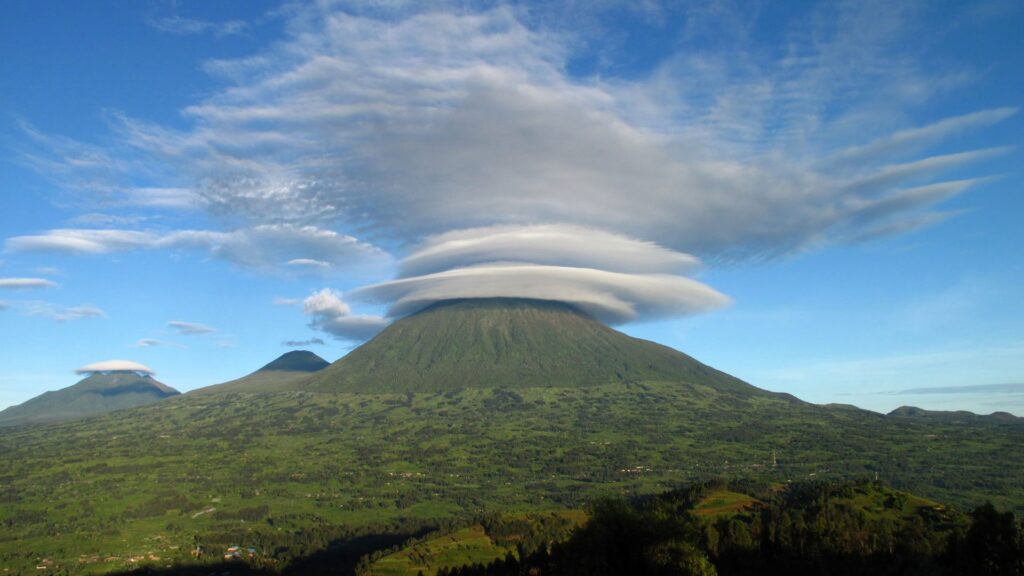
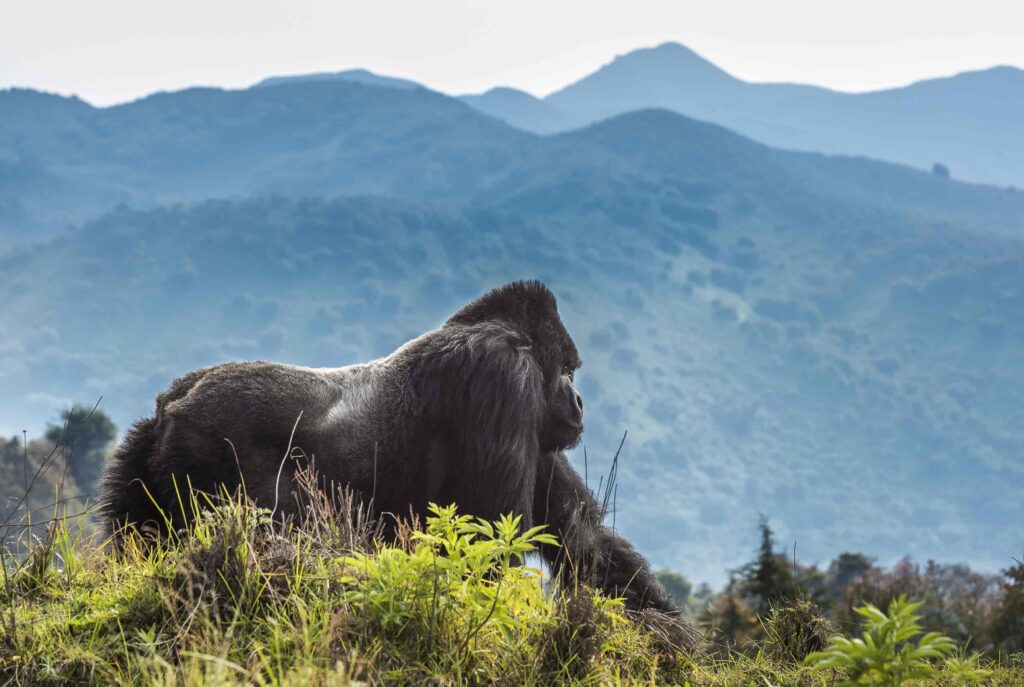
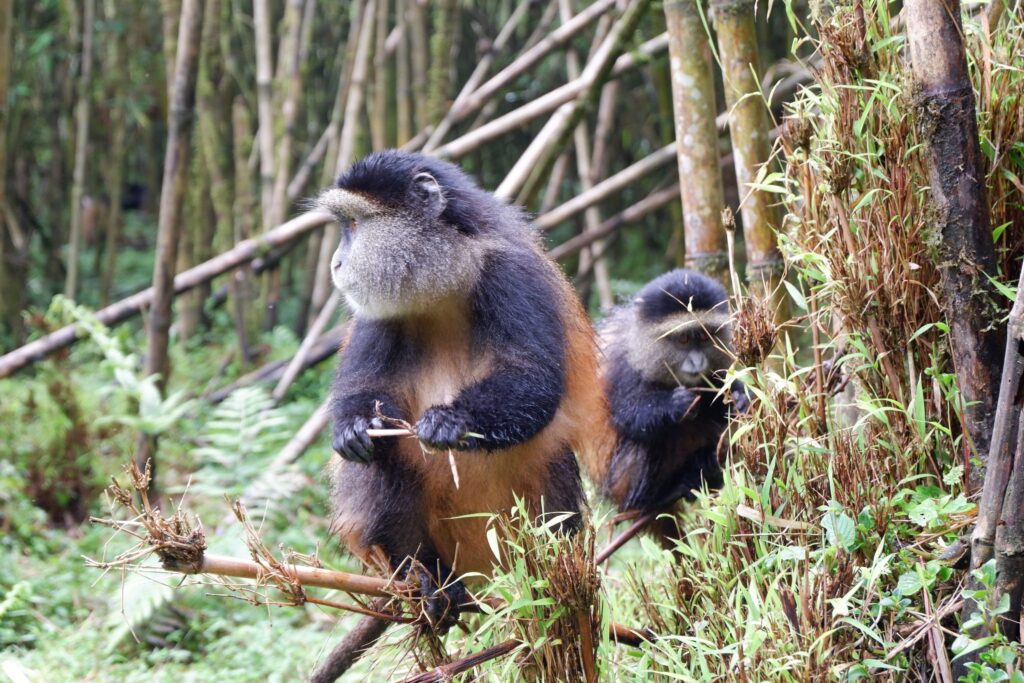
In Rwanda, mountain gorillas are the headline, but Volcanoes National Park is a rich ecosystem in its own right. Golden monkeys, found only in the Virunga region, are a joy to watch. Forest buffalo, black-fronted duikers, and a long list of Albertine Rift endemic birds live in the bamboo and montane forest, and the scenery itself is a highlight: five volcanoes, mist-draped forest zones from bamboo to Hagenia woodland to giant lobelia, and the twin lakes of Burera and Ruhondo below.
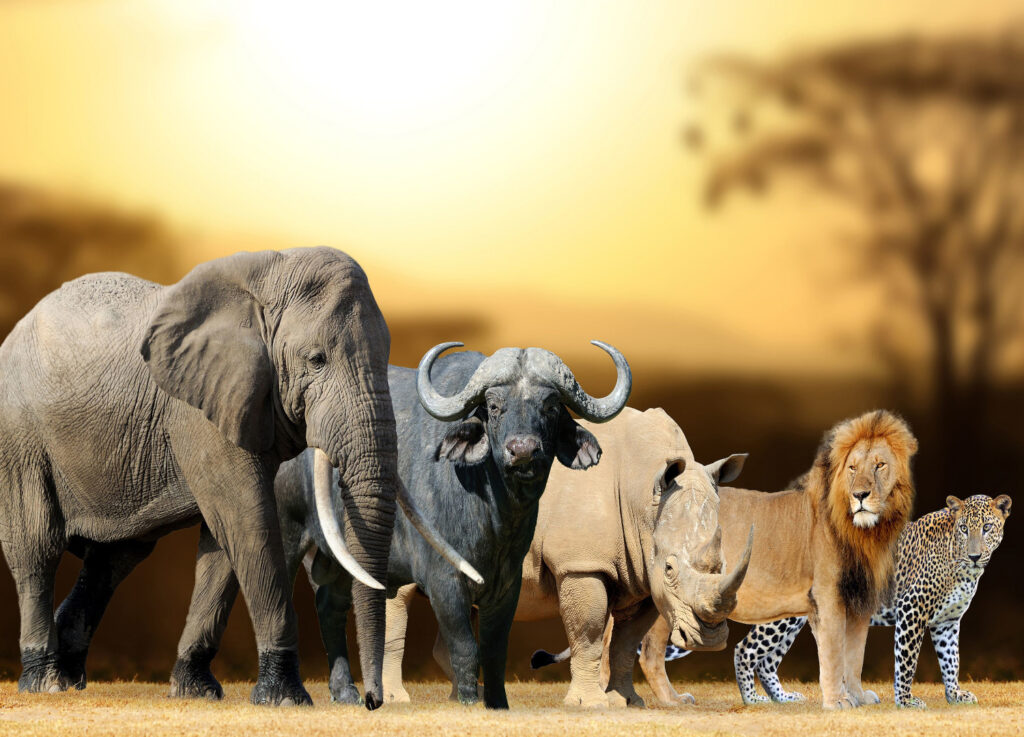
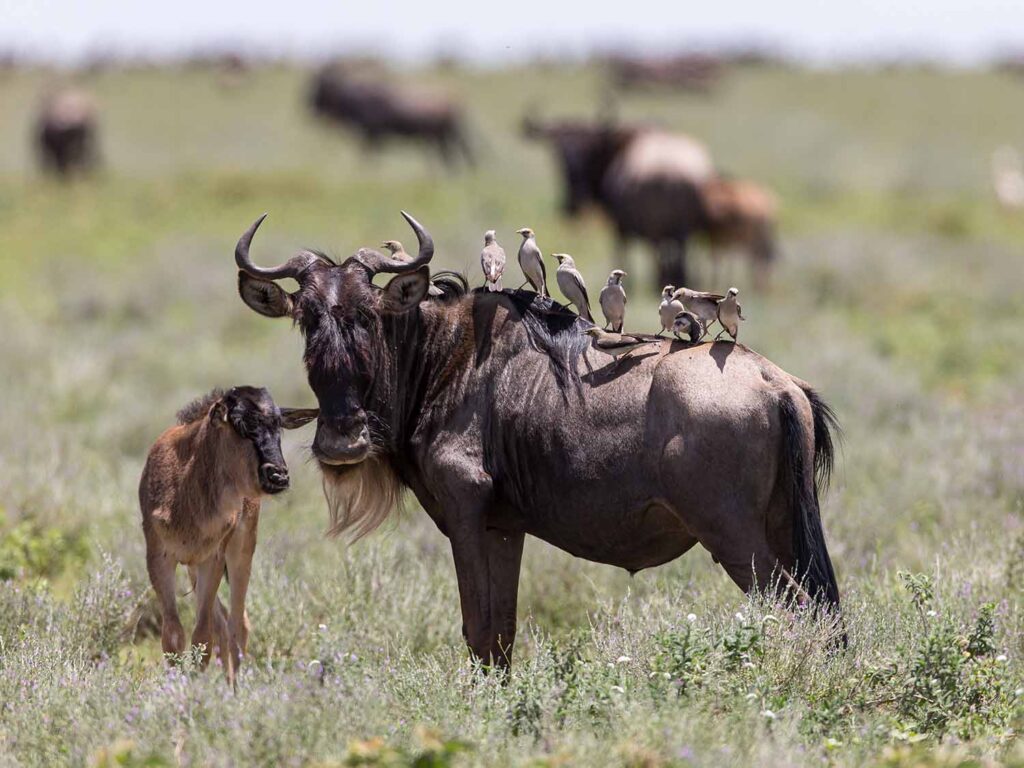
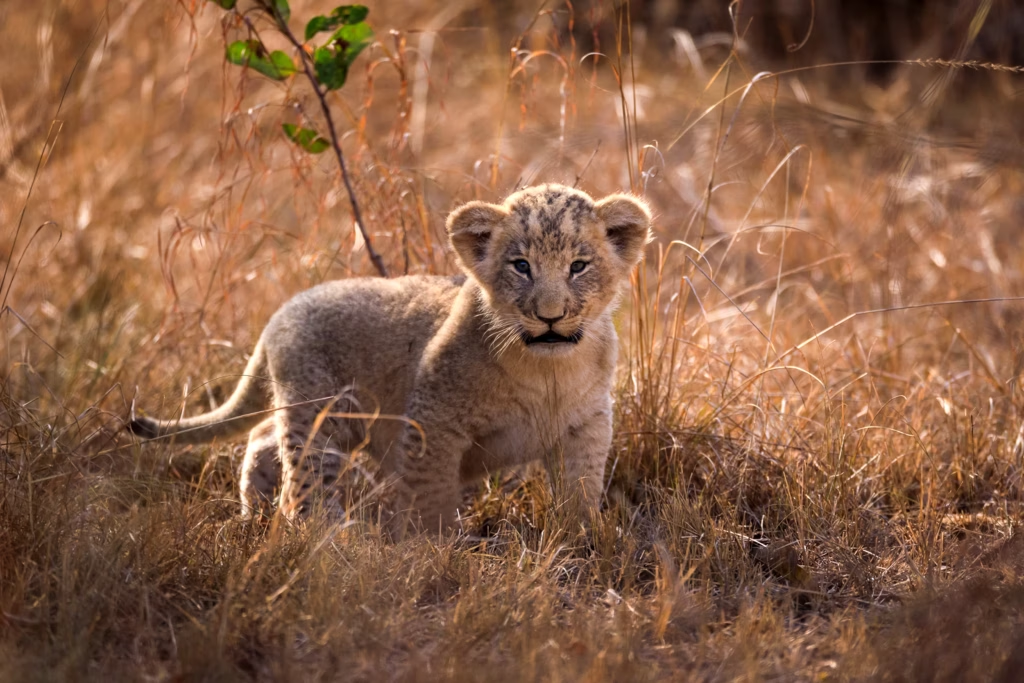
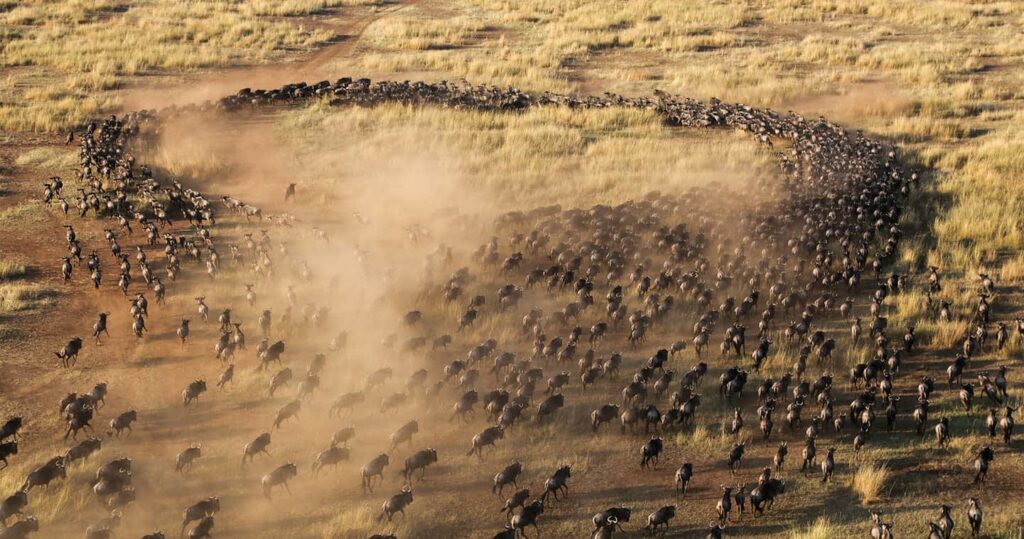
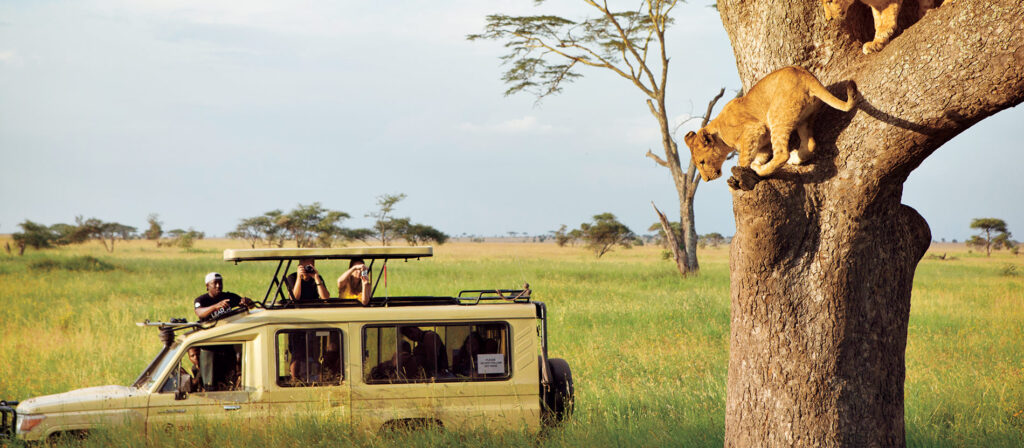
In Tanzania, the Serengeti offers a different register altogether. The Great Migration involves roughly 1.5 million wildebeest, around 400,000 zebras, and several hundred thousand gazelles in a continuous circuit across the ecosystem. Beyond the herds, the park holds one of the largest lion populations of any African reserve, exceptional cheetah viewing on the open plains, and reliable leopard sightings along the Seronera River. Elephants, buffalo, giraffes, hippos, crocodiles, and over 500 recorded bird species complete the picture. Rhinos exist in small, closely guarded numbers around the Moru Kopjes, and sightings are rare.
Physical Difficulty and Fitness Requirements
The gorilla trek is the only element of this safari that requires real physical effort, and it is worth being specific. Treks begin at about 2,500 to 3,000 meters or higher, and the terrain is a steep, muddy, and uneven volcanic slope, often through dense vegetation. Depending on where the family is, you may walk anywhere from 30 minutes to four or more hours each way. The thin air at this altitude makes even moderate climbs feel harder than they would at sea level.
We recommend that you be comfortably able to walk for three to four hours on hilly terrain, ideally with some training in the weeks before you travel: stair climbing, hill walking, and a few long walks in your hiking boots. We strongly advise every guest to hire a porter, and you can get a walking stick at the park. If you have a heart, joint, or respiratory condition, speak to your doctor and tell us in advance. We inform the park about your needs so that they can match you with a suitable family. Children must be 15 or older to trek gorillas, and there are no fitness requirements for the Serengeti, where all game viewing is done from a vehicle.
Best Time to Go: Gorillas and the Great Migration Month by Month
The best time for this combined safari is late June to October, when Rwanda is in its long dry season and the migration moves from the Western Corridor in June to the northern Serengeti for Mara River crossings from July to October. Guides often cite September as the best single month, when crossings remain reliably active and visitor numbers are noticeably lower than in August. For a different kind of safari, January to March offers the calving season on the southern plains, with the densest predator action of the year and fewer visitors. Gorilla trekking in Rwanda is possible all year, because the families remain accessible whatever the weather.

| Month |
Rwanda (Volcanoes NP) |
Serengeti migration location |
Typical temperature |
Crowds and value |
| January |
Short dry season; good trekking conditions |
In the Southern Plains and Ndutu, calving begins. |
Rwanda 8 to 24°C (46 to 75°F); Serengeti 17 to 30°C (63 to 86°F) |
Busy at New Year, then quieter; good value later in the month |
| February |
Short dry season; excellent conditions |
Calving peak around Ndutu; major predator action |
Similar to January |
Moderate crowds; strong value |
| March |
Rains build; muddier trails |
Herds start to move north from the southern plains. |
Rwanda 9 to 22°C (48 to 72°F); Serengeti 18 to 29°C (64 to 84°F) |
Quiet; lower rates |
| April |
Long rains; wettest and greenest |
Central Serengeti and moving northwest |
Similar to March, cooler and cloudier |
Lowest crowds; best value |
| May |
Long rains easing late month |
Heading toward the Western Corridor |
Similar to April |
Very quiet; low rates |
| June |
Long dry season begins; firmer trails |
Grumeti River crossings, Western Corridor |
Rwanda 8 to 24°C (46 to 75°F); Serengeti 15 to 28°C (59 to 82°F) |
Rising demand; permits tighten |
| July |
Peak dry season; best trail conditions |
Herds moving into northern Serengeti |
Similar to June |
Peak season begins; book early. |
| August |
Peak dry season |
Mara River crossings in full swing |
Similar to June |
Highest crowds and rates |
| September |
Peak dry season |
Crossings remain active in the north. |
Similar to June, slightly warmer |
Often the best balance of crossings and crowds |
| October |
Short rains typically begin in late October. |
Crossings continue; herds start to turn south. |
Rwanda 9 to 24°C (48 to 75°F); Serengeti 16 to 30°C (61 to 86°F) |
Moderate crowds; improving value |
| November |
Short rains; some muddy trails |
Herds heading south through the east |
Similar to October, with afternoon showers |
Low to moderate crowds; strong value |
| December |
Short dry season starts |
Herds arriving on the southern plains |
Rwanda 8 to 24°C (46 to 75°F); Serengeti 17 to 30°C (63 to 86°F) |
Peak holiday demand; permits and camps tight |
Road and flight conditions. The road from Kigali to Volcanoes National Park is paved and reliable year-round, though heavy rain in April and May can slow the final approach. In the Serengeti, we use light aircraft for all internal movements because they are faster and avoid wet-season road conditions. Fly-in travel is practical in every month, and the long road transfer from Arusha is best left for travelers with extra time.
Permits and value. Gorilla permits sell out months ahead for June to September and December to February, so for those windows we advise booking 6 to 12 months in advance. For July to September, Northern Serengeti camps often fill up 12 to 18 months in advance. For value, April, May, and November offer lower rates and far fewer visitors, at the cost of wetter conditions. Our deeper guides to Volcanoes National Park, the Serengeti, and the Masai Mara explain the seasons in each destination in more detail.
Gorilla Permits, Park Fees, and Costs
A valid gorilla permit is mandatory, and it is the single most important item to secure first. The Rwanda Development Board issues a limited number each day, and we handle the booking as part of your safari. The table below summarizes the main fees relevant to this itinerary.
| Item |
Approximate cost |
Notes |
| Rwanda gorilla trekking permit |
USD 1,500 per person |
One trek, one hour with the gorillas; included |
| Golden monkey trekking permit |
USD 100 per person |
Included |
| Second gorilla trek (optional) |
USD 1,500 per person |
Subject to availability |
| Exclusive gorilla permit (optional) |
Around USD 15,000 per group |
Private access to one family for the day |
| Serengeti Park entry |
USD 70 to 83 per adult per 24 hours, plus 18% VAT |
Included in the quotation |
| Serengeti bed-night concession fee |
USD 59 to 71 per person per night |
For in-park lodges, included |
| Hot air balloon safari (optional) |
USD 500 to 700 per person |
Reserve in advance. |
| Porter at the gorilla trek |
Modest hire fee, plus tip |
Strongly recommended |
As a rule of thumb, the Rwanda permit should be booked six to twelve months in advance for peak dates and three to six months for shoulder and low seasons. Permit prices are fixed and are not discounted for the rainy season. We also offer the behind-the-scenes gorilla experience, a premium multi-day conservation program for guests who want a deeper encounter.
Packing and Gear List
This journey asks you to pack for two quite different environments, which is why we send a tailored list to every confirmed guest. The core principles are below.
For gorilla trekking in Volcanoes National Park
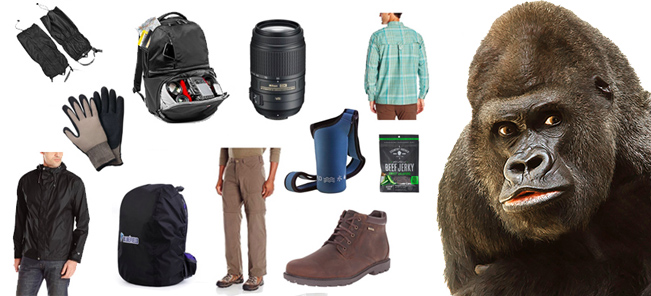
- Waterproof, ankle-supporting hiking boots that are already broken in
- Long-sleeved shirts and long trousers in neutral or earth tones (olive, brown, or grey) to guard against nettles, ants, and scratches.
- Lightweight gardening gloves for pushing through vegetation and gripping branches
- Waterproof rain jacket and a warm fleece, because the forest swings from cold and wet to warm within hours
- Gaiters, a hat, and a small daypack with water, snacks, and insect repellent
- Camera or phone with a protective case (no flash is allowed near the gorillas)
For the Serengeti
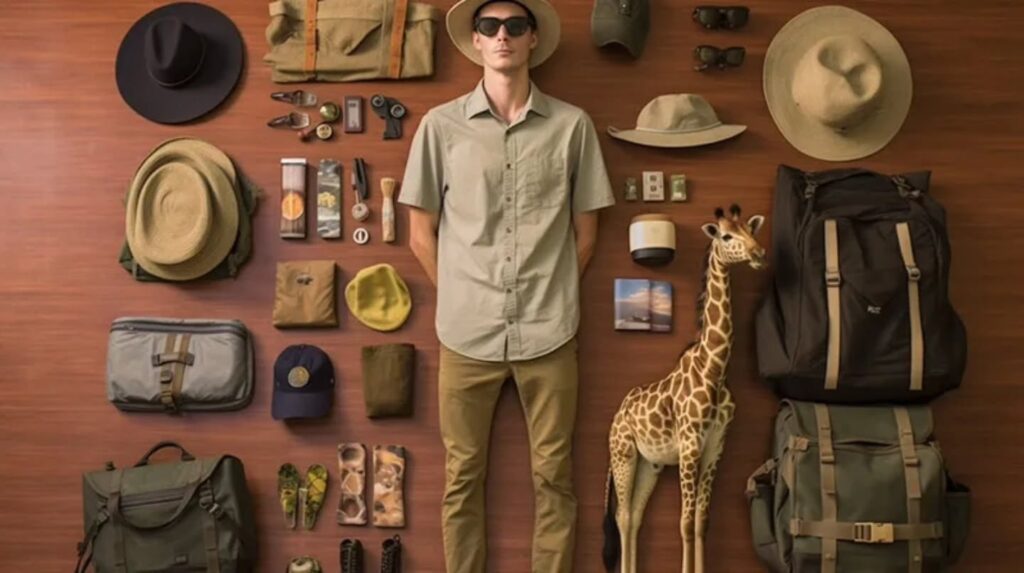
- Neutral, khaki, or olive clothing; avoid bright colors, and avoid dark blue and black in tsetse areas
- A warm layer for cool early-morning and evening drives
- Wide-brimmed hat, polarized sunglasses, and high-SPF sunscreen
- Quality binoculars, ideally one pair per person
- A camera with a telephoto lens of at least 200 mm, spare batteries, and ample memory.
- Soft-sided luggage for light-aircraft flights, with a typical weight limit of 15 to 20 kg.
- A universal plug adapter (Rwanda mainly uses Type C and J sockets; Tanzania commonly uses Type D and G)
Getting There
You fly into Kigali International Airport (KGL), which receives direct flights from several European and Middle Eastern hubs and connects easily to the rest of Africa. From Kigali, our private transfer takes you to Volcanoes National Park in about two to two and a half hours by road, or about 30 minutes by helicopter if you choose that upgrade. The Rwanda half of this safari is road-based, with no light aircraft required.
To reach Tanzania, you fly from Kigali to Kilimanjaro International Airport (JRO) near Arusha, either on scheduled flights (commonly connecting through Nairobi or another regional hub) or on a private charter. From Arusha, light-aircraft flights operated by carriers such as Coastal Aviation, Safari Air Link, or Grumeti Air take you to the Serengeti airstrips at Seronera and in the north near Kogatende or Lamai. You depart from Kilimanjaro on Day 12. If you would rather arrive and depart through the same airport, ask about alternatives.
Visa and Entry Requirements
Most nationalities can apply for a Rwanda e-visa online, currently around USD 50 for a standard single-entry tourist visa. Tanzania also issues e-visas and visas on arrival, with fees typically between USD 50 and 100, depending on nationality. Your passport should have at least six months’ validity and several blank pages. We recommend applying for both visas at least a few weeks before departure, and we guide you through each step.
Health and Vaccinations
No vaccinations are legally required for most travellers, but a yellow fever certificate is needed if you arrive from a yellow fever-endemic country. Because you enter Tanzania from Rwanda, we will confirm whether your routing requires one. Malaria prophylaxis is recommended for the Serengeti and Kigali, though the risk is lower at the high altitudes of Volcanoes National Park, so please consult a travel medicine specialist six to eight weeks before departure. Routine vaccinations should be up to date, and hepatitis A and typhoid are commonly advised. Comprehensive travel insurance with medical evacuation cover is essential. If you have a cold or other respiratory illness on trek day, tell your guide: the park may ask you not to trek to protect the gorillas.
Currency and Tipping
US dollars are widely accepted in both countries, especially for tips, and we recommend carrying recent-series, undamaged notes in small denominations. Local currencies are the Rwandan franc and the Tanzanian shilling, and cards are accepted in hotels and lodges but not in the field. For guidance, a standard tip for your guide is USD 20 to 30 per day, and USD 10 to 15 per day for lodge staff. Porters and trackers at the gorilla trek are typically tipped USD 10 to 20 each, though the amount is at your discretion.