Climbing Mount Nyiragongo: The Volcano Everyone Asks About
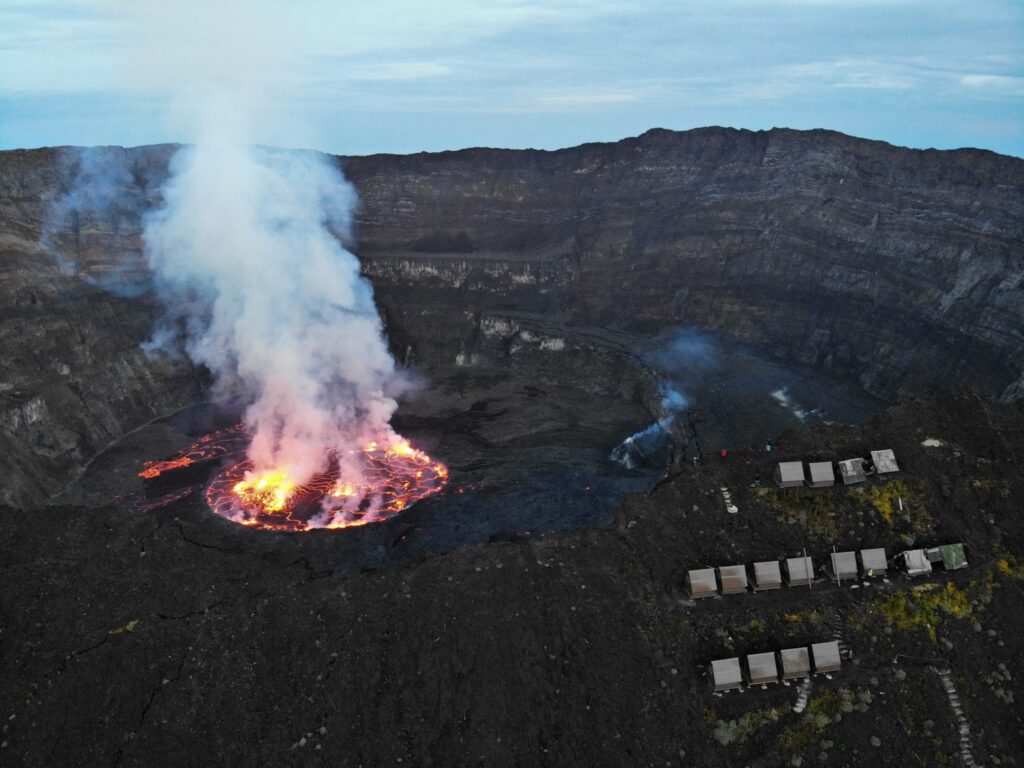
Mount Nyiragongo, at 3,470 meters inside Virunga National Park’s Mikeno sector, holds one of the largest lava lakes on Earth and is climbed on a two-day, one-night guided trek that ends with a night spent in summit cabins on the crater rim, looking down into a churning pool of molten rock hundreds of meters below. The ascent itself takes roughly four to six hours over a demanding but non-technical trail, gaining significant altitude through several distinct vegetation zones before the forest gives way to bare volcanic rock near the summit. A short distance away, Mount Nyamuragira, Africa’s most consistently active volcano, erupts far more frequently than Nyiragongo but is not part of the standard tourist circuit. The Nyiragongo climb is booked and priced separately from a gorilla trekking permit; it is an entirely different activity, with its own permit, that can in principle be combined with gorilla trekking on the same Virunga trip when both are operating. At present, the climb runs through exactly the same suspended Virunga tourism program covered above, so it is not currently available to book on fixed dates, and travelers drawn specifically to Nyiragongo should treat it the same way as the gorilla trek: a genuinely extraordinary experience and one to revisit once the security situation and Virunga’s own official channels confirm a resumption.
How to Get to DR Congo’s Gorilla Parks: Borders, Flights, and Visas
Nearly every DR Congo gorilla itinerary is built around Rwanda as the entry point, not because DR Congo lacks its own airports, but because Kigali International Airport offers by far the most reliable international connections in the region, and both Virunga and Kahuzi-Biega are only a few hours from the Rwandan border by road.
Reaching Virunga via Goma
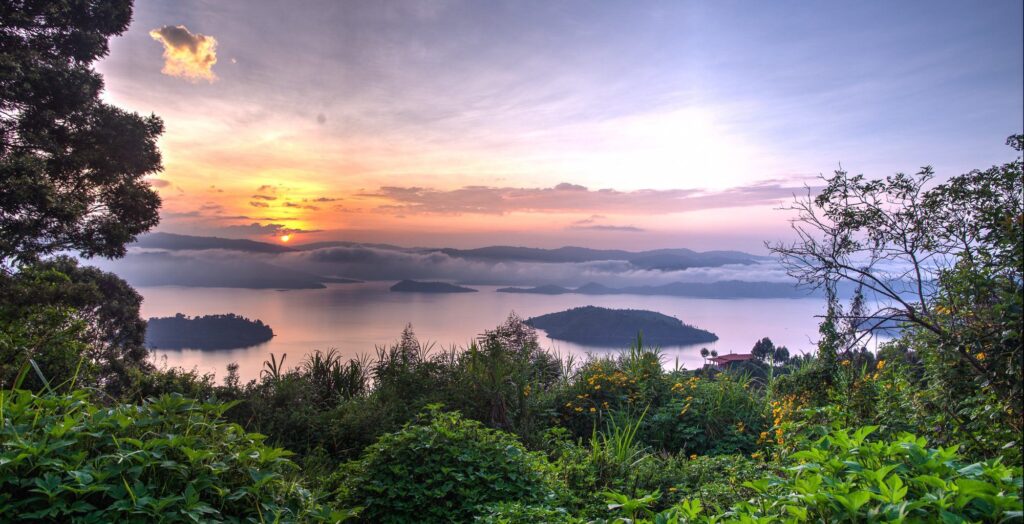
Goma sits on the northern shore of Lake Kivu, directly across the border from Rwanda’s lakeside town of Rubavu (Gisenyi), connected by two land border crossings known as the Grande Barrière and Petite Barrière. The drive from Kigali to the Rwandan border town takes roughly three hours on paved roads, followed by a short walk or vehicle transfer across the border into Goma itself, and onward transfers into Virunga’s Mikeno sector from there. Goma also has its own international-capable airport (GOM) with domestic connections to Kinshasa, though scheduling and reliability have varied considerably given the security situation.
Reaching Kahuzi-Biega via Bukavu
Bukavu sits at the southern tip of Lake Kivu, connected to Rwanda’s Rusizi district and the town of Cyangugu by the Ruzizi border crossings. The drive from Kigali around the western shore of Lake Kivu to the Rwandan border takes five to six hours on a scenic but winding road, considerably longer than the Virunga route, followed by the border crossing and a further roughly ninety-minute drive from Bukavu to Kahuzi-Biega’s Tshivanga park headquarters. Kavumu Airport, north of Bukavu, offers an alternative for travelers arranging domestic DRC charter flights rather than the full road transfer.
Visas and Entry Requirements
DR Congo operates an e-visa system for most nationalities, and a yellow fever vaccination certificate is mandatory for entry, checked at both airports and land borders, exactly as it is entering Rwanda and Uganda. In ordinary times, this is a straightforward process handled well in advance of travel. Under current conditions, both the Goma and Bukavu crossings are administered in territory controlled by M23/AFC rather than the Congolese national government, which means the normal visa and entry process can be disrupted, inconsistent, or subject to change with little notice. Another concrete, practical reason to have a specialist operator with live ground contacts is to confirm entry logistics before you commit to non-refundable flights.
A DR Congo Gorilla Trekking Day: What Actually Happens
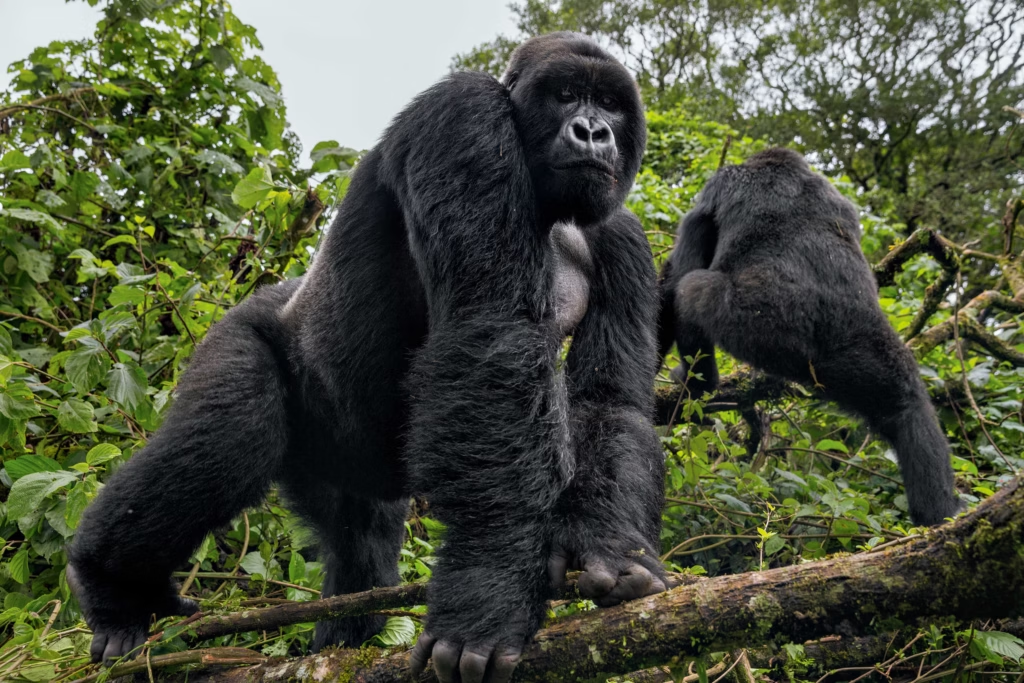
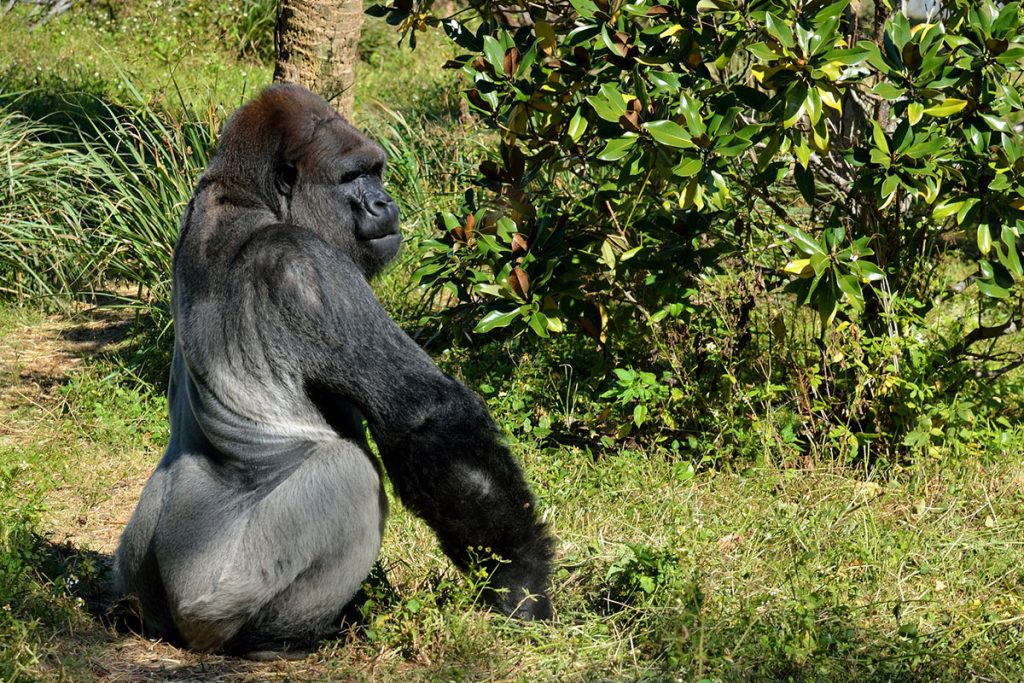
When Virunga and Kahuzi-Biega are operating normally, a day of gorilla trekking in DR Congo follows broadly the same structure used across the entire Virunga Massif, with a few distinctly Congolese details worth knowing in advance.
- An early breakfast at your lodge or tented camp, typically followed by a transfer to the park’s briefing point Bukima for Virunga’s Mikeno sector or Tshivanga Visitor Center for Kahuzi-Biega.
- A ranger briefing covering trekking rules, group formation, and the day’s likely gorilla family assignment, based on tracker reports from earlier that morning.
- The trek itself, typically ranging from one to four hours depending on where the gorilla family has moved overnight, is generally shorter on average than Rwanda’s higher-altitude treks, though never guaranteed.
- A strictly enforced one-hour observation period once the family is located, held at a minimum seven-meter distance, with no flash photography permitted.
- The return hike to the trailhead and a transfer back to your lodge, typically wrapping up by early-to-mid afternoon, leaving the rest of the day free.
The most consequential practical difference from a Rwanda trek is infrastructure density. Rwanda’s Kinigi headquarters processes 24 gorilla families and a well-oiled daily rhythm; Virunga and Kahuzi-Biega process a small fraction of that volume, which in ordinary times has translated into a quieter, more exclusive-feeling encounter, fewer fellow trekkers on the trail, and a genuinely different atmosphere from the more polished Rwandan experience, part of what has long drawn adventurous travelers to DR Congo despite the extra logistical effort.
What to Pack for a DR Congo Safari
Packing for DR Congo starts from the same baseline as a Rwanda or Uganda gorilla trek, with a handful of Congo-specific additions that matter more here than almost anywhere else in the region.
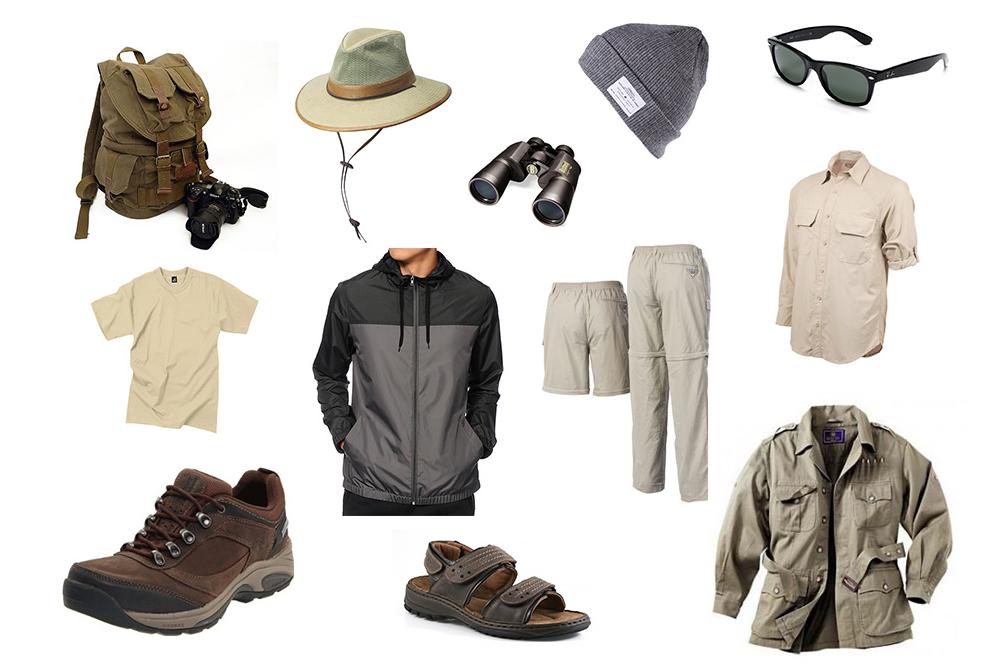
- Long-sleeved shirts and trousers in dark, neutral colors, plus a packable waterproof outer layer identical to Rwanda’s forest-trekking requirements.
- Waterproof, ankle-supporting trekking boots with strong grip; DR Congo’s forest trails are at least as uneven and wet as Rwanda’s.
- US dollars in genuinely crisp, undamaged condition and from a recent series. DR Congo’s cash economy is notably strict about bill condition, and it frequently refuses torn, marked, or older-series notes.
- A comprehensive travel insurance policy that explicitly includes medical evacuation coverage for conflict-affected regions, purchased well before departure and confirmed in writing with the insurer.
- A satellite communication device or subscription, given inconsistent mobile network coverage and the value of an independent way to reach your operator or embassy if needed.
- Copies of your passport, visa, and yellow fever certificate stored separately from the originals, along with your embassy’s emergency contact details.
Best Time to Visit DR Congo for Gorilla Trekking
DR Congo follows the same broad seasonal pattern as Rwanda and Uganda because all three countries share the same equatorial East African climate belt. The long dry season, June through September, and the short dry season, December through February, offer the firmest trails and the most comfortable trekking conditions in both Virunga’s Mikeno sector and Kahuzi-Biega’s highland forest.

The long rains from March through May and the shorter rains in October and November bring muddier, more physically demanding trails, though they also correspond to the traditional low-season permit discounting mentioned earlier in this guide. In an ordinary year, this seasonal calculus would be the main planning consideration. In 2027, it is very much the secondary one: the question of whether the parks are accessible at all currently outweighs the question of which month offers the best trail conditions, and any seasonal planning should happen only after a specialist operator has confirmed current access for your intended dates.
DR Congo vs. Rwanda vs. Uganda: Which Country Should You Choose
All three countries protect part of the same mountain gorilla population. The Virunga Massif spans Rwanda, Uganda, and DR Congo, as covered in detail in our Virunga Mountains guide, but they differ enormously in cost, infrastructure, and, right now, basic accessibility.
| Factor |
Rwanda |
Uganda |
DR Congo |
| Permit cost |
USD 1,500 |
USD 800 |
~USD 400 |
| Habituated gorilla families |
24 |
~20 across Bwindi & Mgahinga |
A small number, historically 1–2 per park |
| Transfer from the international airport |
2–2.5 hrs (Kigali) |
8–10 hrs road or short charter (Entebbe) |
3–6 hrs via the Rwanda border, then further transfer |
| Luxury lodge infrastructure |
Extensive (Singita, Wilderness, One&Only) |
Growing, mid-range to high-end |
Historically modest, tented camps |
| Current accessibility (Aug 2026) |
Fully open |
Fully open |
Suspended |
| Best suited to |
Fixed dates, luxury, certainty |
Value, larger habituated roster |
Flexible dates, adventurous travelers, once reopened |
Choose Rwanda if you want a mountain gorilla encounter on fixed, non-refundable dates within a fully mature luxury infrastructure. It is the safest, most reliable choice for most travelers reading this in 2027 and the one this operator specializes in and can fully commit to. Choose Uganda if value matters more than polish and you’re comfortable with a longer overland transfer; our Rwanda vs. Uganda gorilla trekking comparison covers that decision in full. Consider DR Congo only if you have genuine flexibility in your travel dates, an appetite for a rawer, less-developed style of travel, and the patience to have access confirmed close to departure rather than booked far in advance and, honestly, primarily once the current security situation has meaningfully stabilized.
Where to Stay Near Virunga and Kahuzi-Biega
DR Congo’s accommodation landscape, even in ordinary times, sits at a very different tier from Rwanda’s. Around Virunga’s Mikeno sector, Mikeno Lodge and Bukima Tented Camp have historically served gorilla trekkers, with Lulimbi Tented Camp further south serving the Ishasha savanna sector and Tchegera Island Tented Camp offering a Lake Kivu base with views back toward Nyiragongo’s glowing crater at night. Around Kahuzi-Biega, lodging clusters in Bukavu itself, ranging from modest guesthouses to a handful of comfortable, Lake Kivu-facing hotels, generally more understated than purpose-built safari lodges. None of these options comes close to matching the five-star cluster of properties around Rwanda’s Volcanoes National Park, and that gap is precisely why most experienced regional travelers treat DR Congo as an adventurous add-on to a primarily Rwanda-based trip rather than a luxury destination in its own right. For a full picture of what that Rwandan luxury infrastructure actually looks like, properties like Singita Kwitonda, Wilderness Bisate, and One&Only Gorilla’s Nest, all clustered a short drive from the shared Virunga ecosystem this guide has been describing, see our full breakdown in the Volcanoes National Park guide and the wider Virunga Mountains guide. Most travelers building a serious Rwanda-based journey don’t stop at gorillas either pairing a trek with Nyungwe Forest National Park’s canopy walk and chimpanzee tracking, or Akagera National Park’s Big Five game drives, rounds out a full circuit within a single, fully accessible country, using the kind of luxury lodge infrastructure that DR Congo’s parks, for now, simply cannot match.