Gorilla Families of Volcanoes National Park: A Complete Guide to Rwanda’s 24 Habituated Groups

Volcanoes National Park is home to 24 habituated gorilla families, each different in size, history, and difficulty. Find the right one to plan your trek.

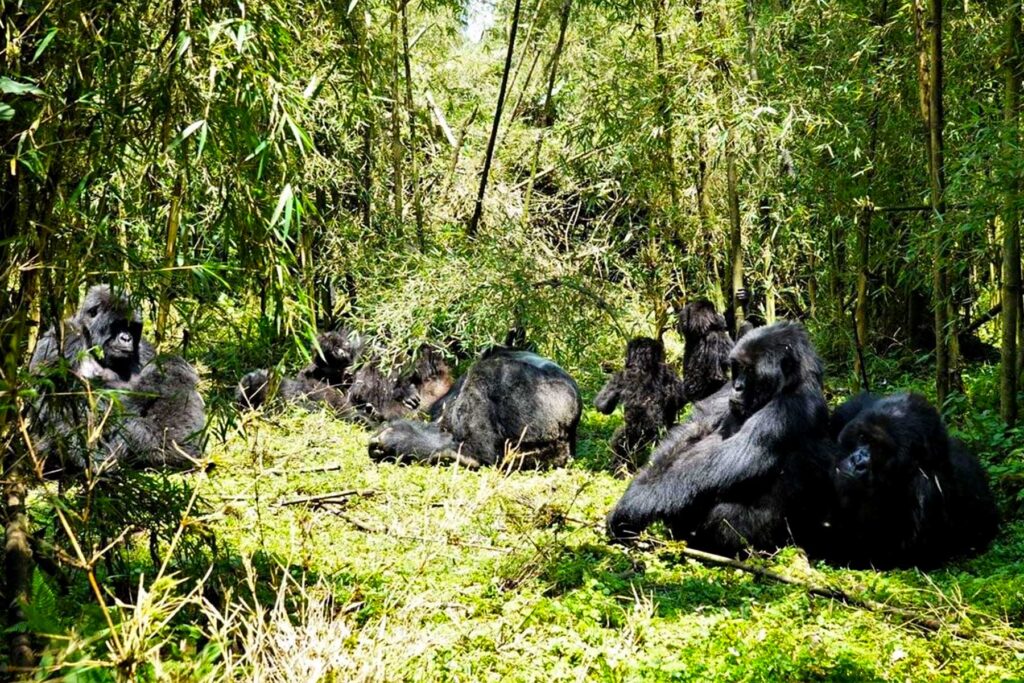
Volcanoes National Park in northwestern Rwanda is home to 24 habituated mountain gorilla families, each occupying its own territory across the forested slopes of the Virunga volcanoes and each open to visitors with a valid trekking permit. Every family is led by at least one dominant silverback and ranges in size from small, newly formed groups of six or seven individuals to large, multigenerational families of twenty or more. The Rwanda Development Board assigns trekkers to a specific family on the morning of the trek, based on the group’s most recently reported location and a traveler’s stated fitness level, which means the family you actually visit is decided that same day rather than booked months in advance.

Gorilla Families of Volcanoes National Park: Full 2027 Guide

Some families, such as Susa, trace their history directly to Dian Fossey’s original research groups from the late 1960s and remain among the largest and most physically demanding treks in the park; others, such as Sabyinyo, are prized for ranging close to the park boundary and requiring comparatively little walking. Rwanda’s gorilla population has grown steadily for four decades, and new families continue to form as existing groups mature and split. The newest, Kigoma, was only established around 2023, which is why the current roster of 24 has grown well beyond the ten or twelve families that most published guides still describe. This guide profiles the individual gorilla families of Volcanoes National Park, explains how family assignment actually works, and covers the practical detail: cost, difficulty, and what an actual trekking day looks like. It also covers what most guides won’t say out loud about family selection and the itineraries that pair naturally with a gorilla family trek. Whether you’re weighing travel dates around a particular family’s story or simply want to understand what you’re walking into, the detail below should settle it.

Permits are limited — spaces fill months ahead

Reserve Your Private Gorilla Trek

Speak with a Rwanda-based specialist today. We secure permits, match you to the right gorilla family, and plan every detail around your schedule.

No group departures · Private itineraries only · Direct Rwanda expertise

How Many Gorilla Families Live in Volcanoes National Park?

Volcanoes National Park is currently home to 24 fully habituated gorilla families available for daily tourism trekking, a figure confirmed against the park’s own nightly guide-tracking records. This is a meaningfully higher number than most gorilla trekking content online reports; many unofficial websites still cite twelve or nineteen families, reflecting the park’s roster from several years ago rather than its current one. Each family receives a maximum of eight visitors per day, which puts the park’s total daily trekking capacity at 192 permits, a figure that is a deliberate conservation ceiling rather than a logistical limit. Beyond the 24 families open to tourism, the Rwanda Development Board and the Dian Fossey Gorilla Fund also monitor a small number of additional groups that are habituated solely for scientific research and are never opened to paying visitors, which is part of why published family counts vary so much across different sources.

Mountain Gorilla Conservation in Rwanda: The Full 2027 Guide

Dian Fossey During Habituation

Why the Number Keeps Growing

Gorilla families are not static units; they grow, and when a family becomes too large for one dominant silverback to manage effectively, a subordinate silverback will often depart with a group of females and offspring to found an independent family of his own. This is precisely how several of today’s largest families came into existence. The original Susa group, once numbering more than 40 individuals during Dian Fossey’s research period, split over time into what are now separately tracked families, including Igisha and Isimbi. More recently, in November 2021, a previously solitary silverback named Noheli was joined by females who had left the Isimbi and Susa groups, forming an entirely new family, a pattern that illustrates why any published family count is really a snapshot of a moving target rather than a permanent figure. Rwanda’s mountain gorilla population has grown from an estimated 254 individuals across the wider Virunga region in 1981 to well over 1,000 today, and each new generation of maturing silverbacks continues to add families to the roster.

The Complete List of Gorilla Families Currently Open for Trekking

Below is the current roster of all 24 gorilla families available for tourism trekking in Volcanoes National Park, cross-checked against Rwanda Gorilla Expeditions’ own nightly field-guide tracking records, which log gorilla family sightings and locations more reliably than any static webpage can. Family names are Kinyarwanda words, often chosen for a dominant silverback’s name, a defining trait, or a geographic feature of the family’s home range. The most recent addition, Kigoma, was only established around 2023, which is a useful reminder that this list reflects a living, changing population rather than a fixed roster. A handful of families on this list are recently formed or have not yet built the kind of long public documentation that older families like Susa or Titus have, where a well-documented history exists.

Family What It’s Known For
Susa The family is most closely associated with Dian Fossey’s original research; once the park’s largest group at over 40 members, it still ranges high on Mount Karisimbi and remains the most physically demanding trek.
Titus Named for a silverback orphaned by poachers as an infant during Fossey’s era, who was raised within another family and later founded his own; one of the park’s most documented gorillas.
Sabyinyo Ranges close to the park boundary near Mount Sabyinyo, making it one of the more physically accessible families to visit.
Amahoro Kinyarwanda for “peace,” consistently described by guides as one of the calmer, more even-tempered families.
Umubano Formed from members who split from the Amahoro family; ranges in a similar lower-altitude zone.
Kwitonda Led by a silverback whose name means “the humble one”; the family’s lineage traces to gorillas that moved into Rwanda from the Congolese side of the Virunga range.
Hirwa Kinyarwanda for “the lucky one,” formed from gorillas that joined together from several other groups and known for occasionally ranging near the Uganda border.
Agashya Known in older records as “Group 13”; took its current name following a change in silverback leadership.
Igisha It formed when a subordinate silverback left the original Susa group with a substantial following, and it is now one of the larger families in the park.
Isimbi Another family whose lineage traces back to the historic Susa group’s split.
Pablo Historically one of the largest families ever recorded in the park, with a lineage tracing to one of Dian Fossey’s original research groups.
Mutobo Named for the Mutobo area of Musanze District, near the park’s northern boundary.
Muhoza A more recently established family; ask your guide for its current territory and story on trek day.
Kwisanga Part of the park’s broader family roster; recently established relative to the historic groups.
Matsiko Part of the park’s broader family roster; recently established relative to the historic groups.
Humura Named from a Kinyarwanda word associated with comfort and reassurance.
Kureba Part of the park’s broader family roster; recently established relative to the historic groups.
Musirikare Part of the park’s broader family roster; recently established relative to the historic groups.
Segasira Part of the park’s broader family roster; recently established relative to the historic groups.
Ntambara Part of the park’s broader family roster; recently established relative to the historic groups.
Dushishoze Part of the park’s broader family roster; recently established relative to the historic groups.
Izuba Kinyarwanda for “sun.”
Urwego Part of the park’s broader family roster; recently established relative to the historic groups.
Kigoma One of the park’s newest families, formed around 2023.

Plan Your Rwanda Safari

Start Planning a Private Gorilla Trek

Rwanda gorilla permits sell out months in advance. Secure your dates before the season closes.

Getting to Know Rwanda’s Most Storied Gorilla Families

A handful of Volcanoes National Park’s 24 families carry decades of documented history, and understanding their stories adds real depth to a trek, whether or not you end up assigned to that specific family on the day.

Susa: The Original Research Family
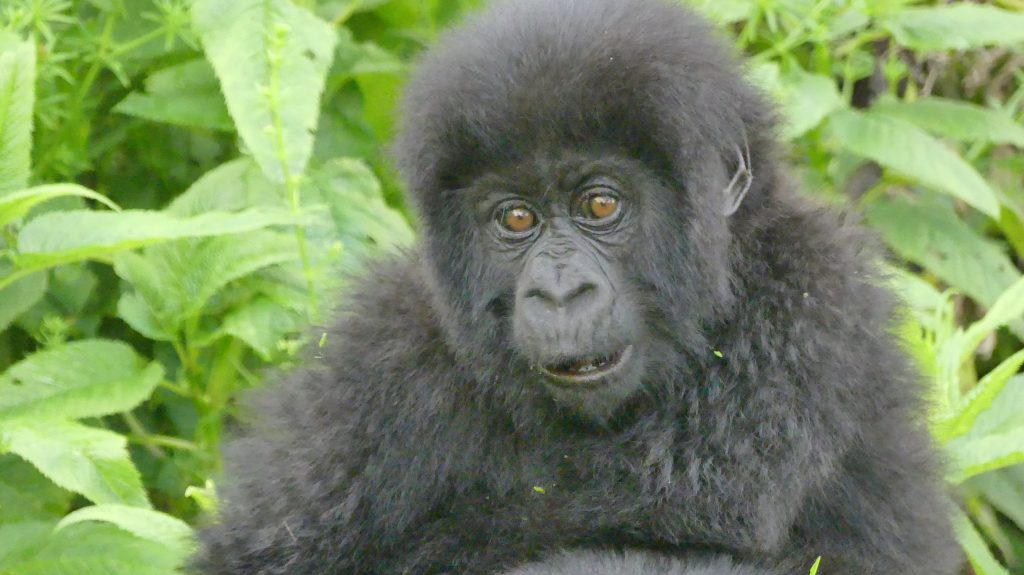
Gorilla Families in Volcanoes National Park

Intarutwa: The Playful Juvenile of the Susa Family

Susa is the family most people picture when they imagine gorilla trekking in Rwanda. It was one of the groups Dian Fossey studied directly from her Karisoke Research Centre beginning in the late 1960s, and at its peak it held more than 40 individuals, making it the largest gorilla family ever recorded in the park. Susa is also famous for a genuinely rare event in gorilla biology: the birth of surviving twins, Byishimo and Impano. The family has since split into multiple independent groups, including Igisha and Isimbi, but the remaining Susa family still ranges at high altitude on Mount Karisimbi, which keeps it the single most physically demanding trek in the park reserved, in practice, for travelers who have specifically requested a challenging hike and are in strong physical condition.

Titus: A Story of Survival

Titus is named for a silverback whose early life reads like the origin story of the entire conservation movement Rwanda now depends on. As an infant during Dian Fossey’s research period, his family was targeted by poachers; he survived and was absorbed into another family, eventually maturing into a dominant silverback who left to found his own group. Titus lived to roughly 35 years old, an unusually long life for a wild silverback, and his family remains one of the most extensively documented in the park’s history, a living reminder of exactly why permit revenue funds anti-poaching patrols as a first priority, not an afterthought.

Sabyinyo and Amahoro: The More Accessible Families

Sabyinyo and Amahoro are consistently the two families most often mentioned when travelers ask about an easier gorilla trek. Sabyinyo ranges near the base of Mount Sabyinyo, close to the park’s southern boundary, which has historically made it one of the shorter treks on offer. Amahoro Kinyarwanda for “peace” has built a reputation among guides for a notably calm, unhurried temperament, and Umubano, which split from Amahoro, tends to range in a similar lower-altitude zone. None of these options is a guarantee: every family moves overnight, and a family with an accessible reputation can occasionally be found at the top of a ridge on any given morning. This arrangement means travelers who flag limited mobility or fitness concerns when booking are more likely, though never certain, to be matched with one of these groups.

Kwitonda, Hirwa, and Agashya: The Cross-Border and Reorganized Families

Kwitonda’s history reflects the reality that the Virunga Massif is one continuous ecosystem, not three separate parks with a fence between them: the family’s lineage traces back to gorillas that moved into Rwanda’s Volcanoes National Park from the Congolese side of the range, and its silverback’s name, Kwitonda, “the humble one,” has become the group’s identity ever since. Hirwa, meaning “the lucky one,” formed when gorillas from several existing families came together into a new group and completed habituation in the mid-2000s; it has periodically been reported ranging close to the Uganda border, a reminder that these are wild animals moving through a shared, cross-border landscape regardless of which country issues the trekking permit. Agashya, known in older literature by its earlier designation “Group 13,” took its current name following a change in silverback leadership, a reminder that family names in Volcanoes National Park are not fixed labels but living records of leadership and history.

Pablo: A Direct Line to Fossey’s Research
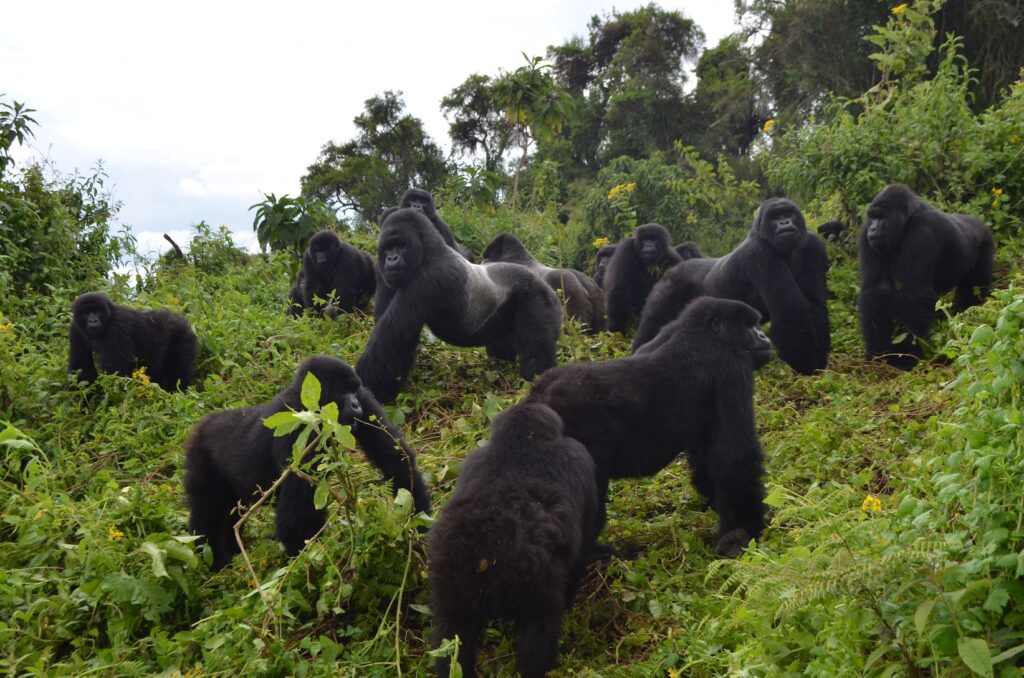
Pablo Gorilla Family

Pablo Gorilla Family

Pablo has historically ranked among the largest families ever recorded in the park, and its lineage connects directly to one of Dian Fossey’s original research groups. Families with this kind of documented depth are part of why gorilla trekking in Rwanda carries a different weight than most wildlife encounters: you are not simply observing an animal; you are, in a very literal sense, standing in front of a family whose story has been recorded for close to sixty years.

How Gorilla Families Are Actually Assigned to Trekkers

Family assignment occurs on the morning of your trek, not at booking, because the Rwanda Development Board’s process is based on where the gorillas are that day, not where they were expected to be. Trackers leave the park before dawn, following the trail each family left the previous evening, and relocate the group’s current position by radio contact with the ranger station well before your 7:00 a.m. briefing at Kinigi. Rangers then match each group of up to eight visitors to a specific family based on three factors: the family’s confirmed location and the resulting expected trek length, the terrain and altitude involved, and the fitness level your group has reported. This is why being honest, not modest, about your physical condition during booking and again at the briefing genuinely changes your outcome. Rangers cannot match you appropriately to a family they don’t have accurate information about.

It also means that no operator, including Rwanda Gorilla Expeditions, can promise a specific family or a specific trek duration in advance under a standard permit. What a good operator can do is communicate your fitness level, interests, and any physical limitations clearly to the park in advance, request a family known for a particular type of terrain when operationally possible, and manage your expectations honestly rather than overpromising a specific outcome. For travelers who want a guarantee rather than a probability, the exclusive-use gorilla permit arranged directly through the Rwanda Development Board at a significantly higher price point allows a single group to select and privately visit one specific family for the full day, with no other visitors present.

Choosing a Gorilla Family Based on Fitness and Interest

While no family assignment is ever guaranteed, Volcanoes National Park’s 24 families do fall into rough, historically consistent categories based on where they typically range. Use the comparison below as a planning guide for setting expectations and communicating your priorities to your operator, not as a booking promise.

Profile Typically Includes What to Expect
More accessible Sabyinyo, Amahoro, Umubano Historically found at lower elevation and closer to the park boundary; often a shorter walk, though never guaranteed.
Moderate Kwitonda, Hirwa, Agashya, Pablo A realistic middle ground of moderate distances and terrain, suitable for most reasonably fit travelers.
More demanding Susa, Igisha, Isimbi Historically, they range at higher altitudes on the slopes of Mount Karisimbi and are best requested by travelers in strong physical condition who specifically want a serious hike.

If your priority is minimizing physical exertion for an older traveler, someone with joint concerns, or simply a preference for more time to enjoy the encounter rather than the hike, say so explicitly when booking. If your priority is the story behind the family more than the trek length, request Susa, Titus, or Pablo by name and understand you may be trekking for several hours to reach them. Either way, hiring a porter at the Kinigi briefing center is worth doing regardless of fitness level: it meaningfully reduces physical strain, directly supports a local livelihood, and frees you to focus on the forest rather than your footing.

Plan Your Rwanda Safari

Start Planning a Private Gorilla Trek

Rwanda gorilla permits sell out months in advance. Secure your dates before the season closes.

A Gorilla Family Trekking Day: Costs, Timing, and What to Bring

A permit for gorilla family trekking in Rwanda costs USD 1,500 per person, issued by the Rwanda Development Board, and the price is identical year-round regardless of season or which family you’re assigned to. The fee covers park entry, ranger and tracker supervision throughout the trek, and one hour of observation time once your group reaches the family. It does not cover accommodation, transfers, porter fees, or gratuities, all of which are itemized separately.

What the Day Actually Looks Like

What to Expect on a Gorilla Trekking Day in Rwanda

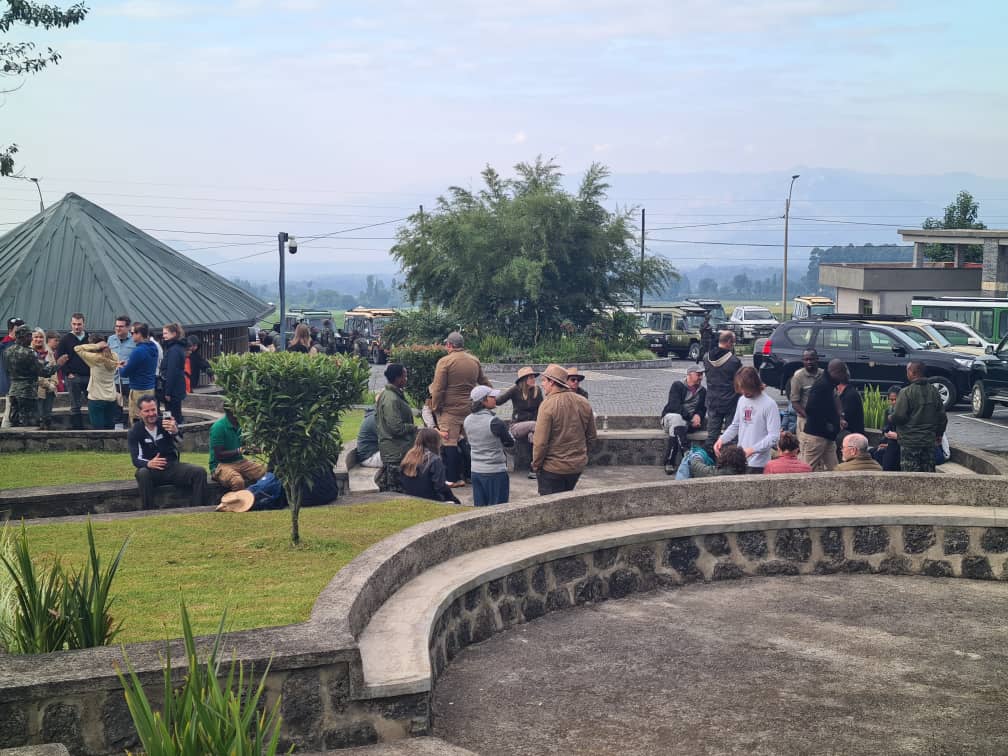
Kinigi Briefing Point

  1. Breakfast at your lodge, typically served from around 6:00 a.m., followed by a private transfer to Kinigi Park headquarters.
  2. Arrival by 7:00 a.m. for the mandatory ranger briefing, where trekking groups are formed and matched to a specific gorilla family.
  3. Optional porter hire at the briefing center is recommended for every traveler, not just those with mobility concerns.
  4. A vehicle transfer to the trailhead nearest your assigned family’s reported location, typically 15 to 45 minutes.
  5. The trek itself lasts from roughly 30 minutes to five hours, depending entirely on where your family is that morning.
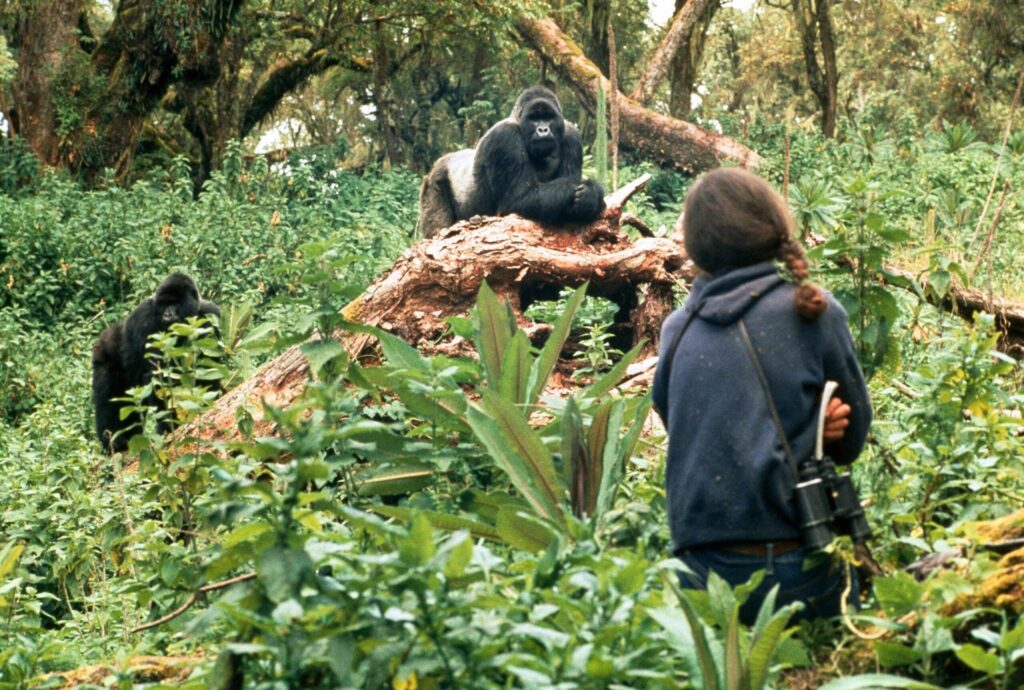
  6. A strictly enforced one-hour observation period once your group reaches the family, beginning the moment you settle at the mandated distance.
  7. The return hike to the trailhead, a vehicle transfer back to Kinigi, and issuance of your trekking certificate most days conclude by early to mid-afternoon.

Costs to Budget Beyond the Permit

Item Typical Cost
Gorilla family trekking permit USD 1,500 per person
Porter (recommended for all fitness levels) USD 15–20, plus a customary tip
Walking stick hire at Kinigi Free or nominal fee
Golden monkey permit (common add-on) USD 100 per person
Exclusive-use gorilla family permit (private access, full day) Approximately USD 15,000 for the group

What to Pack

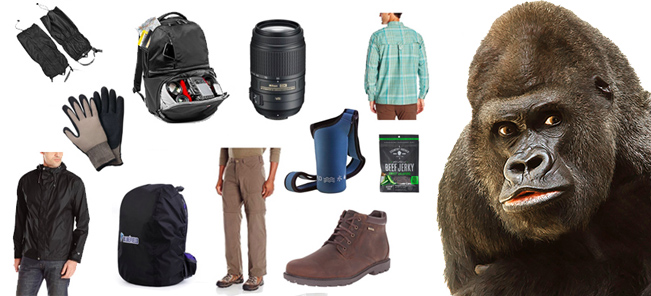
What to Pack for gorilla trekking

  • Long-sleeved shirt and trousers in dark, neutral colors, olive, khaki, or grey; avoid bright colors and white.
  • Waterproof, ankle-supporting trekking boots with aggressive tread; trainers and sandals are genuinely inadequate.
  • A packable waterproof jacket for forest rain at this altitude arrives with little warning.
  • Gardening or lightweight work gloves for pushing through vegetation and gaiters to keep out stinging nettles.
  • At least two liters of water, snacks or a packed lunch, insect repellent, and sunscreen are also essential.
  • A camera or phone with spare batteries and memory cards for flash photography is prohibited, so a fast lens helps in dappled forest light.

What Gorilla Trekking Guides Won’t Always Tell You

  • You cannot request a specific gorilla family and be guaranteed it, but you can request a fitness level, and being precisely honest about your condition, rather than either downplaying or overstating it, is what actually gets you a more appropriate assignment.
  • A family’s reputation for being “easier” reflects its historical range, not a promise about tomorrow morning. Gorillas move independently of their reputation, so even a family known for accessible terrain can occasionally be found high on a ridge on the day of your specific trek.
  • Porters are hired independently at the briefing center, in cash, and separately from your permit price. Not every guide volunteers this upfront, so arriving with small-denomination Rwandan francs or US dollars makes the morning smoother.
  • The earliest trekking groups of the morning tend to get the softest light for photography and, anecdotally, first pick of the more favorably located families, since assignments are made in the order groups arrive and check in at Kinigi; arriving even 15 minutes ahead of your call time is worth it.
  • Families that range closer to the park boundary are visited more often, simply because they’re logistically easier to reach, which can mean a slightly busier feel on the trail, while some of the interior, higher-altitude families offer a quieter forest experience for travelers who prioritize solitude over convenience.

Plan Your Rwanda Safari

Start Planning a Private Gorilla Trek

Rwanda gorilla permits sell out months in advance. Secure your dates before the season closes.

Frequently Asked Questions About Gorilla Families in Volcanoes National Park

How many gorilla families are in Volcanoes National Park?

Volcanoes National Park currently has 24 fully habituated gorilla families open for daily tourism trekking. Each family receives a maximum of eight visitors per day, which puts total daily trekking capacity at 192 permits across the park. This figure has grown over time as Rwanda’s gorilla population has expanded and existing families have split to form new, independent groups. A small number of additional families are habituated for scientific research only and are never opened to tourism, which partly explains why some published sources still cite lower, outdated totals.

Can I choose which gorilla family I trek?

Not directly. Family assignment happens at the 7:00 a.m. ranger briefing at Kinigi on the morning of your trek, based on each family’s overnight location as reported by trackers and your group’s stated fitness level. You can request a general preference, such as an easier or more demanding trek, and a specialist operator can flag that preference to the park in advance, but no standard permit guarantees a specific named family. The only way to guarantee visiting a specific family is through Rwanda’s exclusive-use gorilla permit, priced at approximately USD 15,000, which grants a group private, sole access to one chosen family for the day.

What is the most famous gorilla family in Rwanda?

Susa is the most famous gorilla family in Volcanoes National Park. It was one of the groups directly studied by primatologist Dian Fossey from her Karisoke Research Centre starting in the late 1960s, once grew to more than 40 members, and produced the rare surviving twins Byishimo and Impano. Because Susa still ranges at high altitude on Mount Karisimbi, it also remains the single most physically demanding trek in the park, requested specifically by travelers who want both the history and a genuine physical challenge.

Which gorilla family is easiest to trek?

Sabyinyo and Amahoro are the two families most consistently described as more accessible, since both have historically ranged closer to the park boundary at lower elevation than families like Susa. Umubano, which split from Amahoro, tends to occupy a similar lower-altitude zone. None of these factors is a guarantee every family relocates overnight in search of food, so trek length is confirmed fresh each morning rather than fixed by a family’s general reputation.

How much does it cost to trek a gorilla family in Rwanda?

A standard gorilla trekking permit costs USD 1,500 per person, issued by the Rwanda Development Board, and the price is fixed year-round regardless of season or which family you are assigned to. The fee covers park entry, ranger and tracker supervision, and one hour of observation with your assigned family. It does not include accommodation, transfers, porter fees, or gratuities, all of which are budgeted separately and typically arranged as part of a full safari package.

What is the Susa gorilla family known for?

The Susa family is known for three things above all: its direct link to Dian Fossey’s original research from the late 1960s, its historical size of more than 40 individuals at its peak, making it the largest family ever recorded in the park, and the birth of the surviving twins Byishimo and Impano, a genuinely rare event in gorilla biology. Susa has since split into additional independent families, including Igisha and Isimbi, but the remaining group still ranges at high altitude and is widely regarded as the most demanding trek in Volcanoes National Park.

How are new gorilla families formed?

New gorilla families typically form when a maturing silverback leaves his birth family, sometimes departing with a group of females and young gorillas who choose to follow him, and he establishes an independent territory of his own. Several of Volcanoes National Park’s current 24 families formed this way, including Igisha and Isimbi, both of which split from the original Susa group over time. In one well-documented case, a previously solitary silverback named Noheli formed an entirely new family in November 2021 when females from the Isimbi and Susa groups joined him, and the park’s newest family, Kigoma, was established around 2023 through the same natural process, a pattern that continues to add families to the park’s roster.

What happened to the Titus gorilla family?

Titus was orphaned by poachers as an infant during Dian Fossey’s research period in the 1970s, survived, and was subsequently raised within another gorilla family. He later matured into a dominant silverback and departed to found his family, which still carries his name today. Titus himself lived to approximately 35 years old, an unusually long lifespan for a wild silverback, and his story remains one of the most extensively documented examples of gorilla resilience in the park’s conservation history.

Do gorilla families ever cross into Uganda or Congo?

Yes. The Virunga Massif is a single continuous ecosystem shared by Rwanda, Uganda, and the Democratic Republic of Congo, and gorilla families do not recognize national borders. The Hirwa family in particular has periodically been reported ranging close to, and at times across, the Uganda border near Mgahinga Gorilla National Park. This cross-border movement is one reason regional conservation bodies coordinate tracking and protection efforts across all three countries rather than managing each park in isolation.

How is a gorilla family assigned on the day of the trek?

Trackers leave the park before dawn to relocate each family from its previous night’s nesting site, reporting the family’s current position by radio ahead of the 7:00 a.m. ranger briefing at Kinigi. Rangers use those real-time reports, combined with each group’s stated fitness level, to match trekking parties of up to eight visitors to a specific family. Because this decision depends on where the gorillas actually are that morning, it cannot be made in advance, which is why family assignment happens at the briefing rather than at the point of booking.

Can two people in the same group trek different gorilla families?

Yes. Each gorilla trekking permit is issued and assigned individually, so two travelers booked together can each be assigned to a different family on the same morning if that’s what they prefer, whether to compare experiences, spread photographic opportunities across two encounters, or simply because one traveler wants a more demanding trek than the other. This needs to be communicated clearly to your operator during planning, since standard bookings assume a group wants to trek together.

How long do gorilla families stay in one spot?

Gorilla families rarely remain in the same location for more than a single day. They move continuously through their home range in search of food, building a new nest each night, which is why trackers must relocate every family fresh each morning rather than relying on the previous day’s position. This constant movement is the underlying reason no operator can guarantee a specific trek duration in advance, regardless of which family you’re ultimately assigned to.

What is the difference between Susa and the families that split from it?

Susa is the original family Dian Fossey studied, and it remains the largest and most historically significant group in the park, still ranging at high altitude on Mount Karisimbi. Igisha and Isimbi are both independent families that formed when subordinate silverbacks departed the growing Susa group with portions of its membership, a natural response to the group becoming too large for one dominant male to manage. Both retain genetic and behavioral ties to the original Susa line, but each is now tracked, assigned, and visited as its own separate family with its territory.

Plan Your Gorilla Family Trek

Every one of Volcanoes National Park’s 24 gorilla families offers a genuinely different encounter, and the right one for you depends on fitness, interest, and a bit of luck in where the gorillas happen to be that morning. Rwanda Gorilla Expeditions works inside this park every day, tracks these families directly, and builds every itinerary around the traveler in front of us rather than a fixed template. Tell us your dates, and we’ll check permit availability within a few minutes, flag your fitness level and family interests to the park in advance, and build the rest of your Rwanda safari around a confirmed gorilla trekking day. Reach the team directly via WhatsApp or email through rwandagorillaexpeditions.com, or start by reading the full Gorilla Trekking guide for everything else you’ll want to know before you go.

Ready to Trek? Permits are limited — plan early.