5-Day Rwanda Gorilla & Golden Monkey Discovery Safari

Private 5-day Rwanda gorilla and golden monkey safari: Kigali, Volcanoes National Park, Dian Fossey hike, and luxury lodges. Check permit availability today.

Five private days between Kigali and the Virunga volcanoes: one hour with a wild silverback family, a morning among golden monkeys in the bamboo forest, a walk to Dian Fossey’s grave above the cloud line, and four nights in lodges that understand why you came.

5-Day Luxury Rwanda Gorilla & Golden Monkey Safari 2027

There is a particular silence that settles over a forest when a silverback stops eating and looks at you. It lasts perhaps ten seconds. Nothing in the planning prepares you for it, and nothing afterward quite lets it go. This five-day Rwanda gorilla and golden monkey safari is built around that silence and around the quieter wonders that give it context: a troop of golden monkeys tumbling through the bamboo, a hike to Dian Fossey’s grave in the saddle between two volcanoes, and the twin crater lakes of Burera and Ruhondo turning pewter at dusk. It is a private journey, designed and run by a Rwanda-based team, for travelers who want the full Volcanoes National Park experience without a single wasted hour.

At Rwanda Gorilla Expeditions, we build this itinerary around one conviction: we handle a once-in-a-lifetime encounter with total precision. Permits, lodge rooms, trek matching, transfers, and conservation etiquette are arranged before you land so that the only decision left on the mountain is where to point your camera.

Rwanda Gorilla and Golden Monkey Safari Snapshot: At a Glance.

Duration 5 days / 4 nights
Starting / ending point Kigali International Airport (KGL), with a private road transfer to and from Volcanoes National Park
Parks and experiences covered Kigali (private city tour including the Kigali Genocide Memorial) and Volcanoes National Park (mountain gorilla trek, golden monkey trek, Dian Fossey and Karisoke hike, twin lakes Burera and Ruhondo)
Number of gorilla treks One standard trek (upgrade to a private family via exclusive-use permit available)
Group size Private party only for guide, vehicle, and planning. The Rwanda Development Board (RDB) caps every gorilla and golden monkey trekking group at 8 visitors.
Trek difficulty Moderate to strenuous. The gorilla trek is 30 minutes to 4+ hours depending on the family’s overnight position; the golden monkey trek is easier; the Karisoke hike is moderate, climbing to roughly 3,000 m (about 9,800 ft).
Accommodation tier Luxury: one night in a five-star Kigali hotel, three nights in a luxury lodge near Kinigi. Ultra-luxury (Wilderness Bisate, Singita Kwitonda Lodge, and One&Only Gorilla’s Nest) is available as an upgrade.
Best season June to September and December to February (dry seasons); trekking runs year-round
Price indicator (per person, sharing) From approximately USD 6,500 on a luxury-tier lodge to approximately USD 10,500 to 15,000+ on an ultra-luxury lodge
Permits included Standard RDB gorilla trekking permit (USD 1,500), golden monkey permit (USD 100), Dian Fossey and Karisoke hike permit (USD 75)

Permits are limited — spaces fill months ahead

Reserve Your Private Gorilla Trek

Speak with a Rwanda-based specialist today. We secure permits, match you to the right gorilla family, and plan every detail around your schedule.

No group departures · Private itineraries only · Direct Rwanda expertise

Why choose this Rwanda gorilla and golden monkey safari?

Most short gorilla packages are built backward from the permit. They land you in Kigali, drive you north at dawn, put you in the forest within hours, and return you to the airport the next afternoon. It works, and for some schedules, it is the only thing that does. But it treats the gorilla trek as the entire trip, and it quietly asks your body to manage jet lag, a three-hour drive and a steep, high-altitude trek in a single 24-hour window.

This itinerary spends its days differently. You arrive, sleep, and meet Rwanda properly in Kigali before heading north. You trek gorillas on Day 3, after a night at altitude and a full afternoon to settle into the lodge. You then give the forest two more days: golden monkeys on Day 4, the Karisoke trail, and the lakes around them. The result is a journey with an arc rather than a single peak, in which the gorilla encounter lands with more meaning because you have spent time in the landscape and the history that made it possible.

It is ideal for first-time gorilla trekkers who want to do it properly, for honeymooners and couples marking a milestone (Explore our Rwanda safari styles for how we shape romantic and photographic journeys), for photographers who need more than one morning in the light of the bamboo and the mist, and for families traveling with teenagers aged 15 and over, the minimum age for gorilla trekking. It also suits “primate collectors”: travelers who have already trekked chimpanzees or gorillas elsewhere and now want to add the endangered golden monkey, a species found nowhere outside the Virunga and nearby Albertine Rift forests.

The emotional outcome is difficult to oversell and easy to describe honestly. In 1981, the world had roughly 254 mountain gorillas. Today, thanks largely to the economics of regulated tourism, the population exceeds 1,000, the only great ape on earth whose numbers are rising. Your permit fee is part of that arithmetic. The practical outcome is just as concrete: a seamless, fully private five days in which every permit, transfer, lodge booking, and trek assignment has been handled by people who work inside Rwanda’s gorilla trekking system every week of the year.

If you want more range, our Best of Rwanda’s National Parks Safari adds Akagera’s Big Five and Nyungwe’s chimpanzees over ten days. For those who want a private family experience, this itinerary can be enhanced with exclusive gorilla trekking in Rwanda. And if you are still weighing destinations, our guide to Rwanda versus Uganda gorilla trekking sets out the real differences in cost, access, and experience.

One piece of honesty belongs at the top of the page. Gorillas move. Whether your trek lasts thirty minutes or four hours is decided by where your assigned family slept, not by what you paid. We match you to a family as carefully as the system allows, and we prepare you for the full range, but no operator can promise a short walk. What we can promise is that your guide will take you to the gorillas.

Plan Your Rwanda Safari

Start Planning a Private Gorilla Trek

Rwanda gorilla permits sell out months in advance. Secure your dates before the season closes.

Detailed Itinerary for the 5-Day Rwanda Gorilla & Golden Monkey Discovery Safari.

Day 1: Arrival in Kigali, a Private Welcome in the City of a Thousand Hills

Kigali International Airport sits on a ridge at roughly 1,500 meters (about 4,900 feet), and the final descent shows you why Rwanda is called the land of a thousand hills: red-roofed neighborhoods spilling down the slopes, green valleys folded between them, and a sky that is usually larger than you expected. Your guide will be waiting beyond immigration with a name board and a cold bottle of water and will already have your luggage in hand by the time you have cleared the formalities. If you have not arranged an e-visa in advance, a single-entry tourist visa can be issued on arrival (see the visa section below).

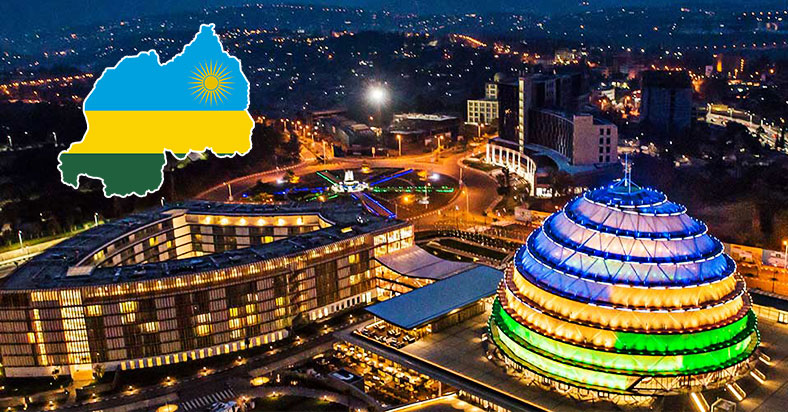
The drive into the city takes 25 to 35 minutes, depending on traffic, and it is a quietly instructive first look at the country. The roads are paved and orderly. Motorcycle taxi riders wear helmets and carry a spare for their passenger. Plastic bags have been banned since 2008, which is part of why the verges are so clean. Kigali is the kind of capital that makes first-time visitors reconsider what they thought they knew about the continent, and tomorrow’s city tour will deepen that impression considerably.

Kigali City

Tonight is deliberately unscheduled. Your luxury hotel in Kigali sits in a quiet residential district, with rooms that look out across the valley and a pool that catches the last of the evening light. Temperatures at this altitude are gentle, typically 15 to 18°C (59 to 64°F) after dark, so a terrace dinner is comfortable year-round. Before you retire, your guide will run a short kit check: boots, gaiters, gloves, a rain jacket, and layers for the mountain. Anything missing can usually be sourced in Kigali tonight or hired at the park headquarters, which is far easier than discovering the gap on the morning of your trek.

Many long-haul itineraries reach Kigali in the evening or overnight, via connections through Doha, Istanbul, Addis Ababa, Nairobi, Brussels, or Amsterdam. If your flight lands very late, we simply move the welcome to the next morning, and the rest of the program is unaffected. Either way, sleep is the goal. Two of the next four days begin before dawn.

Drive time Airport to hotel: approximately 25 to 35 minutes
Activity Arrival, transfer, kit check (no scheduled activity)
Meals Dinner at your hotel or a restaurant of your choice, on request
Overnight Luxury hotel, Kigali (approx. 1,500 m / 4,900 ft)
Logistics note Carry your trekking boots in hand luggage; it is the one item you cannot easily replace.

Day 2: Kigali City Tour, Genocide Memorial and the Drive North to Volcanoes National Park

The morning begins in Gisozi, at the Kigali Genocide Memorial, where more than 250,000 victims of the 1994 genocide against the Tutsi are buried. Allow about two hours. The exhibitions are carefully made and unflinching, and the gardens above the burial grounds are a place to sit with what you have seen. It is not an uncomplicated visit, and it is not meant to be. Anyone who spends five days in Rwanda leaves with a more profound understanding of the country if they have begun here. Your guide will pace the visit to your group and can step back whenever you want silence. Entry is free, with donations welcome.

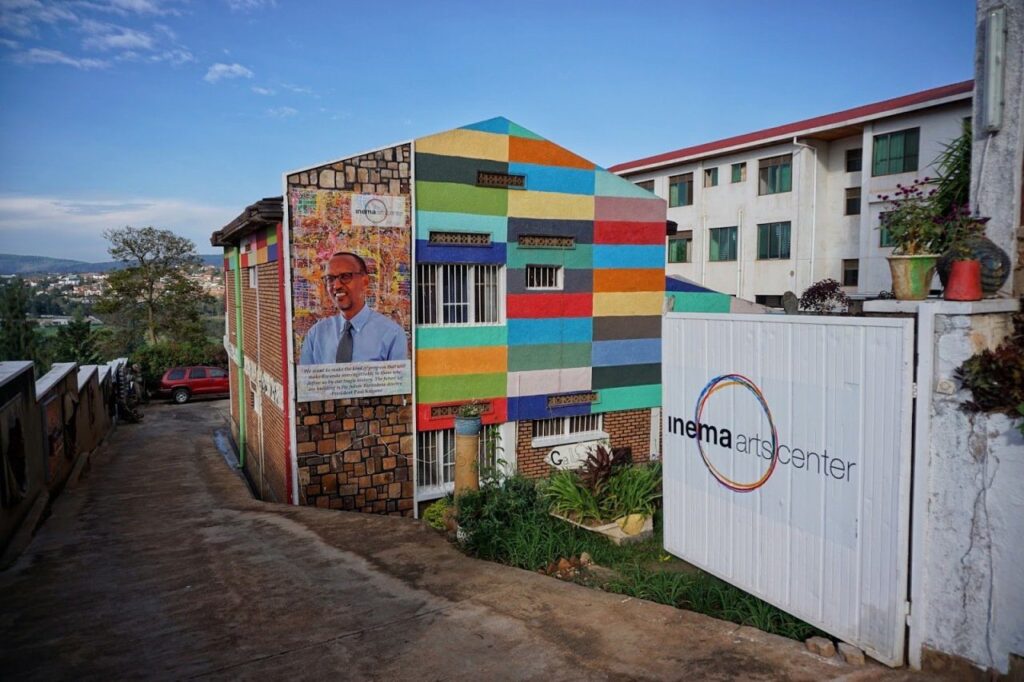
The second half of the morning offers a different register. Depending on your interests, your guide can take you to the Inema Arts Centre, where contemporary Rwandan painters and sculptors work and sell in a warm, unstuffy space, or to Kimironko Market, a loud, fragrant tangle of fabric stalls, spice sellers, and basket weavers. The woven peace baskets, known as agaseke, are the classic Rwandan keepsake and well worth the bargaining. Lunch is at one of Kigali’s better restaurants, where Rwandan staples such as brochettes and isombe and lake tilapia sit alongside a surprisingly appealing contemporary menu.

Inema Arts Centre

Around midday your private vehicle turns north. The road to Musanze covers roughly 100 to 110 kilometers and takes two to two and a half hours, climbing through the terraced hillsides of Rulindo and Gakenke districts, where every slope that can be farmed has been, in precise geometric patterns of green and red earth. The air thins and cools as the road gains height. Then, usually somewhere beyond the district town of Base, the Virunga volcanoes appear on the horizon, a blue-gray line of cones that looks improbable above the farmland. Sabyinyo, Gahinga, Muhabura, Bisoke, and Karisimbi will become familiar over the next three days; this view is the first glimpse, and most guests ask the driver to stop. Read more about the range in our guide to the Virunga Mountains.

You reach your lodge in the middle of the afternoon, after climbing from about 1,500 meters in Kigali to roughly 2,000 to 2,400 meters (6,500 to 7,900 feet) around Kinigi. The change in air is immediate: cooler, cleaner, and carrying the smell of eucalyptus and woodsmoke. Staff meet you with a warm towel and a hot drink, and your guide takes you through tomorrow in detail: the 6:00 a.m. breakfast, the 7:00 a.m. briefing at park headquarters, what the first meeting with the gorillas will feel like, and how to behave when it happens. Many lodges arrange a performance by local Intore dancers in the early evening, a spirited, athletic display with roots in Rwanda’s royal courts. Dinner is early and unfussy by design, and bed is earlier still.

Drive time Kigali to Volcanoes National Park lodges: approximately 2 to 2.5 hours (about 100 to 110 km)
Activity duration Genocide Memorial approx. 2 hours; market or arts center approx. 1 hour
Meals Breakfast at the hotel, lunch in Kigali, dinner at the lodge
Overnight Luxury lodge near Volcanoes National Park (approx. 2,000 to 2,400 m / 6,500 to 7,900 ft)
Logistics note Pack a light fleece for the lodge evenings; temperatures near Kinigi drop to 8 to 12°C (46 to 54°F) at night.

Day 3: Mountain Gorilla Trek in Volcanoes National Park

The wake-up call comes at about 5:30 a.m., and the lodge kitchen has been awake longer than you have. Breakfast is served from 6:00 a.m., and a packed lunch is handed over with your walking stick and a final check of your daypack: at least two liters of water, a rain jacket, a camera, and a spare battery. By 6:30 a.m. your vehicle is climbing the lane to Kinigi, the park headquarters, which most lodges reach in 20 to 40 minutes. The mist is usually still sitting in the valleys. Women walk toward their fields with hoes over their shoulders; schoolchildren in immaculate uniforms raise a hand as you pass.

At Kinigi, Intore dancers and drummers often greet arriving guests while coffee is served, and the briefing begins at 7:00 a.m. Park rangers explain the rules, which are strict and exist entirely for the gorillas’ sake: stay at least seven meters from the animals, never eat or drink in their presence, keep your voice low, and no flash photography. Because mountain gorillas share enough of our biology to catch our respiratory illnesses, anyone who is coughing or unwell may be asked to stay behind, and masks may be required in close proximity. Groups are then formed, each of no more than eight visitors, and allocated to a habituated family. Your guide will have already shared your fitness profile with the park’s team so that you are matched, as far as possible, with a family whose current location suits you. The base is also where you can hire a porter. We recommend one for everyone, whatever your fitness: porters are local community members, the fee is modest (typically USD 10 to 20 plus a tip), and the help on the steep sections is genuine.

A short drive of 15 to 45 minutes brings you to the trailhead for your family, usually at the edge of the potato and pyrethrum fields that ring the park. A low stone wall marks the boundary, built to keep buffalo and elephants out of the farmland. On the other side, the world changes. Farmland gives way to dense montane forest, then to bamboo, and in places to the strange, mossy, elfin woodland of giant Hagenia trees and lobelias. The ground is spongy with decades of leaf litter and often steep and slippery. The air is cool and loud with birdsong. Trackers, who have followed your family since first light, radio your guide with their position, and the walk begins.

2-Day Rwanda Gorilla Safari | Volcanoes National Park

How long you walk is the one thing nobody can tell you in advance. Some groups meet their family in thirty minutes; others climb for three or four hours, occasionally longer, across slopes that pass 3,000 meters (9,800 feet). Whatever the day demands, the guides set a patient pace, stop whenever the group needs to catch its breath, and talk quietly about the forest as you go: the wild celery and thistles that gorillas favor, the dung that tells trackers how recently a family passed, and the golden monkeys that sometimes cross above you. Near the end, your guide will ask you to leave walking sticks and extra bags with the porters and carry only your camera. Then everyone goes quiet.

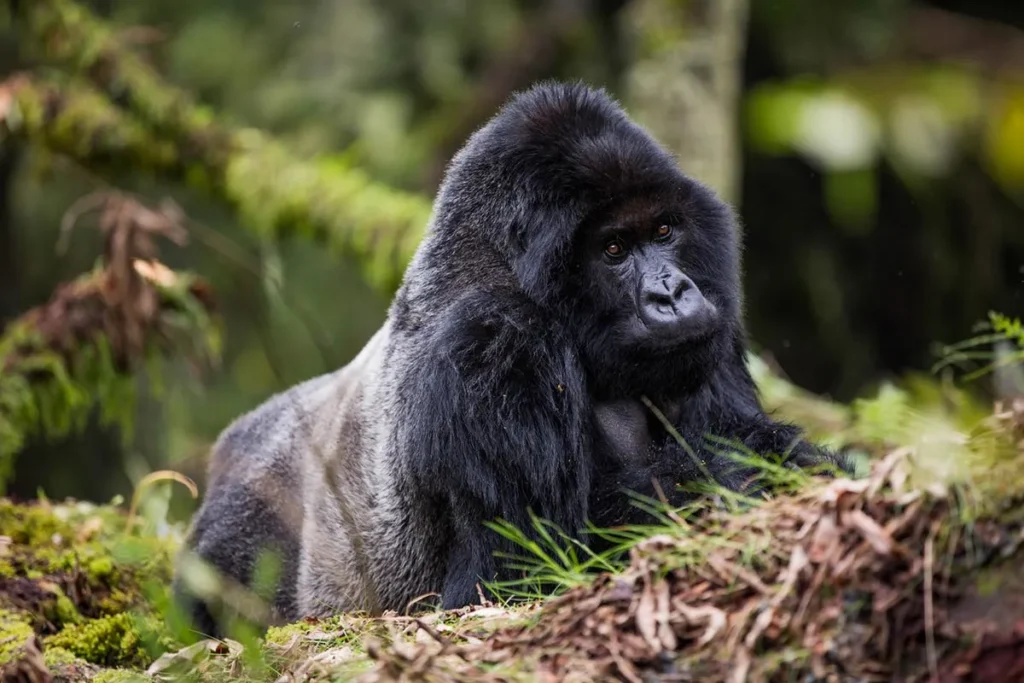
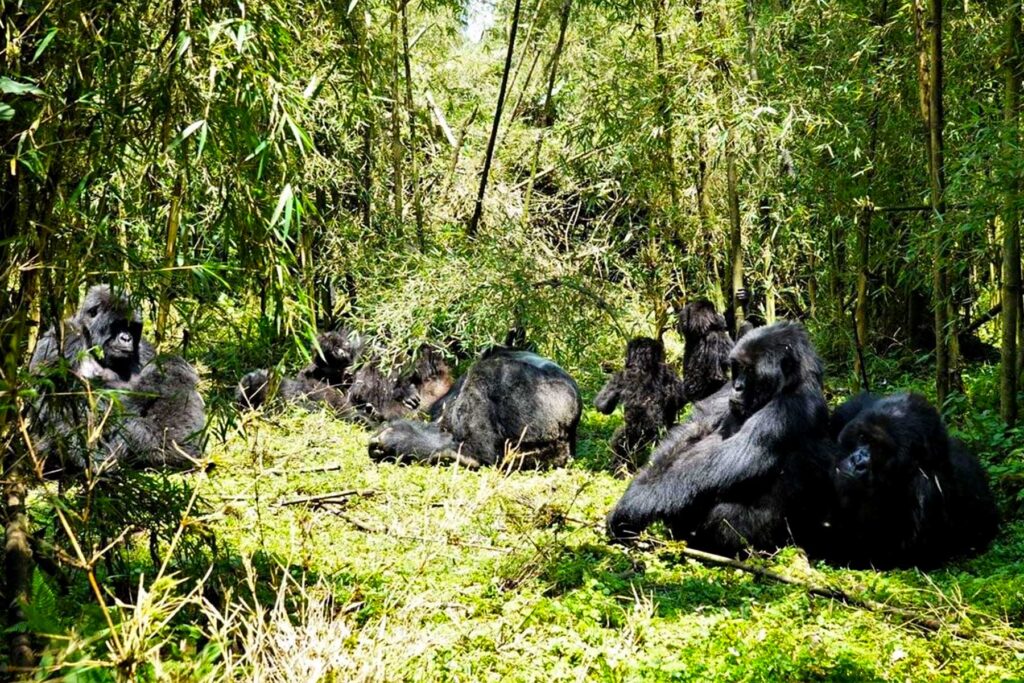
The first sighting rarely happens the way people imagine. There is no dramatic clearing, no choreography. There is a rustle in the undergrowth, a shape that resolves into a dark hand holding a stalk of bamboo, and then the realization that the forest in front of you is full of gorillas. A silverback may sit in a pool of filtered sunlight, massive, unhurried, and entirely uninterested in the visitors standing seven meters away. A mother adjusts the grip of an infant clinging to her chest. Juveniles wrestle, tumble, and lose interest in each other within seconds. The one-hour limit is rigid: it protects the gorillas from stress and disease, and your guide will keep time quietly. In that hour, most people stop photographing for a few minutes simply to look.

Photography here rewards patience. The understory is dim, so a fast lens and a high ISO matter more than megapixels. A 70-200mm zoom suits most encounters, since you cannot step closer. Flash is strictly prohibited. Take a short burst when a juvenile approaches, then lower the camera. Some of the most memorable moments occur when nothing is happening: a silverback chewing, eyes half-closed, ringed in forest light.

When the hour ends, the group withdraws slowly and without ceremony, and the walk back is usually lighter than the walk in. Lunch is eaten at the trailhead or back at the lodge, and a certificate of participation is presented at Kinigi. Most groups are back at the lodge between 12:30 and 3:00 p.m. The afternoon is yours: a long bath, a massage, or an hour on the terrace watching the clouds peel off Bisoke. Dinner is the quietest meal of the trip, with a weary, thoughtful, pleased table. If you would like to learn more about the families you may be matched with, see our guide to the gorilla families of Volcanoes National Park.

Drive time Lodge to Kinigi: 20 to 40 minutes; Kinigi to trailhead: 15 to 45 minutes
Activity duration Briefing 1 hour; trek 30 minutes to 4+ hours each way; one-hour gorilla visit; total day 5 to 8 hours
Altitude Trailheads are approx. 2,400 to 2,800 m; gorilla encounters typically occur between 2,500 and 3,300 m (8,200 to 10,800 ft).
Meals Breakfast, packed lunch, dinner at the lodge
Overnight Luxury lodge near Volcanoes National Park
Logistics note Early wake-up call (5:30 a.m.). Waterproof boots, gaiters, gloves, and a rain jacket are essential. No flash photography. Minimum age 15.

Day 4: Golden Monkey Trek in the Bamboo and an Afternoon on the Twin Lakes

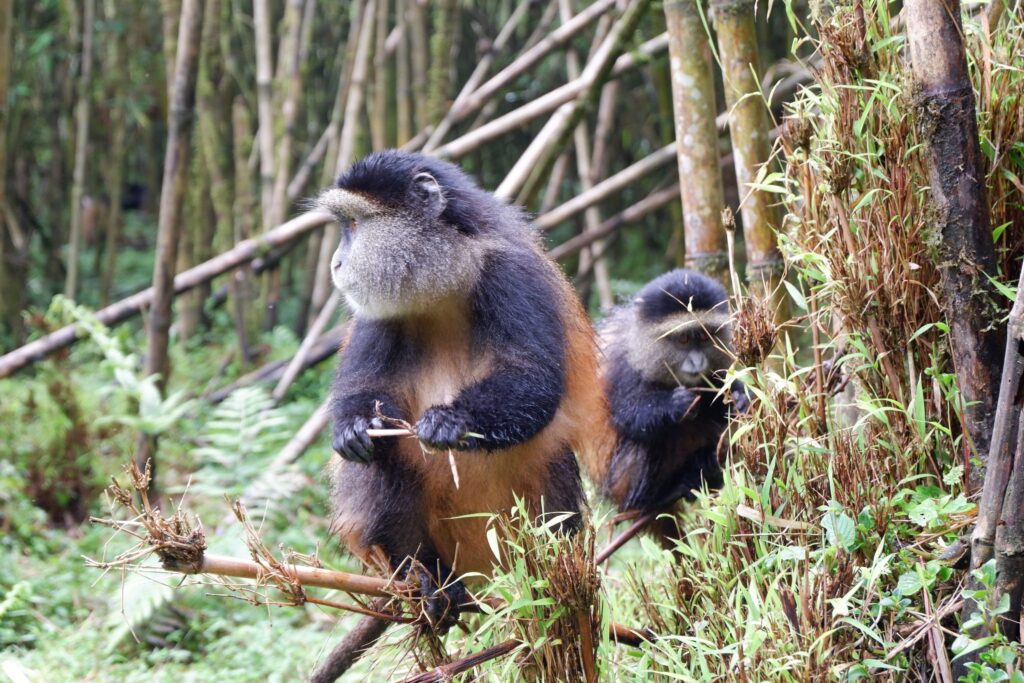
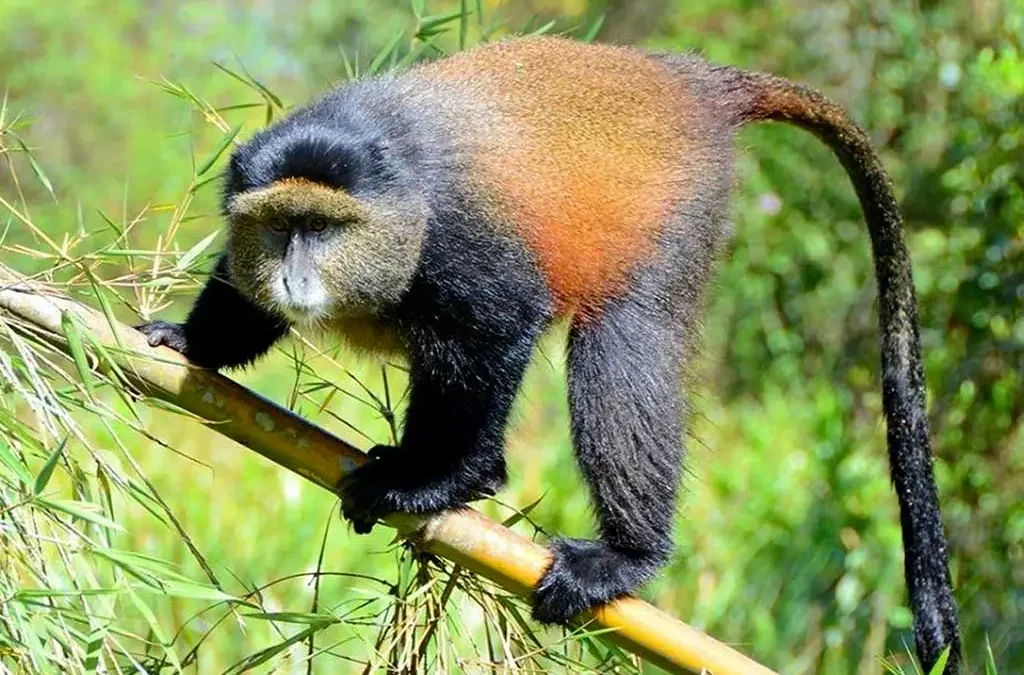
If the gorillas command stillness, the golden monkeys demand laughter. The morning follows the same early rhythm, with breakfast at 6:30 a.m. and the 7:00 a.m. briefing at Kinigi, but the mood is lighter from the first minute. Golden monkeys (Cercopithecus kandti) are small, copper-and-black primates, endangered and found only in the bamboo and montane forests of the Virunga volcanoes and neighboring Albertine Rift. They live in troops that can number in the dozens, and they move with a restless, acrobatic energy that makes a gorilla’s serenity look almost monastic.

3-Day Rwanda Gorillas & Golden Monkeys Safari

The trek itself is usually gentler than the gorilla day. Trailheads for the habituated troops lie on the lower slopes near Mount Sabyinyo and Gahinga at roughly 2,400 to 2,600 meters (7,900 to 8,500 feet), and the walk through farmland, then into dense bamboo, typically takes one to two hours each way. The bamboo forest has its atmosphere: a green, filtered half-light, a constant creak and rustle overhead, and the smell of damp stems. Then the troop is found, and the bamboo above you erupts. Monkeys leap from stem to stem, drop to the ground to forage, and pause on a branch at eye level to inspect the strangers below. You spend an hour with them, under the same RDB rules of respect and distance that protect the gorillas. Photographers should bring a quick lens and patience: the monkeys rarely sit still, and the bamboo shades the light unpredictably.

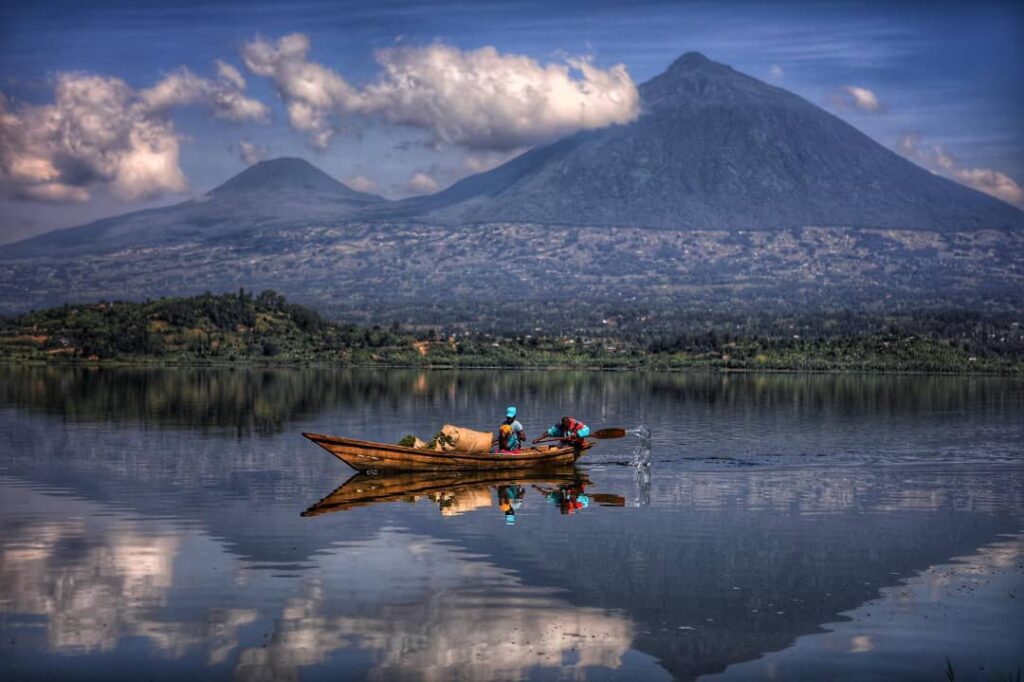
Back at the lodge by late morning, there is time for a shower and a long lunch before the afternoon excursion. The twin crater lakes of Burera and Ruhondo lie 30 to 60 minutes’ drive from Musanze, in a fold of hills northeast of the park. Burera is the larger and deeper of the two, and at roughly 1,800 to 1,900 meters (about 6,000 feet), the lakes sit far below the forest where you spent the morning. Their dark water is surrounded by steep, intensively farmed hills, and on a clear afternoon the Virunga cones are reflected in the surface with a precision that looks edited. By private boat or traditional canoe, you drift past fishermen, terraced banana plantations, and tiny lakeside villages. Your guide can arrange a short walk into a village where you can meet farmers, see how sorghum beer is brewed, or watch weaving. Anyone interested in a more structured cultural visit can ask us to substitute the Ibyiwacu Cultural Village experience.

Lake Burera and Lake Ruhondo

The day ends with the sun dropping behind the volcanoes, and the lodge arranging a fire on the terrace if you want one. This is also a perfect evening to take stock. Many guests find that the golden monkey trek, which they expected to be an add-on, becomes one of the surprising highlights of the trip. For more on the park, its wildlife, and what each activity involves, read our Volcanoes National Park guide.

Drive time Lodge to Kinigi in 20 to 40 minutes; Musanze to the lakes in 30 to 60 minutes.
Activity duration Golden monkey trek: 3 to 5 hours, including one hour with the troop; lakes excursion: 2 to 3 hours
Altitude Golden monkey trailheads approx. 2,400 to 2,600 m; Lakes Burera and Ruhondo approx. 1,800 to 1,900 m
Meals Breakfast, lunch, and dinner at the lodge
Overnight Luxury lodge near Volcanoes National Park
Logistics note Bring a light waterproof cover for the boat and sun protection for the lakes; the walk to the monkeys is shorter than the gorilla trek but still muddy.

Day 5: Dian Fossey and Karisoke Hike, then the Road to Kigali and Departure

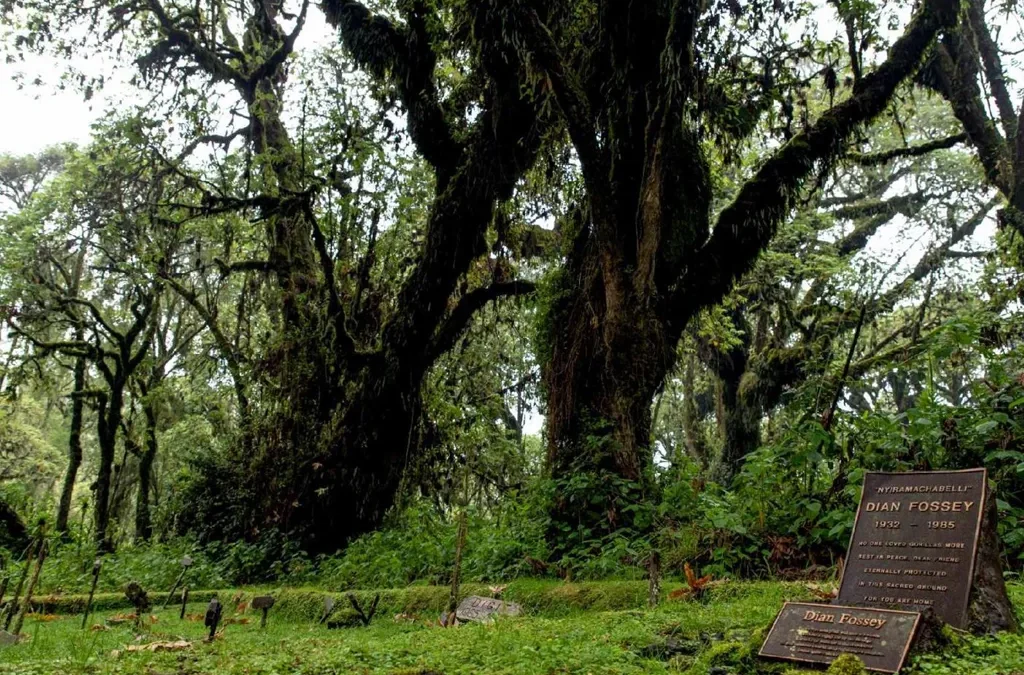
The final morning belongs to the woman who made the rest of the trip possible. In 1967 the American primatologist Dian Fossey established the Karisoke Research Centre in the saddle between Mount Karisimbi and Mount Bisoke, where she spent the next eighteen years studying and defending the mountain gorillas. Her methods for habituating wild groups to human presence, gradual and patient, are the foundation of every trek in the region. She was killed in her cabin in December 1985, and her grave lies at the edge of the old research camp, alongside the graves of gorillas killed by poachers, including her favorite, Digit.

Dian Fossey Tomb Hike

The hike starts at the Bisoke trailhead after the 7:00 a.m. briefing and a drive of about 30 minutes. The route climbs through farmland, then through bamboo and moss-draped forest, to roughly 2,900 to 3,000 meters (9,500 to 9,800 feet), about 6 kilometers there and back. Allow four to six hours in total, including time at the site. The trail is steep in places and often wet, but it is shorter and slower than a long gorilla trek, and your ranger will point out birds and signs of buffalo and gorillas on the way. The site itself is quiet and moving, set in a clearing with views across the saddle. It is a place that explains, better than any museum, why this forest is still full of gorillas. Our Behind-the-Scenes Gorilla Trekking Experience offers the deepest version of this story, working beside the primatologists and vets who continue Fossey’s work.

After lunch at the lodge, the drive back to Kigali takes two to two and a half hours. If your flight departs in the evening or overnight, as many international departures from Kigali do, this schedule works well. If your flight leaves earlier in the day, we simply swap the order: the Karisoke hike becomes an optional extra on Day 4 in place of the lakes, and the final morning becomes a relaxed visit to the Musanze Caves, a network of lava tubes formed by the same volcanic forces that built the mountains above, followed by an early transfer. Either way your guide and driver deliver you to the terminal with a comfortable margin. Gorilla trekking is the kind of experience that makes people book a return trip in the airport lounge, and the team will be glad to help when you do.

Drive time Lodge to Karisoke trailhead approx. 30 minutes; Volcanoes to Kigali Airport approx. 2.5 to 3 hours
Activity duration Dian Fossey and Karisoke hike 4 to 6 hours, including the site visit.
Altitude Karisoke approx. 2,900 to 3,000 m (9,500 to 9,800 ft)
Meals Breakfast, lunch at the lodge (or packed), dinner on your own, or en route depending on the flight
Overnight Departure: a dayroom in Kigali is available on request.
Logistics note Please keep a spare set of dry clothes in the vehicle. Evening or overnight flights are best suited to this program.

Plan Your Rwanda Safari

Start Planning a Private Gorilla Trek

Rwanda gorilla permits sell out months in advance. Secure your dates before the season closes.

Gorilla Families and Trekking Difficulty

Rwanda’s gorilla trekking is organized around habituated families: groups of gorillas, led by a dominant silverback, that have spent two to five years being gradually accustomed to human observers. Each family receives a single visit per day, with a maximum of eight visitors, so the number of permits on any date equals the number of families multiplied by eight. A dozen families are currently open for tourism in Volcanoes National Park. The families differ in size, temperament, and, crucially for you, range.
Gorilla Families of Volcanoes National Park: Full 2027 Guide

The assignment happens on the morning of your trek, at the Kinigi briefing, based on overnight tracker reports and the fitness profile your guide has shared. Families such as Sabyinyo, Amahoro, Agashya, and Kwitonda have historically ranged at lower or more accessible elevations, while groups such as Susa have tended to range higher and farther. These are tendencies, not guarantees: gorillas follow food, weather, and their politics, and a family that was close last week may be two hours away today. Your guide will tell you honestly what the day looks like once the assignment is made. For a full profile of each family, see our gorilla families guide.

This is not a fixed-difficulty activity like a summit hike. Treks range from 30 minutes of easy walking to four hours or more of steep, muddy, high-altitude terrain, and you will not know which until the morning. What you can control is preparation, a porter, and the advice of a guide who knows each slope. Travelers with mobility concerns should tell us early, because careful matching can make a real difference. If a guaranteed private pace and a family chosen in advance matter to you, the exclusive-use gorilla permit lets you request a specific family and set your pace, though it does not extend the one-hour observation window, which is a fixed welfare rule for all visitors.

Elevation Profile Summary

Altitude shapes every day of this safari, so it is worth understanding before you pack. The journey begins at about 1,500 meters in Kigali and climbs to the 2,000- to 2,400-meter band around Kinigi on Day 2. From there, each activity takes you higher or lower in a distinct pattern. The figures below are approximations; actual elevation depends on where each family or troop is found on the day.

Day Activity Approximate elevation profile
Day 1 Kigali arrival About 1,500 m (4,900 ft). No climbing. Easy acclimatization night.
Day 2 Kigali to Volcanoes Gain of roughly 500 to 900 m by road to lodge at 2,000 to 2,400 m (6,500 to 7,900 ft). Mild altitude effects possible.
Day 3 Gorilla trek Trailhead 2,400 to 2,800 m; encounters typically 2,500 to 3,300 m. Walking gain is about 100 to 600+ m, depending on the family, with descents on the return.
Day 4 Golden monkey trek, twin lakes Trailhead elevation is 2,400 to 2,600 m, with modest climbing in bamboo (about 100 to 300 m). Afternoon descends to lakes at 1,800 to 1,900 m.
Day 5 Karisoke hike, drive to Kigali Ascent from about 2,400 m to 2,900 m, then to 3,000 m (500 to 600 m gain), with a matching descent. The road descends to about 1,500 m in Kigali.

For context, the volcanoes above you reach Sabyinyo 3,669 m, Bisoke 3,711 m, Muhabura 4,127 m, and Karisimbi 4,507 m. You will not climb them on this itinerary, but they set the scale of the landscape. Altitude sickness is uncommon at these elevations, but the combination of thin air and steep ground makes moderate fitness valuable. Drink plenty of water and set a slow, steady pace.

Accommodation and Lodges

The lodge cluster around Volcanoes National Park is, by any global standard, extraordinary. In two decades the area has attracted some of the most respected names in luxury safari hospitality, and the properties sit within 20 to 40 minutes of the Kinigi headquarters, so the choice between them is mostly about design, setting, and atmosphere rather than convenience. We tailor the lodge to your party, budget, and dates; the properties below are those we most often recommend.

Wilderness Bisate

The most distinctive lodge in the region sits on the rim of an eroded volcanic cone, where Wilderness has spent years replanting a degraded hillside with native forest. A small collection of circular, thatched villas, each with a fireplace and a view toward the volcanoes, hovers in the canopy. Golden monkeys are sometimes visible from the villa decks. The design echoes the palace of the Rwandan kings, and the whole property feels more like a sanctuary than a hotel. It is the choice for couples and anyone who values architecture and reforestation as much as service.

Singita Kwitonda Lodge

Singita’s Rwandan lodge sits directly against the park boundary, with private suites facing the volcanic range and a guiding team with profound knowledge of the Virunga ecology. The cuisine and wine program are among the best in the region, and the staff-to-guest ratio allows a level of attention that few lodges anywhere match. It suits travelers who want the full Singita standard in a primate setting and are happy to spend accordingly.

One&Only Gorilla’s Nest

At the edge of the park, One&Only’s lodge, set in gardens that are a destination in themselves, offers generous suites, a spa, and the brand’s polished, gracious service. The atmosphere is one of unhurried elegance, a counterpoint to the physical intensity of the trekking day. It particularly suits travelers who want the comfort of a resort-grade property after a demanding morning in the forest.

Wilderness Sabyinyo Silverback Lodge.

One of the original luxury lodges in the area, Sabyinyo sits at the base of Mount Sabyinyo, the oldest of the Virunga volcanoes. A small group of stone cottages looks onto the mountain and the surrounding farmland. It is community-owned and managed by Wilderness, so a stay carries a documented direct benefit for the people living around the park. It is the natural entry point for the luxury tier on this itinerary and offers the best value of the properties listed here. A fifth option, Virunga Lodge, perches above the twin lakes and pairs especially well with the Day 4 excursion.

In Kigali, you will spend one night at a five-star or boutique hotel in a quiet residential district. Should you wish to extend your stay in the capital, please inquire about a second night.

Wildlife and Nature to Expect

Beyond the mountain gorillas and golden monkeys that give this safari its name, Volcanoes National Park is a dense, layered ecosystem. The lower slopes are covered with mixed woodland and farmland, while higher up there are bamboo, followed by Hagenia and Hypericum woodland, and finally giant lobelia and heather near the summits. Each zone has its residents. Forest buffalo, bushbuck, and black-fronted duikers move through the understory, and spotted hyenas are present, though rarely seen. Blue monkeys can occasionally be glimpsed at lower elevations.
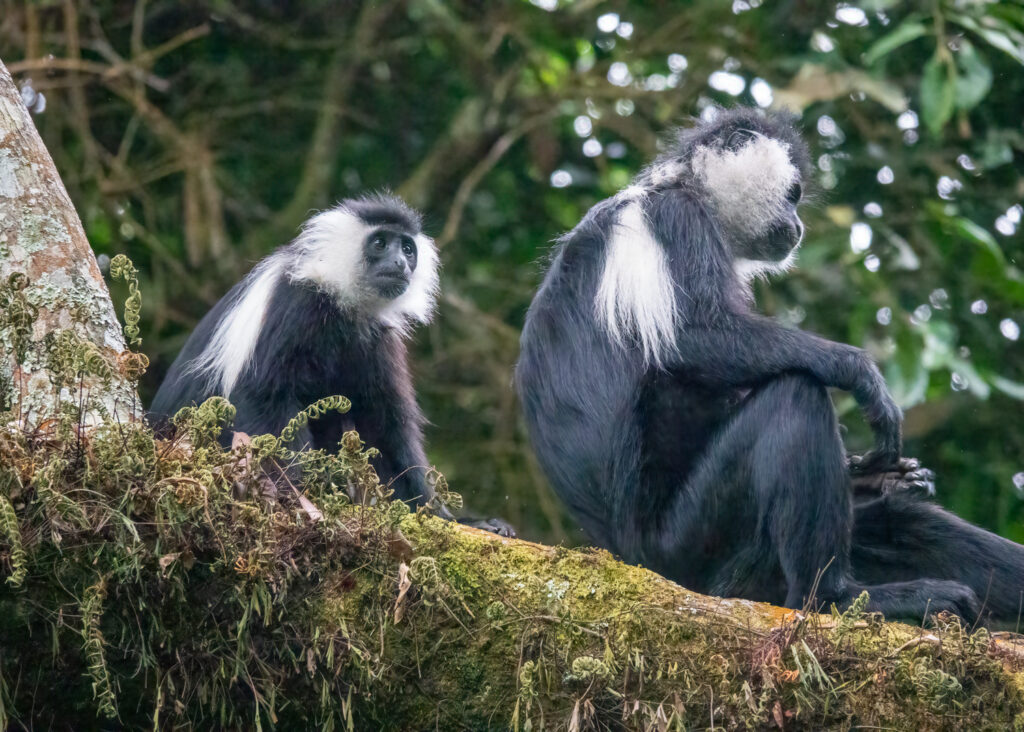
Angola Colobus Monkey Troops

Birdlife is excellent, with more than 200 species recorded, including several Albertine Rift endemics such as the Rwenzori turaco, handsome francolin, and red-faced woodland warbler. The best birding is often on the Karisoke trail, where the bamboo gives way to moss forest. The scenery is a constant companion: the five volcanoes rising behind farmland, mist pooling in the valleys at dawn, and the twin lakes laid out like pewter dishes below. Travelers who want savannah or chimpanzees as well should consider adding Akagera National Park for the Big Five or Nyungwe Forest National Park for chimpanzees and colobus monkeys.

Physical Difficulty and Fitness Requirements

Be honest with yourself about fitness, because the mountain will be. Gorilla treks begin at 2,400 to 2,800 meters and can climb past 3,000 meters over steep, muddy, uneven volcanic slopes, often through dense vegetation where there is no path at all. You do not need to be an athlete, but you do need to be comfortable walking uphill for several hours, with a pause, in cool, damp conditions. A reasonable benchmark is the ability to hike four hours with a gentle incline carrying a small daypack. Training with stair climbing or hill walking for six to eight weeks beforehand is time well spent.

Three tools make the difference. A porter carries your pack and gives a steadying hand on steep or slippery ground. A hiking pole or walking stick, provided free at the briefing center, adds balance. And the match between you and your gorilla family, which we advise on in advance, can reduce the walking time considerably for less fit travelers. The golden monkey trek is easier than the gorilla trek, and the Karisoke hike is moderate. For the mobility-conscious, we can reorder the program, add a rest day, or use the exclusive-use permit to remove pressure from the pace. Everyone should have a doctor’s clearance if they have heart, lung, or joint conditions.

Best Time to Go: Rwanda Gorilla and Golden Monkey Safari by Season.

Gorilla and golden monkey trekking operates every day of the year in Volcanoes National Park, so the question is not whether you can go but which conditions you prefer. Rwanda has two dry seasons and two rainy seasons. The long dry season runs from June to September and the short dry season from December to February; the long rains fall from March to May and the short rains from October to November. Temperatures in Kigali typically range from 15 to 27°C (59 to 81°F) year-round. Around Kinigi, expect 8 to 12°C (46 to 54°F) at night and 18 to 24°C (64 to 75°F) during the day, with several degrees cooler on the higher slopes.

Best time for gorilla trekking.

Months Season Conditions and wildlife Crowds, permits, and value
June to September Long dry season (peak) Driest and coolest, firm trails, and clear mountain views. Gorillas often feed lower, as bamboo shoots and fruit are available. Daytime temperatures range from 18 to 24°C (64 to 75°F), while nighttime temperatures range from 8 to 11°C (46 to 52°F). Highest demand. Permits and lodges sell out six to twelve months ahead. Best weather, highest rates.
October to November Short rains Expect showers most afternoons, with lush forests and muddier trails. Golden monkeys are active in fresh bamboo growth. Day 18 to 23°C (64 to 73°F). Quieter. Easier availability on short notice; reasonable value in the shoulder season.
December to February Short dry season Mostly dry with occasional showers; excellent trekking and photography. Daytime temperatures range from 19 to 25°C (66 to 77°F). Busy around Christmas and New Year; book six to nine months ahead. Strong alternative to the June peak.
March to May Long rains (low season) Heaviest rainfall, slippery trails, mist, and dramatic skies; the forest is at its greenest. Day 17 to 22°C (63 to 72°F). Fewest visitors, most flexible permits and lodge rooms; some lodges offer reduced rates. A discounted gorilla permit may apply to some low-season itineraries.

For this itinerary specifically, the dry months suit the Karisoke hike and the twin lakes best, since the volcano views are clearest and the trails are firmest. The gorilla trek itself is rewarding in every season, and some experienced travelers deliberately choose the rains for the green forest and empty trails. The golden monkey trek is reliably excellent all year. Road transfers between Kigali and Musanze are paved and open in every season, though heavy rain can slow traffic. For more on timing across the country, explore our Rwanda safaris guide, which compares the parks season by season.

What’s Included and What’s Not

Included Not included
4 nights’ luxury accommodation (1 in Kigali, 3 near Volcanoes National Park) International flights to and from Kigali
Meals as specified (full board at the lodge, breakfast in Kigali, lunch on touring days) Rwanda tourist visa (USD 50 on arrival or e-visa)
Standard RDB gorilla trekking permit (USD 1,500 per person) Comprehensive travel insurance with medical evacuation cover
Golden monkey trekking permit (USD 100 per person) Tips for guide, driver, rangers, trackers, porters, and lodge staff
Dian Fossey and Karisoke hike permit (USD 75 per person) Alcoholic drinks beyond lodge inclusions, laundry, spa, and personal items
Park entrance fees for all activities Porter fees at the briefing (USD 10 to 20 per day)
Private 4×4 transport and airport transfers Optional upgrades: exclusive-use gorilla permit, helicopter transfers, ultra-luxury lodges
English-speaking professional guide for the full trip Any activity not listed in the itinerary
Kigali city tour and Genocide Memorial visit Vaccinations and personal medication
Twin Lakes excursion by boat or canoe
Bottled water, 24/7 in-country support

Gorilla Permits, Park Fees, and Costs

A standard gorilla trekking permit in Rwanda costs USD 1,500 per person, issued by the Rwanda Development Board, and it covers a single trekking day with one habituated family: park entry, a ranger guide and tracking team, and one hour with the gorillas. It is the most expensive standard gorilla permit in the world, and deliberately so. A large share of the revenue funds anti-poaching, veterinary care, and community projects around the park. A golden monkey permit costs USD 100, and the Dian Fossey and Karisoke hike permit costs USD 75; all three are included in the program price. Permits are paid in advance and are non-refundable in most circumstances, so please confirm your dates before committing.

Item Cost (USD) Notes
Standard gorilla permit 1,500 per person Shared group of up to 8; family assigned at Kinigi
Exclusive-use gorilla permit Approx. 15,000 per group Flat fee for up to 8 people; private family, same one-hour limit.
Golden monkey permit 100 per person Included in this safari
Dian Fossey and Karisoke hike 75 per person Included in this safari
Porter at briefing 10 to 20 per day Excluded; recommended
Visa (single entry, 30 days) 50 per person Excluded

For travelers who want complete privacy, the exclusive gorilla trekking product allows one group to book an entire family’s daily slot, and for those who want depth over privacy, our behind-the-scenes experience runs for up to three days alongside researchers at a substantially higher cost. Permits sell out months ahead in June to September and December to February, so we recommend booking six to twelve months ahead for those windows and three to six months ahead for the rest of the year.

Packing and Gear List.

Think layers and function. Mornings are cool, forest conditions change by the minute, and every item below earns its place. Choose neutral, earth-toned colors, such as olive, brown, or gray, and avoid bright colors and white, which can disturb animals and attract insects.
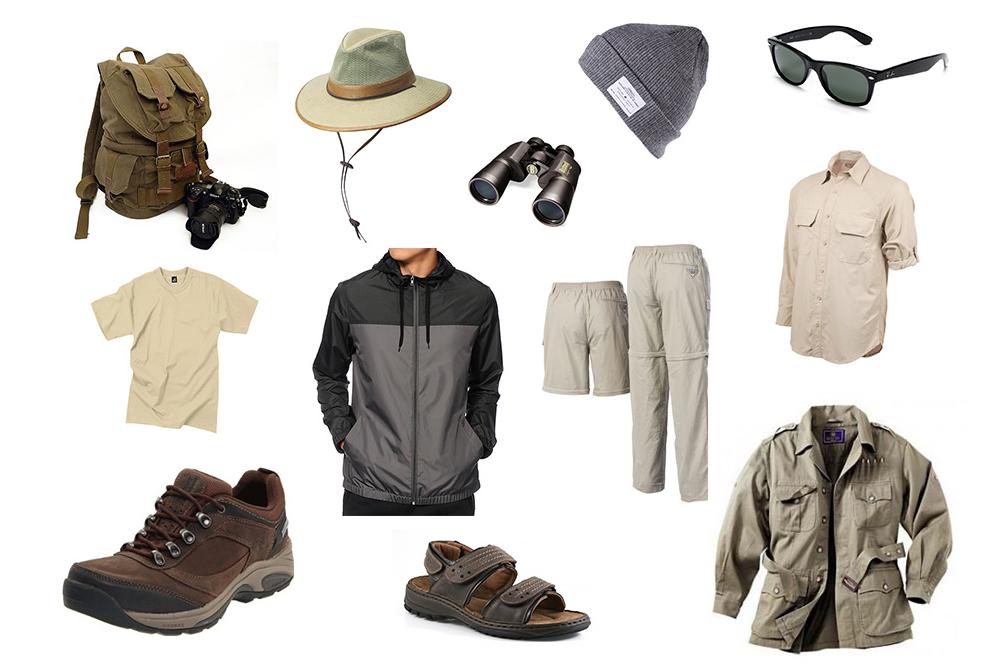
What to Pack for a Safari

Item Why it matters
Waterproof, ankle-supporting hiking boots The forest floor is steep, wet, and uneven. Break them in before you travel.
Long-sleeved shirts and long trousers Protection from stinging nettles, ants, and scratchy vegetation.
Waterproof rain jacket Rain can arrive without warning at altitude, in any season.
Gaiters Keep nettles and mud out of your boots; they are hireable at Kinigi.
Gardening or light work gloves Useful when grabbing branches and thorny vines.
Fleece and warm layer Mornings and evenings at the lodge are cold (8 to 12°C / 46 to 54°F).
Binoculars (8×42 recommended) For birds, golden monkeys, and distant volcano views.
Camera with fast lens, spare batteries No flash near gorillas; consider a 70-200mm zoom. Bring a dry bag.
Polarized sunglasses, hat, sunscreen Strong equatorial sun, especially at the lakes.
Reusable water bottle and daypack Carry at least 2 liters of water on trek days.
Insect repellent Useful in Kigali and at lower altitudes; malaria risk is lowest near Volcanoes.
Plug adapter (Type C/J, 230V) or universal Rwanda uses Type C and J sockets.
Small USD notes For tips, porters, and small purchases, travelers prefer bills dated 2013 or newer.

Getting There

Almost every international traveler arrives through Kigali International Airport (KGL), served by direct and one-stop connections from Europe, the Middle East, and across Africa. Your guide meets you in the arrivals hall and manages the transfer to your hotel. From Kigali, Volcanoes National Park is a two- to two-and-a-half-hour drive (100 to 110 km) by private 4×4 on a well-maintained paved road. There are no scheduled domestic flights to the Volcanoes area, so road transfer is standard. Private helicopter transfers between Kigali and the lodges can be arranged for a premium, saving most of the road time. Rwanda is compact, which means that moving between parks rarely takes more than a day.

Visa and Entry

Most nationalities can obtain a single-entry tourist visa valid for 30 days, either online as an e-visa or on arrival at Kigali International Airport, for USD 50. Your passport should be valid for at least six months from your date of entry. If you plan to combine Rwanda with Uganda and Kenya, the East Africa Tourist Visa at USD 100 covers all three for 90 days with multiple entries. Apply online in advance to save time at the airport, and check the latest requirements through the official Rwandan immigration portal before you travel.

Health and Vaccinations

A yellow fever vaccination certificate is required if you arrive from, or have transited through, a yellow fever endemic country; no other vaccinations are legally required for entry. Hepatitis A, typhoid, and routine boosters are commonly recommended, and your travel medicine clinic will advise on others. Malaria prophylaxis is recommended for Rwanda, though the risk is lowest in the high-altitude Volcanoes area and higher in Kigali and lowland regions. Ill travelers, especially with colds or respiratory infections, may be refused gorilla trekking for the animals’ safety, so take care in the days before. Comprehensive travel insurance, including medical evacuation, is essential.

Currency and Tipping

The local currency is the Rwandan franc (RWF), but US dollars are widely accepted at lodges, hotels, and in tourism generally, and international cards work in Kigali and at most lodges. Carry small US bills for tips and small purchases. As a guide, budget USD 20 to 30 per day for your driver-guide (shared by the party), USD 10 to 15 per day per guest into the lodge staff tip box, and a small tip for rangers, trackers, and porters on trek days, typically USD 10 to 20 for a porter. Tips are voluntary but customary, and they matter to the people who earn a modest living from the visitor economy around the park.

Plan Your Rwanda Safari

Start Planning a Private Gorilla Trek

Rwanda gorilla permits sell out months in advance. Secure your dates before the season closes.

Frequently Asked Questions about the 5-Day Luxury Rwanda Gorilla & Golden Monkey Safari.

How much does a 5-day gorilla and golden monkey safari in Rwanda cost?

A luxury 5-day Rwanda gorilla and golden monkey safari typically costs from about USD 6,500 per person sharing in a luxury-tier lodge, rising to roughly USD 10,500 to 15,000 or more at Wilderness Bisate, Singita Kwitonda Lodge, or One&Only Gorilla’s Nest. The permits alone cost USD 1,675 per person: USD 1,500 for the gorilla permit and USD 100 for the golden monkey permit, plus USD 75 for the Dian Fossey hike. The rest of the budget goes to lodging, private transport, a guide, and meals. Prices vary by season, with June to September and December to February the most expensive. We provide an itemized quotation with no hidden costs.

How much is a gorilla trekking permit in Rwanda?

A standard gorilla trekking permit in Rwanda costs USD 1,500 per person, issued by the Rwanda Development Board. It includes park entry, a ranger guide, trackers, and one hour with a habituated gorilla family. It does not include accommodation, transfers, porters, or tips. An exclusive-use permit, which reserves an entire family for one private group of up to eight people, costs about USD 15,000 as a flat fee. Permits are issued in limited numbers and paid in advance.

How much is a golden monkey trekking permit in Rwanda?

A golden monkey trekking permit in Volcanoes National Park costs USD 100 per person. It covers park entry, a guide, and one hour with a habituated troop, with up to eight visitors per group. It is far cheaper than a gorilla permit and a worthwhile addition to any itinerary. The trek is shorter and generally easier than a gorilla trek, and the monkeys are playful and photogenic. It is included in this safari.

Is a 5-day gorilla trekking safari in Rwanda worth it?

For most travelers, yes. A five-day itinerary spreads the gorilla trek, golden monkey trek, and cultural sights over comfortable days rather than compressing them into 48 hours. You arrive rested, trek on day three after acclimatizing, and still have time for the Dian Fossey hike and the twin lakes. If you have limited time, shorter two- and three-day options exist, but five days reduces the pressure and generally produces better photography, more time at lodges, and a more profound understanding of conservation. Our team can help you find the right length for your schedule.

How difficult is gorilla trekking in Rwanda?

Gorilla trekking in Rwanda ranges from moderate to strenuous, depending on where your assigned family spent the night. Some treks take 30 to 60 minutes; others take three to four hours or longer through steep, muddy terrain at 2,500 to 3,300 meters. Fitness, a porter, and a hiking stick help, and we advise on family matching for less fit travelers. If you can comfortably hike for several hours uphill with breaks, you will be fine. The minimum age is 15.

How close do you get to mountain gorillas in Rwanda?

The official rule is a minimum distance of seven meters (about 23 feet) between visitors and gorillas, and visits are limited to one hour. In practice, curious juveniles sometimes approach closer, and guides will quietly ask you to step back when that happens. You are never allowed to touch the gorillas. Flash photography is prohibited, and you should not eat or drink near them.

What is the best time of year for gorilla trekking in Rwanda?

Trekking operates year-round, but the long dry season from June to September and the short dry season from December to February offer the firmest trails and clearest views. March to May and October to November are rainy, with muddier terrain but fewer visitors and easier permit availability. Permits for the dry seasons often sell out six to twelve months ahead, so book early.

How far in advance should I book a Rwanda gorilla permit?

For June to September and the Christmas to New Year period, book six to twelve months in advance. For other months, three to six months is usually enough, though earlier is better. Gorilla permits are limited in daily supply and sell out, and the best lodges near the park hold very few rooms. We check real-time permit availability before quoting your itinerary. Tell us your dates and we will check permit availability within a few minutes.

Can I see gorillas and golden monkeys on the same trip?

Yes. Both live in Volcanoes National Park, and they can be combined on consecutive days or, on shorter schedules, on the same day. This itinerary schedules them on separate days to allow for rest and better photography. The golden monkey trek uses a separate USD 100 permit and typically lasts three to five hours in total.

What is the minimum age for gorilla trekking in Rwanda?

The minimum age for gorilla trekking is 15 years, set by the Rwanda Development Board to protect gorillas from childhood illnesses and to reflect the physical demands of the trek. The rule has no exceptions. Younger children can join other activities, such as the Kigali tour, the twin lakes, the Musanze Caves, or cultural visits, but not the gorilla trek itself.

What should I wear for gorilla trekking in Rwanda?

Wear long-sleeved shirts and long trousers in neutral, earth-toned colors, waterproof ankle-supporting hiking boots, gaiters, and light gloves. Bring a waterproof jacket and layers for cold mornings. Avoid bright colors, perfume, and white clothing. Carry at least two liters of water, snacks, insect repellent, and sunscreen, and keep your camera ready without flash.

Can I do the gorilla habituation experience on this safari?

No. The gorilla habituation experience, in which visitors spend several hours with a family still becoming accustomed to humans, takes place only in the Rushaga sector of Bwindi Impenetrable National Park in Uganda and is not part of this Rwanda itinerary. It can be added through a cross-border extension. For a deeper, research-led alternative in Rwanda, see our behind-the-scenes gorilla experience, and for the country comparison, read Rwanda vs Uganda gorilla trekking.

How far is Volcanoes National Park from Kigali?

Volcanoes National Park is about 100 to 110 kilometers from Kigali, which takes two to two and a half hours by road. The route is paved. There are no scheduled domestic flights, though private helicopter charters can be arranged. Most lodges are 20 to 40 minutes from the Kinigi Park headquarters, where all treks begin.

Can I combine this safari with other East African destinations?

Yes. Rwanda pairs naturally with Uganda for chimpanzees and Bwindi and with Tanzania and Kenya for plains wildlife. Popular extensions include Akagera National Park for the Big Five, Serengeti and Ngorongoro Crater in Tanzania, the Masai Mara in Kenya, and a beach finish in Zanzibar. We design multi-country journeys with a single team handling permits, flights, and transfers. Plan the sequence so the gorilla dates, the least flexible element, come first.

Plan Your Rwanda Safari

Start Planning a Private Gorilla Trek

Rwanda gorilla permits sell out months in advance. Secure your dates before the season closes.

Book Your Rwanda Gorilla and Golden Monkey Safari

Gorilla permits are issued in small numbers each day and sell out months ahead. The finest lodges near Kinigi hold only a handful of rooms. If you have a window in mind, the single most useful thing you can do today is start the conversation. Our Rwanda-based team handles every element: permits, lodges, private transfers, trek matching, and in-country support from the moment you land to the moment you depart. No call centers, no generic brochures.

Reach us on WhatsApp or by email, or use our contact page. Tell us your dates and we’ll check permit availability within a few minutes.