What Are the Virunga Mountains? Geography, Volcanoes, and National Parks
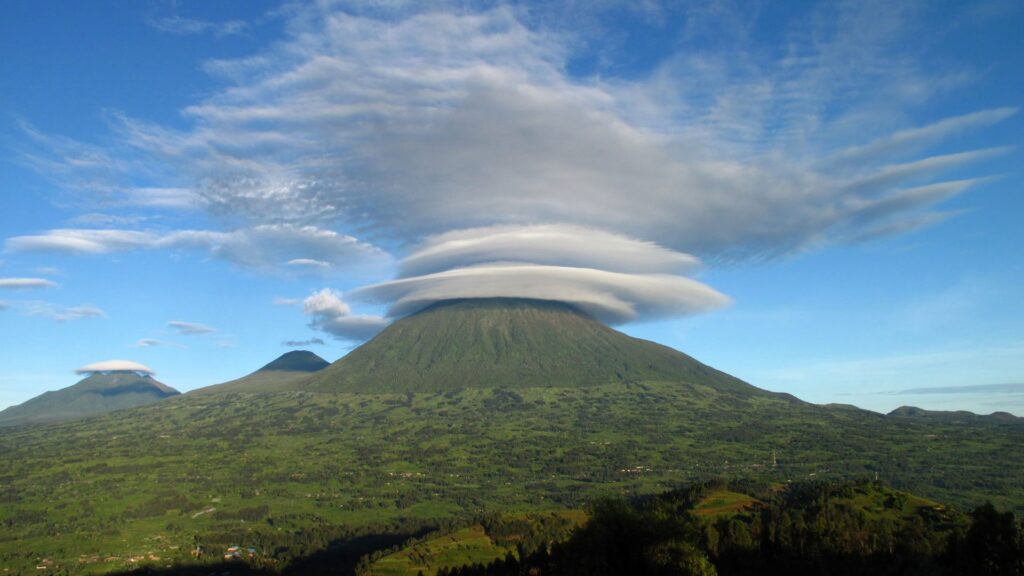
The Virunga Mountains are a volcanic mountain range roughly 80 kilometers long, part of the Albertine Rift branch of the East African Rift, sitting between Lake Kivu and Lake Edward at the meeting point of Rwanda, Uganda, and the Democratic Republic of Congo. The name comes from the Kinyarwanda word “ibirunga,” meaning “volcanoes,” and the range is known in Uganda by its older name, Mufumbiro. Most of the eight volcanoes are extinct or dormant; only two, Nyiragongo and Nyamuragira, both entirely inside the DRC, remain regularly active, with Nyiragongo notably holding one of the largest lava lakes on Earth.
The Eight Volcanoes
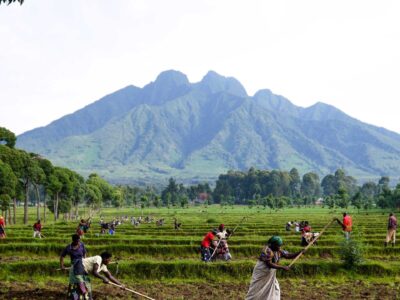
Mount Sabyinyo, whose jagged, weathered summit is the oldest formation in the range, sits at the exact tripoint where Rwanda, Uganda, and the DRC meet the only place on the continent where a single hike can put you in three countries within a few hundred meters. Mount Karisimbi is both the tallest peak in the Virungas and the highest point in Rwanda, its upper slopes cold enough to occasionally see frost even at this latitude close to the equator.
| Volcano |
Height |
Status |
Country/Border |
| Karisimbi |
4,507 m |
Dormant (last erupted c. 8050 BCE) |
Rwanda–DRC border |
| Nyiragongo |
3,470 m |
Active; lava lake |
DR Congo |
| Muhabura |
4,127 m |
Inactive |
Rwanda–Uganda border |
| Mikeno |
4,437 m |
Extinct |
DR Congo |
| Bisoke (Visoke) |
3,711 m |
Dormant (last erupted 1957) |
Rwanda–DRC border |
| Sabyinyo |
3,669 m |
Extinct; oldest in the range |
Rwanda – Uganda – DRC tripoint |
| Gahinga |
3,474 m |
Extinct |
Rwanda–Uganda border |
| Nyamuragira |
3,058 m |
Africa’s most active volcano |
DR Congo |
Three Countries, Three National Parks
Each country protects its own sector of the massif under a different name and management authority. Rwanda’s Volcanoes National Park covers 160 square kilometers of the range’s southeastern slopes, including Karisimbi, Bisoke, Muhabura, Gahinga, and Sabyinyo, and is the sector this article focuses on. Uganda’s Mgahinga Gorilla National Park, the smallest of Uganda’s parks at roughly 34 square kilometers, covers the northern slopes of Muhabura, Gahinga, and Sabyinyo. The Democratic Republic of Congo’s Virunga National Park is by far the largest of the three, Africa’s oldest national park, established in 1925, and the only sector containing the range’s two active volcanoes, Nyiragongo and Nyamuragira, along with Mount Mikeno. All three parks are contiguous and, in principle, form a single transboundary protected ecosystem, though political and security realities mean the three sides currently operate as three separate tourism experiences rather than one seamless park.
Gorilla Trekking in the Virunga Mountains: Choosing Your Country
All three Virunga countries offer mountain gorilla trekking, but they are not interchangeable options, and the differences in cost, access, and reliability matter more than most first-time researchers expect.
Rwanda: Volcanoes National Park
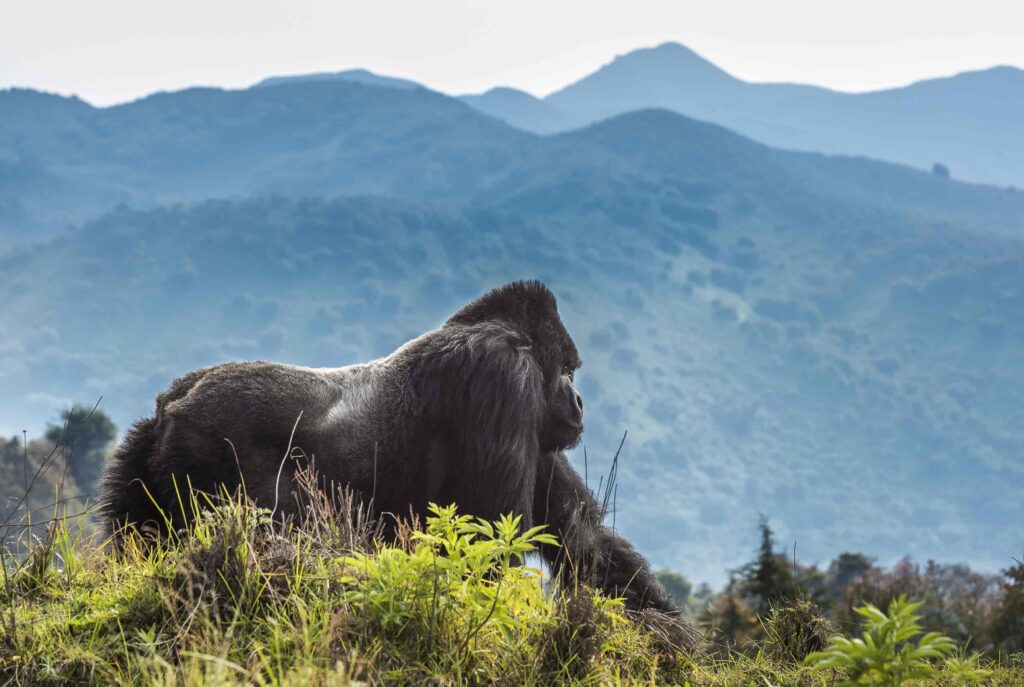
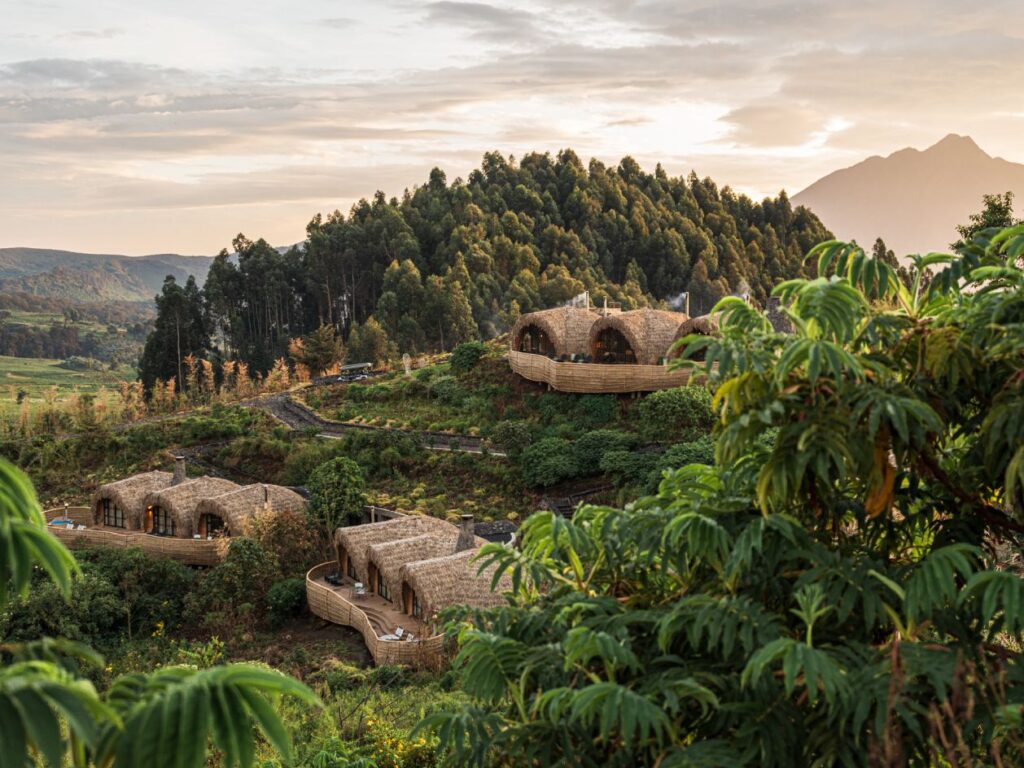
Rwanda’s side of the Virungas holds 24 habituated gorilla families, the largest number of trekking-accessible groups anywhere in the world, supported by a mature network of luxury lodges and a permit system priced at USD 1,500 per person specifically to keep visitor numbers controlled. For the international traveller this guide is written for, Rwanda is, in practical terms, the default choice: the shortest, most reliable transfer from an international airport, the deepest bench of five-star accommodation, and zero exposure to the access uncertainty that affects the Congolese side. Our gorilla trekking guide covers full details on permits, trekking difficulty, and what a trekking day actually involves, including information about the gorilla families of Volcanoes National Park.
Uganda: Mgahinga Gorilla National Park
Mgahinga is genuinely part of the Virunga massif, but it is a minor gorilla trekking destination within Uganda, home to only one regularly monitored family, the Nyakagezi group, which sometimes ranges across the border into Rwanda or the DRC entirely, meaning a permit here does not guarantee a sighting on any given day. The vast majority of Uganda’s gorilla trekking, and the reason Uganda holds its permit price of USD 800, actually happens in Bwindi Impenetrable Forest, a separate forest ecosystem roughly two hours south of the Virungas that is not, geologically or geographically, part of this mountain range at all. Travellers researching “gorilla trekking in Uganda” usually find themselves directed toward Bwindi, not Mgahinga. See our full Rwanda vs. Uganda gorilla trekking comparison for the complete picture.
DR Congo: Virunga National Park
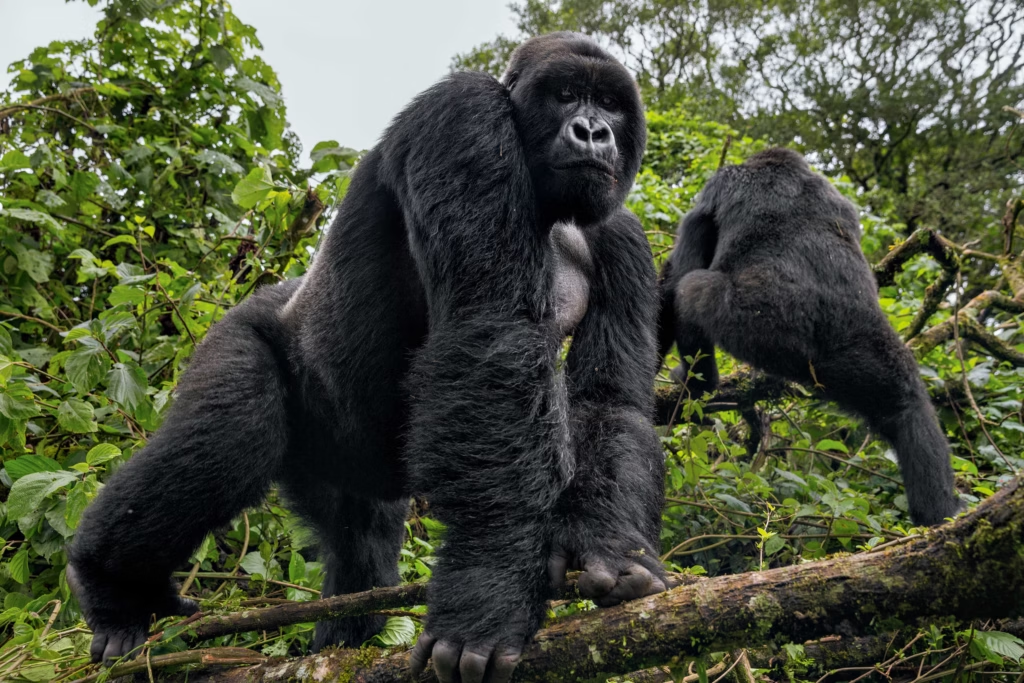
The Congolese side of the Virungas holds a substantial share of the world’s mountain gorillas, alongside the singular experience of climbing to the edge of Nyiragongo’s active lava lake, and has historically been priced as low as USD 400 per gorilla permit, the cheapest of the three countries. The honest caveat that matters more than the price is access: eastern DRC’s security situation has repeatedly forced Virunga National Park to suspend tourism, sometimes for months, sometimes for years at a stretch, following incidents involving armed groups operating in North Kivu province. At the time of writing, Virunga National Park permits remain suspended due to ongoing regional security restrictions, and this status can change with little notice in either direction. We do not include DRC trekking as a default recommendation in any itinerary until our team has confirmed the current, on-the-ground status directly, and we advise every traveller considering it to do the same rather than relying on a published tour listing.