Luxury Rwandan Primate Safari: 8 Days with Chimpanzees, Mountain Gorillas & Golden Monkeys.

8-day luxury Rwandan primate safari: chimpanzees in Nyungwe, mountain gorillas, and golden monkeys in Volcanoes National Park. Private guides, five-star lodges. Enquire.

Begin in the mist-wrapped canopy of Nyungwe, where chimpanzee pant-hoots roll through a forest older than the Ice Age, and end in the bamboo of the Virunga volcanoes, an arm’s length from a silverback, in a private, five-star journey through Rwanda’s richest primate country.

The luxury Rwandan primate safari is the most complete primate journey in East Africa, designed for travellers who want three of the continent’s most coveted wildlife encounters in a single, unhurried eight days: wild chimpanzees in Nyungwe Forest, endangered mountain gorillas in Volcanoes National Park, and the acrobatic golden monkey, a species found nowhere else on earth outside the Virunga massif. Every day is private, every lodge is among the finest in Africa, and every permit, transfer, and trekking morning is handled by the team at Rwanda Gorilla Expeditions so that your only task is to be present.

Luxury Rwandan Primate Safari | 8-Day Chimps, Gorillas & Monkeys

Most Rwanda itineraries are built around a single headline: the mountain gorilla. That is a magnificent headline, but it is only one chapter of what Rwanda’s forests hold. This eight-day safari is built around the whole story. It pairs Rwanda’s two remarkable forest ecosystems, the ancient rainforest of Nyungwe and the volcanic bamboo slopes of Volcanoes National Park, so that you meet three entirely different primates, in three entirely different landscapes, with a different kind of excitement each time.

Nyungwe is where you earn your encounter. Chimpanzees live in a loud, moving world: you hear the pant-hoots before you see a single animal, then follow your tracker through wet, shining forest until a branch overhead begins to shake. At Volcanoes National Park, you experience the encounter with startling intimacy. A silverback settles into the vegetation within arm’s reach, an infant tumbles across a root, and for one regulated hour the forest is yours. The golden monkeys in between, tumbling through the bamboo in troops of dozens, add the playful rhythm that makes the whole journey feel alive.

The route itself is part of the luxury experience. Instead of backtracking from park to park, the itinerary travels a natural circuit: Kigali, southwest to Nyungwe through the cultural heartland of Huye, north along the shore of Lake Kivu, and onward to the volcanoes. You finish with the animal most travelers dream of, and you reach it rested, acclimatized, and already fluent in the language of the forest.

Permits are limited — spaces fill months ahead

Reserve Your Private Gorilla Trek

Speak with a Rwanda-based specialist today. We secure permits, match you to the right gorilla family, and plan every detail around your schedule.

No group departures · Private itineraries only · Direct Rwanda expertise

Safari Summary of the Luxury Rwandan Primate Safari at a Glance.

Detail What to expect
Duration 8 days / 7 nights
Starting and ending point Kigali International Airport (KGL), Rwanda
Parks and experiences Nyungwe Forest National Park, Lake Kivu, Volcanoes National Park, Kigali
Primates you will track Eastern chimpanzees, Angolan colobus, other Nyungwe monkeys, mountain gorillas, golden monkeys
Number of treks 1 chimpanzee trek, 1 mountain gorilla trek, 1 golden monkey trek, plus the Nyungwe canopy walk (a second gorilla trek or exclusive permit can be added)
Group size Private party only. Gorilla groups on the trail are capped at 8 visitors, and chimpanzee groups are also small.
Trek difficulty Moderate. Gorilla treks run from about 30 minutes to 5 hours; chimpanzee treks from 1 to 5 hours. Porters and fitness-matched family assignments reduce the strain.
Accommodation tier Luxury and ultra-luxury: One&Only Nyungwe House, a choice of Singita Kwitonda, Wilderness Bisate, One&Only Gorilla’s Nest, or Wilderness Sabyinyo Silverback Lodge, and a five-star Kigali hotel
Best season June to September and December to February are best for the firmest trails; March to May and October to November are best for lush scenery, thinner crowds, and, for chimpanzees, often settled communities.
Permits included Gorilla permit (USD 1,500), chimpanzee permit (USD 150), golden monkey permit (USD 100), and Nyungwe canopy walkway fee (USD 40), per person.
Transport Private 4×4 safari vehicle with an English-speaking driver-guide throughout
Minimum age 15 years for gorilla trekking

Who is this safari ideal for?

  • Honeymooners and anniversary couples who want private suites, quiet luxury, and a once-in-a-lifetime shared encounter. The itinerary can be upgraded with an exclusive gorilla permit; explore our guide to exclusive gorilla trekking in Rwanda.
  • Wildlife photographers who want three distinct primate subjects, three light conditions, and generous time in the field. Extra days can be added for a second gorilla trek.
  • Repeat Africa travellers who have done the Serengeti, the Okavango, or the Mara and want something categorically different.
  • Multigenerational families and groups of friends with teenagers aged 15 and above, who can all share the gorilla trek together.
  • Conservation-minded travellers who want to see where their permit fees go and meet the people behind the mountain gorilla recovery.

What you take home is both emotional and practical. Emotionally, it is the memory of eye contact with a wild, magnificent ape in a forest that was nearly lost. Practically, it is the confidence of a journey in which every permit, vehicle, lodge, and trekking day was arranged by a specialist team that works inside these parks every day.

Because the most discerning travellers often want more than one country, this safari also serves as the opening or closing chapter of a wider East African journey: Rwanda’s primates combined with Uganda’s Bwindi and Kibale forests, Tanzania’s Serengeti, or Kenya’s Masai Mara.

Plan Your Rwanda Safari

Start Planning a Private Gorilla Trek

Rwanda gorilla permits sell out months in advance. Secure your dates before the season closes.

Detailed Itinerary for the 8-Day Luxury Rwandan Primate Safari. (Day by Day)

Because this is a bespoke journey, the order of days, the lodge selection, and the activities can all be adjusted around your dates, your fitness, and your interests. Drive times are approximate and depend on road conditions, stops, and traffic.

Day 1: Arrival in Kigali and a Cultured Welcome

Your journey begins at Kigali International Airport, where your private driver-guide meets you as you exit arrivals and takes you through the cool, tree-lined streets of what is routinely described as one of Africa’s cleanest and safest capitals. The transfer to your hotel takes roughly 20 to 40 minutes depending on traffic. Kigali sits at about 1,500 meters, so the air is mild and the evenings are pleasantly cool, a gentle start after a long-haul flight.

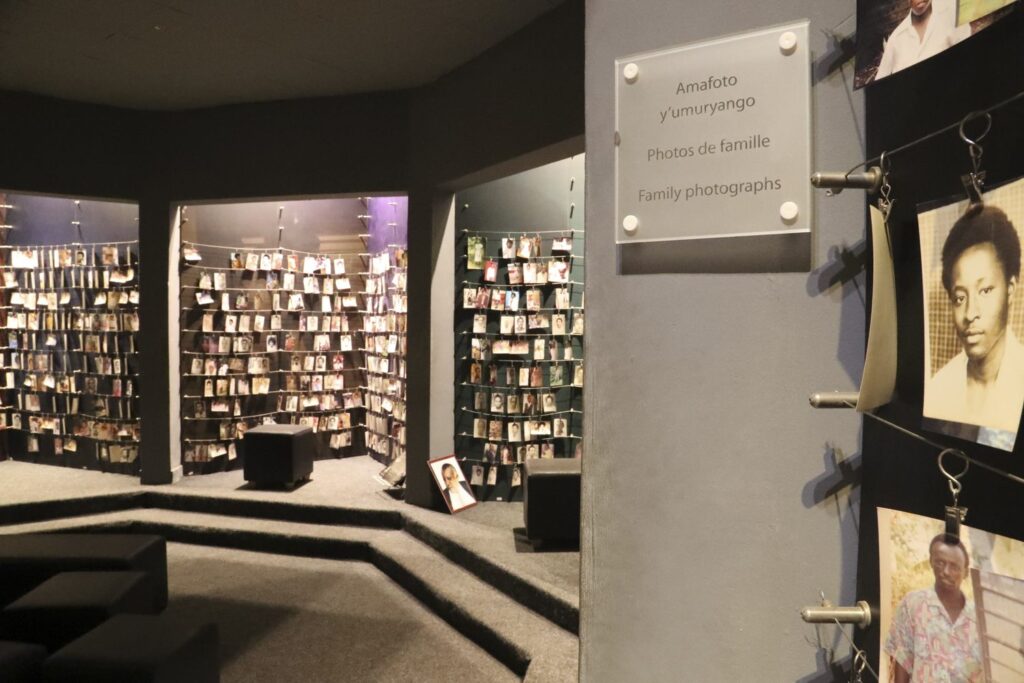
Kigali Genocide Memorial

After you have settled in, and if your flight times allow, you will spend the afternoon learning about Kigali’s story. A visit to the Kigali Genocide Memorial is the most important cultural stop in the country: a sober, beautifully curated memorial that explains the events of 1994 and the extraordinary national recovery that followed. Understanding it makes everything you will see in the days ahead, from community-owned lodges to the conservation model funding the gorilla program, make more sense. For a lighter note, your guide can add a stop at the Inema Arts Centre for contemporary Rwandan art or a coffee tasting that introduces the country’s celebrated single-origin beans.

Dinner is at one of Kigali’s best restaurants or at your hotel, depending on how you feel. If you arrive late, the city program moves to the final day, and you simply rest.

Day 1 at a glance
Drive time Airport to hotel: about 20 to 40 minutes
Activities Private airport meet and greet, Kigali Genocide Memorial, optional art and coffee stop
Accommodation Five-star hotel in Kigali, such as the Kigali Marriott Hotel or similar.
Meals Dinner
Logistics note Altitude is about 1,500 m. Hydrate well and keep the evening relaxed.

Day 2: Kigali to Nyungwe Forest through the Heart of Rwanda

After a relaxed breakfast, you set out southwest on the road to Nyungwe, a drive of roughly 225 kilometers and about five hours, most commonly routed via Huye (formerly Butare). The road is the best introduction to the country you could ask for. Terraced hills fold away on every side, cyclists haul bananas and sacks of potatoes along the verges, and the villages hum with market-day energy that you will want to photograph again and again.

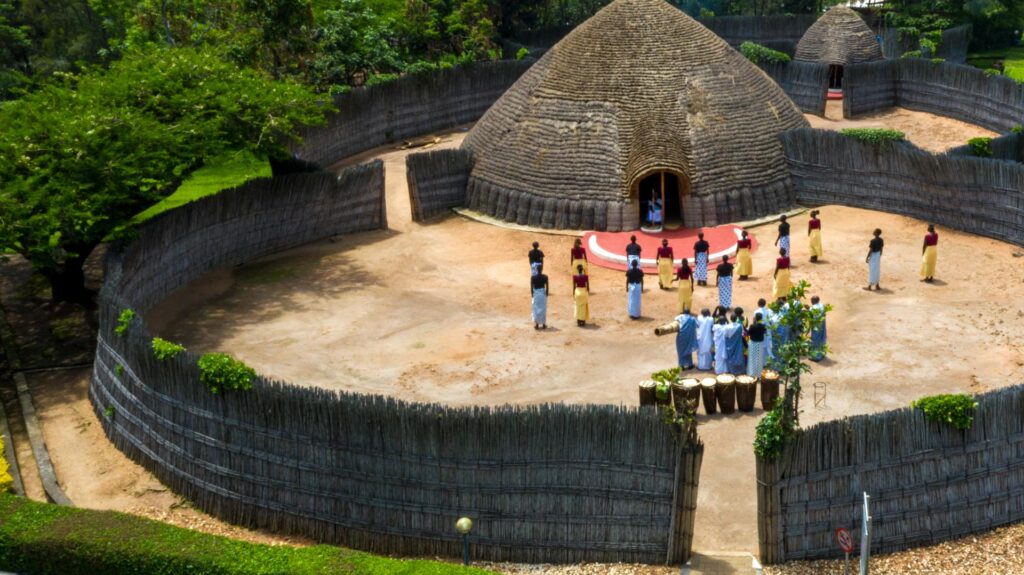
Two worthwhile stops break up the journey. At Nyanza, the replica of the former royal palace introduces Rwanda’s monarchy and the long-horned Inyambo cattle that were once the symbol of royal wealth. In Huye, the National Museum of Rwanda is widely regarded as the finest museum in the country, with a clear and thoughtful overview of Rwandan history and culture. Lunch is taken along the way at a place we have tested for quality and speed, so there is no compromise on comfort.

King's Palace Museum in Nyanza

As the road climbs, the landscape shifts from farmland to tea. Rows of neat, bright-green bushes spill down the hills, and then the dark, continuous wall of Nyungwe rises behind them. You arrive at One&Only Nyungwe House in the late afternoon, on a working tea estate at the forest edge. Check in, take a long bath, and let the sound of the forest settle in.

Day 2 at a glance
Drive time About 5 hours of driving (225 km), plus stops
Activities Scenic drive via Nyanza and Huye, National Museum of Rwanda, tea estate arrival
Accommodation One&Only Nyungwe House (luxury forest lodge on a tea estate)
Meals Breakfast, lunch, dinner
Logistics note Mornings in Nyungwe can be cold, in the low teens of Celsius. Keep a mid-layer in your day bag.

Day 3: Chimpanzee Trekking in Nyungwe Forest

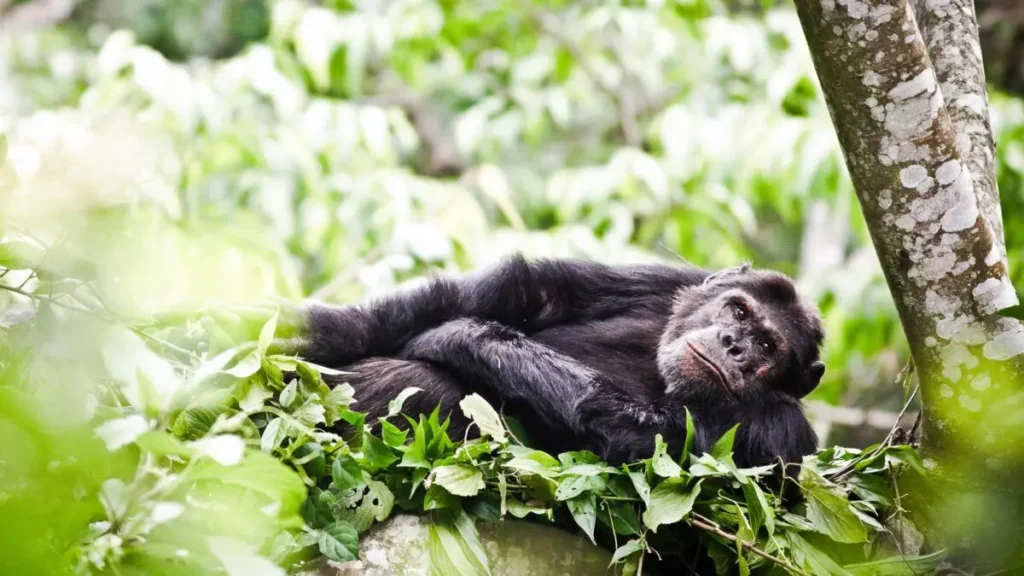
This is the first of the safari’s three great primate days, and it begins early. Nyungwe has two habituated chimpanzee communities, and choosing between them is one of the most important planning decisions in the whole itinerary. For this safari we recommend the Cyamudongo community, a group of roughly 30 chimpanzees in a small, detached forest fragment about 34 kilometers from Gisakura. Local guides consider it the most reliable chimpanzee sighting in the park because the smaller forest limits how far the group can range before trackers relocate it. The price of that reliability is a pre-dawn departure, typically around 4:30 to 5:00 a.m., and a drive of about 90 minutes on a rough track in a 4×4. We pack a hot breakfast for the road.

7-Day Luxury Rwanda Safari: Nyungwe, Kivu & Gorillas

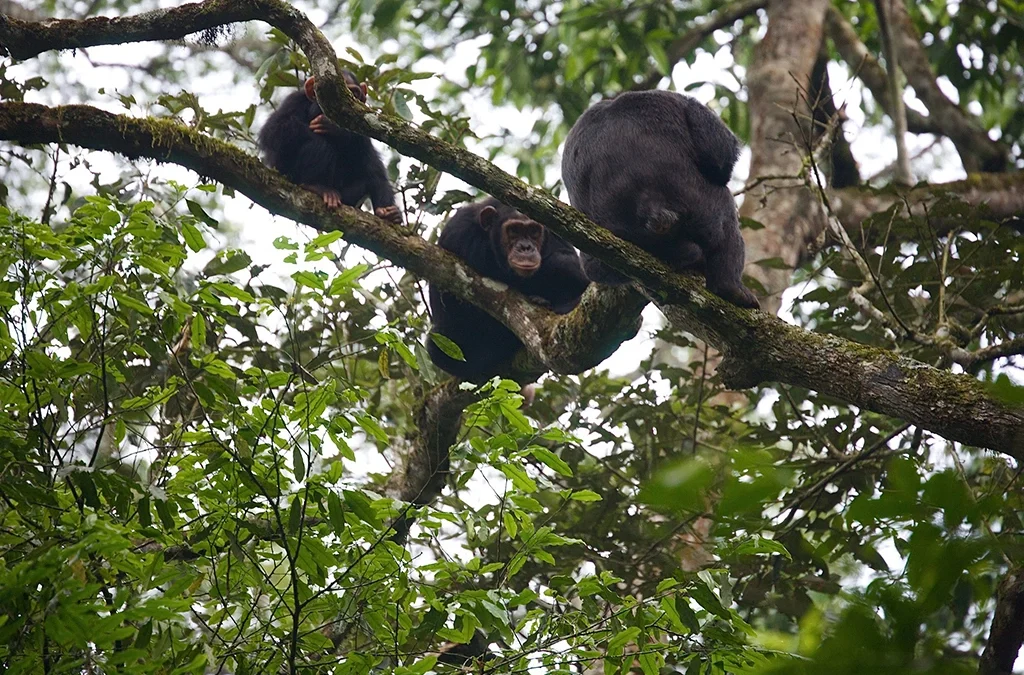
The trek itself is a different rhythm from gorilla trekking. Chimpanzees are constantly on the move, and the first sign of them is usually sound: the rising, hooting pant-hoot call that carries across the valley. Your tracker listens, reads the forest, and leads you toward the calls through wet, undulating terrain beneath a high canopy of enormous, moss-draped trees. Treks can last anywhere from one to five hours, and once you find the community, you are allowed one hour with them at a respectful distance. Expect stretches of high-canopy movement, on a good day, punctuated by chimpanzees feeding or resting at eye level, grooming each other and arguing over fruit. It is raw, noisy, and utterly unlike anything else on the safari.

You are back at the lodge by late morning or early afternoon. A late lunch, a long soak, and, if you wish, a spa massage will ease your legs. Late afternoon is yours for a guided walk through the tea estate. If you would rather take the main-forest alternative, the Uwinka community of roughly 60 chimpanzees near the park’s reception center is a shorter transfer, though sightings can take longer to secure. We will discuss both options with you and tailor the choice to your fitness and patience for early starts.

Day 3 at a glance
Wake up. About 4:00 to 4:30 a.m. for Cyamudongo; about 5:00 a.m. for Uwinka
Drive time About 90 minutes each way to Cyamudongo (rough road); short transfer to Uwinka
Trek 1 to 5 hours of tracking, then 1 hour with the chimpanzees
Accommodation One&Only Nyungwe House
Meals Packed breakfast, lunch, dinner
Logistics note Waterproof boots, a rain jacket, a head torch, and at least two liters of water. Porters are recommended and can be arranged.

Day 4: Canopy Walk, Birding and Colobus Monkeys in Nyungwe

After yesterday’s early start, today is more spacious. If you are a birder, your guide can take you out at first light along the Karamba trail or the forest edges near Gisakura, where the dawn chorus is layered from canopy to understory. Nyungwe holds over 300 bird species, including roughly 29 Albertine Rift endemics, and even non-specialists tend to be captivated by the sound before the first coffee is finished.

Nyungwe Canopy Walk

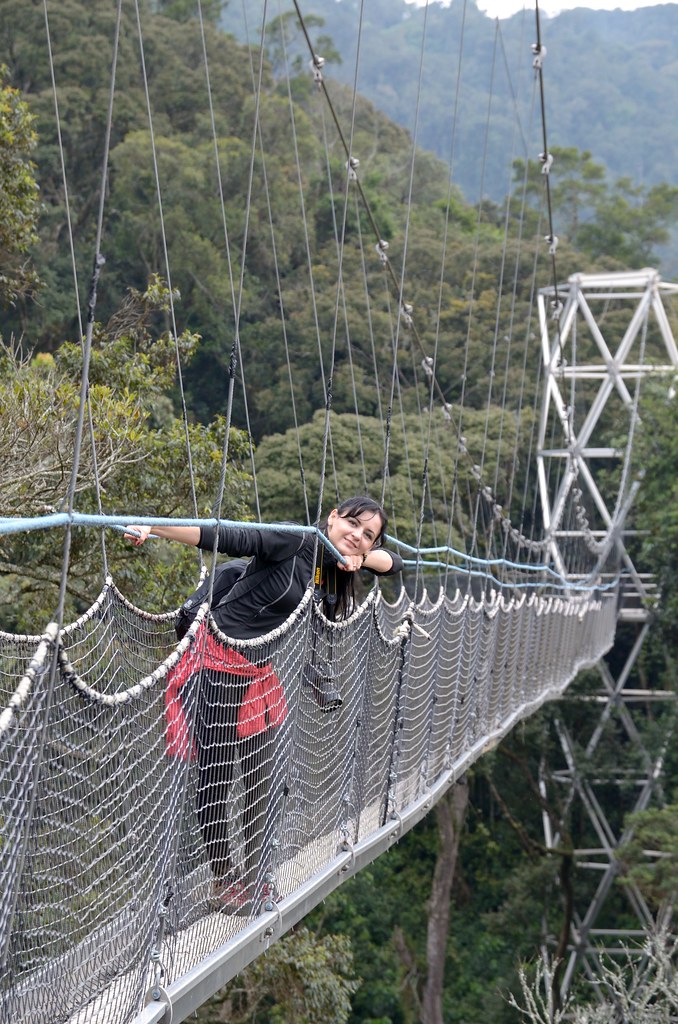
The centerpiece of the day is the Nyungwe canopy walkway, the only structure of its kind in East Africa. A guided hike of roughly 45 minutes to two hours along the Igishigishigi Trail from the Uwinka Visitor Centre leads to a 160-meter suspension bridge made of three linked sections, reaching about 70 meters above the forest floor at its highest point. The bridge sways gently underfoot, and the view from the central span has no ground in it at all, only the crown of the forest stretching away toward Lake Kivu. Your guide will point out canopy-dwelling birds and primates that are almost impossible to see from below. Travellers who dislike heights should know the central span is the longest; you can turn back at any time.

Along the forest edges and trail sections, there is a strong chance of Angola colobus monkeys, the black-and-white primates that form super-troops of up to several hundred individuals and move through the canopy like a rolling wave. Blue monkeys, L’Hoest’s monkeys, and grey-cheeked mangabeys may also appear, their whooping calls ringing out from the trees. If you still have energy and the weather is kind, the hike to Kamiranzovu Waterfall or the shorter Isumo Waterfall trail offers a quiet, less structured way to enjoy the forest.

Return to the lodge for a late lunch and a free afternoon. The tea estate invites a slow walk, and some guests choose a spa treatment or a visit to a tea-processing demonstration. Dinner is a relaxed affair beside the lodge’s open fires.

Day 4 at a glance
Activities Optional dawn birding, canopy walkway, colobus monkey viewing, optional waterfall hike
Duration The canopy walk takes about 2 hours round trip, including the approach; other activities are optional.
Accommodation One&Only Nyungwe House
Meals Breakfast, lunch, dinner
Logistics note The canopy walkway fee (USD 40) is separate from the chimpanzee permit. Both are arranged in advance.

Day 5: Nyungwe to Lake Kivu to Volcanoes National Park

Today you leave the forest and travel north on one of the most scenic drives in Africa. The road follows the ridges above Lake Kivu, one of the most remarkable Rift Valley lakes, a 2,700-square-kilometer expanse of deep blue water at about 1,460 meters above sea level. Terraced hills tumble to the water on every side, small fishing boats ply the lake in the early light, and the hills on the far shore belong to the Democratic Republic of Congo. Few roads in Africa pair this much water with this much mountain.

We break the journey at the lakeshore town of Karongi (Kibuye) for a lazy lunch on a terrace above the water. Depending on your appetite for activity, you can add an hour on the lake by boat, with a gentle cruise past the small islands and a stop to watch the fishing cooperatives at work, or simply sit and watch the afternoon light settle across the water.

From the lake you continue to Musanze, the gateway town for Volcanoes National Park, and on to your lodge on the slopes of the Virunga volcanoes. Depending on road conditions and stops, the full transfer from Nyungwe is roughly four to six hours of driving. You will arrive in time for a lodge welcome, a briefing on tomorrow’s trek, and a quiet dinner with the volcanoes lit by the last of the light.

Day 5 at a glance
Drive time About 4 to 6 hours of driving, with a long lunch stop at Lake Kivu
Activities Scenic Kivu drive, lakeside lunch, optional boat trip
Accommodation Volcanoes National Park luxury lodges: Singita Kwitonda, Wilderness Bisate, One&Only Gorilla’s Nest, or Wilderness Sabyinyo Silverback Lodge.
Meals Breakfast, lunch, dinner
Logistics note Early to bed. Tomorrow’s wake-up is around 5:30 a.m.

Day 6: Mountain Gorilla Trekking in Volcanoes National Park

This is the day the whole safari has been building toward. You wake before dawn to the sound of the forest and a hot breakfast at the lodge, and your driver-guide transfers you to the park headquarters at Kinigi for the 7:00 a.m. ranger briefing. The park has 24 habituated gorilla families, and groups of up to eight visitors are matched to a family on the morning of the trek, based on where the gorillas were found by trackers at first light and on the fitness level you have reported. Your guide will have flagged your preferences in advance, and a ranger will make the final assignment with you at the briefing.

From the briefing point a vehicle takes you to the trailhead nearest your assigned family, usually a drive of 15 to 60 minutes. The trek then begins, through farmland, over a low stone wall, and into the bamboo and montane forest of the Virunga slopes. Depending on where the gorillas spent the night, the walk can take as little as 30 minutes or as much as five hours. The terrain is steep, muddy, and uneven; the vegetation is thick with stinging nettles; and the altitude, 2,400 meters and above, will make you breathe harder than you expect. A porter is highly recommended; he will carry your bag, haul you up the steep sections, and give a local family a day’s income.

Exclusive Gorilla Trekking in Rwanda: The Private Trek Guide

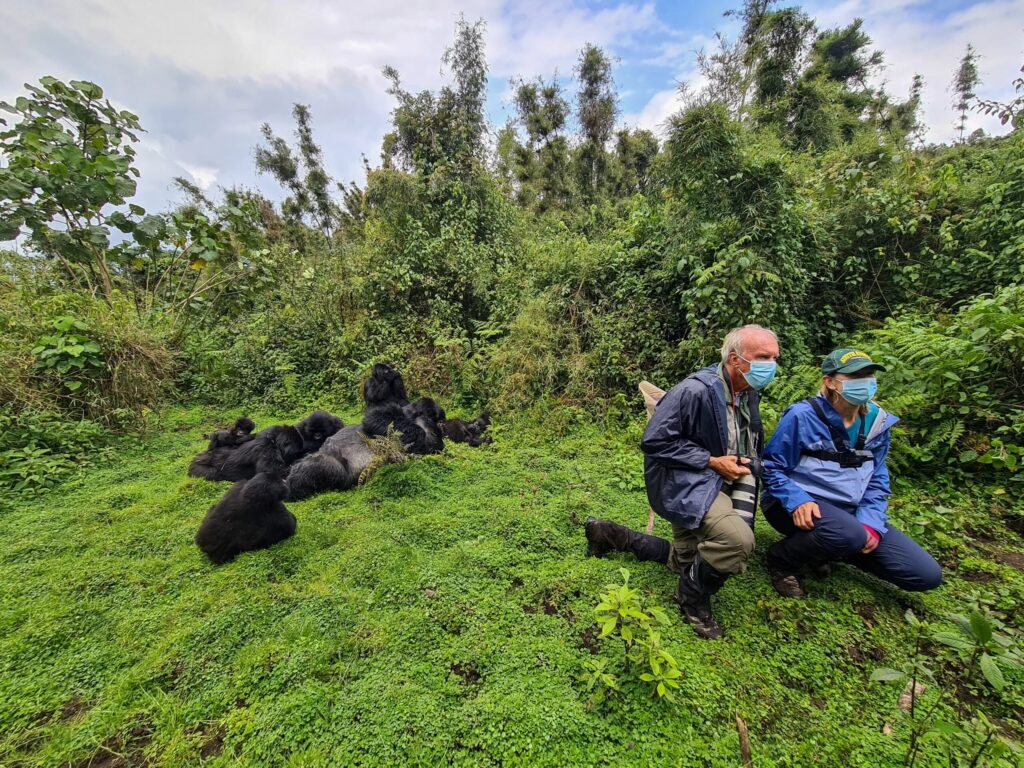
When the trackers signal that the family is near, you leave your bags behind and move in with only your camera. Then comes the moment. A silverback sits among the vegetation, broad-backed and unhurried. A mother nurses an infant. A juvenile somersaults down a slope and tugs at a leaf. You will be asked to keep seven meters away, though the gorillas rarely observe the rule themselves, and one hour is the strict limit. It will feel like ten minutes. The hour is silent except for the sound of gorillas breathing, chewing, and occasional low rumbles that your guide will interpret.

You return to the trailhead, receive your gorilla trekking certificate, and are driven back to your lodge for a late lunch. The afternoon is free. Many guests choose a long massage, a nap, or an hour with a book and a pot of tea, with the volcanoes in view. In the evening, a lodge conservation talk can sometimes be arranged.

Day 6 at a glance
Wake up. About 5:30 a.m.
Briefing 7:00 a.m. at Kinigi Park headquarters
Transfer to trailhead. 15 to 60 minutes
Trek 30 minutes to 5 hours of hiking, then 1 hour with the gorillas
Accommodation Volcanoes National Park luxury lodge
Meals Breakfast, lunch (packed or at the lodge), dinner
Logistics note Waterproof boots, gloves, long sleeves, a rain jacket, and no flash photography. Minimum age 15.

Day 7: Golden Monkeys, Dian Fossey's Legacy and the Twin Lakes

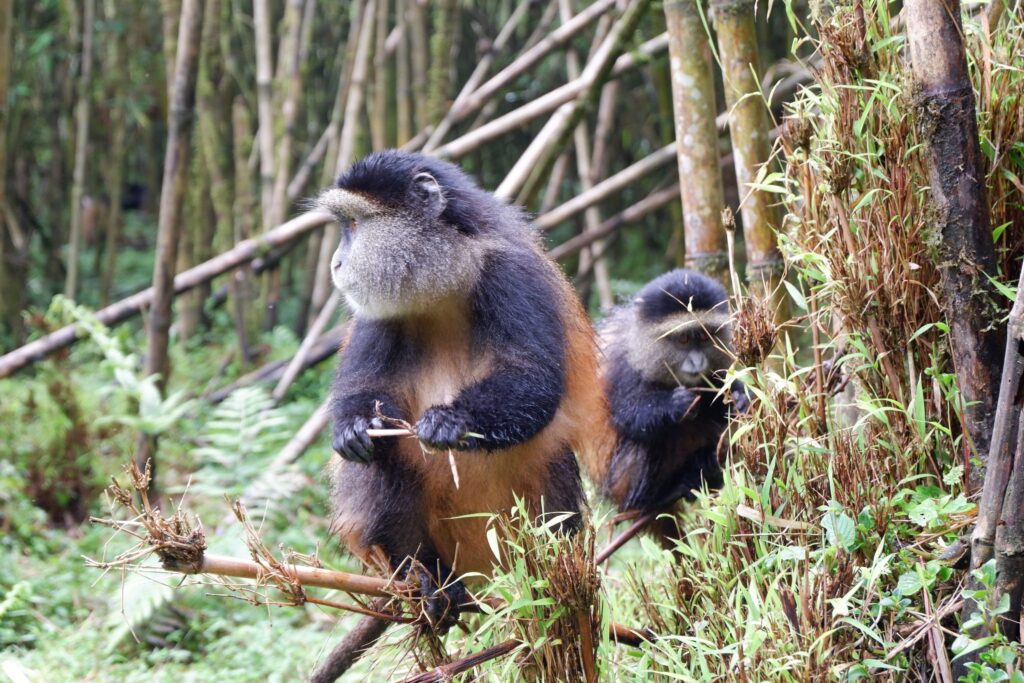
After yesterday’s drama, this morning is gentler. The golden monkey trek is a half-day experience in the bamboo forest on the lower slopes of the volcanoes. Golden monkeys are endemic to the Virunga massif and travel in troops of 30 to 80 individuals. They are small, bright orange, and astonishingly acrobatic, bounding from stem to stem in a way that is the exact opposite of the gorillas’ calm. The trek is typically shorter and less physically demanding than a gorilla trek, and the golden monkey permit is USD 100 per person. Photographers love it: the light slanting through the bamboo stems turns the monkeys’ fur to copper.

5-Day Luxury Rwanda Gorilla & Golden Monkey Safari 2027

The rest of the day is tailored to your interests. Three options are possible, and each can be combined with another:

  • The Dian Fossey Gorilla Fund campus near Musanze introduces the science and the story of mountain gorilla conservation. The history of Dian Fossey’s Karisoke Research Centre, founded in 1967, is the foundation of every gorilla trek in Rwanda today.
  • The Twin Lakes of Burera and Ruhondo, formed when ancient lava flows dammed the valleys, are best experienced from a boat or from a high viewpoint, with the volcanoes rising behind the terraced hills.
  • Iby’iwacu Cultural Village, founded in part by former poachers who now work in conservation, offers Intore dance, storytelling, and a candid conversation about how the relationship between local communities and the forest has changed.

If you are an experienced trekker with energy to spare, an alternative is the hike to Dian Fossey’s grave and the old Karisoke site, a three- to four-hour, roughly six-kilometer round trip at about 2,967 meters. A second gorilla trek is also possible if permits are available; see the permit section below. Your final evening is a farewell dinner at the lodge, perhaps with a private table under the stars.

Day 7 at a glance
Activities Golden monkey trek (half day), then your choice of Fossey Fund campus, Twin Lakes, or cultural village
Accommodation Volcanoes National Park luxury lodge
Meals Breakfast, lunch, dinner
Logistics note Briefing at Kinigi at 7:00 a.m. Pack lighter than for the gorilla trek, but still bring waterproofs.

Day 8: Return to Kigali and Departure

After a final breakfast with the volcanoes in view, your driver-guide takes you back toward Kigali, a drive of roughly two to two-and-a-half hours on a well-maintained paved road through the Thousand Hills. If your flight is in the evening, as we recommend, you can stop in the capital for a late lunch, a last coffee, or the Kigali Genocide Memorial and Inema Arts Centre if you did not see them on Day 1. A day room at your Kigali hotel can be arranged for freshening up before the flight.

Your driver-guide transfers you to Kigali International Airport for your departure flight. You leave with a stamp in your passport, mud on your boots, and a different relationship to the forest.

Day 8 at a glance
Drive time Volcanoes to Kigali: about 2 to 2.5 hours
Activities Scenic drive, optional Kigali city stops, airport transfer
Meals Breakfast, lunch
Logistics note We recommend a departure flight after about 5 p.m. to avoid a rushed morning.

Plan Your Rwanda Safari

Start Planning a Private Gorilla Trek

Rwanda gorilla permits sell out months in advance. Secure your dates before the season closes.

What’s Included and What’s Not Included

Included

  • Gorilla trekking permit (USD 1,500 per person), chimpanzee trekking permit (USD 150), golden monkey permit (USD 100), and Nyungwe canopy walkway fee (USD 40)
  • Seven nights of luxury accommodation as listed, subject to availability.
  • Meals as specified in the itinerary and, at the lodges, full-board service.
  • Private 4×4 safari vehicle with an English-speaking driver-guide for the whole journey
  • Airport meet and greet and all transfers
  • Park fees, ranger and tracker supervision on all treks
  • Bottled water in the vehicle
  • Pre-departure briefing and a packing list

Not included

  • International flights to and from Kigali
  • Rwanda visa (USD 50 for most nationalities; see below)
  • Travel insurance, which we strongly recommend and which should include medical evacuation
  • Tips and gratuities for guides, porters, and lodge staff
  • Premium alcoholic drinks and items of a personal nature
  • Porter fees at the park unless pre-arranged.
  • Optional upgrades: exclusive gorilla permit, second gorilla trek, volcano hikes, helicopter transfers

Extend Your Journey Across East Africa

Many of our luxury guests treat this safari as the opening chapter of a longer East African expedition. The most natural extensions are Uganda, where Bwindi Impenetrable Forest offers a second gorilla experience and Kibale Forest the best chimpanzee tracking in the region; Tanzania, where the Serengeti and Ngorongoro Crater deliver the open-savannah drama that Rwanda’s forests cannot; and Kenya’s Masai Mara, followed by a few days on the coast or in Zanzibar. Rwanda’s own Akagera National Park adds Big Five game drives if you want a savannah chapter without leaving the country. To compare the two gorilla destinations before you decide, read our guide to Rwanda versus Uganda gorilla trekking. Our team designs and operates private, multi-country journeys across the region, so we handle every leg as one seamless itinerary.

Gorilla Families, Chimpanzee Communities, and Trekking Difficulty

Primate trekking is not a fixed-difficulty activity like a summit hike. The animals move every day, so the length and effort of your trek depend on their location that morning, not on a brochure. Setting that expectation honestly is the first step to enjoying the day.

How gorilla families are assigned
Pablo Gorilla Family

Pablo Gorilla Family

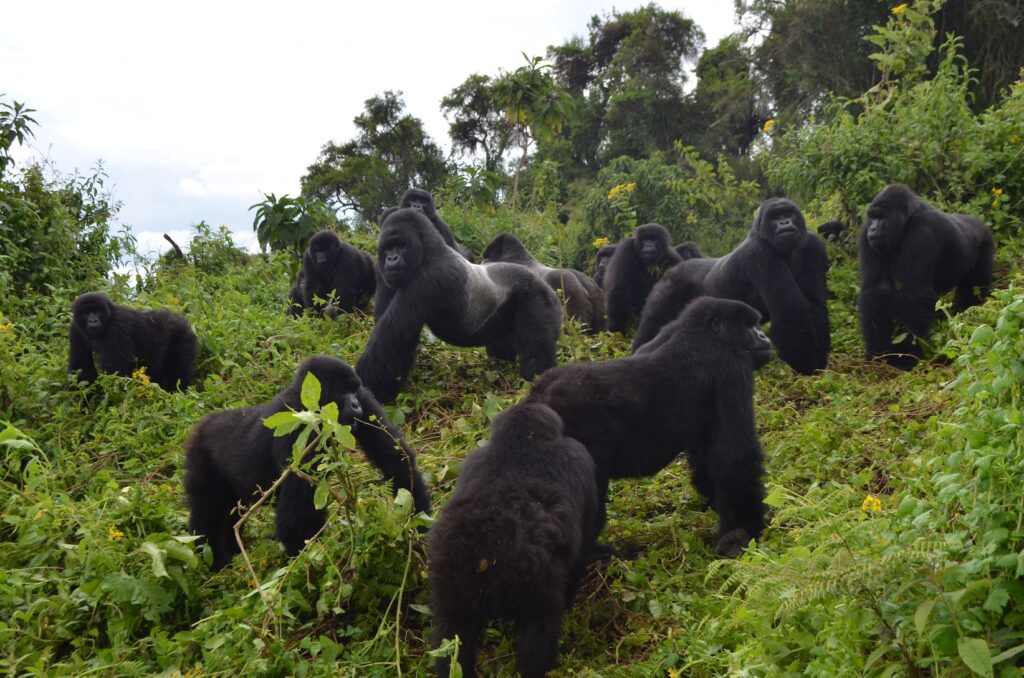
Volcanoes National Park currently has 24 habituated gorilla families open to visitors, each led by at least one dominant silverback. Each family receives a maximum of eight visitors per day, which caps the park at 192 trekking permits daily. Trackers leave before dawn to relocate each family from its previous night’s nest site, and rangers match each group of visitors to a specific family at 7:00 a.m. Kinigi briefing, based on the family’s location, the terrain involved, and the fitness level reported by your group. This is why being honest, rather than modest, about your fitness genuinely changes your outcome. No operator can promise a specific family under a standard permit; what we can do is communicate your fitness level and preferences to the park in advance. For a detailed profile of every family, from Susa to Kigoma, see our full guide to the gorilla families of Volcanoes National Park.

Profile Families typically in this group What to expect
More accessible Sabyinyo, Amahoro, Umubano Historically found at a lower elevation, closer to the park boundary. This route is often a shorter walk, though the outcome is never guaranteed.
Moderate Kwitonda, Hirwa, Agashya, Pablo Moderate distances and terrain, suitable for most reasonably fit travellers.
More demanding Susa, Igisha, Isimbi Historically, they ranged at higher altitudes on Mount Karisimbi. This hike is best for strong walkers who want a serious challenge.

A family’s reputation is a historical tendency, not a promise for tomorrow morning. A usually accessible family can be found high on a ridge on any given day. If a guarantee of a particular family matters to you, the exclusive-use permit described in the permits section removes the uncertainty.

How chimpanzee communities differ.

Nyungwe’s two habituated communities offer a clear trade-off. Cyamudongo, with about 30 individuals in a small forest fragment, is the more reliable sighting but requires a pre-dawn start and a rough 90-minute drive. Uwinka, with about 60 individuals in the main forest block, is closer to the lodges but can involve several hours of fast-paced hiking if the group has ranged widely overnight. Unlike gorillas, chimpanzees rely largely on sound, making sightings less certain, and any operator who guarantees them is overselling. Our guides will tell you plainly which option best matches your appetite for effort and your tolerance for uncertainty.

Elevation Profile of the Safari

Altitude shapes comfort on this safari more than distance does. The journey climbs gradually from Kigali, drops to the lakeshore, and then rises to its highest points on the volcano slopes. The figures below are approximate and are meant as a planning guide.

Stage Approximate elevation What the profile means
Kigali About 1,500 m Mild and comfortable. No altitude effects for most visitors.
Gisakura and the Nyungwe tea estate About 2,000 m Cooler, damper air. A modest climb from Kigali.
Uwinka and the canopy walkway About 2,500 m The approach trail climbs and descends gently through the forest. Expect a sustained but moderate walk.
Cyamudongo forest Lower than the main Nyungwe block Short, steep, slippery sections after rain. The drive is long; the elevation change is modest.
Lake Kivu About 1,460 m The lowest point of the journey. Warm, restful, and a natural recovery stop.
Musanze and the lodges About 1,850 m in town, higher at the lodges A gradual climb back toward the volcanoes.
Kinigi Park headquarters About 2,400 m Trek assignments begin here. The air is noticeably thinner.
Gorilla trekking zone Roughly 2,400 to above 3,000 m The steepest, most demanding sections of the safari. Gains of several hundred meters are common.
Golden monkey bamboo zone Roughly 2,500 to 3,000 m Lower and gentler than most gorilla treks.
Dian Fossey grave hike (optional) About 2,967 m A moderately demanding climb of several hundred meters.

The practical takeaway is that the safari is deliberately sequenced so that your most altitude-sensitive day, the gorilla trek, comes after several days at moderate elevation and a rest night at the lodge. Nyungwe’s mid-altitude forest and Lake Kivu’s warm lowlands provide an acclimatisation arc before the volcanoes. Anyone with a known sensitivity to altitude should mention it at booking.

Luxury Accommodation: Lodges on the Luxury Rwandan Primate Safari

Rwanda’s luxury lodges are among the finest in Africa, and this safari uses them deliberately. Each is chosen for its location, its guiding quality, and its ability to turn the end of an early trekking day into something close to a reward in itself. Final selection depends on your dates and availability.

Kigali: five-star city comfort

Your first night is in a five-star hotel in the capital, chosen for its restaurants, its quiet rooms, and its convenient access to the airport and the city’s cultural sights. Properties such as the Kigali Marriott Hotel are the type we use.

Nyungwe: One&Only Nyungwe House
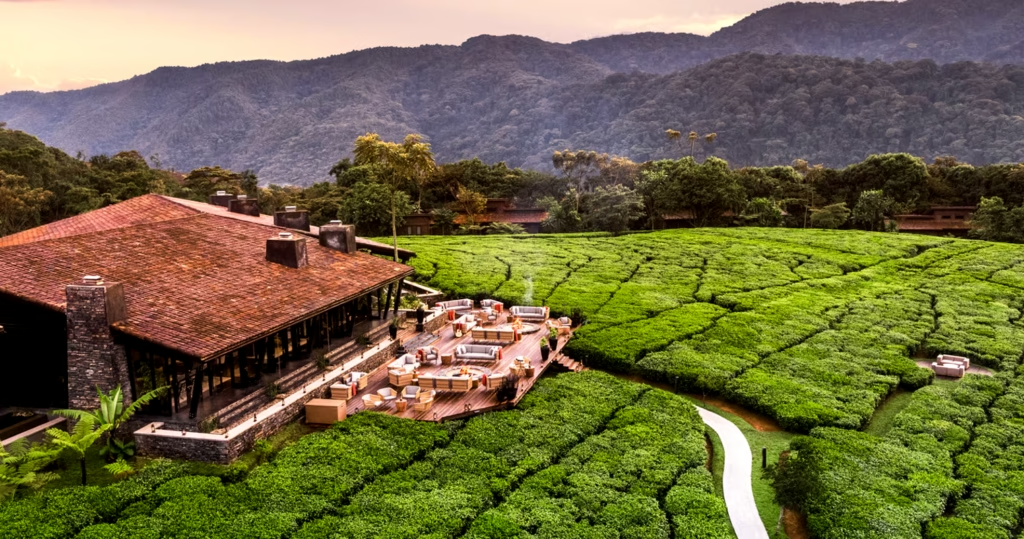
One&Only Nyungwe House

One&Only Nyungwe House is the standout luxury property in the Nyungwe area, set on a working tea estate at the edge of the forest. Suites open onto the plantation, with views toward the tree line, and the property pairs the One&Only brand’s signature service with genuine proximity to the park boundary. It is the natural base for travellers combining chimpanzee trekking with the canopy walk, and the tea estate offers relaxing walks between treks. We recommend three nights here so that you can enjoy both a chimpanzee day and a slower forest day.

Volcanoes National Park: four exceptional options

The ring of lodges around Kinigi is, by any global standard, extraordinary, and all of them sit within roughly 20 to 40 minutes of the park headquarters. We will match you with a lodge that suits your style:

  • Singita Kwitonda Lodge sits right at the park boundary, with uninterrupted views of the volcanic range and a guiding team with deep ecological knowledge.
  • Wilderness Bisate is set on a reforested, formerly eroded hillside in a striking circular, thatched design, with golden monkeys often visible from individual villas.
  • One&Only Gorilla’s Nest brings the brand’s signature polish to the park’s edge, with gardens and an unhurried atmosphere that contrasts with the physical intensity of a trekking day.
  • Wilderness Sabyinyo Silverback Lodge operates on a community-ownership model at the base of Mount Sabyinyo, combining high-quality accommodation with direct economic benefit to the surrounding population.

For more on how your lodge choice fits into the wider journey, see our Rwanda safari styles guide or the overview of Rwanda safaris. Lodges in this tier fill early in the June to September window, often before permits do, which is why a conversation about dates and lodge preference is the right first step.

Wildlife and Nature to Expect on a Rwanda Primate Safari

A primate safari in Rwanda delivers far more than the three headline species. The two forests rank among the richest in the Albertine Rift, and the guiding helps you notice what most visitors miss.

Primates
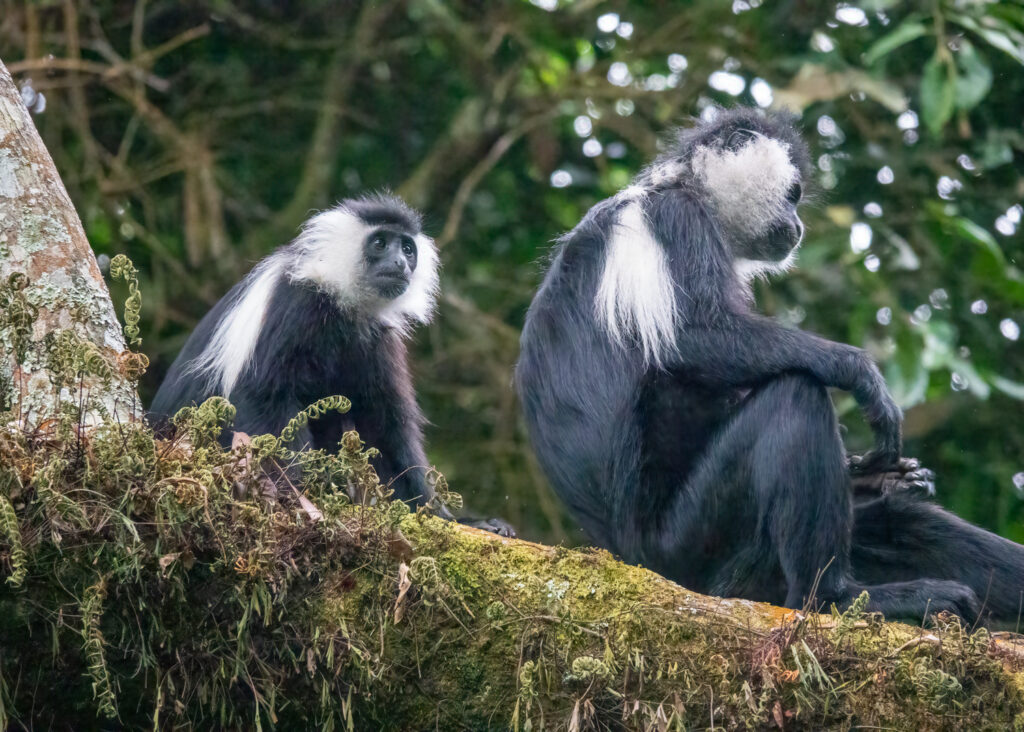
Angola Colobus Monkey Troops

  • Mountain gorillas in Volcanoes National Park, part of the Virunga population that numbers more than 1,000 individuals across the wider massif.
  • Golden monkeys, an Albertine Rift endemic found in the Virunga bamboo, travel in troops of 30 to 80 individuals.
  • Eastern chimpanzees in Nyungwe, in the Uwinka and Cyamudongo communities.
  • Angola colobus, which form super-troops of up to several hundred individuals, are also found in Nyungwe.
  • Nyungwe’s other monkeys: L’Hoest’s monkey, silver monkey, grey-cheeked mangabey, blue monkey, red-tailed monkey, Dent’s mona monkey, vervet monkey, and olive baboon. In total the forest holds 13 primate species, more than any other park in Rwanda.

Birds and landscape

Nyungwe has more than 300 recorded bird species, roughly 29 of them Albertine Rift endemics, including the Rwenzori turaco, red-collared babbler, and Rockefeller’s sunbird. Volcanoes National Park adds over 200 bird species, including the Rwenzori double-collared sunbird, handsome francolin, and dusky crimsonwing. The scenery changes just as much: Nyungwe’s cathedral-like canopy, ferns and orchids; the tea estates of Gisakura; the blue expanse of Lake Kivu; and then the volcanic bamboo, giant lobelia, and Hagenia woodland of the Virunga slopes. The twin crater lakes of Burera and Ruhondo, formed by ancient lava flows, complete a landscape that looks more like a painting than a park.

Learn more about the forests behind this safari in our guides to Volcanoes National Park and the Virunga Mountains.

Physical Difficulty and Fitness Requirements

This is a moderate safari, but it is not a casual one, and being honest about the physical side is part of travelling well.

  • Volcanoes National Park treks begin around 2,400 meters and often climb above 3,000 meters. Nyungwe’s trails sit at roughly 2,000 to 2,500 meters. You should be comfortable walking steadily at altitude.
  • Expect steep, muddy, and uneven slopes in both forests, tangled roots, stinging nettles, and, in wet weather, slippery clay. Trails are rarely flat for long.
  • Gorilla treks last roughly 30 minutes to 5 hours; chimpanzee treks 1 to 5 hours. Allow for several hours of walking on both days.
  • Recommended fitness. Regular walking or hiking in the months before travel, ideally with some hills, is the best preparation. You do not need to be an athlete, but you need to be able to walk for several hours.
  • Porters and poles. We recommend a porter for every trek. A porter costs a modest fee, carries your daypack, and helps on steep or slippery sections. Walking sticks are available at Kinigi.

How a trek assignment mitigates difficulty: rangers match your group to a family partly by fitness, so honest reporting at booking and at the briefing makes a genuine difference. Travellers with limited mobility are more likely, though never certain, to be matched to a more accessible family. If you have a medical condition, talk to your doctor before booking and to us so that we can flag any requirements early. The minimum age for gorilla trekking is 15.

Best Time to Go on a Luxury Rwandan Primate Safari

Rwanda’s equatorial position means primate trekking works year-round, but the seasons shape comfort, permit availability, and, for chimpanzees, the nature of the encounter. Temperatures below are daytime ranges at park level and vary with altitude; Volcanoes National Park daytime temperatures at park headquarters typically sit between about 11°C and 19°C (52°F to 66°F), with colder nights.

Best time for gorilla trekking.

Season Months Weather and temperatures Trails and road conditions Crowds and value
Long dry season June to September Driest and clearest. Kigali about 16 to 27°C (61 to 81°F); Nyungwe about 12 to 22°C (54 to 72°F); Volcanoes about 11 to 19°C (52 to 66°F). Firmest trails, easiest canopy walk conditions, and best road access between parks. Peak season. Book permits and lodges 6 to 12 months ahead. Highest lodge rates.
Short dry season December to February Dry and bright, with temperatures similar to those from June to September. Good trail conditions. Excellent for road transfers. A second peak is available, but permits are somewhat easier to obtain. Very good value-quality balance.
Long rains March to May Wettest months. Cooler and misty, with heavy showers. Muddier trails; waterproofs and porters are essential. Roads remain passable. Quietest months. Lower lodge rates and the most vivid green scenery.
Short rains October to November Lighter, more intermittent rain. Mostly manageable trails; occasional delays after heavy showers. Shoulder season. Good availability and good value.

Best time for each activity

  • Chimpanzee trekking in Nyungwe. Counterintuitively, the wetter months of March to May and October to November can produce more settled, easier-to-find chimpanzee communities, because food is abundant and groups range less widely. The June to August fig-fruiting period is also locally regarded as excellent. Dry months give firmer trails.
  • Gorilla trekking in Volcanoes National Park. Possible year-round. Dry months offer firmer footing and easier walking; rainy months offer fewer visitors and a more atmospheric forest.
  • Golden monkey trekking. Year-round. Troops stay in the lower bamboo zone, so the trek is rarely affected by season.
  • Canopy walkway. Best in dry months for clearer views toward Lake Kivu, although mist can create dramatic scenes in the rains.
  • All transfers on this safari are by road. The Nyungwe to Kivu to Volcanoes drive is easiest in dry months; in heavy rains, allow extra time.

A note on September and Kwita Izina

Kwita Izina, Rwanda’s annual gorilla-naming ceremony, takes place at Kinigi in September, adding to demand at an already busy time. If you wish to attend, book further ahead; if you wish to avoid crowds, choose another month.

For a first luxury primate safari, December to February and June to September deliver the most comfortable trekking and the most dependable road conditions. For travellers who want fewer people, lush landscapes, and good lodge availability, late October to November and March to May are rewarding choices, provided you pack well. Gorilla permit prices do not drop in the rainy season in Rwanda, so the value of the shoulder months comes from lodge rates and availability.

Gorilla Permits, Park Fees, and Costs

Transparency about cost is part of the luxury. The figures below are the permit and fee rates published by the Rwanda Development Board (RDB) and shown across our site; they are fixed year-round and are the same regardless of which gorilla family you visit.

Item Cost per person Notes
Mountain gorilla trekking permit USD 1,500 Covers park entry, ranger and tracker supervision, and one hour with the family. Fixed all year.
Golden monkey trekking permit USD 100 Often available at shorter notice than gorilla permits.
Chimpanzee trekking permit (Nyungwe) USD 150 Limited daily permits. Book 2 to 3 months ahead at minimum.
Nyungwe canopy walkway USD 40 Separate fee, payable regardless of chimpanzee trek.
Porter (optional but recommended) About USD 10 to 20 plus tip Hired at the park. Supports local livelihoods.
Exclusive-use gorilla permit (optional upgrade) Approximately USD 15,000 per group Private, full-day access to one chosen family. See our exclusive gorilla trekking guide.
Behind-the-scenes gorilla experience (optional) Approximately USD 15,000 per person Premium conservation-focused option. See the behind-the-scenes gorilla experience.

How far in advance should I book? Gorilla permits sell out three to twelve months ahead for June to September and December to February, so we recommend securing your dates as soon as you are certain of them. Chimpanzee permits are far less constrained but can still sell out in peak months, and the luxury lodges around Volcanoes National Park often fill even earlier than permits. Outside peak season, a lead time of at least three months remains sensible. Our team checks live permit availability on your behalf.

Why the permit is priced this way. Rwanda’s high-value, low-volume model funds anti-poaching, veterinary monitoring, and community benefit programs and has helped Rwanda’s gorilla population grow over the past decades. Your permit fee is a direct contribution to a conservation system that works.

Packing and Gear List for Nyungwe and Volcanoes National Park

You will move between a damp mid-altitude rainforest and a cold volcanic slope, so layers matter more than quantity. Pack soft bags, which are easier to load into a safari vehicle, and keep a small day bag with you at all times.
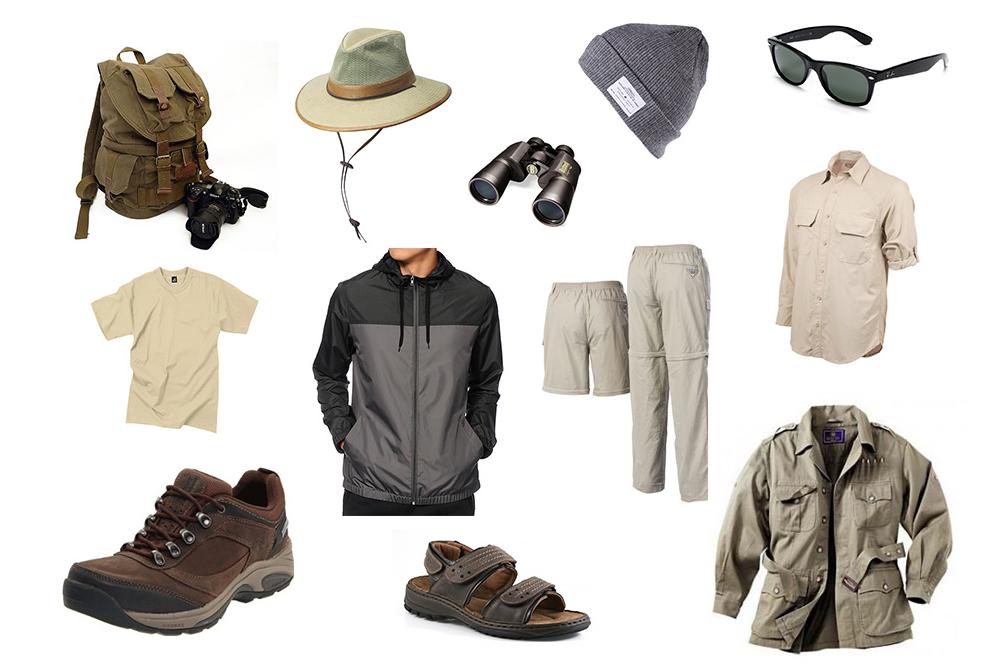
What to Pack for a Safari

  • Clothing: neutral, earth-toned long-sleeved shirts and long trousers (olive, khaki, grey). Avoid bright colors and white. Long sleeves and trousers guard against stinging nettles, ants, and biting insects.
  • Layers: a warm fleece or light down jacket for cold early mornings in Nyungwe and on the volcano slopes, plus a packable waterproof jacket. Rain can arrive within minutes.
  • Footwear: waterproof, ankle-supporting hiking boots with strong grip, broken in before travel. Trainers and sandals are inadequate. Add lightweight camp shoes for the lodge.
  • Gloves and gaiters: gardening or lightweight work gloves for gripping vegetation and gaiters to keep nettles and mud out of your boots.
  • Optics and camera: quality binoculars, a camera with a fast lens (50mm f/1.4 or 85mm f/1.8 works well in dappled forest light), spare batteries, and memory cards. Flash is strictly prohibited near gorillas and chimpanzees. A telephoto lens of at least 200mm helps with golden monkeys.
  • Protection: hat, polarized sunglasses, sunscreen, and insect repellent.
  • Hydration and extras: a refillable water bottle (at least two liters on trek days), a head torch for the pre-dawn Cyamudongo starts with a dry bag or waterproof case for cameras and phones and a small first-aid kit with personal medication.
  • Adaptors: Rwanda uses 230V electricity with Type C and Type J sockets, so bring a universal adaptor.
  • Cash: small-denomination US dollars for porter fees and tips, since card facilities are limited at Kinigi.

Getting There: Kigali International Airport and Road Transfers

Most travellers arrive at Kigali International Airport (KGL), served by RwandAir and by major carriers including Ethiopian Airlines, Kenya Airways, Brussels Airlines, Qatar Airways, and Turkish Airlines. From Europe, common routings run via Addis Ababa, Brussels, or Doha; from North America, via London, Brussels, Addis Ababa, or Nairobi. Your driver-guide meets you in the arrivals hall and handles all baggage and transfers.

This itinerary is designed as a private road journey, which is part of its charm: roads in Rwanda are paved and well maintained, and the scenery is a highlight in its own right. The key transfers are Kigali to Nyungwe (about 225 km, roughly five hours), Nyungwe to Volcanoes via Lake Kivu (roughly four to six hours), and Volcanoes to Kigali (about 100 to 110 km, two to two-and-a-half hours). All transfers use a private 4×4 with an experienced driver-guide.

If time is short or you prefer to avoid long drives, faster options exist. A small airstrip at Kamembe, near Cyangugu, can cut the Kigali to Nyungwe journey to roughly an hour by air, though it depends on charter availability. Helicopter transfers between Kigali and the Volcanoes area are available through specialist operators and take under half an hour, at a cost of several thousand dollars per leg depending on aircraft and group size. Ask us about a fly-in version of this safari.

Not sure how the safari fits your flights? Our team can propose arrival and departure timings that avoid rushed mornings. Browse other Rwanda safari experiences for ideas on extending your stay.

Visa and Entry Requirements for Rwanda

Rwanda offers one of the simplest entry systems in Africa. Most nationalities can obtain a 30-day single-entry tourist visa for USD 50, either online through the Rwandan government’s Irembo e-visa portal before travel or on arrival at Kigali International Airport. Citizens of African Union, Commonwealth, and La Francophonie countries are generally eligible for a free 30-day visa on arrival. If your safari continues to Uganda or Kenya, the East Africa Tourist Visa (Rwanda, Uganda, and Kenya) may suit you better. Rules can change, so confirm your own requirements with the Rwandan immigration authority or your airline before travel. Your passport should be valid for at least six months beyond your arrival date.

Health and Vaccinations

No vaccinations are legally required for most travellers, but a yellow fever certificate is mandatory if you arrive from or have transited through a yellow fever endemic country. Typhoid, hepatitis A and B, meningitis, and tetanus are commonly recommended. Malaria prophylaxis is advised for Rwanda generally; risk is lower at the higher elevations of Volcanoes National Park and Nyungwe, but precautions remain sensible, and your doctor or a travel clinic can advise based on your health and itinerary.

Two practical conservation rules apply to your health. Mountain gorillas are susceptible to human respiratory illnesses, so anyone with a cold, flu, or other contagious illness may be refused permission to trek, and you should tell your guide if you feel unwell. Masks may be requested near the animals, and you must keep your distance. Travel insurance that covers medical evacuation is strongly recommended.

Currency and Tipping

The local currency is the Rwandan franc (RWF), but US dollars are widely accepted at lodges and for tips. Bring clean, undamaged, recent-series notes; older or torn notes are sometimes refused. Cards work at lodges and in Kigali but are limited elsewhere, and ATMs are available in Kigali and larger towns.

Tipping is customary and genuinely appreciated. As a guide: USD 20 to 30 per day for your driver-guide and USD 10 to 15 per day per lodge staff member or pooled for the team at each lodge. Rangers, trackers, and porters on your treks also expect tips; your guide will advise on appropriate amounts on the day.

Plan Your Rwanda Safari

Start Planning a Private Gorilla Trek

Rwanda gorilla permits sell out months in advance. Secure your dates before the season closes.

Frequently Asked Questions About the Luxury Rwandan Primate Safari

How much does a luxury Rwanda primate safari cost?

An 8-day luxury Rwandan primate safari, with chimpanzee trekking in Nyungwe and gorilla and golden monkey trekking in Volcanoes National Park, typically costs from about USD 14,000 to 22,000 per person sharing, depending on the season and the lodges chosen. The permits alone are USD 1,500 for gorillas, USD 150 for chimpanzees, and USD 100 for golden monkeys, with the Nyungwe canopy walkway adding USD 40. The balance is made up of ultra-luxury lodges, private transport, and guiding. Solo travelers pay more per person because lodge and permit costs are fixed per person. Rwanda Gorilla Expeditions provides itemized quotes with no hidden fees.

How many days do you need to see gorillas and chimpanzees in Rwanda?

A minimum of seven to eight days is recommended to see both gorillas and chimpanzees comfortably in Rwanda. Nyungwe Forest, where chimpanzees live, sits about five hours by road from Kigali and four to six hours from Volcanoes National Park, where the gorillas live, and the park rewards at least two nights. An eight-day itinerary allows one night in Kigali, three in Nyungwe, and three at Volcanoes, with time for chimpanzees, the canopy walk, gorillas, and golden monkeys without rushing.

Can you see gorillas and chimpanzees on the same trip in Rwanda?

Yes. Rwanda is one of the few countries where you can track mountain gorillas, chimpanzees, and golden monkeys on a single trip. Gorillas and golden monkeys live in Volcanoes National Park in the north, while chimpanzees live in Nyungwe Forest in the southwest. Travelling between the two takes most of a day, usually along the scenic Lake Kivu road, which is why a route that links them in a sensible circuit, as on this safari, makes the most of your time.

How much does a gorilla trekking permit cost in Rwanda?

A standard gorilla trekking permit in Rwanda costs USD 1,500 per person, issued by the Rwanda Development Board. The price is fixed year-round and is the same regardless of the gorilla family you are assigned. It covers park entry, ranger and tracker supervision, and one hour with the gorillas. It does not include accommodation, transfers, porter fees, or gratuities. An exclusive-use permit giving a private group sole access to one family for the day costs approximately USD 15,000.

How much is a chimpanzee trekking permit in Rwanda?

A chimpanzee trekking permit in Nyungwe Forest costs USD 150 per person for foreign non-residents, issued by the Rwanda Development Board. It covers park entry, a ranger guide, and one hour with a habituated community. The Nyungwe canopy walkway is a separate fee of USD 40. Daily chimpanzee permits are limited, so booking two to three months ahead is a sensible minimum in peak season.

Is chimpanzee trekking in Nyungwe worth it?

Yes, particularly if you want a different kind of primate encounter from gorilla trekking. Chimpanzees are fast-moving and noisy, so the experience is more dynamic than the calm gorilla encounter, and Nyungwe adds an ancient rainforest, 13 primate species, over 300 bird species, and East Africa’s only canopy walkway. At USD 150, the permit is roughly a tenth of the price of a gorilla permit, making it one of the best-value wildlife additions to any Rwanda itinerary. Sightings are less certain than gorillas, so the experience suits travellers who value the journey as well as the encounter.

Is chimpanzee trekking harder than gorilla trekking?

Neither is simply harder; they are difficult in different ways. Gorillas are tracked to a known location before your trek begins and move slowly. Chimpanzees move constantly and can range widely overnight, so treks last from one to five hours, and the outcome is less predictable. Nyungwe’s terrain is steep and slippery, especially in the rains, and Cyamudongo requires a pre-dawn start. Overall effort is comparable to a moderate Volcanoes National Park gorilla trek, and porters help in both.

Is the golden monkey trek worth doing?

Yes. Golden monkeys are endemic to the Virunga massif, found nowhere else in Rwanda, and travel in troops of 30 to 80 acrobatic individuals. The trek is a half-day in the lower bamboo zone, typically shorter and less demanding than a gorilla trek, and the permit costs USD 100. It is a favorite among photographers and families, and it adds energy and contrast to a gorilla day.

What is the best time of year to see chimpanzees and gorillas in Rwanda?

The dry seasons, June to September and December to February, offer the firmest trails and the most comfortable trekking for both. For chimpanzees specifically, the wetter months of March to May and October to November can improve sightings because abundant food keeps communities closer to their core range. Gorilla trekking is possible year-round, and permit prices do not change with season. The right month is a trade-off between trail comfort, crowd levels, and lodge value.

How far is Nyungwe from Volcanoes National Park?

Nyungwe Forest is roughly four to six hours by road from Volcanoes National Park, depending on stops and road conditions, via the scenic road along Lake Kivu through Karongi. Most luxury itineraries break the journey with a long lunch or an overnight stay on the lake. From Kigali, Nyungwe is about 225 kilometers and five hours by road, and Volcanoes National Park is about 100 to 110 kilometers and two to two-and-a-half hours.

How far in advance should I book gorilla permits in Rwanda?

Book gorilla permits as early as possible, ideally six to twelve months ahead for June to September and December to February. Rwanda has 24 habituated gorilla families, each receiving a maximum of eight visitors a day, for a total of 192 permits daily, and peak dates sell out well before travel. Luxury lodges around Volcanoes National Park often fill even earlier. Outside peak season, at least three months’ notice is sensible.

What is the best luxury lodge for gorilla trekking in Rwanda?

The leading luxury lodges near Volcanoes National Park are Singita Kwitonda Lodge, Wilderness Bisate, One&Only Gorilla’s Nest and Wilderness Sabyinyo Silverback Lodge. All are within 20 to 40 minutes of the Kinigi park headquarters, so the choice comes down to style rather than convenience: Singita for boundary-edge views and guiding, Bisate for its design and reforestation, Gorilla’s Nest for polish and gardens, and Sabyinyo Silverback for its community-ownership model. For Nyungwe, One&Only Nyungwe House is the standout.

Is Rwanda safe for a luxury safari?

Yes. Rwanda is consistently rated among the safest countries in Africa for international travelers, and Kigali is regarded as one of the continent’s cleanest and safest capitals. Trekking in both Volcanoes National Park and Nyungwe is closely supervised by trained rangers. The main practical risks are environmental, such as steep trails and sudden rain, and are manageable with proper footwear and layering. Travellers should avoid the Democratic Republic of Congo border areas and follow their government’s travel advice.

Can I combine this Rwanda primate safari with Uganda, Tanzania or Kenya?

Yes. Many of our luxury guests combine Rwanda’s primates with another East African country. Uganda is the most common pairing, adding Bwindi Impenetrable Forest for gorillas and Kibale Forest for chimpanzees, with a land crossing at Cyanika. Tanzania adds the Serengeti and Ngorongoro Crater, and Kenya adds the Masai Mara. Rwanda Gorilla Expeditions arranges multi-country itineraries as one seamless journey.

Plan Your Rwanda Safari

Start Planning a Private Gorilla Trek

Rwanda gorilla permits sell out months in advance. Secure your dates before the season closes.

Enquire About Your Luxury Rwandan Primate Safari

Gorilla permits are limited, and the finest lodges fill months ahead, so the best time to start planning is now. When you contact Rwanda Gorilla Expeditions, you speak to a Rwanda-based specialist, not a call center. We check live permit availability, match you to the right lodges, and handle every transfer, permit, and trekking day so that nothing is left to chance.

Tell us your dates and we’ll check permit availability within a few minutes. Message us on WhatsApp or email rwandagorillaxpeditions@gmail.com. You can also use our contact page or learn more about our team. Every itinerary is private, every detail is confirmed in writing, and every trek is planned around you.