Where to Stay near Volcanoes National Park: Luxury Lodges for a Golden Monkey Safari.
The lodges around Volcanoes National Park are among the finest wildlife accommodations on the continent, and the choice between them is a matter of design, setting, and atmosphere rather than convenience, because most sit within 20 to 40 minutes of the Kinigi headquarters. They are priced per person per night, inclusive of meals and usually activities, and the top properties are at four-figure US dollar rates in peak months, so we quote the current rates for your dates rather than publishing numbers that go out of date. A few of them are worth describing, because they shape the character of the entire trip.
Wilderness Bisate
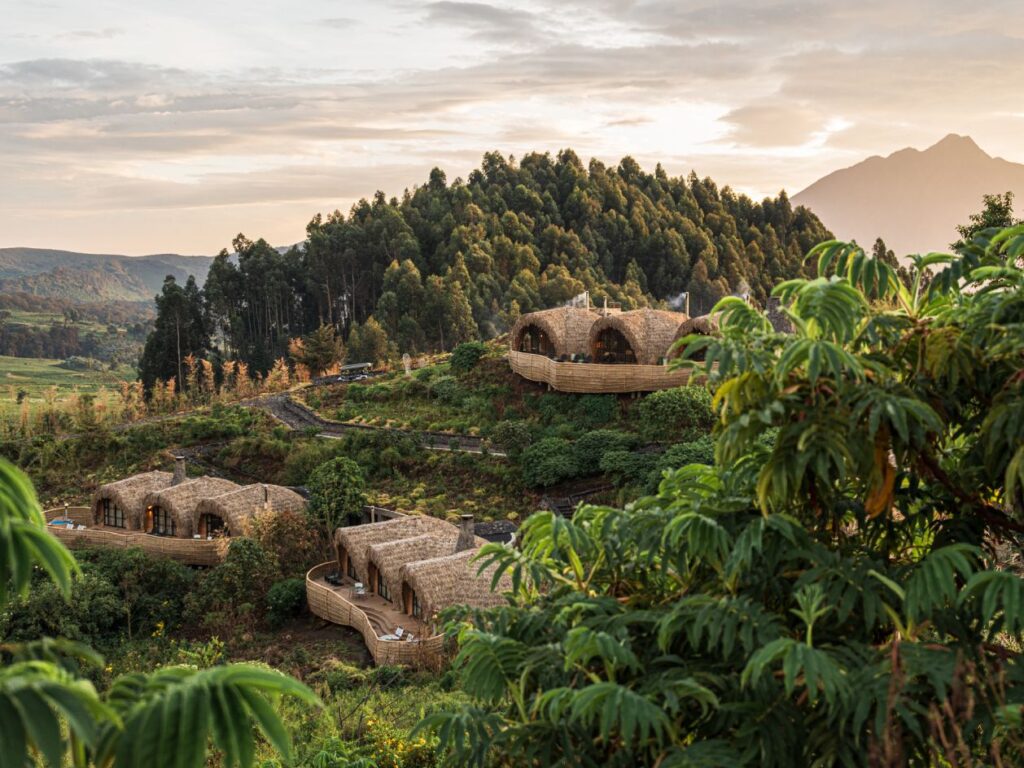
Bisate sits on the rim of an eroded volcanic cone, where Wilderness has spent years replanting a degraded hillside with native forest, and its circular thatched villas look toward the volcanoes from among the trees. It is the choice for couples and for anyone who values architecture and conservation as much as service, and golden monkeys are sometimes seen from the villa decks. For honeymoons and milestone anniversaries, it is one of the most requested properties we offer, and you can see how we shape those journeys in our Rwanda safari styles.
Singita Kwitonda Lodge
Singita’s Rwandan lodge sits directly against the park boundary, with suites facing the volcanic range and a guiding team that has a deep knowledge of the Virunga ecology. The cuisine and the wine program are among the best in the region, and the staff-to-guest ratio allows a level of attention that few lodges anywhere can match. It suits travellers who want the full Singita experience in a primate setting.
One&Only Gorilla’s Nest
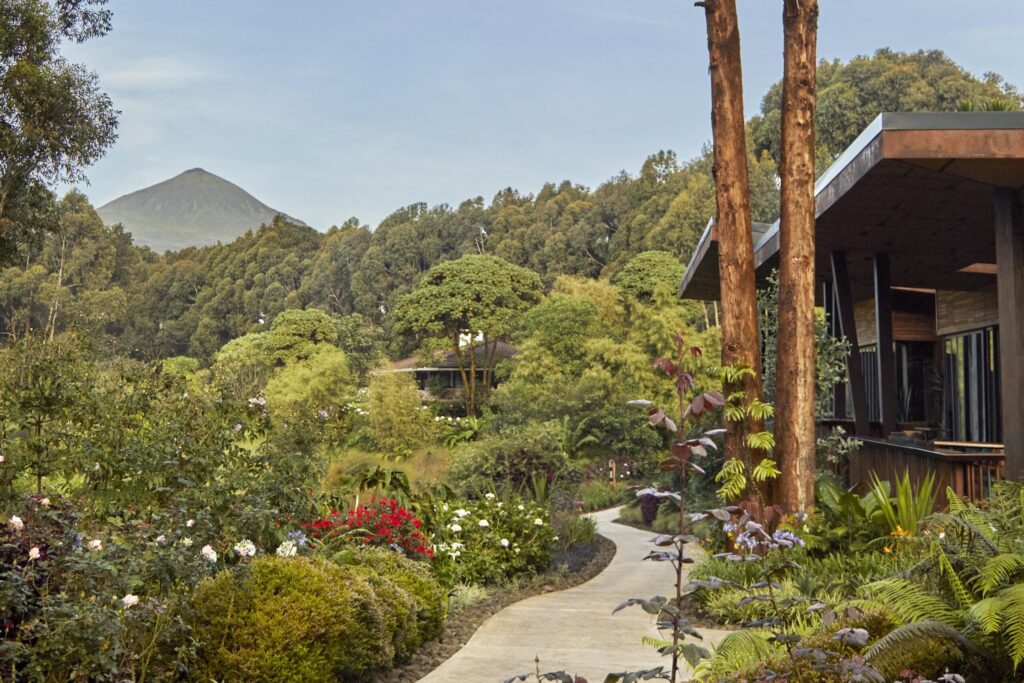
One&Only’s lodge, set in gardens that are a destination in their own right, offers generous suites, a spa, and polished, gracious service. The atmosphere is one of unhurried elegance, a counterpoint to the physical intensity of the trekking day, and it suits travellers who want resort-grade comfort after a morning in the forest.
Sabyinyo Silverback Lodge and Virunga Lodge
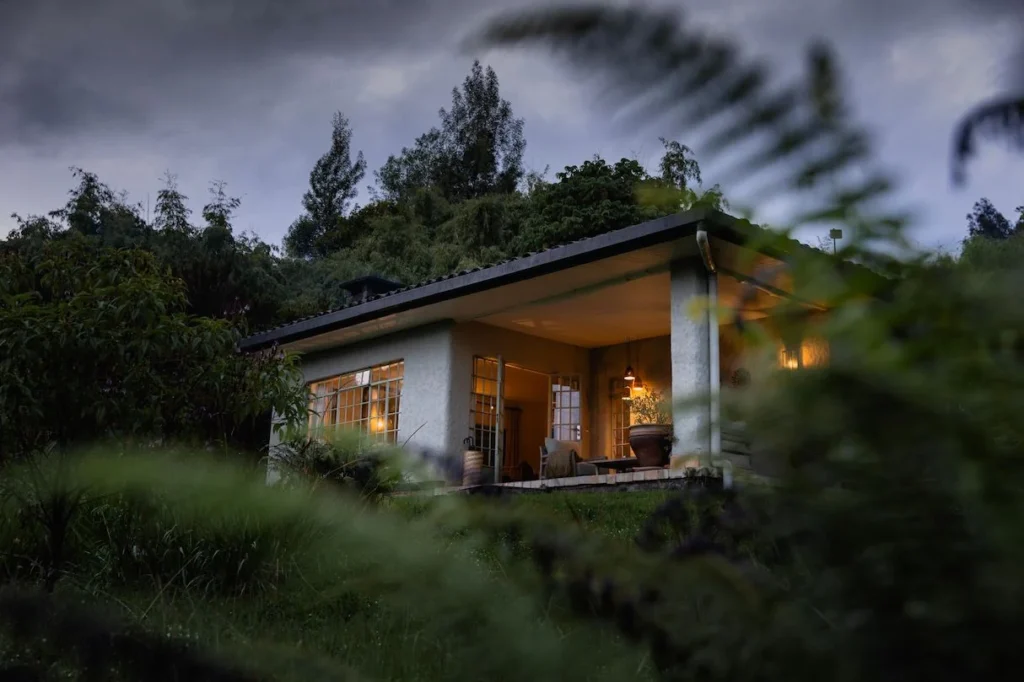
Wilderness Sabyinyo Lodge
Wilderness Sabyinyo Silverback Lodge is one of the original luxury properties in the area, community-owned and managed by Wilderness, with stone cottages at the foot of Mount Sabyinyo, the oldest of the Virunga volcanoes. A stay carries a documented benefit for the people living around the park. Virunga Lodge perches above the twin lakes and pairs especially well with a golden monkey day that ends on the water. In Kigali, you can easily arrange a night in a five-star or boutique hotel before or after the park.
Getting There, Visas, Health, and Money
Almost every international visitor arrives through Kigali International Airport, and the drive from Kigali to the Volcanoes National Park lodges is roughly 100 to 110 kilometers on a paved road that takes two to two and a half hours. There are no scheduled domestic flights to the Musanze area, so the road transfer is standard, and a private helicopter transfer can be arranged at a premium for guests who prefer to save the time. Rwanda is compact, so moving between parks rarely takes more than a day.
Visa and entry
Most nationalities can obtain a 30-day tourist visa on arrival or online, and the U.S. State Department lists the fee at USD 50 for a single-entry visa and USD 70 for a multiple-entry visa. Your passport should be valid for at least six months from the date of arrival and have a blank page for the entry stamp. If your itinerary combines Rwanda with Uganda and Kenya, ask us whether the regional East Africa Tourist Visa suits your route, and check the current fee and rules on the official Rwandan immigration portal before you apply. Entry rules have been changing in 2026, as described above, so always confirm them close to departure.
Health
A yellow fever vaccination certificate is required if you arrive from, or have transited through, a country where yellow fever is present. Hepatitis A, typhoid, and routine boosters are commonly recommended, and your travel medicine clinic will advise on the rest. The malaria risk is lowest at the altitude of Volcanoes National Park and higher in Kigali and the lowland parks, so prophylaxis decisions depend on the full itinerary. Tap water is not safe to drink, so stick to sealed bottled water. Comprehensive travel insurance that includes medical evacuation is essential, since healthcare outside Kigali is limited and hospitals often require payment up front.
Money and tipping
The Rwandan franc is the local currency, but US dollars are widely accepted at lodges and by tourism providers, and international cards work at most lodges and in Kigali. The U.S. Embassy notes that many businesses will accept only US bills printed after 2009 and that exchange bureaus may refuse smaller denominations, so carry recent, undamaged notes. For tipping, a sensible guide is USD 20 to 30 per day for your driver-guide, USD 10 to 15 per day per guest into the lodge staff tip box, and a small amount for rangers and trackers, with USD 10 to 20 for a porter after a trek day. Tips are voluntary but customary, and they matter to the people who earn a modest living from the visitor economy around the park.
What to Wear, What to Pack, and How to Photograph Golden Monkeys
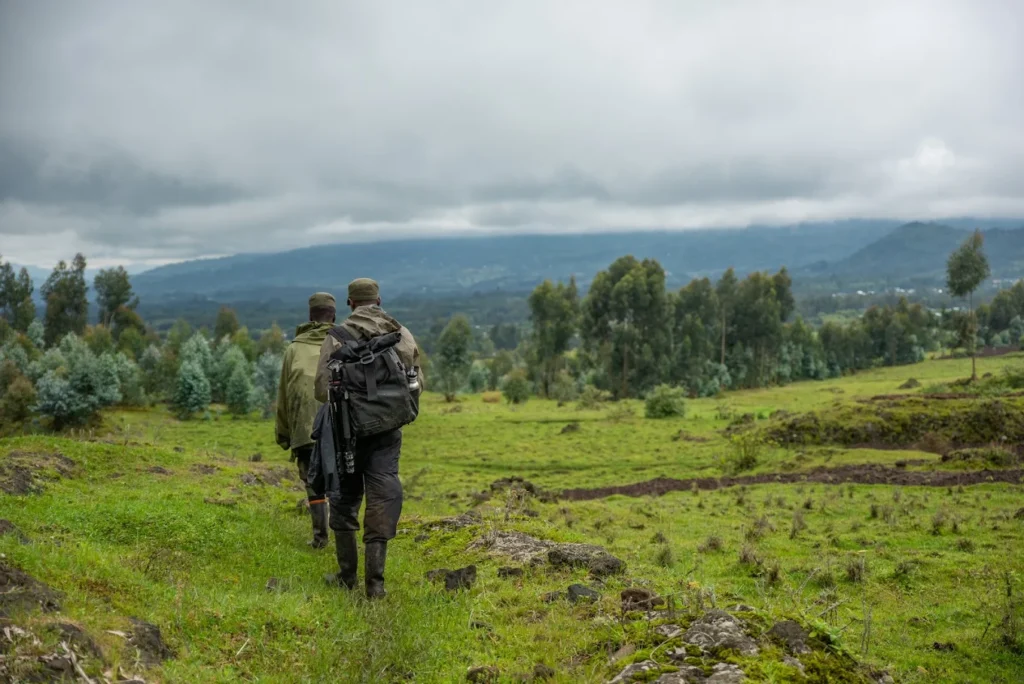
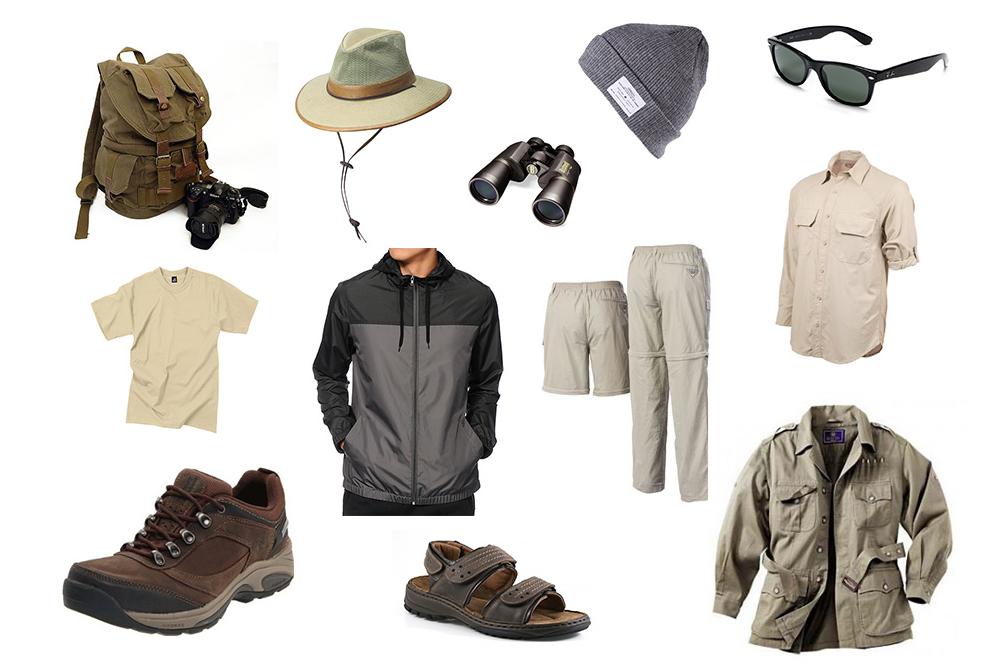
Dress for a cool, wet, muddy forest at altitude, and think in layers rather than in outfits. The bamboo zone is cooler and damper than the farmland below it; mornings at Kinigi are between about 8 and 12 degrees Celsius, and rain can arrive without warning in any month. Long-sleeved shirts and long trousers in muted greens, browns, or greys are the right choice, because bright colors and white can unsettle wildlife and attract insects, and the long sleeves protect you from stinging nettles and scratchy vegetation. A packable waterproof jacket is essential, and a fleece for the early start earns its place in your daypack.
Footwear and small essentials
Boots are the most consequential item. Waterproof, ankle-supporting trekking boots with a firm sole and good grip are non-negotiable, because the ground is often steep, slick, and uneven, and trainers or flat-soled shoes will make a manageable walk unpleasant. Gaiters keep mud and nettles out of your boots and are often available to hire at Kinigi, and lightweight gardening gloves are useful when you steady yourself on bamboo. Pack at least two liters of water, a packed lunch or snacks from your lodge, insect repellent, sunscreen, and a hat. Carry your boots in your hand luggage on the flight, as they are the one item you cannot easily replace, and break them in properly before you travel.
Photographing golden monkeys
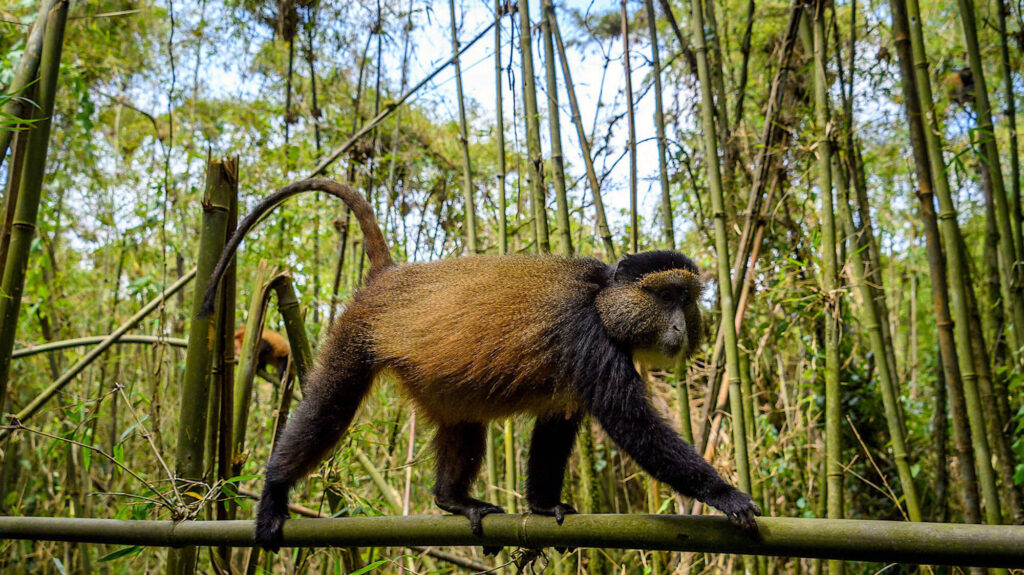
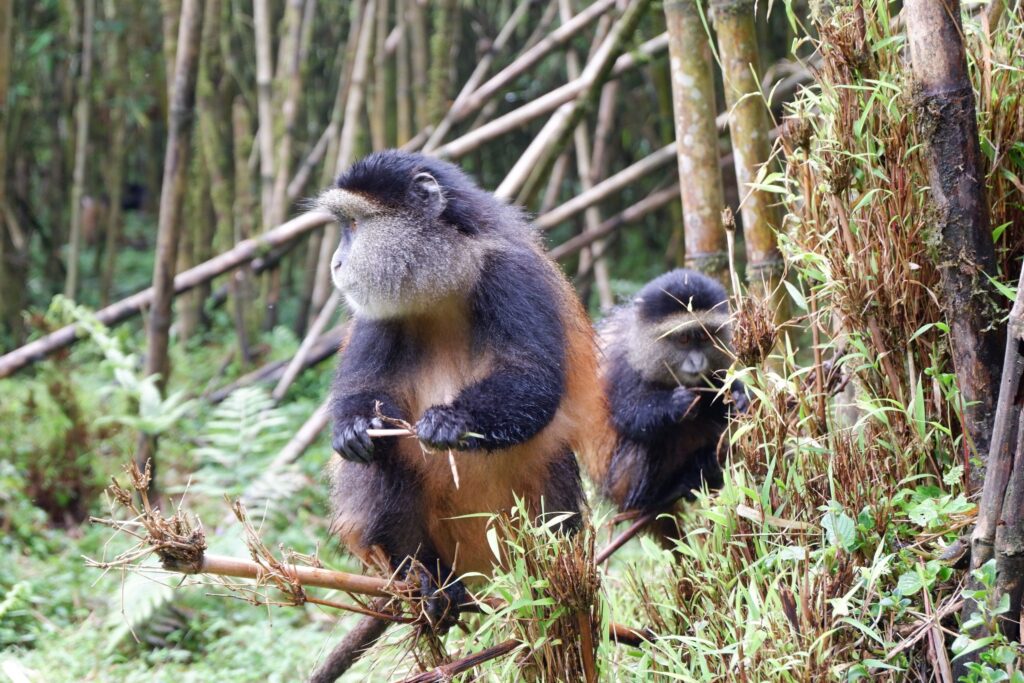
Golden monkeys reward preparation. The bamboo forest is shaded, and the animals are small, fast, and almost constantly in motion, so a lens with a wide aperture and a reach of around 200 millimeters, such as a 70 to 200 millimeter zoom, is far more useful than a high-megapixel body. Use a shutter speed of at least 1/500 of a second where the light allows it, raise the ISO rather than risk blur, and shoot in short bursts when an animal pauses on a stem. Flash is prohibited, as with all primates in the park, and it would not help anyway. Binoculars of 8×42 magnification are a reliable companion for the high-canopy feeding, and a dry bag or rain cover for your camera is worth packing in any season. Photographers can add a second golden monkey morning to any of our itineraries for exactly this reason.
Golden Monkeys Beyond Volcanoes National Park: Gishwati-Mukura and Mgahinga.
Volcanoes National Park is the most reliable and the best-equipped place to see golden monkeys, but it is not the only one, and there are two alternatives that suit travellers who have already done the Kinigi circuit or who are building a longer regional itinerary. They are quieter and less polished, and we treat them as add-ons rather than substitutes.
Gishwati-Mukura National Park, Rwanda
Gishwati Forest in western Rwanda is the only other place in the country where golden monkeys can be tracked. It is a regenerating fragment of a once-vast forest, and in our Gishwati-Mukura National Park guide we explain how the park, gazetted in 2015 and opened to visitors in 2019, covers 34 square kilometers and sits about 157 kilometers, or three to four hours, from Kigali. The golden monkey groups here are smaller, and the experience is quieter than at Kinigi. There is no single dedicated permit price, and access is arranged as a package through the Forest of Hope Guest House or the newer high-end concession, so budgeting works differently from Volcanoes. It makes sense for travellers who want a second, more private encounter and a window on a conservation recovery, and it pairs naturally with a night on Lake Kivu between Volcanoes and Nyungwe.
Mgahinga Gorilla National Park, Uganda
Across the border, Mgahinga Gorilla National Park in the south-west corner of Uganda protects the Ugandan slopes of the same Virunga volcanoes and offers both standard golden monkey tracking and a full-day golden monkey habituation experience that is found only there. The Uganda Wildlife Authority issues the permits at USD 100, the same as in Rwanda. Mgahinga is a small, rustic park, and its infrastructure is considerably less developed than that around Kinigi. For a candid comparison of how the two countries differ on gorilla permits, access, comfort, and cost, read our guide to Rwanda versus Uganda gorilla trekking. Cross-border itineraries need extra attention currently, given the regional health measures described earlier, so speak to us before you plan one.
Building a Luxury Itinerary Across Rwanda and East Africa
A golden monkey day is rarely the whole of a luxury safari, and it fits best into a journey that gives each ecosystem its own character. Rwanda is compact enough to combine three completely different environments in a single trip without hurried transfers. In the east, Akagera National Park offers savannah game drives and boat safaris on lakes where hippos and crocodiles are abundant, and it has been restored, in partnership with African Parks, to a Big Five destination. In the southwest, Nyungwe Forest National Park offers chimpanzee tracking and a canopy walkway suspended some fifty meters above the forest floor. In the north, Volcanoes National Park offers the gorillas and the golden monkeys. Our 10-day Best of Rwanda’s National Parks Safari sequences all three, finishing with the gorillas on day eight and the golden monkeys on day nine, so the whole journey builds toward the mountains.
Extending into Uganda, Tanzania, and Kenya
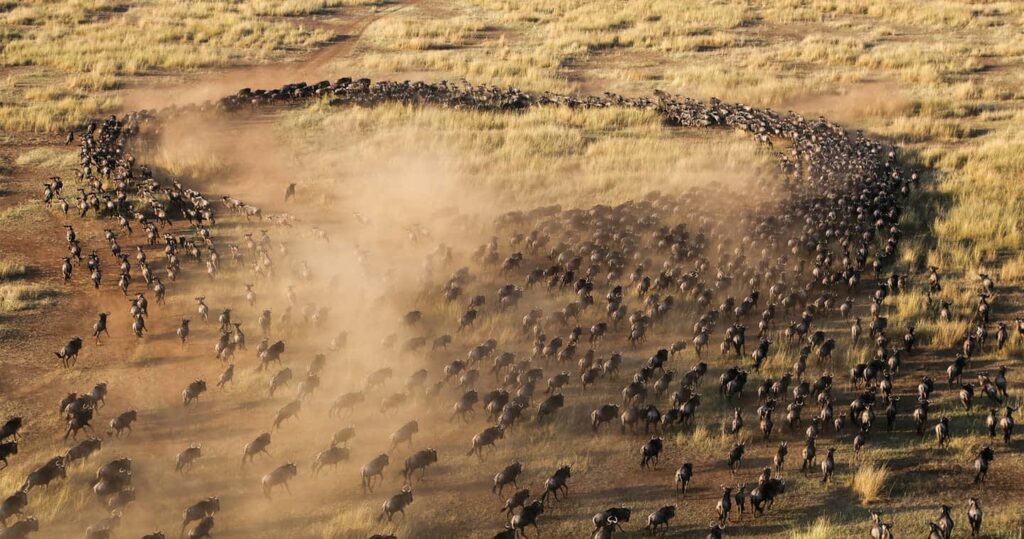
Rwanda is a natural opening chapter for a wider East African circuit, because Kigali has strong air connections and the country’s infrastructure is among the most reliable on the continent. Travellers commonly add the chimpanzees and the tree-climbing lions of western Uganda, the Serengeti and Ngorongoro Crater in Tanzania, the Masai Mara in Kenya, or a beach finish in Zanzibar. We design these as single, private journeys with one team handling permits, flights, and transfers, and our principle is to schedule the least flexible element, which is always the gorilla permit date, first.
Private, bespoke, and conservation-led
Everything we operate is private: your vehicle, your guide, and your itinerary are yours alone, even on days when the permit group in the forest is shared. For guests who want the encounter itself to be private, exclusive gorilla trekking lets one group buy out a gorilla family’s daily slot for roughly USD 15,000, and for guests who want depth over privacy, our behind-the-scenes gorilla trekking experience places a very small group alongside primatologists and veterinarians over several days. Neither changes the golden monkey day, but both change the shape of the journey around it.
What a Luxury Golden Monkey Trip to Rwanda Costs
The golden monkey permit itself is only a small part of the overall budget. At USD 100 per person it is one of the cheapest line items on any Rwanda itinerary, and the cost of a trip is driven overwhelmingly by the gorilla permit at USD 1,500 per person, the lodge, and the private guiding and transport. For a five-day private itinerary with one night in Kigali and three at a luxury lodge near Kinigi, our current indicative pricing starts at approximately USD 6,500 per person sharing at the luxury tier, rising to roughly USD 10,500 to 15,000 or more per person at the ultra-luxury lodges, with Bisate, Singita Kwitonda, and One&Only Gorilla’s Nest at the upper end. That pricing includes the standard gorilla permit, the golden monkey permit, the Dian Fossey and Karisoke hike permit, private 4×4 transport, a private guide and meals as specified, and it excludes international flights, visas, insurance, porter fees, and tips.
Prices vary with the season, with June to September and December to February the most expensive, and they vary with the lodge you choose, the length of the stay, and whether you upgrade to an exclusive-use gorilla permit. We provide an itemised quotation so you can see precisely what each element costs, which is also the best way to compare operators, as a lower headline price almost always reflects a shared vehicle, a less experienced guide, or a lodge a long way from the park. Understood properly, the golden monkey trek is not a significant cost driver. It is among the best-value mornings in East African travel.