Before Dawn: The Lodge in the Last Dark
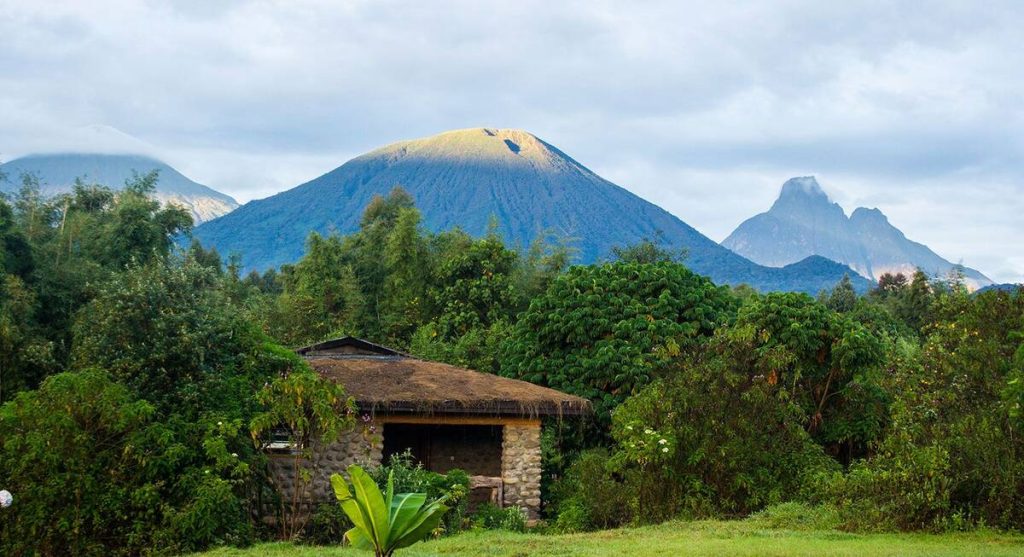
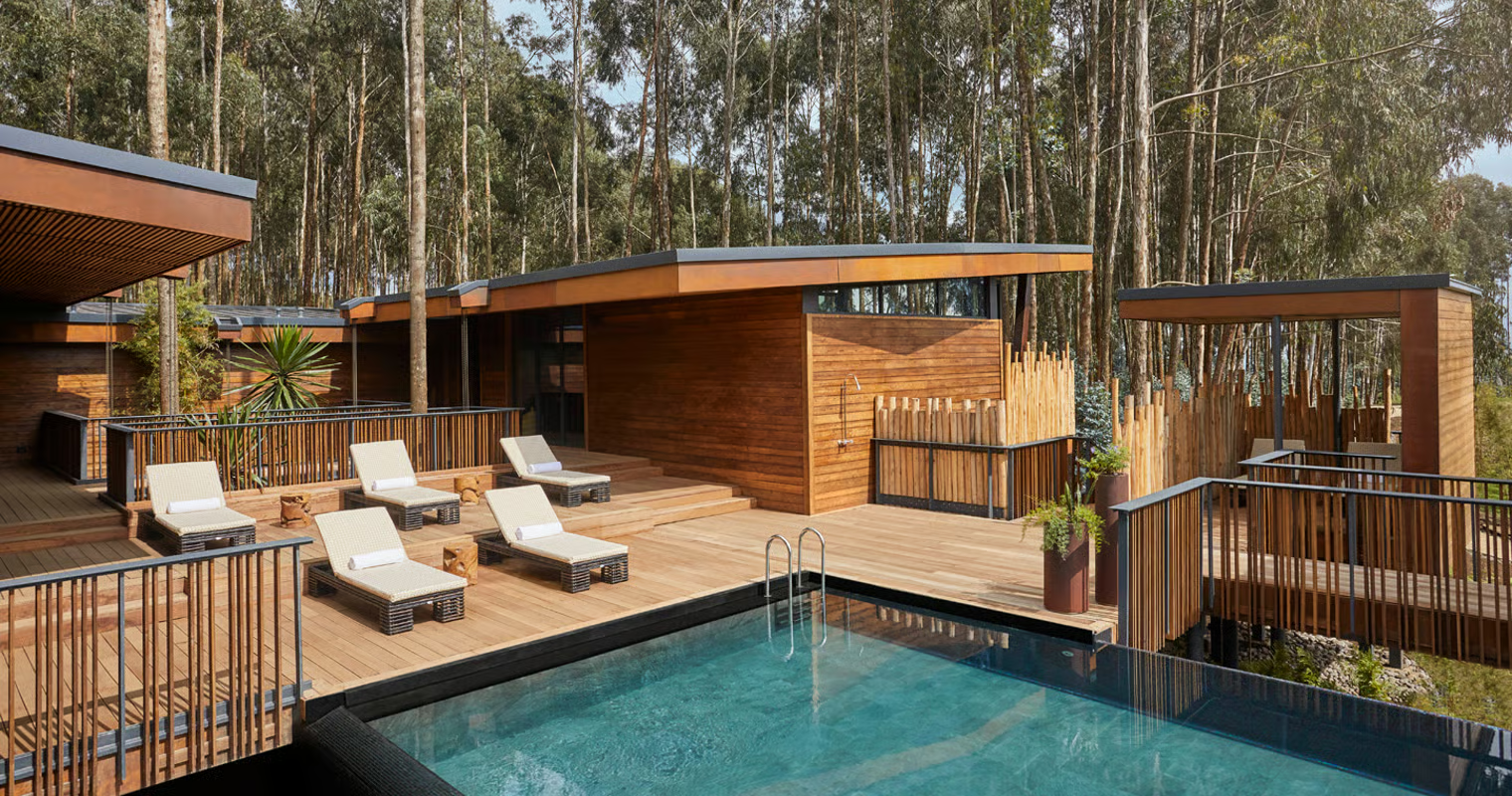
The lodge is quiet at five-thirty in the morning, but not entirely still. The kitchen has been awake since before you, preparing a breakfast that is warm, sufficient, and served with the calm of people who understand that today is important and that what happens before the trek matters too. Good coffee. Fresh bread with local honey. Fruit. The kind of meal that provides energy without heaviness, eaten at a table where the window already shows the volcanoes emerging from the dark.
The drive to the park headquarters at Kinigi takes fifteen minutes from most of the park’s premier lodges, and arriving there without the accumulated tension of a three-hour pre-dawn drive from Kigali is one of the quiet luxuries that the overnight stay provides. You are present. You have slept in the forest’s neighborhood. The morning air, cool and dense with the particular fragrance of high-altitude vegetation and volcanic earth, has already begun its work on your attention.
The Briefing at Kinigi: Rules Born from Respect
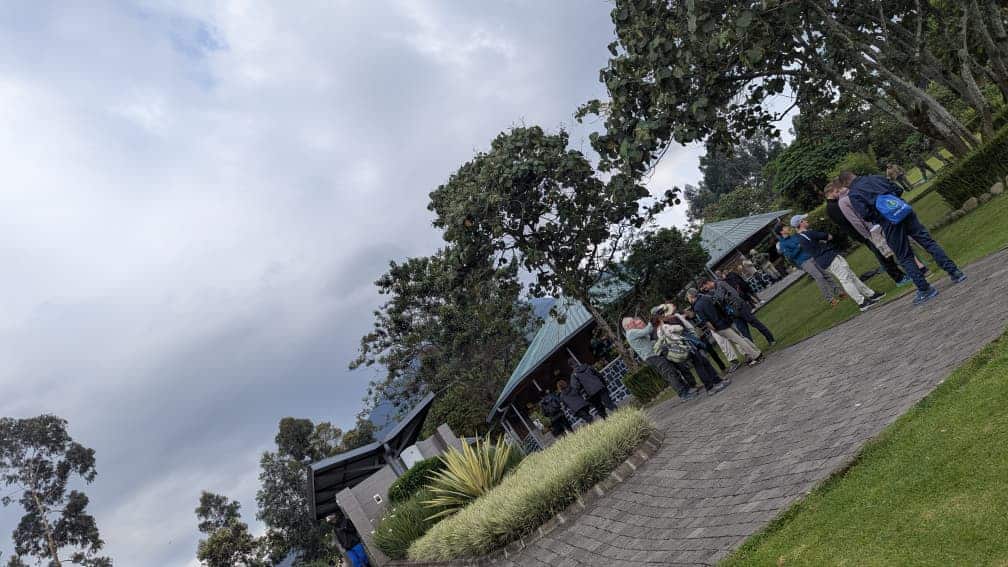
At 7:30 AM, the Rwanda Development Board conducts the ranger briefing at Kinigi with the seriousness it deserves. The protocols of gorilla trekking are presented as what they are: not bureaucratic restrictions but the accumulated wisdom of decades of conservation work and the specific behaviors that protect the health and psychological well-being of an animal that shares 98.3% of our DNA and has no immunity to our diseases. There was no food within 200 meters of the gorillas. No flash photography. A seven-meter minimum distance unless the gorilla chooses to close it. Cover your mouth if you cough. Follow the lead ranger’s hand signals immediately and without question. Stay together as a group. And the instruction that no one quite anticipates is, if a silverback charges, do not run. Stand still, look down, and trust your ranger. The briefing ends with a family assignment: one of the habituated gorilla families of Volcanoes National Park has been allocated to your group of eight, and your guide knows their recent movements, their approximate size, and the terrain that today’s tracking is likely to involve.
Among the families regularly visited by Rwanda Gorilla Expeditions guests are the Susa group the largest in the park, currently over 40 members with multiple silverbacks, requiring the most demanding terrain but delivering a sheer scale of presence that is unmatched; the Amahoro group, whose name means “peace” in Kinyarwanda and whose temperament exactly earns it, ideal for first-time trekkers and those with fitness considerations; the Kwitonda group, known for a silverback of unusual size and calm authority; and the Umubano group, habitually found in accessible terrain with a particularly relaxed attitude toward observers. Rwanda Gorilla Expeditions works with the park to advocate for appropriate family assignments based on each guest’s profile. Those seeking complete privacy in a wholly exclusive encounter are directed to our exclusive gorilla trekking option, where premium permits remove all other visitors from the experience.
The Trek: The Forest Has Its Own Time
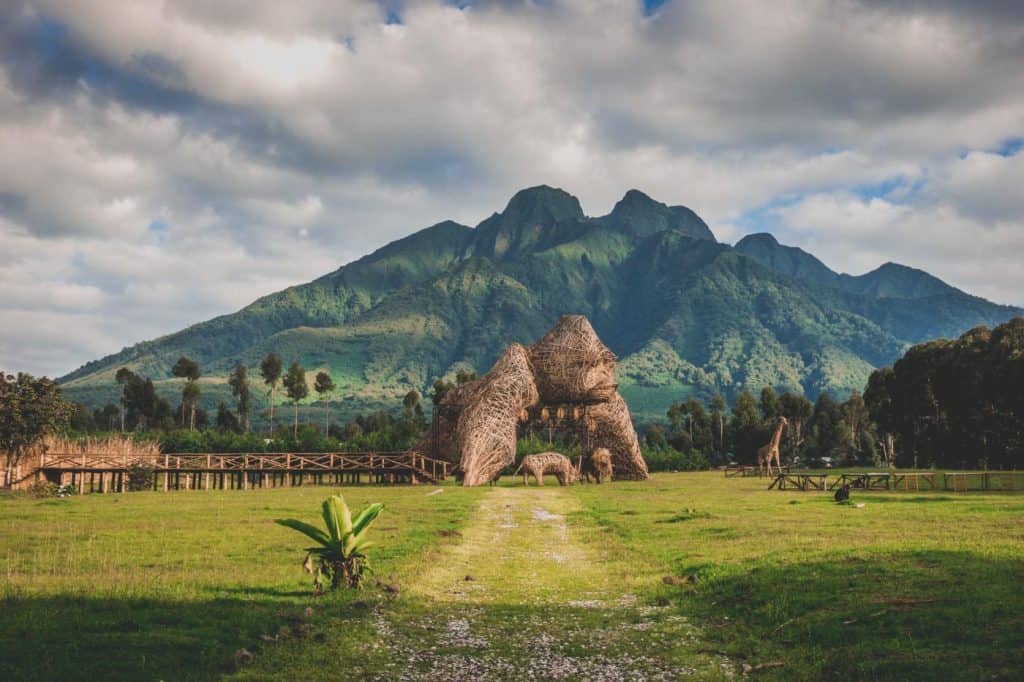
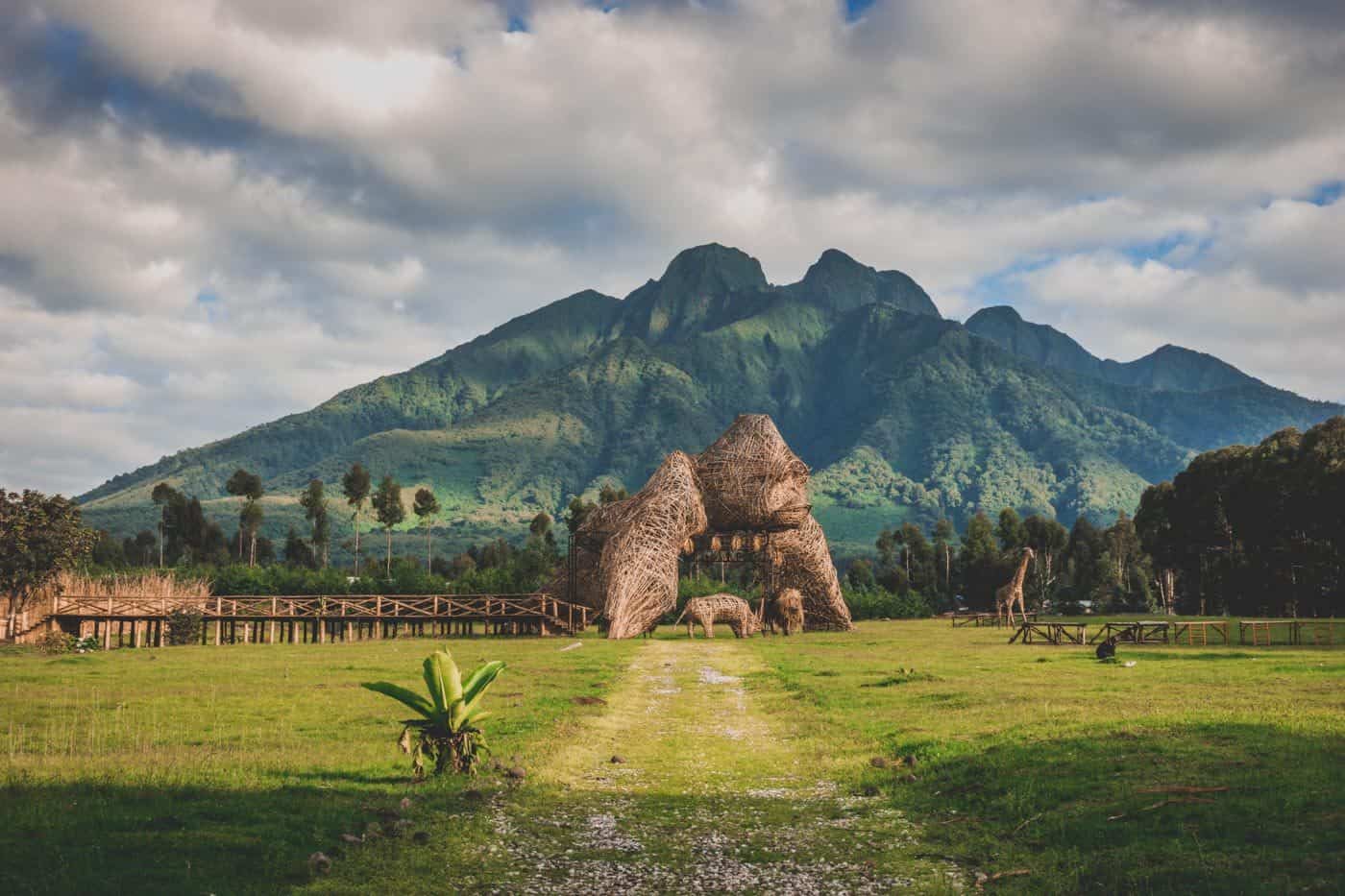
The trail begins where the farmland ends, a boundary so precise it seems designed rather than evolved, the cultivated world stopping at an invisible line beyond which everything belongs to a different order of things. Within fifty metres of the forest edge, Kigali feels like a distant memory. The bamboo canopy closes above the trail. The light shifts from the open brightness of the fields to a green-filtered luminescence that makes everything look slightly unreal, as though the film stock of the world has changed. The air is several degrees cooler and carries the dense, layered fragrance of decomposing leaves, volcanic earth, moisture, and the indefinable smell of an ancient forest. It smells, in the best possible way, like nothing familiar.
The porters, local community members hired at the trailhead, a practice that provides meaningful income and represents a direct economic link between the park and its neighboring communities, take the weight from your shoulders the moment you step onto the trail. Your daypack travels with a porter who keeps pace without effort and whose knowledge of the terrain, accumulated through years of daily forest work, is a constant quiet reassurance. The rangers move slowly but efficiently, knowing exactly what and where to look.
There are sounds you have never heard before. A bird whose call is a cascading series of liquid notes that seem to descend through octaves; your guide identifies it without looking up, adds its common and Latin names, and notes the particular season in which it calls most often. The rustle of something unseen in the undergrowth is almost certainly a buffalo, but it might be something smaller. The creak and shift of the bamboo in a breeze that reaches you as a sound before a sensation. And then, transmitted by radio from the trackers ahead, the message translates as “They are near.”
The Encounter: Sixty Minutes in Another Kingdom
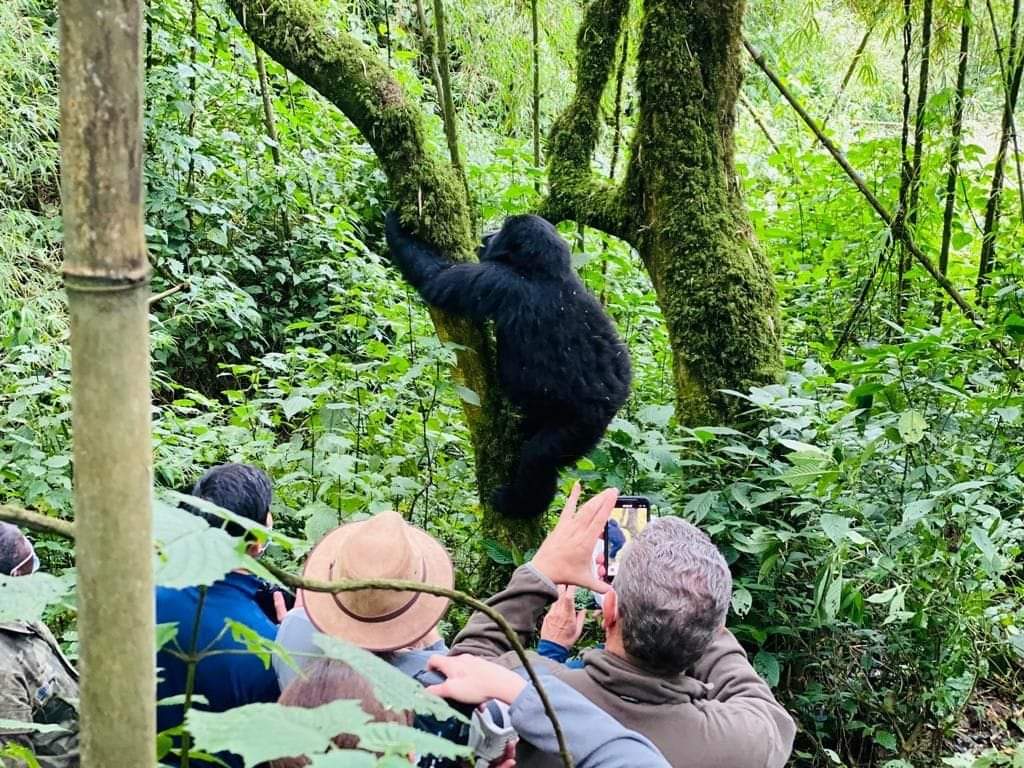
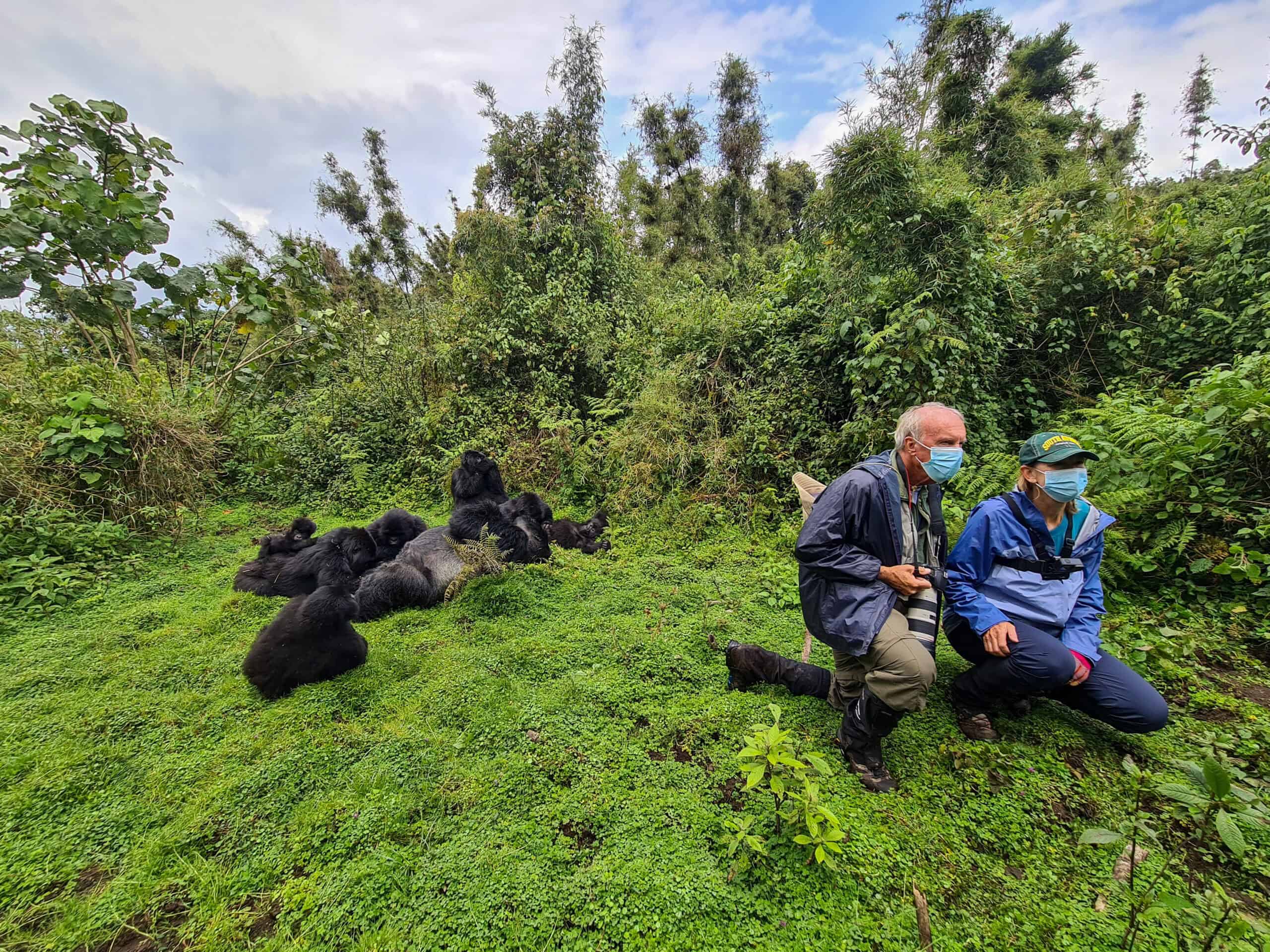
The first sight of the gorillas is rarely what you expect; no expectation adequately prepares you for it. A guide who has led hundreds of treks will tell you that every single one has produced the same response in first-time visitors: a specific, involuntary kind of stillness that is different from merely stopping a stillness of the entire person, breath included, attention narrowed to a single point with a completeness that normal life almost never achieves.
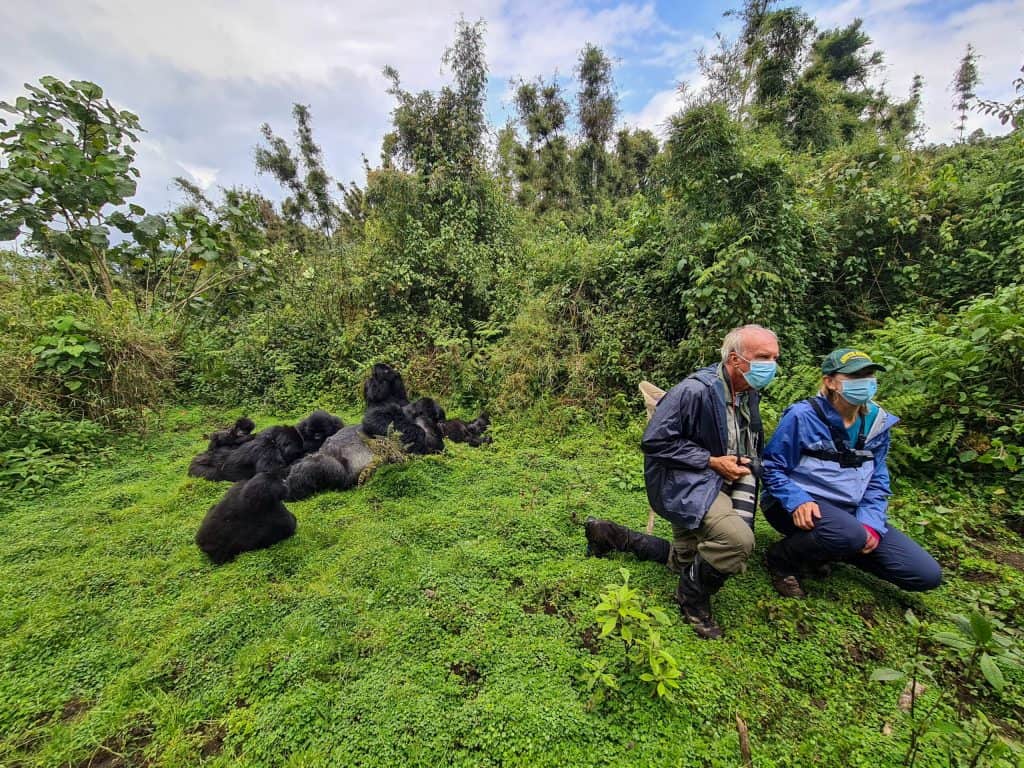
Gorilla Trekking in Rwanda
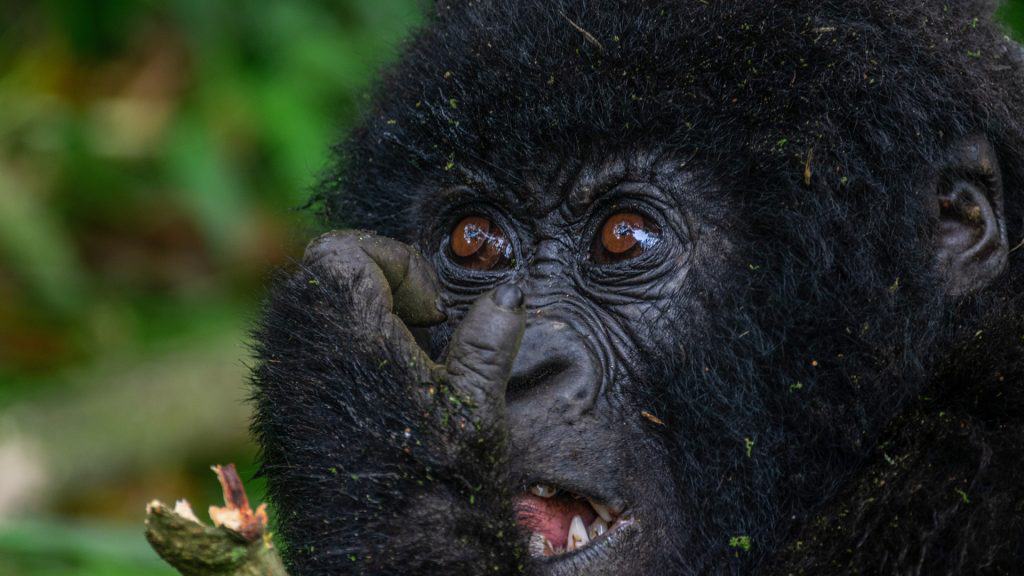
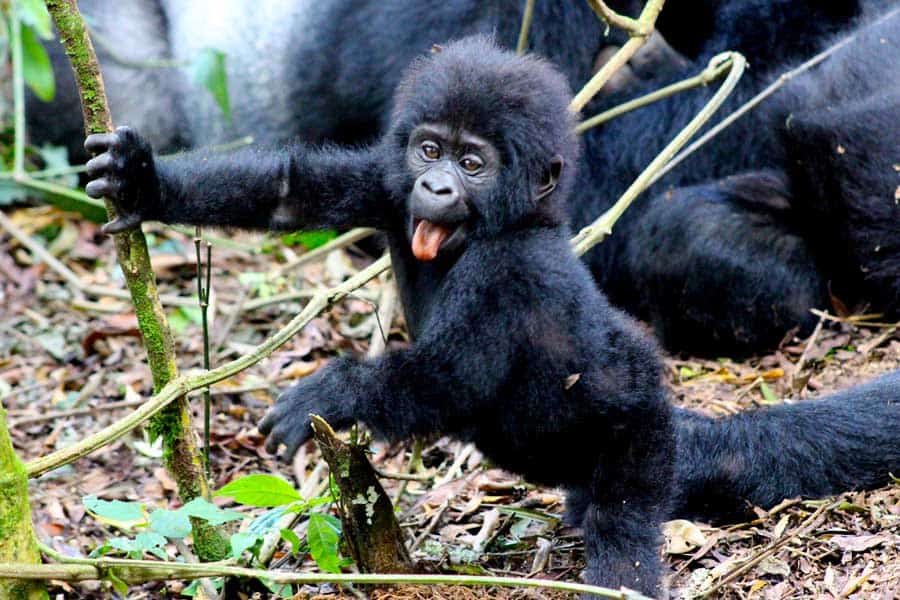
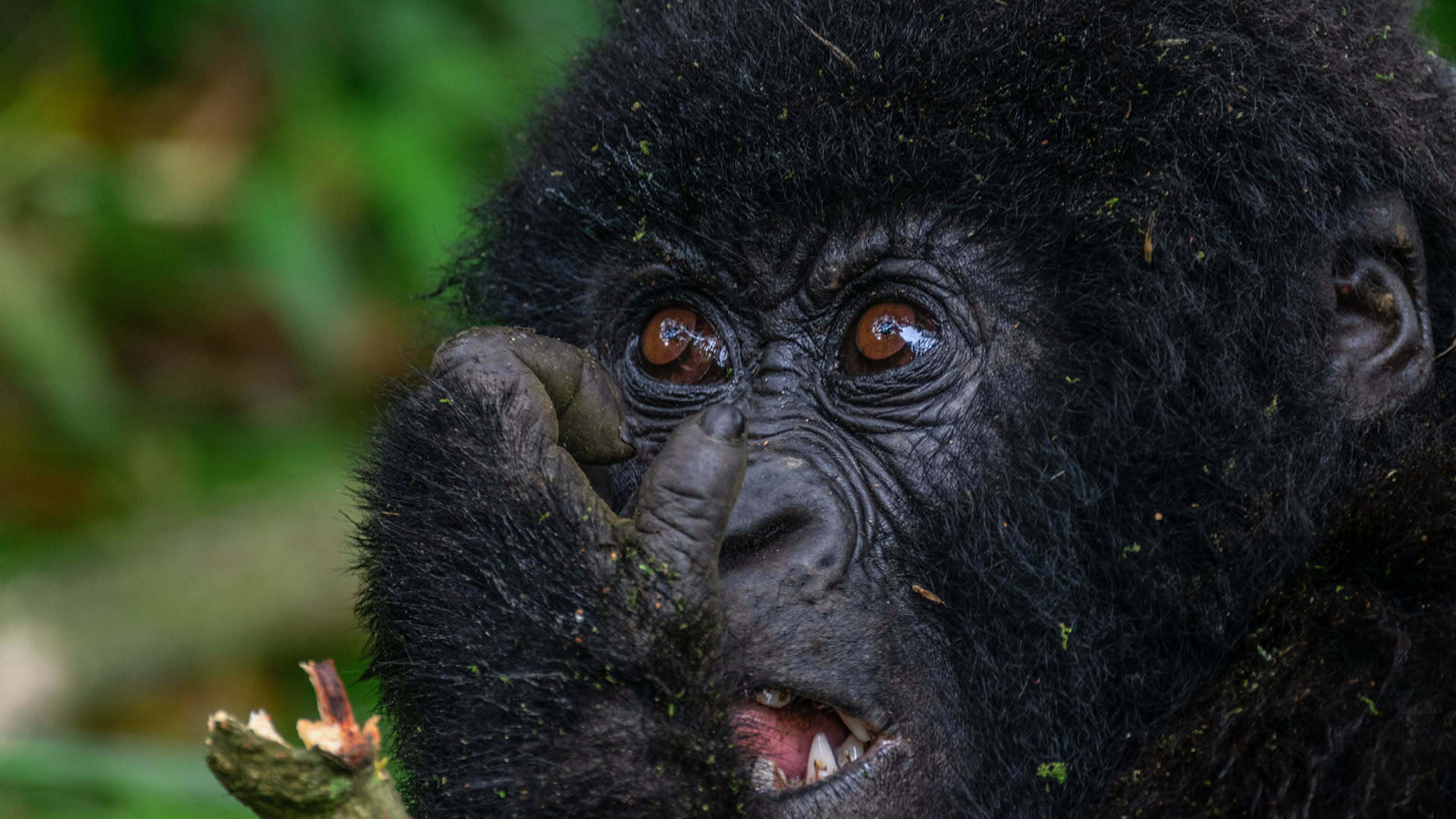
A mother nurses her infant with the specific tenderness of a being who knows the infant is everything. Two juveniles chase each other through the undergrowth with theatrical outrage over a matter of complete triviality. An older female sits in the vegetation and pulls leaves from a stem with methodical patience, watching your group with the relaxed attention of someone who has seen such behavior before and found it neither threatening nor particularly interesting. And then the silverback arrives, not with drama, but with the specific, absolute authority of a creature who has never in his life felt the need to announce himself. He weighs perhaps four hundred pounds. He is perhaps six metres from where you stand. He glances at you once with eyes that contain an intelligence you will spend the rest of your life trying to describe accurately, and he decides you are not worth a second look. It is the most magnificent thing anyone in your group has ever witnessed.
Sixty minutes. Not enough and more than enough simultaneously. Your ranger signals the withdrawal with a quiet gesture, and the group moves backward through the vegetation with the reverence of people leaving a place of worship. The forest closes around the gorillas again. The boundary trail traverses the profound silence of those who have undergone transformation but have yet to process it. This experience is what Rwanda Gorilla Expeditions exists to deliver: not just the logistics of the encounter but the conditions that allow it to arrive with full force. For those who want to go beyond this encounter and engage with the scientific and conservation world that makes it possible, our behind-the-scenes gorilla trekking experience offers an extraordinary alternative for up to three guests who want three consecutive days alongside the researchers and veterinarians who protect these families.
Late Morning: Lunch, and the Long Return
At Kinigi, the open-air dining area serves a hot lunch, offering views of the park boundary and the forest above it. Your gorilla trekking certificate bearing today’s date, the name of your gorilla family, and the stamp of the Rwanda Development Board is presented with the quiet ceremony it deserves. It is a simple document. It shows, with official authority, that you were in that forest, with those animals, on this day. No photograph will ever quite prove it the way this piece of paper does.
The return drive to Kigali follows the now-familiar route in reverse, the landscape carrying the accumulated meaning of two days of profound engagement with this country. Your guide adjusts the pace to yours: more conversation if you want it, more silence if you prefer that, perhaps a stop at the roadside viewpoint above Musanze where the valley spreads out below and the volcanoes are visible one last time in the afternoon light. By early to mid-evening, Kigali receives you back into its hills. The journey is complete. The story, however, has barely begun.