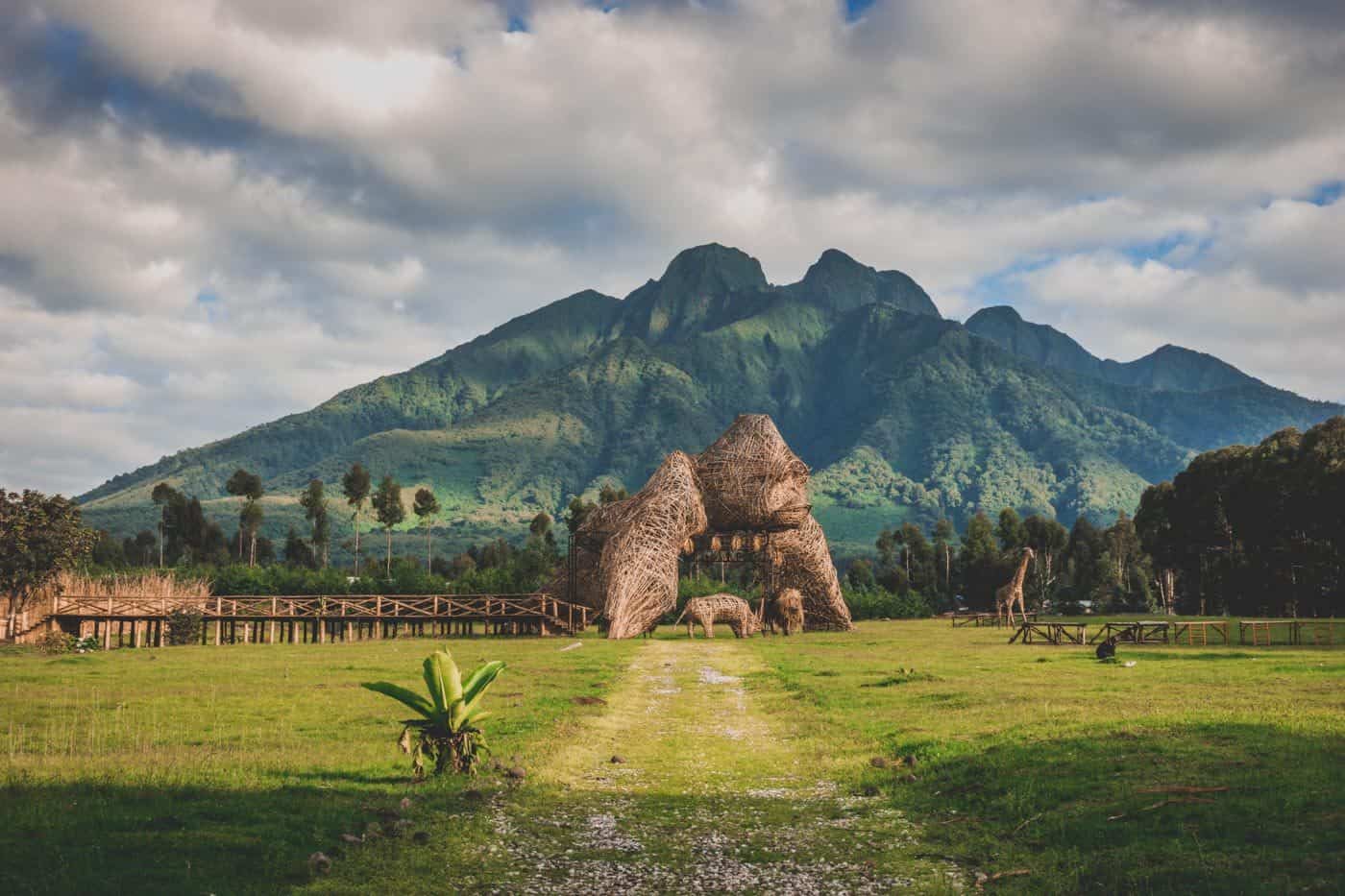
Before Dawn: Kigali Stirs, and So Does Your Anticipation
The city is quiet at five in the morning. Kigali, Rwanda’s immaculate capital perched on its many hills, is just beginning to breathe. The night staff of your hotel, perhaps the serene Kigali Marriott or the hillside elegance of the Radisson Blu, moves silently around you as your private vehicle waits at the entrance, your dedicated driver-guide already there, thermos in hand, quietly proud of the day that lies ahead.
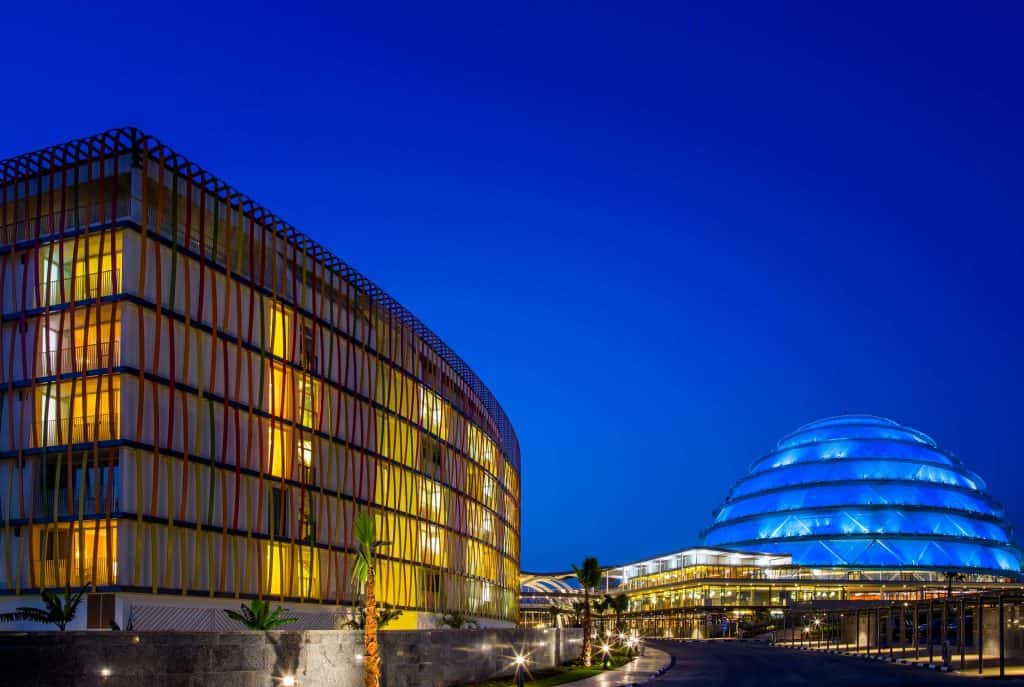
Radisson Blu Hotel Kigali, Rwanda
There is no rushing, no shared shuttle, and no strangers crowding your morning. Your hotel prepares a curated packed breakfast on request, with warm bread, fresh fruit, and good Rwandan coffee accompanying you as the vehicle pulls out through the empty streets and begins its north-westward climb toward the Virunga Volcanoes. The city dissolves behind you. The hills take over.
The drive from Kigali to Volcanoes National Park covers roughly 110 kilometres and takes between two and two-and-a-half hours on well-maintained tarmac roads. Your guide narrates at a pace that suits you, perhaps explaining the ecology of what you are approaching, the history of Dian Fossey and the Karisoke Research Centre, or simply the politics of gorilla conservation in a country that has made wildlife protection a point of national pride. Rwanda’s landscape shifts around you with cinematic deliberateness: red-soil terraces stacked like ancient amphitheatres, banana groves swaying in the early light, women carrying loads on their heads with extraordinary grace. This is not the Africa of generalities. This is Rwanda, specific and sovereign and singular.
Morning: The Briefing at Kinigi, Where Adventure Is Made Official
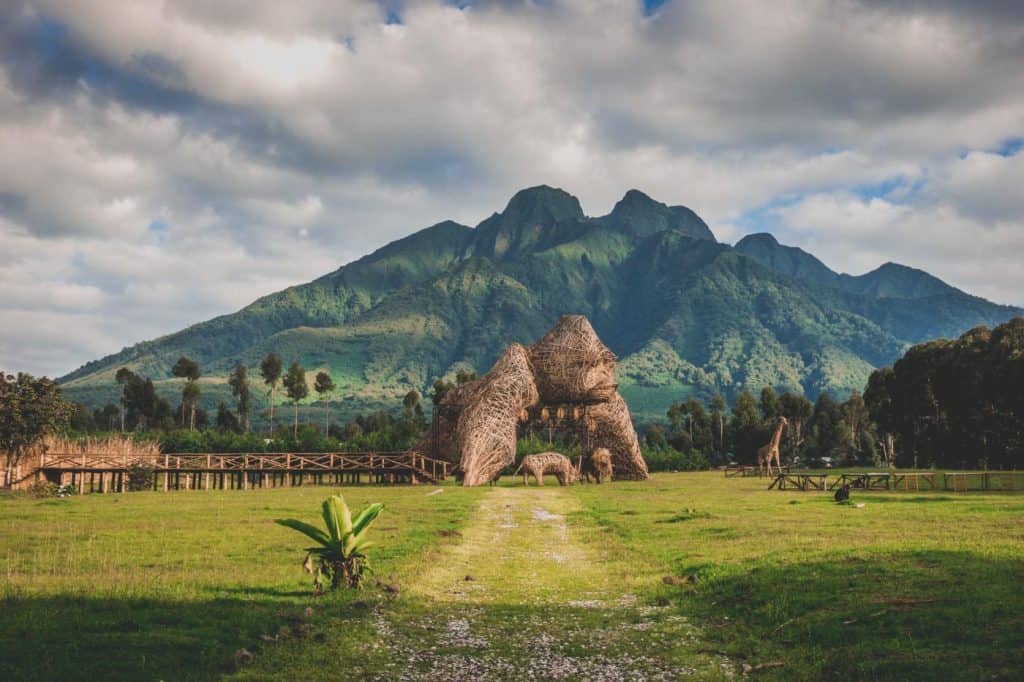
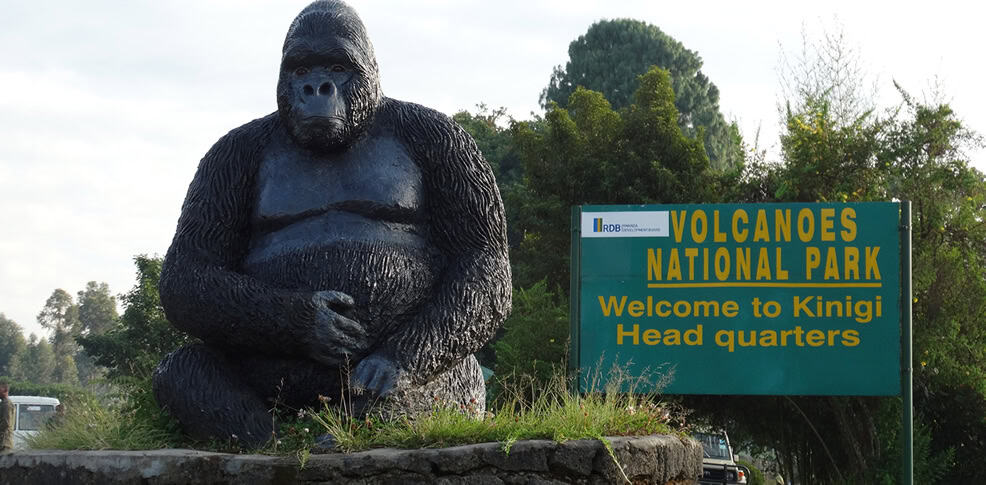
By 7:30 in the morning, your vehicle arrives at the park headquarters in Kinigi, the gateway village to Volcanoes National Park. The air is noticeably cooler here, at over 1,850 metres above sea level, and the silhouette of the Virunga chain dominates the northern horizon: Karisimbi, at 4,507 metres the highest; Bisoke with its jewel of a crater lake; and Sabyinyo, Gahinga, and Muhabura standing sentinel behind. The scale of what you are about to walk into announces itself quietly, and it is enormous.
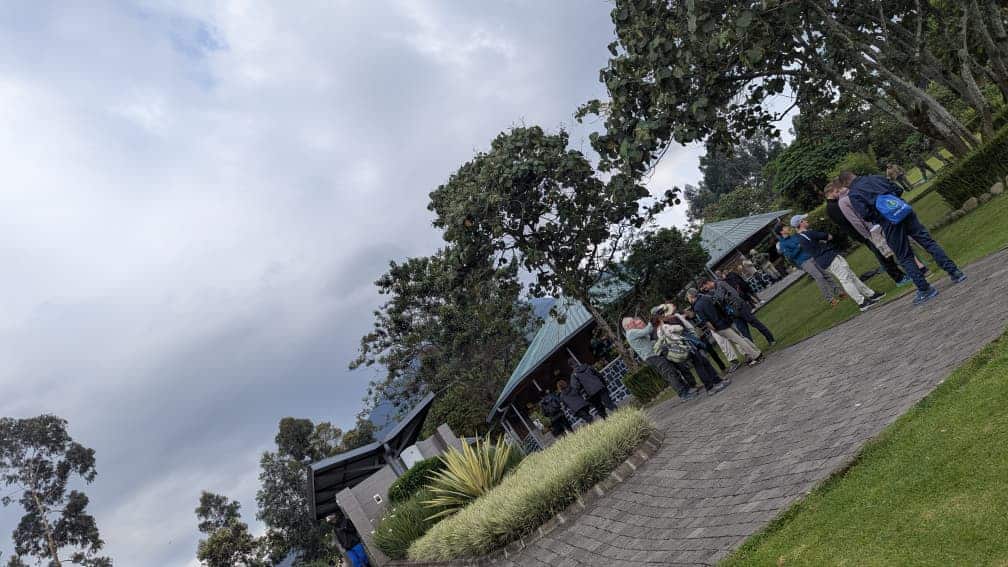
Volcanoes National Park Briefing Point
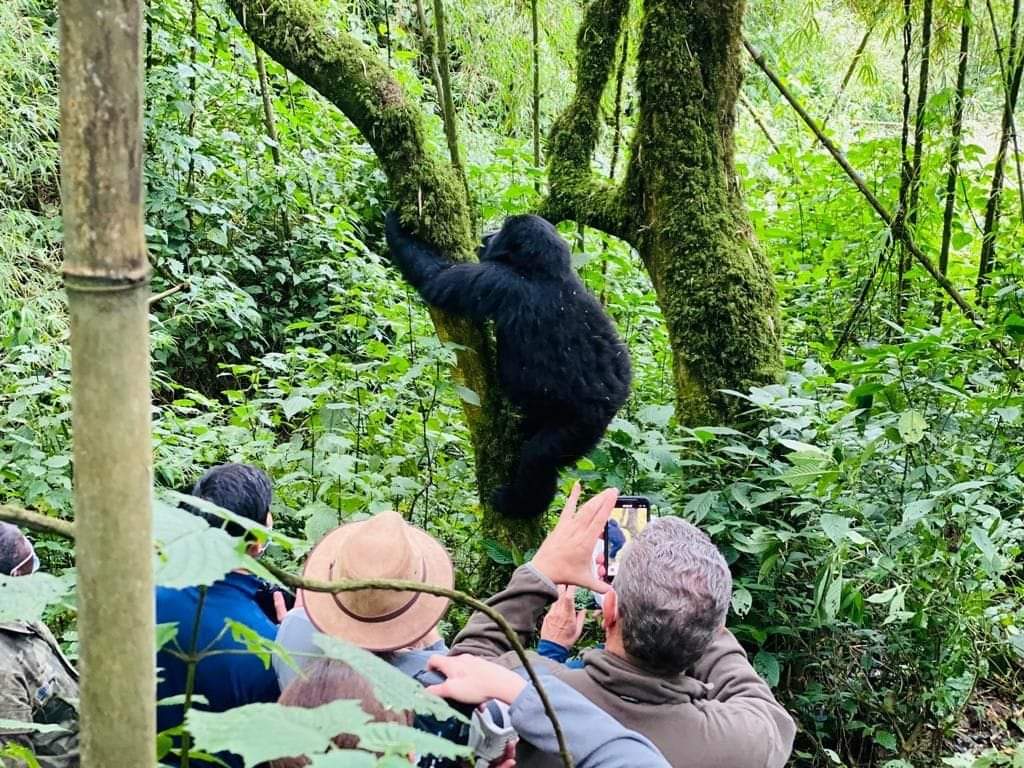
The Rwanda Development Board rangers conduct a briefing that is simultaneously practical and reverent. You learn the protocols: no flash photography, no eating within 200 metres of the gorillas, maintain a seven-metre distance unless a gorilla approaches you of its accord, cover your mouth if you cough, and follow the ranger’s instructions without question. These rules exist not to constrain your experience but to protect it. The gorillas and the park authority trust visitors because visitors have consistently been worthy of that trust, and today, that trust extends to you.
Trekkers are sorted into groups of eight, each group assigned to a specific habituated gorilla family. Rwanda’s gorilla families are legendary: the Susa group, the Amahoro family, the Kwitonda, and the Umubano, each with its own distinct personality and social dynamics. Your guide, who has trekked with these families for years, knows which family’s movements suit your fitness level and interests, and the assignment is never random. If you are considering a private, fully exclusive encounter with a single family, explore exclusive gorilla trekking in Rwanda, a premium option that removes all other visitors from your experience entirely.
The Trek: Into the Cathedral of Green
There is no single word for what the forest of Volcanoes National Park smells like. It is earth and rain and age, the particular combination of volcanic soil, decomposing leaves, and altitude moisture that exists nowhere else on the planet in quite this way. The trail begins at the park boundary, often through farmland that borders the forest edge, and within minutes the cultivated world disappears and you are inside something primaeval and immense.
The Rwandan porters hired locally at the trailhead, along with a contribution you are warmly encouraged to make, will carry your daypack, camera bag, or anything that weighs you down. Many of them have been doing this job for decades, their boots worn and their laughter easy and generous. They know this forest like you know your home, and they take pride in what you are about to see.
The trek duration varies with complete honesty: the gorilla families are wild animals, and they sleep where they choose the night before and move at their pleasure through the morning. Rwanda’s gorilla groups, however, are known to have smaller home ranges than their counterparts in Uganda’s Bwindi, which tends to mean shorter treks on average. Most treks in Volcanoes National Park last between two and four hours, though the range is genuinely one to six. Your tracker guides know within a reasonable degree where the family is, having followed the group’s movements since the earliest hours of the morning via radio. The forest gives clues: a freshly broken stalk, a warm nest, the high-pitched call of a young gorilla somewhere through the trees.
You move through bamboo groves where the light filters in shafts. You push through hagenia and hypericum forest, your boots finding purchase on volcanic soil that is soft with moisture. Your ranger walks ahead, machete in hand where necessary, and there is nothing performative about any of it; this is simply how you get to where they are.
The Encounter: One Hour That Rewrites You
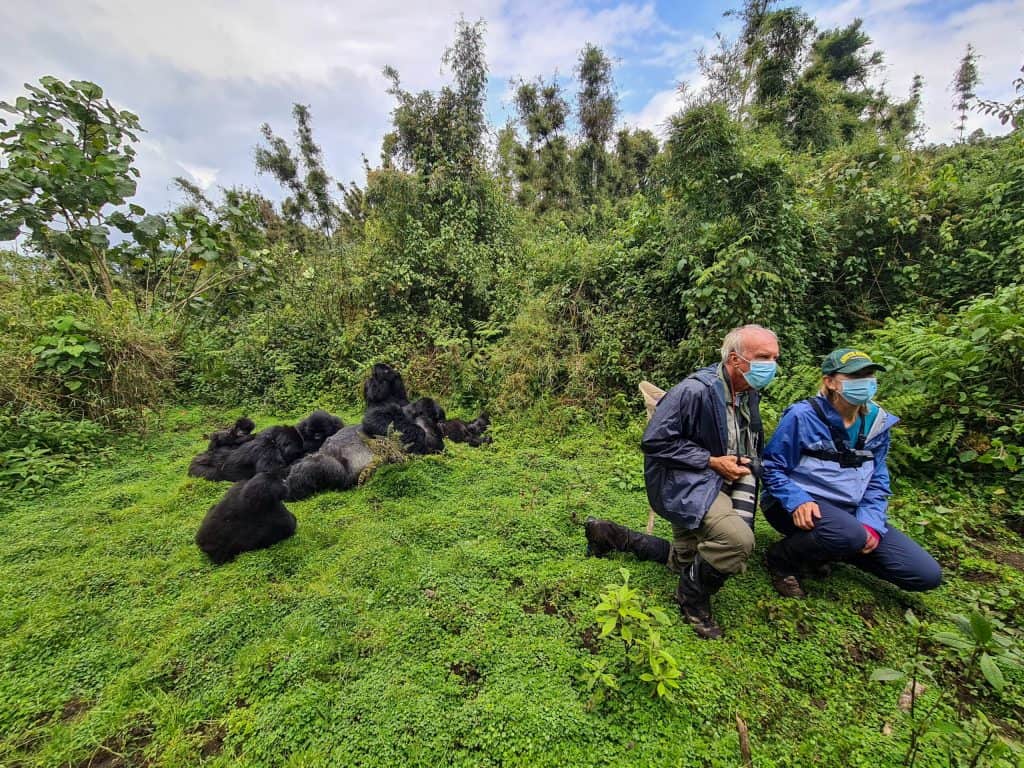
Then your ranger stops. Raises a quiet hand. And there, through the last curtain of vegetation, you see them.
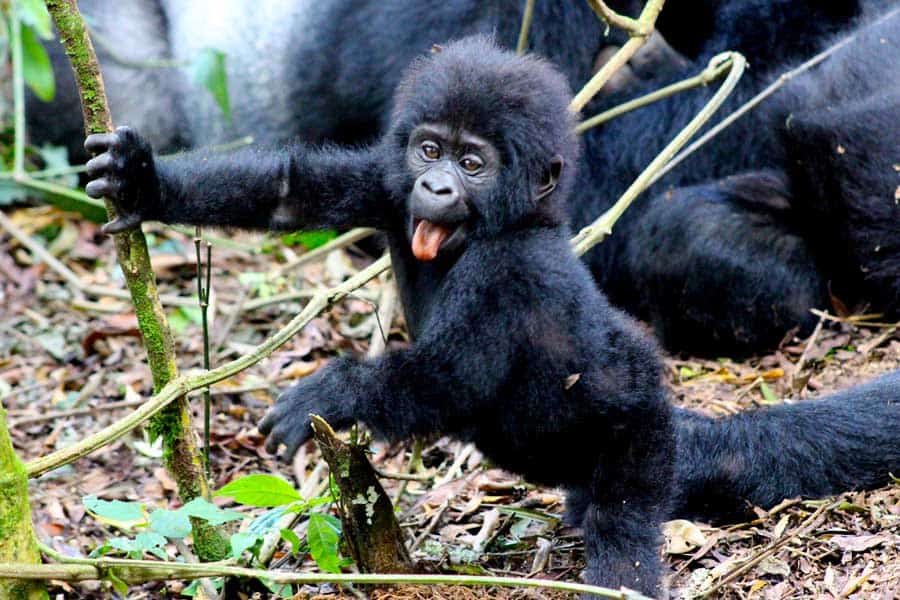
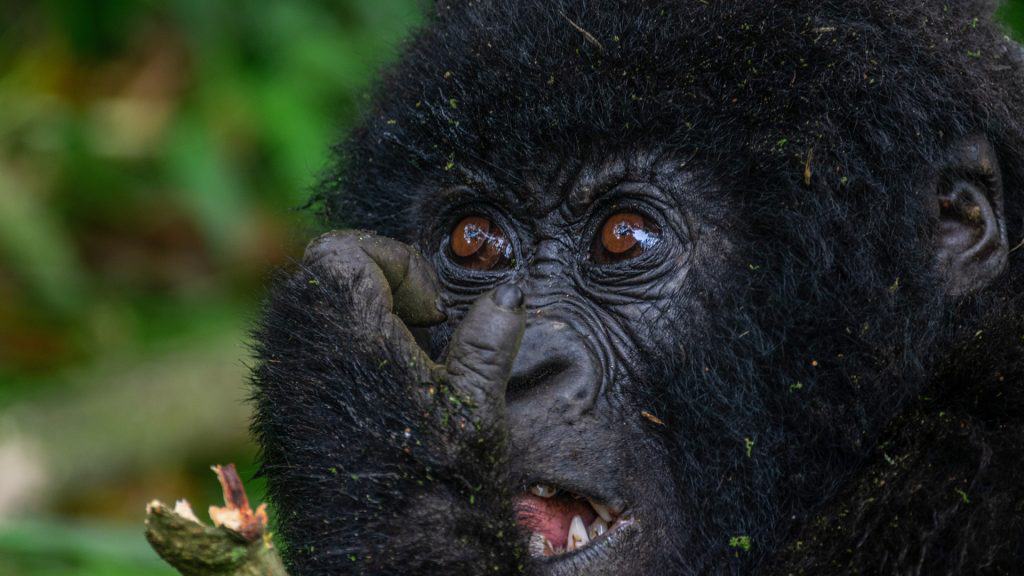
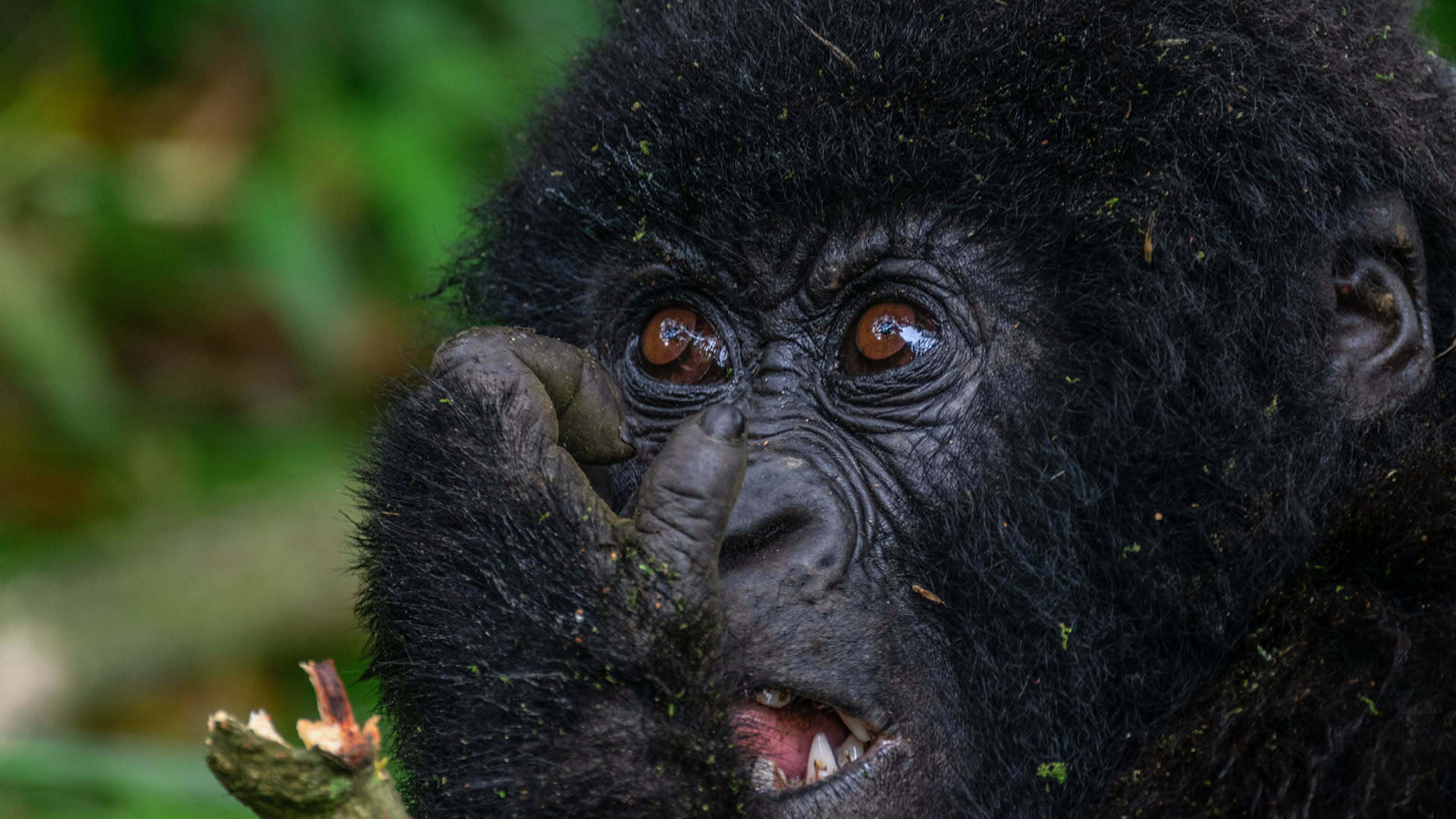
A baby gorilla in Volcanoes National Park, Rwanda.
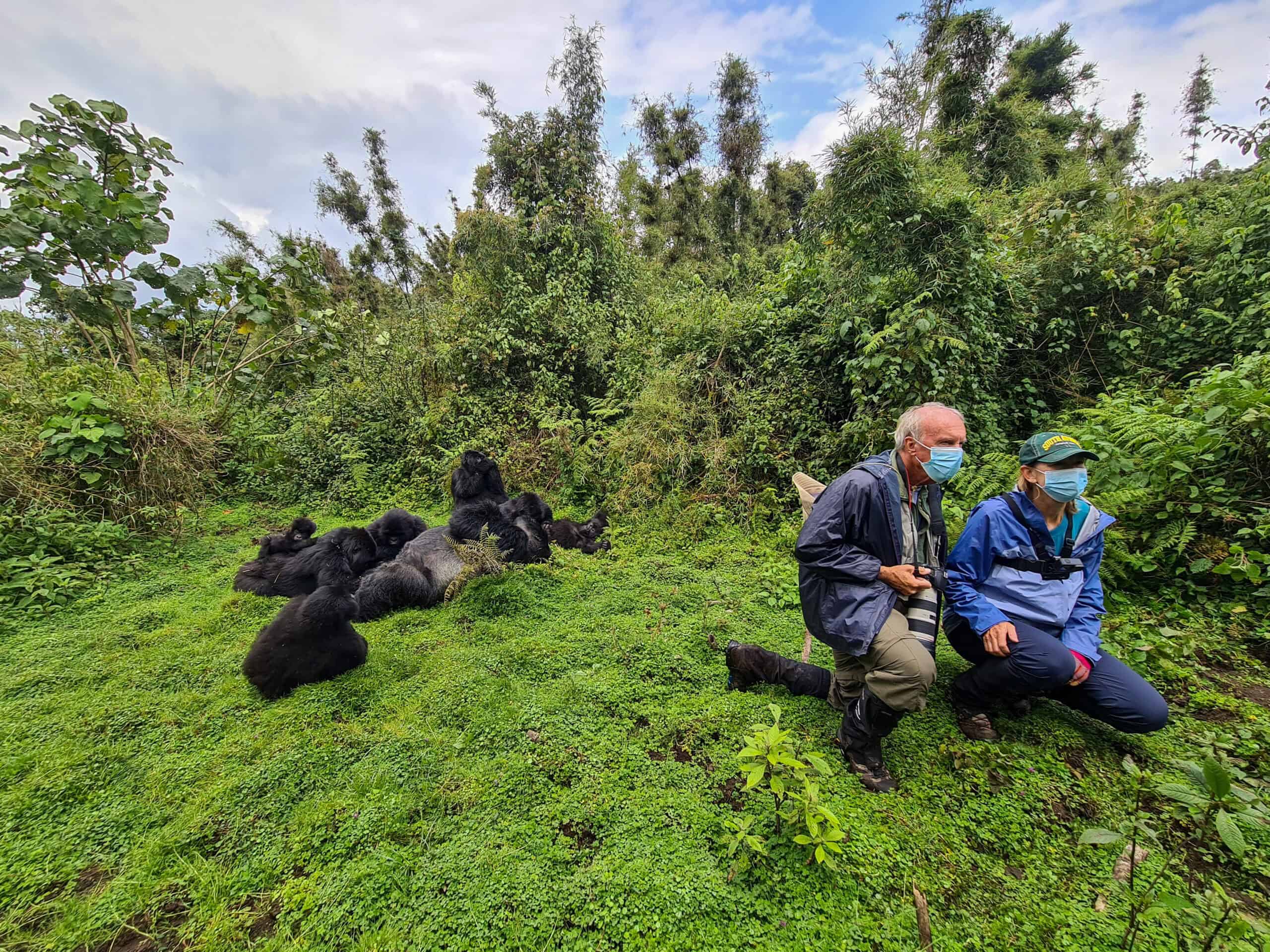
A mother gorilla nurses her infant with extraordinary tenderness, the baby’s fingers wrapped around her thumb. A young male, a blackback, three or four years from his silver, chases his sibling through the undergrowth with theatrical outrage. And then the silverback arrives, moving through the group’s orbit with the unhurried authority of a sovereign: four hundred pounds of absolute confidence, choosing to be exactly where he is, unconcerned by your presence in the way that only an apex being can be unconcerned.
Your guide whispers context into the silence. You raise your camera. You lower your camera. You simply look, because no photograph has ever quite captured the moment, and you know it. The hour contracts and expands simultaneously you will remember it as both an instant and a lifetime. Children tumble. Adults eat. The silverback glances at you once with eyes that are unmistakably, uncomfortably intelligent. You are being assessed as calmly as you are assessing.
This experience is what Rwanda Gorilla Expeditions exists to deliver. Not just the logistics of getting you there, but the understanding that this moment, this specific, unrepeatable hour, deserves the best possible conditions around it. Our behind-the-scenes gorilla trekking experience offers an extraordinary alternative for those who want to go beyond the standard encounter and explore the science, conservation, and daily life of the researchers living alongside these families.
Late Morning to Noon: The Return, the Elevation, the Certificate
The walk back to the park boundary feels shorter than the walk in, as returns often do. You move through the humming forest in a private state of reverence and euphoria. Back at the park headquarters, a hot lunch is served, arranged through your guide, and you receive your official gorilla trekking certificate, signed and dated, a physical record of a morning that required no monument.
The certificate is, in its modest way, the most honest souvenir Africa offers. It says only: you were here, and you saw them. It needs to say nothing else.
Afternoon: The Road Back, and the Particular Satisfaction of Having Done Something Real
The return drive to Kigali retraces the morning’s route, though the landscape looks different now; it has been made familiar and beloved in the way that only a profoundly good day can do. Your driver navigates the hills as the afternoon light turns them gold, and there is time, if you wish, to stop at the base of the volcanoes for photographs or at a roadside market in Musanze for something local and unplanned. The choice is entirely yours. This is, after all, a private journey. For visitors who would like to extend their time in the region, our 2-Day Rwanda Gorilla Safari adds an overnight stay near the park, allowing for a more relaxed pace and the possibility of combining gorilla trekking with golden monkey tracking or a guided volcano hike.
You return to Kigali in the late afternoon, between five and seven in the evening depending on trail conditions. The city you left before dawn has gone through its full day without you, unaware that you have been in the presence of something that will change how you think about wilderness, time, and sharing a planet with another species.